




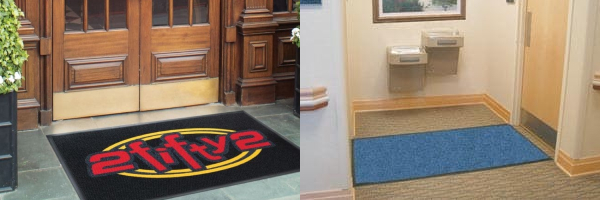
Indoor Entrance Mats & Runners
Indoor entrance matting is what your building uses inside the door to catch the residual soil and moisture that get past the exterior. The four sub-categories below — commercial-grade entrance matting, moisture-specific absorbent matting, longer entryway runners, and the full indoor catalog browse — each handle a different version of the inside-the-door problem. Sized correctly, placed correctly, and maintained on schedule, indoor matting protects the interior flooring, keeps the entrance presentable, and pulls slip-and-fall liability down. Sized wrong or skipped, it does none of that — and the floor inside takes the consequences.
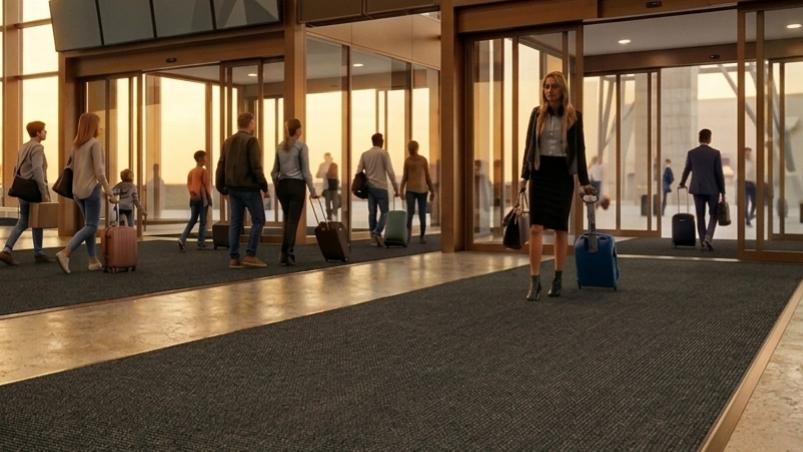
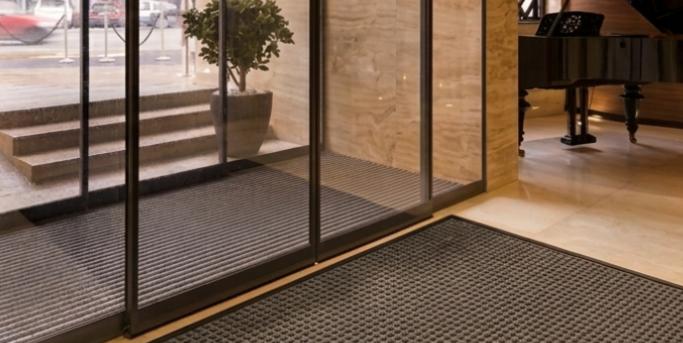
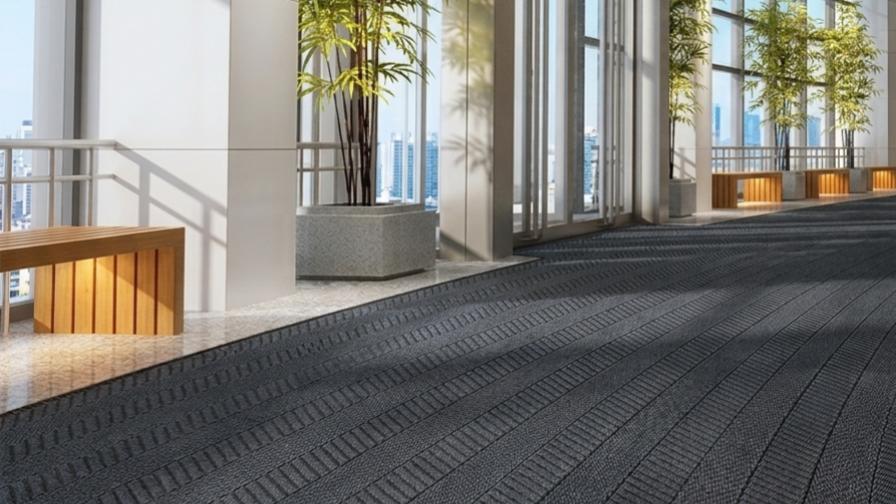
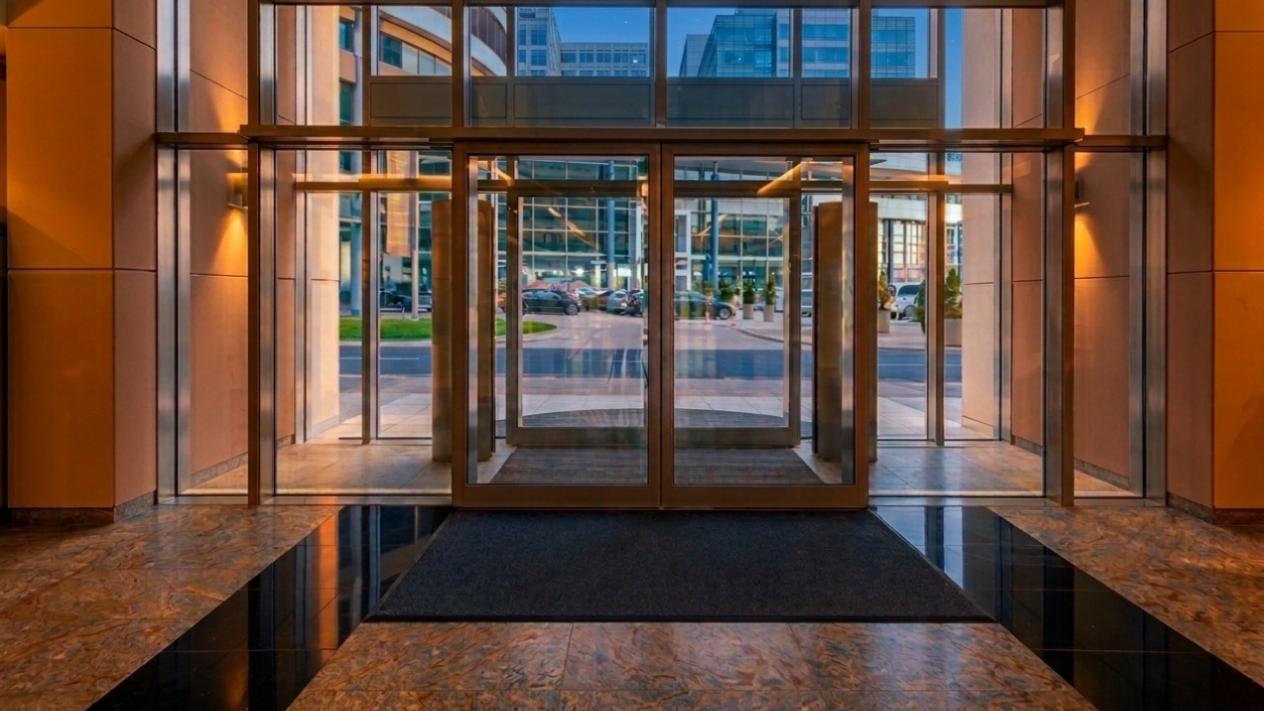
Indoor entrance matting is what your building uses inside the door to catch the residual soil and moisture that get past the exterior. The four sub-categories below — commercial-grade entrance matting, moisture-specific absorbent matting, longer entryway runners, and the full indoor catalog browse — each handle a different version of the inside-the-door problem. Sized correctly, placed correctly, and maintained on schedule, indoor matting protects the interior flooring, keeps the entrance presentable, and pulls slip-and-fall liability down. Sized wrong or skipped, it does none of that — and the floor inside takes the consequences.
What Indoor Matting Does Past the Door
The interior of a commercial building sees the residual soil and moisture that arrived on shoes from outside. Even with an exterior scraper doing front-end work, a substantial portion of incoming dirt still rides into the building on shoes — fine grit that abrades hard floors, residual moisture that gets ground into carpet, salt and chemicals that corrode interior finishes. Indoor matting is the second line of defense at the threshold and the interior stage of a complete entrance matting plan: catches what the exterior didn't, holds it where the floor cleaning crew can recover it, and prevents the tracked-in load from reaching the rest of the building. Get the sizing and construction right and the interior flooring lasts substantially longer between refinishings.
The Sizing Mistake That Halves Indoor Mat Service Life
Most commercial buyers undersize the walk-off coverage. The math is consistent: ISSA field data shows it takes six to eight footfalls per shoe to capture residual soil — fifteen to twenty feet of matting from the door inward. A standard 3-foot-by-5-foot mat at the lobby threshold catches three or four footsteps at best, then saturates. Once saturated, the mat stops trapping and starts spreading — pushing dirt and moisture deeper into the building instead of holding it where it landed. The interior flooring takes accelerated wear. The mat itself runs through a twelve-month replacement cycle on what should have been a four-to-five-year service life. Slip-and-fall liability — which NFSI tracks as one of the top entrance-related risk categories for commercial buildings — climbs because saturated mat surfaces lose their grip on wet shoes.
The fix is to size the coverage to the actual walk-off depth from door inward, not just the door width. For most commercial entries, that means either a longer mat (4-by-6 or 4-by-8) at the threshold or a 3-foot-wide runner extending 10 to 30 feet into the lobby. Indoor mats and runners are the two formats that solve this together; the choice between them depends on how far traffic travels before reaching the main interior floor.
How the Four Indoor Matting Approaches Differ
Four sub-categories cover the different versions of the inside-the-door problem. Each handles a different angle on the same job.
Commercial Entrance Mats
Heavy-duty matting built for the daily traffic real commercial buildings see. This is the general-purpose entrance category — branded entry presentation, looped surfaces for appearance retention, eco-friendly recycled-content options, and premium aesthetic-driven design all live here. The right starting point when you're outfitting a standard commercial entry that needs to handle ongoing traffic without compromising on appearance or interior protection.
Water Absorbent Mats
Moisture-specific matting for indoor spaces where water — not just general dirt — is the primary problem at the door. Pool entries, gym thresholds, food service kitchens, healthcare wet-zone transitions, vestibules in rainy climates. Different constructions handle continuous-wet conditions differently: bi-level drainage that channels water below the walking surface, looped pile that traps moisture in the fiber, natural fiber for covered transitions. The right pick for moisture-heavy spaces where a general entrance mat would saturate and fail fast.
Entryway Runners
Longer-format coverage for deep entries where a single mat doesn't reach the actual walk-off distance. Three feet wide, ten to thirty feet long, designed to extend along the natural traffic path from door to elevators or main floor. The right format when the path from the threshold to the interior flooring takes more than a standard mat can cover — corridor entries, deep lobbies, school main entrances, hospital corridors immediately past the front door. Runners pair well with a mat at the threshold for very deep entries.
All Indoor Entrance Mats
The full catalog browse across the indoor matting range. Useful when you're not sure which sub-category fits your specific entrance, when you want to compare options across categories side by side, or when you're outfitting multiple entries and need to see what's available before picking. Built as an orientation layer — gives you the framework for choosing across the indoor matting catalog rather than driving you straight into one sub-category.
Three Things to Check Before You Pick
Three factors usually narrow the choice quickly. First, walk-off depth — measure from the door inward to the first transition point (elevator bank, main lobby, conference area). Under six feet works with a standard mat; eight feet or more wants a runner; very deep entries (fifteen to thirty feet) take both. Second, moisture exposure at the threshold — continuous-wet spaces need moisture-specific construction with drainage or fiber-absorption capacity, general-dirt entries handle fine with standard commercial matting. Third, brand presence at the door — if the entrance is part of how the organization presents itself, branded options in the commercial entrance category match the function with the visual identity. Most commercial buyers can map their entrance to one of the four sub-categories with those three checks.
Why Mats Inc.
Mats Inc. has been outfitting commercial indoor entrances since 1964. The four sub-categories above are the indoor matting families that have held up across the building types we serve — corporate, hospitality, healthcare, education, government, retail, food service, industrial. The constructions still in the catalog are the ones that survive real commercial use. If you're trying to figure out which sub-category fits your entrance, or if your setup spans more than one (a vestibule transition into a deep lobby, for example), we can walk the plan with you before any commitment.
Frequently Asked Questions
How big should an indoor mat be at a busy commercial entry?
Answered by Dustin Thompson, Owner & CEO
Size the mat to the walk-off path, not the door width. ISSA research shows it takes six to eight footfalls per shoe to capture residual soil — that's fifteen to twenty feet of matting from the door inward. At a busy commercial entry, a 3-by-5 mat catches three or four footsteps before saturating. The right setup at most commercial doors is either a longer mat (4-by-8 or 4-by-10) at the threshold or a 3-foot-wide runner extending ten to twenty feet into the lobby. For very deep entries, pair both — a mat at the threshold and a runner extending further in. Match the format to your actual interior layout, then size from there.
Can the same indoor matting handle both wet weather and dry conditions year-round?
Answered by Jinna Hopson, Vice President of Marketing
Most indoor constructions handle both, but the specific construction matters. Bi-level drainage matting and natural-fiber absorbents excel at moisture and work fine in dry conditions. Looped Berber and synthetic carpet faces lean more toward dry-condition performance with moisture as a secondary capability. For climates that run wet half the year, prioritize a moisture-first construction. For mostly-dry interiors, a looped Berber construction holds appearance longer. If your entrance sees a clear wet season — coastal regions, rainy-climate hospitality, northern winters — the water-absorbent sub-category is the right starting point; for predominantly dry interiors, commercial entrance mats cover more situations.
What's the difference between an indoor mat and an indoor runner?
Answered by Jinna Hopson, Vice President of Marketing
An indoor mat is sized to a single doorway placement — typically 3-by-5, 4-by-6, or 4-by-8 — and sits at the threshold. A runner is longer and narrower — usually 3 feet wide and 10 to 30 feet long — and extends coverage further into the building along the natural traffic path. Runners are how you reach the 15 to 30 foot ISSA-recommended walk-off distance at busier entrances, especially in school corridors, hospital lobbies, and commercial buildings where the path from door to interior floor takes longer than a single mat can cover. Many deep commercial entries use both — a mat at the threshold to catch the heaviest dirt and a runner extending inward to finish the walk-off.
Why does an indoor mat sometimes wear out within a year?
Answered by Dustin Thompson, Owner & CEO
Three causes drive most premature indoor mat wear. First, the mat is undersized for the traffic — saturating in the first few footsteps means it works overtime and degrades fast. Second, no exterior scraper is doing the front-end work, so the indoor mat is catching grit and debris it wasn't built for. Third, maintenance — indoor mats need to be lifted regularly to clean and dry the surface beneath, otherwise moisture trapped underneath breaks down the backing from below. Fix any one of these and the mat usually reaches its expected four-to-five-year service window.
Does every indoor commercial mat need non-slip backing?
Answered by Dustin Thompson, Owner & CEO
At any commercial doorway with regular traffic, yes. Rubber backing is what keeps the mat planted on the floor through continuous footsteps and prevents the curling-edge trip hazard that develops when mats slide out of position. For hospitals, schools, and high-traffic public buildings specifically, rubber-backed commercial constructions are the right specification — they grip non-marking on hard floors and stay stable under cart and wheelchair traffic. Slip-and-fall risk at building entrances is a leading commercial liability source, and unbacked or shifting mats are a primary contributor to that risk.
How should I approach outfitting indoor matting across multiple commercial entrances?
Answered by Jinna Hopson, Vice President of Marketing
Start by measuring each entry's walk-off depth from door to interior floor, then group entrances by profile — short entries that take a single mat, deeper entries that need a runner, very deep entries that need both. Once the size requirements are grouped, the construction choice usually narrows quickly based on traffic volume and moisture exposure. For multi-location programs with brand consistency requirements, branded matting at customer-facing entrances paired with standard matting at service or back-of-house doors is a common pattern. We can walk the portfolio with you before committing to a multi-site spec.
By Jinna Hopson, Vice President of Marketing, Mats Inc.