




Water Absorbent Indoor Mats
Water absorbent matting from Mats Inc. — built specifically for spaces where moisture is the primary problem at the door, not just a side effect of weather. The four options below handle moisture differently. Waterhog Elite Herringbone and Half-Circle Waterhog Elite use bi-level construction with channels that route water below the walking surface, keeping the mat absorbent while the surface stays drier underfoot. Super Berber traps moisture in dense looped fiber for spaces where the mat needs to look clean while it works. Coir Matting absorbs and scrapes through natural fiber for covered transitions where shoes come in damp.
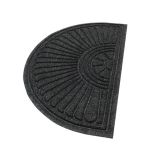 Half-Circle Waterhog Elite Entrance Mat$67.00The Half-Circle Waterhog Entrance Mat takes the bi-level Waterhog face you'd put inside a busy front door and curves one end into a half-oval, so a plain rectangular runner reads as a finished, grand entrance. It scrapes shoes and holds water below the walking surface, and the rounded end softens
...
The Half-Circle Waterhog Entrance Mat takes the bi-level Waterhog face you'd put inside a busy front door and curves one...
View Details
View Details
 Super Berber Matting
Starting at $60.00
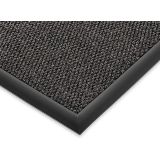
Super Berber Matting is a dense berber entrance mat that does the two hardest jobs at a busy door at once: it scrapes grit off shoes and soaks up the moisture they carry. The needle-punch berber surface is solution-dyed in up to 40 colors, and a custom logo can...
Super Berber Matting is a dense berber entrance mat that does the two hardest jobs at a busy door...
View Details
View Details
 Coir Matting
Starting at $70.00
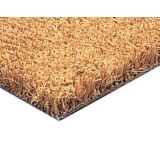
Coir Matting is natural coconut-coir fiber tufted onto a solid vinyl base — the original boot-scraping fiber, set on a backing that keeps what it catches off your floor. The stiff coir brushes grit and moisture off shoes at the door, while the vinyl base seals the underside so...
Coir Matting is natural coconut-coir fiber tufted onto a solid vinyl base — the original boot-scraping fiber, set on...
View Details
View Details
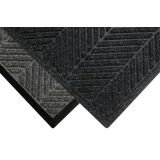 Waterhog Elite Herringbone Mats$75.00The Waterhog Elite Herringbone is a bi-level entrance mat built to pull dirt and water off shoes and keep them off your floor. Raised nubs scrape debris and moisture down below foot level, while a raised water-dam border around the edge holds the runoff on the mat instead of
...
The Waterhog Elite Herringbone is a bi-level entrance mat built to pull dirt and water off shoes and keep...
View Details
View Details
Why Moisture-Specific Mats Matter
A mat built for general entrance dirt and a mat built for moisture-heavy traffic are different products, even when they look similar in a catalog photo. The difference shows up in how the mat behaves under continuous wet conditions: how fast it absorbs, how long it holds water before saturating, what happens to the backing when moisture sits underneath the mat against the floor for hours, and whether the mat surface stays safe to walk on as it loads up.
A mat that works fine at a dry corporate lobby door fails inside a month at a pool entrance, a gym, a restaurant kitchen threshold, or a medical-facility clean-water transition. The four products in the grid above all handle continuous moisture — but they handle it in different ways, and the right pick depends on what your space asks of it.
The Failure Mode at Wet Entrances
The most common failure at moisture-heavy spaces is a mat that's absorbent on the surface but doesn't manage what happens underneath. Water absorbed at the top eventually wicks down to the backing, sits between the mat and the floor, and starts breaking down both surfaces from below. The mat backing cracks. The floor underneath grows mildew. The mat starts releasing odor that no cleaning will resolve. Slip risk goes up as the saturated surface becomes slick instead of grippy.
NFSI tracks slip-and-fall incidents at wet thresholds as one of the most consistent commercial liability sources, which is why moisture-specific matting design — channels, drainage, breathable backings, regular lifting — matters more in these spaces than in dry-entry applications. The products below are built around this problem rather than around it.
How the Four Options Compare
Each option in the grid handles moisture differently. Picking between them comes down to what the space is actually doing.
Waterhog Elite Herringbone Mats use bi-level construction — herringbone-patterned face on top, recessed water-channeling wells underneath. Water absorbed at the surface flows into the wells below, keeping the walking surface drier than what's actually held in the mat. This is the strongest pick for high-volume wet entrances where the mat needs to keep absorbing without saturating the surface — covered hotel entries during rain, retail entrances in wet climates, healthcare facility thresholds where wet shoes are constant.
Half-Circle Waterhog Elite Entrance Mat uses the same bi-level Waterhog construction in a half-circle shape, designed for architectural placements where a rectangular mat doesn't fit the space. Made with at least 90% recycled plastic content reclaimed. Same moisture-handling capability — wells channel water away from the walking surface — in a shape that fits curved or angled thresholds at corporate lobbies, hospitality entries, and architectural front doors.
Super Berber Matting takes a denser-fiber approach. The high-performance looped yarn traps moisture and dirt within the pile while keeping the entrance presentable across heavy traffic days. Rubber backing prevents slipping when the mat saturates. This is the right pick for moisture-heavy spaces where the mat also needs to look clean while it's working — corporate lobbies during weather events, hospitality entries where appearance matters as much as function, food service entrances where a polished look matches the space.
Coir Matting uses natural coconut husk fiber for moisture absorption combined with shoe scraping. The 3/16-inch thick vinyl backing prevents leak-through to the floor underneath, which is what makes it commercial-grade rather than residential. Best for covered entries where moisture is incidental rather than constant — hotel covered driveways, restaurant covered patios, residential-feel commercial entries where natural fiber fits the space's design. Not the right call for sustained-wet conditions where coir saturates faster than synthetic alternatives.
Three Things to Check Before You Pick
First, what kind of moisture exposure the space actually sees. Continuous-wet spaces (pool entries, locker room transitions, food-prep thresholds, gym shower exits) need mats with the strongest drainage and saturation tolerance — the bi-level Waterhog options handle this best. Intermittent-wet spaces (covered hotel entries during rain, retail entrances in wet climates, healthcare facility thresholds) work well with Super Berber's dense-pile absorption combined with regular drying. Incidental-wet spaces (covered architectural entries where moisture occasionally arrives on shoes) work fine with Coir's natural-fiber absorption.
Second, how often the mat will be lifted for the floor to dry. No moisture mat survives long when it's never lifted — the backing breaks down from below. Schedule mat-lifting based on how wet the space actually gets, not a generic cleaning calendar.
Third, slip risk on the mat surface itself. As mats saturate, surface grip changes. Rubber-backed Waterhog and Super Berber both stay planted under wet conditions; Coir's vinyl backing also resists slipping but the natural fiber surface can become slicker than synthetic alternatives at full saturation.
Why Mats Inc.
The four products above are the ones that have held up in moisture-heavy commercial spaces — at facility doors, gym entrances, hospitality thresholds, medical environments — where the wrong specification fails fast and the consequences hit fast: degraded entrance appearance, slip-and-fall liability exposure, floor damage underneath the failing mat, and an entrance that's actively working against the building it's supposed to protect.
The part that matters most is getting the specification right at the start — the right construction for the actual moisture exposure, sized for the space, matched to the maintenance reality of who's lifting and drying the mat. Get that right and the mat does its job for years. Spec consultation available if you want a second opinion before ordering.
Frequently Asked Questions
How wet does my entrance need to be before I need a moisture-specific mat?
Answered by Dustin Thompson, Owner & CEO, Mats Inc.
Any space where wet shoes are a daily occurrence rather than an exception. That covers more spaces than most buyers initially think — restaurant kitchens, gym entrances, pool transitions, food service prep areas, medical facility clean-water thresholds, cleanrooms, vestibules in wet-climate regions, and any covered entry that sees rain regularly. The general rule: if the floor next to the door is wet most days, the mat at the door is moisture-rated. Standard entrance mats hold up fine at dry-entry corporate doors but break down fast in continuous-wet conditions.
How do these compare on look and aesthetics, not just function?
Answered by Jinna Hopson, Vice President of Marketing, Mats Inc.
Aesthetic choice depends on the space the mat lives in. Waterhog Elite Herringbone has a refined herringbone surface pattern that fits corporate lobbies, hospitality entries, and architectural thresholds where the mat needs to look intentional. Half-Circle Waterhog Elite is the same construction in a curved shape designed for grand-entrance placements where rectangular doesn't work visually.
Super Berber has a softer, more carpeted look that fits hospitality and corporate spaces where the mat should feel residential-quality even though it's commercial-grade. Coir Matting has a natural-fiber appearance that fits covered entries with a more organic or rustic design intent — restaurants with farmhouse aesthetics, hospitality entries with natural-material design themes, residential-feel commercial spaces. Color and finish options vary across each construction; we can pull samples for a specific space if needed.
What happens when one of these mats gets fully saturated?
Answered by Dustin Thompson, Owner & CEO, Mats Inc.
The bi-level Waterhog options are designed to keep absorbing past what the surface holds — water channels into the recessed wells, which gives the mat reserve capacity. They eventually saturate too, but they hold dramatically more water before the surface gets slick. Super Berber holds water in the dense pile until lifted and dried; once saturated, the surface grip stays better than expected because of the pile texture, but absorption stops until the mat dries. Coir saturates faster than synthetic options and once fully saturated, the natural fiber loses scraping action and becomes mostly water-storage.
Lifting and drying any mat regularly is the practical solution for sustained-wet spaces — the mat needs the floor underneath to dry and the mat itself to release moisture. Daily lifting is appropriate for continuous-wet spaces; weekly works for intermittent-wet.
Can I get a moisture-rated mat in a custom size for an irregular threshold?
Answered by Jinna Hopson, Vice President of Marketing, Mats Inc.
Yes, with options across each construction. Waterhog Elite Herringbone supports custom rectangular sizing within the construction's tolerances. Super Berber supports custom cuts as well, with multiple color options for the dense-pile face. Half-Circle Waterhog Elite has fixed half-circle dimensions but several size options within that shape. Coir Matting is available in rolls, which gives you flexibility for custom lengths and recessed wells with non-standard depths.
For irregular shapes — angled thresholds, curved entries that don't match the half-circle template, recessed wells with non-standard depths — send us the dimensions and we'll confirm what's manufacturable. Custom orders typically take two to four weeks depending on the spec.
How does a moisture-specific mat differ from a standard entrance mat?
Answered by Dustin Thompson, Owner & CEO, Mats Inc.
Three differences that show up in how the mat performs. Backing construction: moisture-rated mats use heavier-duty backings that resist breakdown when continuously exposed to water from underneath. Standard entrance mats handle occasional moisture but break down faster in sustained-wet conditions.
Surface drainage: bi-level Waterhog mats specifically have wells beneath the walking surface that store water away from foot traffic, which is moisture-specific functionality not present in flat-pile entrance mats.
Fiber composition: dense pile fibers (Super Berber) and natural fibers (Coir) hold water differently than flat looped pile, with implications for how the mat performs across saturation cycles.
Standard entrance mats work well at dry doors. Moisture-specific mats work in spaces where water is the primary problem at the threshold.
What's the realistic service life on these in a wet environment?
Answered by Dustin Thompson, Owner & CEO, Mats Inc.
At moderate-moisture placements with appropriate maintenance, three to four years across all four constructions. At continuous-wet placements (pool entries, gym transitions, food service kitchens), expect one to three years depending on traffic volume and lift-and-dry frequency. Mats lifted regularly for the floor to dry beneath them last significantly longer than mats left in place.
Coir saturated frequently has a shorter service life than synthetic alternatives because natural fiber breaks down faster under sustained moisture exposure. Bi-level Waterhog options often hit the upper end of the range because the channels reduce backing exposure to standing water. Service life ultimately comes down to specification fit and maintenance discipline.
By Dustin Thompson, Owner & CEO, Mats Inc.