




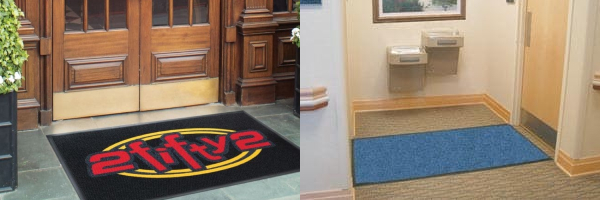
Entryway Runners
Entryway runners from Mats Inc. — designed to extend floor protection from the doorway through the path traffic actually takes into the interior. The four options below cover the range from light-traffic side entries to heavy-traffic main entrances, with one option built around decorative pattern integration. Needle Rib Matting handles light-traffic entries with ribbed scraping. Wonder-Pro Olefin works at medium-traffic entries with olefin fiber dirt-trapping. Cross-Over Matting handles high-traffic main entrances with multi-zone construction. Chevron Matting brings decorative pattern to entries where the runner is part of the visual presentation. Each one fits a different runner placement scenario. The section below covers how to pick between them.
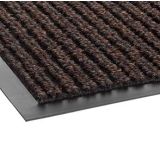 Needle Rib Matting
Starting at $55.00
Needle Rib Matting is a low-profile, linear-ribbed entrance mat built for lighter-traffic doors — side entrances, small storefronts, boutiques, and interior thresholds that see foot traffic but not a flood of it. The close ribbed surface wipes moisture off shoes and holds it on the mat, so a smaller entrance...
Needle Rib Matting is a low-profile, linear-ribbed entrance mat built for lighter-traffic doors — side entrances, small storefronts, boutiques, and...
View Details
View Details
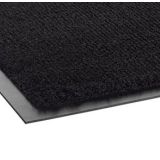 Wonder-Pro Olefin Matting
Starting at $55.00
Wonder Pro Matting is a plush, cut-pile olefin entrance mat made to soak up water and fine dust at the door, in a deep range of colors. Where some entrance mats scrape coarse grit, this one is built to wipe shoes clean and hold moisture and fine dirt — pulling...
Wonder Pro Matting is a plush, cut-pile olefin entrance mat made to soak up water and fine dust at the...
View Details
View Details
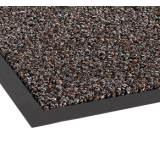 Cross-Over Matting
Starting at $46.00
Cross-Over Matting is a loop-pile entrance mat that scrapes debris and moisture off shoes at the door while starting to dry them — the middle step in a layered entrance setup, between the coarse mat outside and the absorbent mat inside. The looped olefin surface is abrasive enough to clean...
Cross-Over Matting is a loop-pile entrance mat that scrapes debris and moisture off shoes at the door while starting to...
View Details
View Details
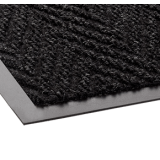 Chevron Matting$42.00Chevron Matting is an indoor entrance mat that catches grit and pulls moisture off shoes a few steps inside the door, before either reaches your floor. Its V-pattern surface works traffic coming from any direction, and a crush-resistant face keeps it doing that job for years instead of matting down
...
Chevron Matting is an indoor entrance mat that catches grit and pulls moisture off shoes a few steps inside the...
View Details
View Details
What a Runner Does That a Standard Mat Doesn't
A standard entrance mat stops dirt and moisture at a single point — the doorway itself. A runner extends that work along the path traffic actually takes after entering. The difference matters because a single mat at the door catches the first few footsteps; the rest of the dirt and moisture rides shoes deeper into the building.
ISSA research shows it takes six to eight footsteps to wipe a shoe clean — roughly 15 feet of mat from the door inward. A 3-by-5 mat at the threshold catches maybe four steps.
A runner extending into the foyer, lobby, or hallway catches the rest. As the extended-coverage format in the indoor mats and runners lineup, it keeps interior flooring cleaner across the day and reduces the maintenance burden in spaces that see steady inbound traffic. The four constructions in the grid above are sized and built for that extended-coverage role.
The Failure Mode at Runner Placements
The most common failure at runner placements is undersizing or under-spec'ing for the actual traffic volume. A runner sized for the doorway width but too short for the walk-off path lets traffic exit the runner still carrying dirt and moisture. A runner spec'd for light-traffic appearance retention but placed at a high-traffic main entrance crushes flat within months and starts presenting a worn, degraded path through the most-seen part of the interior.
The downstream consequences compound: accelerated wear on the flooring underneath where the runner has failed, slip-and-fall risk that NFSI tracks at wet or worn-mat transitions, increased maintenance burden from a runner that needs constant attention, and a deteriorating first impression for everyone walking the path. Picking the right traffic tier and the right length at the start is what avoids the cycle.
How the Four Options Compare
Each option in the grid handles a different runner placement scenario. Picking between them comes down to traffic volume and what role the runner plays visually.
Needle Rib Matting uses a ribbed surface construction to scrape dirt from shoes as traffic moves across the runner. Slip-resistant surface and resilient fibers make it a solid pick for light-traffic entries — boutiques, small offices, side entrances, residential-feel commercial spaces, and any entry path where traffic is steady but not heavy. The ribbed texture handles the scraping work while keeping the runner appearance consistent across daily use. Strongest fit when the runner needs to do reliable scraping work without being asked to handle main-entrance traffic volumes.
Wonder-Pro Olefin Matting uses resilient olefin fibers built for dirt and moisture trapping at medium-traffic entries. The olefin construction holds up across daily volumes that would crush a residential-grade runner, while the dense face traps incoming dirt and absorbs moisture before it travels deeper into the interior. Right pick for professional offices, mid-sized commercial entries, healthcare facility secondary entrances, and any runner placement where traffic is consistent but doesn't hit the volumes of a major commercial main entrance. Versatile across a wide range of medium-traffic interior layouts.
Cross-Over Matting is the high-traffic option in the grid — a multi-zone construction designed for main entrances, busy commercial entries, retail storefronts with continuous inbound traffic, and any runner placement where the path is taking the highest daily volume the building sees. The multi-zone design handles dirt-trapping and moisture absorption across different sections of the runner, so the construction continues working as it loads up across a heavy traffic day. Built for durability where lighter constructions would fail, with the aesthetic refinement to fit professional commercial spaces.
Chevron Matting takes the high-traffic capability and adds decorative pattern. The chevron design promotes multi-directional brushing — shoes scrape against the pattern from any approach angle, which improves dirt removal compared to single-direction ribbing. 100% polypropylene needle-punch fibers retain moisture and channel dirt away from the walking surface; durable PVC backing holds the runner planted under continuous traffic; vivid non-fading colors keep the visual presentation consistent over time.
Custom sizes are available, which matters for runner placements with non-standard length requirements. Right pick when the runner is part of the visual presentation of the space — hospitality entries, retail storefronts where pattern reinforces brand, architectural entry paths where the runner needs to do the work and look intentional doing it.
Three Things to Check Before You Pick
First, traffic tier. Runners spec'd below the actual traffic volume fail fast, which is the single most common buyer mistake at runner placements. Match the construction to what the entry is actually doing — Needle Rib for light, Wonder-Pro for medium, Cross-Over for high, Chevron for high-traffic with decorative emphasis.
Second, length. Most buyers undersize because they size to the doorway rather than the walk-off path. The right length is whatever covers the natural traffic path until shoes are clean — typically 10 to 15 feet from the door, longer in foyers and corridors with extended interior paths. Custom lengths are available across most of the grid for non-standard layouts.
Third, what role the runner plays visually. A back-of-house service entrance and a hospitality main entry have different visual standards even at the same traffic volume. Match the visual character of the runner to where it lives — Needle Rib and Wonder-Pro for utility-first placements, Cross-Over for refined commercial spaces, Chevron when pattern is part of the design intent.
Why Mats Inc.
The four runners in the grid above are what's stayed on the floor across decades of watching what holds up at extended-coverage placements. Constructions that didn't survive the daily traffic cycle retired from the catalog. The ones still here are the ones we'd put down at our own front door and run all the way to the lobby.
The part that matters most for runner specifications is matching the traffic tier and the length to what the entry is actually doing — get that right at the start and the runner does its job for years. Spec consultation available if you want a second opinion before committing to a length.
Frequently Asked Questions
How do I figure out which traffic tier my entry actually fits?
Answered by Dustin Thompson, Owner & CEO
Count the inbound foot traffic across a representative day, not a slow one. Light-traffic entries see scattered traffic across the day — boutiques, side entrances, small offices, residential-feel spaces — and Needle Rib Matting handles that volume well.
Medium-traffic entries see steady inbound traffic across business hours but not continuous flow — professional offices, mid-sized commercial entries, healthcare secondary entrances — and Wonder-Pro Olefin is built for that range.
High-traffic entries see continuous inbound traffic across peak hours — main entrances at busy commercial buildings, retail storefronts, hospitality entries — and that's where Cross-Over and Chevron belong. If you can't tell which tier fits, send us a description of the entry and we'll spec it.
How does pattern affect the visual integration of a runner in a space?
Answered by Jinna Hopson, Vice President of Marketing
Pattern changes how visible the runner is in the space and how it integrates with the surrounding flooring. A flat or ribbed runner reads as a functional element — present, useful, but not visually claiming the space. A patterned runner like Chevron reads as part of the design — the pattern brings visual interest, reinforces a sense of intentional space planning, and can complement architectural details in the surrounding floor and wall finishes.
For hospitality entries, retail storefronts where presentation is part of the customer experience, and architectural entry paths where the runner is part of the visual journey, pattern adds something a flat construction can't.
For utility-first placements where the runner just needs to do the work without drawing attention, a flat or ribbed face is usually the right call. Color choice matters as much as pattern — we can pull samples to test a specific space if needed.
How long should an entryway runner be?
Answered by Dustin Thompson, Owner & CEO
The runner should cover the path traffic takes until shoes are clean — typically 10 to 15 feet from the doorway, sometimes longer in foyers, corridors, and extended interior paths. ISSA's six-to-eight-footstep rule is the practical measurement: count the steps from the door to where you want clean shoes, multiply by an average two-foot stride, and that's the minimum runner length.
Most undersized runners fail because they're sized for the doorway rather than the walk-off path. For non-standard lengths — long corridors, irregular foyer shapes, recessed entries — custom sizing is available across most constructions in the grid. Send us the dimensions and we'll confirm.
Can I get a runner in a custom size or color to match my space?
Answered by Jinna Hopson, Vice President of Marketing
Yes, with options across the grid. Chevron Matting offers custom sizes and a range of color choices, which is often the right pick when the runner is part of the visual design and needs to coordinate with surrounding finishes. Cross-Over Matting and Wonder-Pro Olefin support custom rectangular sizing within standard manufacturing tolerances. Needle Rib Matting is available in standard sizes with multiple color options for the ribbed face.
For irregular shapes — angled entries, curved corridors, recessed runner placements — send us the dimensions and design intent and we'll confirm what's manufacturable. Custom orders typically take two to four weeks depending on complexity and the construction.
How does a runner placement affect the flooring underneath over time?
Answered by Dustin Thompson, Owner & CEO
A properly spec'd runner protects the flooring underneath by keeping moisture and dirt off the surface. A poorly spec'd runner — undersized, wrong traffic tier, or never lifted for cleaning — can actually accelerate wear on the floor below.
Moisture trapped between the runner backing and the flooring breaks down both surfaces over time. Dirt that accumulates under the runner abrades the floor finish every time the runner shifts under traffic.
The fix is straightforward: lift the runner regularly so the floor underneath can dry and be cleaned, choose a backing rated for the floor type (PVC and rubber backings work on most hard surfaces; some delicate finishes need specific backing types), and spec the right traffic tier so the runner doesn't degrade and start working against the floor. Done right, the flooring under a runner stays in better shape than the flooring next to it.
For multi-location buildings, should I use the same runner across all entries?
Answered by Jinna Hopson, Vice President of Marketing
Usually a mixed approach works better than picking one runner for every entry. Main customer-facing entries at every location benefit from visual consistency — the same construction, color, and pattern across all main entrances creates an immediate brand-experience signal across the portfolio.
Service entries, back-of-house entries, and secondary entries can use a different construction matched to their actual traffic volume rather than the visual standard of the main entry. For a multi-location program, the most common pattern is one premium runner (Chevron or Cross-Over) at every customer-facing main entry and one workhorse runner (Wonder-Pro or Needle Rib) at the secondary entries — that gets you visual brand consistency where it matters and traffic-appropriate spec everywhere else. We can help scope a multi-location runner program around your specific portfolio.
By Dustin Thompson, Owner & CEO, Mats Inc.