




More Information
| Manufacturer | Dimex |
|---|
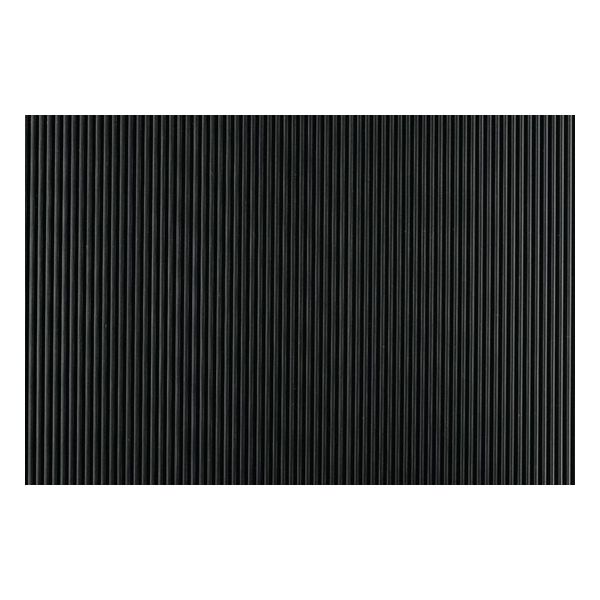
Corrugated Vinyl Switchboard Matting (ASTM)
Product Number:
#0213V
$1,202.00

Have a question? We're here to help!
Description
This is ASTM D178 Type II switchboard matting in a corrugated finish — a non-conductive vinyl barrier for people working at or near energized electrical equipment. It comes in Class 1, Class 2, and Class 3, each rated for a different working voltage, and every roll is proof tested at its class voltage across the entire surface.
What Non-Conductive Matting Does Before a Routine Job Turns Into an Incident
The mechanism is simple. Electricity needs a complete circuit, and a person standing on a bare floor in front of a live panel is half of one. Insulating matting sits between the worker and the floor so current has nowhere to go. Contact can still happen; the circuit just can't close.
What's less obvious is when that matters most. Serious electrical incidents rarely happen on the unfamiliar job where everyone is careful. They happen on the routine one — the panel somebody has opened four hundred times, on an afternoon when they're thinking about something else and skip a step they've never skipped before.
That's the argument for insulated matting as permanent infrastructure rather than task equipment. It doesn't depend on anyone remembering it. It's already under their feet on the day attention slips, which is the day it earns its keep.
Most facilities also run mixed voltages. A distribution board, a transformer, and a bench aren't the same electrical environment, and matting rated for one isn't automatically right for another. That's why this product is sold by class rather than as a single item — the mat has to match the equipment, not the building.
Why Type II Vinyl, and Why the Class Range Matters Here
Type II designates the compound. This is a vinyl formulation built for electrical insulation, and it also meets fire resistance standards — a meaningful property in electrical rooms, where the equipment being protected against is itself an ignition source.
Vinyl brings some practical advantages in this application. It holds up against the oils, greases, and chemicals that end up on shop and plant floors, wipes down easily so contaminants don't accumulate in the corrugations, and stays dimensionally stable over long runs so a roll lies flat instead of fighting you.
The class range is the real differentiator on this product. Class 1 covers lower-voltage work at 7,500 volts maximum recommended use. Class 2 steps up to 17,000. Class 3 reaches 26,500. One product line covers a wide span of equipment, so a facility with varied voltages can standardize on one type and vary only the class.
Thickness rises with class, because insulating capacity comes from material. Class 1 is 3/16 inch, Class 2 is 1/4 inch, Class 3 is 3/8 inch. That relationship is useful in the field — thickness is a fast visual check that the roll in front of you is the class you ordered.
Testing is what makes any of it meaningful. Every roll is proof tested at its class voltage over the entire surface rather than sampled. A barrier is only as good as its weakest square inch, and spot-checking a 75-foot roll would leave most of it unverified. Rolls are supplied as single pieces, so no splice sits in the middle of the protection.
The corrugated surface runs as ridges across the mat, adding traction where people stand for long stretches and where floors pick up oil or moisture. In an electrical room, a mat that doubles as a slip hazard would be solving one problem by creating another.
Where It Belongs, and Where It Doesn't
Distribution boards, switchgear, sub-stations, transformers, generators, and electrical workbenches. Anywhere someone works at or near energized equipment and the floor under them needs to stop conducting. It sits with the rest of our electrical and switchboard matting, which covers the other type and class combinations.
Coverage is where specifications usually fall short. The mat needs to span the full area a worker occupies — enough that they can shift stance, step back, or reach sideways without a foot landing on bare floor. A mat narrower than the panel is a mat somebody steps off, and they won't notice when they do.
What it is not: an ESD or anti-static mat. Those are conductive by design, built to drain static charge to ground and protect sensitive electronics. This does the opposite — it blocks the path to ground entirely. The two are not interchangeable in either direction, and treating this one as an ESD product would remove the protection it exists to provide.
It's also not an anti-fatigue mat or general floor protection. The corrugated surface gives traction, but comfort isn't what you're buying, and putting insulating matting where it isn't needed can leave people assuming an area is protected when the mat was placed for another reason entirely.
And it is not primary protection. De-energizing, verification, protective equipment, and trained procedure come first. This is the layer underneath all of that — the one still working when something else doesn't.
Three Things to Check Before You Spec It
First, inventory your equipment before you pick a class. Walk the rooms and write down the actual working voltage at each panel, bench, and transformer. Facilities that buy one class for everything usually end up over-specified in some rooms and under-specified in others. With three classes available, you can match each area properly rather than averaging across the building.
Second, think about thickness in the space it's going. Class 3 material at 3/8 inch is noticeably thicker than Class 1 at 3/16, and that shows up in door clearance, in the transition at the mat edge, and in how much the roll weighs when your crew moves it. Check the swing of any door opening over the mat before the order goes in, not after it lands.
Third, set the inspection routine on day one. Dielectric failure is invisible — a cut, a puncture, metal debris pressed into the surface, or chemical contamination can compromise the barrier while the mat looks fine. Decide now who checks it, how often, and what triggers replacement. A mat people trust that no longer performs is worse than no mat, because bare floor at least doesn't create confidence.
Why Mats Inc.
Since 1964 we've built a matting line broad enough that we don't have to push you toward whatever's on the shelf. On electrical work that matters more than usual, because the right answer depends entirely on your voltage and your equipment. We'll ask what you're working on before we quote, and if the honest answer is a different class or a different type than this one, that's what we'll tell you. Getting a switchboard mat wrong isn't a returns problem.
| Product Type | Insulating (non-conductive) switchboard matting |
| Standard | ANSI/ASTM D178, Type II |
| Material | High-quality vinyl compound; meets fire resistance standards |
| Surface | Corrugated |
| Color | Black |
| Classes Available | Class 1, Class 2, Class 3 |
| Testing | Every roll proof tested at its class voltage over the entire surface |
| Roll Supply | Full rolls only, single piece |
| Recommended For | Distribution boards, switchgear, sub-stations, transformers, generators, electrical workbenches |
| Static Control | None — this is an insulator, not an ESD or anti-static product |
| Warranty | 1-year limited (Mats Inc.) |
Sizes by Class
| Class | Thickness | Widths | Roll Length | Roll Weight |
|---|---|---|---|---|
| Class 1 | 3/16 inch | 36 inch | 75 ft. | 295 lb. |
| Class 2 | 1/4 inch | 24, 36, and 48 inch | 75 ft. | Confirm by width |
| Class 3 | 3/8 inch | 36 inch | 75 ft. | Confirm |
Frequently Asked Questions
What's the difference between Type I and Type II, and does vinyl insulate as well as rubber?
Type designates the compound the matting is manufactured from. Type I is a rubber compound; Type II, this product, is a vinyl compound. Both are insulating matting made to the same ASTM D178 standard, and both are proof tested to the same class voltages. Vinyl doesn't insulate less — insulating performance is defined by class, and a Type II Class 2 mat is tested at the same voltage as a Type I Class 2 mat.
Where they differ is in secondary properties. This vinyl formulation also meets fire resistance standards and stands up well to oils, greases, and chemicals. In a plant or shop where the floor around the panel isn't pristine, that resistance matters over the life of the mat. Choose type on those environmental factors, and choose class on voltage. Class is the safety decision; type is the fit decision. — Dustin Thompson, Owner & CEO, Mats Inc.
Which class do I need?
Start from the actual working voltage at the equipment — measured or taken off the equipment documentation, not estimated. Class 1 carries a recommended maximum use voltage of 7,500 volts, Class 2 goes to 17,000, and Class 3 reaches 26,500. Match the class to the voltage with room to spare rather than landing right on the limit.
Notice that each class is proof tested well above its recommended use voltage — Class 2, for example, is proof tested at 20,000 volts but rated for use at 17,000. That gap is deliberate margin, and it's there for real-world conditions, not as a reserve you're meant to spend. Treat the recommended maximum use voltage as the ceiling and the proof test figure as evidence the material has margin behind it. If your equipment sits near a class boundary, move up. — Dustin Thompson, Owner & CEO, Mats Inc.
Does it need to be grounded, bonded, or fastened to the floor?
No grounding, and this is important enough to be blunt about. Grounding an insulating mat defeats its entire purpose — the whole point is that there's no path from the worker through the floor to ground. If anyone on your team is used to installing ESD matting, they may reach for a ground cord out of habit. On this product that habit is dangerous.
On fastening: it's designed to lie loose so it can be lifted, inspected underneath, repositioned, and replaced without demolition. Adhesives and mechanical fasteners can also puncture or contaminate the barrier. Let it lie flat and relax after unrolling, trim it clean so edges sit tight, and if it's slipping in a busy area, ask us before adding anything to hold it down. — Dustin Thompson, Owner & CEO, Mats Inc.
What sizes are available, and how do I work out how much to order?
Class 2 is the most flexible — 24, 36, and 48 inch widths in 75-foot rolls. Class 1 and Class 3 come in 36 inch width, also in 75-foot rolls. It's sold in full rolls, and one roll typically covers several pieces of equipment once it's cut to length.
To estimate, work equipment by equipment rather than room by room. Measure the width of each panel or bench, add margin on both sides so a worker never runs out of mat when they shift or step back, and total those lengths. Choose width based on how far people stand back while working — for anything they need to open, reach into, and step away from, the wider option is usually the right call. Send us your equipment list with voltages and we'll size both the class and the quantity with you. — Jinna Hopson, Vice President of Marketing, Mats Inc.
What's it like to install and live with day to day?
It's black with a corrugated ridged surface — plainly industrial, which is exactly right for an electrical room. Plan for the weight: material runs from 1.25 pounds per square foot at Class 1 up to 2.51 at Class 3, so a full roll of the thicker material is a two-person job with equipment. Think through where it lands on the dock and how it gets to the room before it arrives.
Let it lie flat for a while after unrolling so it relaxes and stops holding the curl. Cut with a sharp blade against a straightedge for clean edges that sit tight and don't catch a boot. Day to day it's easy — the vinyl surface wipes down, and it resists the oils and greases that collect on plant floors, so the corrugations don't turn into a trap for grime. — Jinna Hopson, Vice President of Marketing, Mats Inc.
Can I just buy one class and use it everywhere?
You can, and plenty of facilities do, but it's worth understanding the trade before you commit. Buying the highest class for the whole building means you're covered everywhere, but you're also putting 3/8 inch material in rooms that never needed it — thicker underfoot, heavier to handle, and more of a step at the edge in low-traffic areas.
Buying a single lower class is the mistake that actually matters. If one transformer room runs above what that class is rated for, the mat there isn't protecting anyone and nothing about it looks different from the rolls that are. Standardizing on one type across the facility is genuinely sensible — it keeps purchasing simple and the material consistent. Varying the class by room is what keeps it correct. Walk the equipment once, write down the voltages, and you'll only ever have to do it properly one time. — Jinna Hopson, Vice President of Marketing, Mats Inc.
Written by Dustin Thompson, Owner & CEO, Mats Inc.
Ordering Info
| DIELECTRIC | PROOF | RECOMMENDED | ||
| TYPE | CLASS | TEST VOLTAGE | TESTED | MAX. USE VOLTAGE |
| II | 1 | 20,000 VAC | 10,000 VAC | 7,500 VAC |
| II | 2 | 30,000 VAC | 20,000 VAC | 17,000 VAC |
| II | 3 | 40,000 VAC | 30,000 VAC | 26,500 VAC |
| II | 4 | 50,000 VAC | 40,000 VAC | 36,000 VAC |
| THICKNESS | CLASS | WIDTH | LENGTH | WT/SF |
| 3/16" | 1 | 36" | 75 LF | 1.25# |
| 1/4" | 2 | 24" | 75 LF | 1.67# |
| 1/4" | 2 | 36" | 75 LF | 1.67# |
| 1/4" | 2 | 48" | 75 LF | 1.67# |
| 3/8" | 3 | 36" | 75 LF | 2.51# |
| 1/2" | 4 | 36" | 30 LF | 3.56# |
Reviews
Write Your Own Review
Related Products
Heritage Personalized Coir Door Mat
#775 Epoxy Flooring Adhesive
#560 Rubber Flooring Adhesive
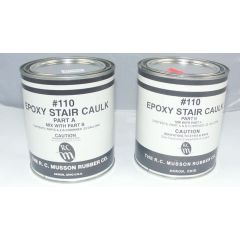
#110 Epoxy Nose Caulk
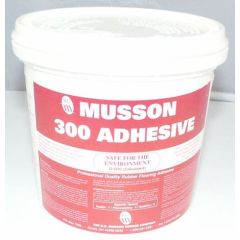
#300 Water Based Contact Adhesive
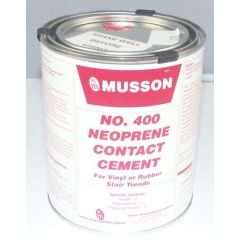
#400 Neoprene Contact Adhesive
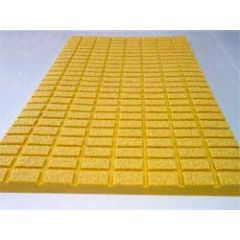
Rotary Table & Rig Floor Mats
Fore-Runner Mat
Safety Track Resilient Medium Non-Skid Tape
3M Vinyl Loop Wet Area Matting