




More Information
| Manufacturer | Custom Mat |
|---|
$145.00

Have a question? We're here to help!
Description
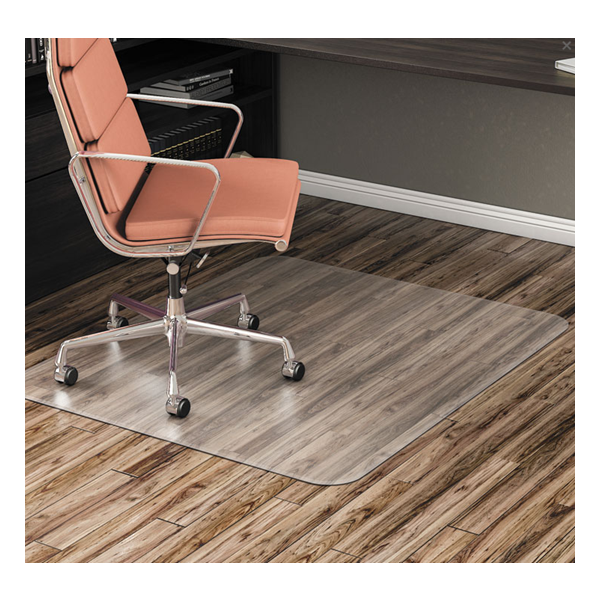
Hardwood is a finish, not just a floor. It was chosen, paid for, and sealed, and a rolling chair is the fastest way to undo all three. Chair Mats for Wood Floors are clear 0.125" vinyl mats made to sit on a hard surface and take caster wear so the finish underneath does not.
They are textured on both faces, and that is the detail that separates them from every other mat in this range.
What a Hard-Floor Chair Mat Does Before the Finish Wears Through
A sealed wood floor is protected by a coating only a few thousandths of an inch thick. Everything below it — the stain, the grain, the wood — depends on that layer staying whole.
Chair casters work against it constantly. A seated adult's weight arrives through five small wheels, which concentrates it to roughly a hundred times the pressure of a footstep, and it lands on the same square yard hundreds of times a day.
The visible result is a dulled, hazed zone along the paths the chair uses while the rest of the room still reflects light. It reads as a worn patch, and it will not clean off, because nothing is dirty. The coating is simply gone there.
Once the finish is breached, moisture reaches the wood and the repair stops being cosmetic. At that point you are refinishing a room rather than replacing a mat.
Why Both Faces Are Textured, and Why That Is the Point
Most people assume a hard-floor mat is a plain smooth sheet. This one is not. It carries a slight texture on both sides, and each side is doing a different job.
The texture on the top face reduces scratching. A caster rolling across a perfectly slick surface skates and drags whatever grit it has picked up; a lightly textured face gives the wheel something to bite so it rolls instead.
The texture on the underside is what holds the mat in position. There are no cleats or studs here — nothing that would press into a wood finish — so the grip comes from surface texture against a solid floor rather than from anything digging in.
That combination is why this works on any hard surface rather than one specific material. It does not need pile to anchor into and it does not need a particular finish to stick to.
The mat is 0.125" clear vinyl throughout, and like the other clear grades it is GreenGuard certified for low volatile organic compound emissions — the kind of line that gets asked for on school, healthcare, and green building specifications.
Which Floors It Suits, and Which It Does Not
It works on any hard surface. Hardwood is the obvious one, but tile, laminate, sealed concrete, and vinyl flooring all qualify. It suits executive offices, conference rooms, clinic and dental workstations, reception desks, and home offices where the hard floor is the finished look rather than something waiting to be covered.
It is not a carpet mat. Surface texture is enough to hold position against something solid; it is not enough to hold against pile. On carpet the mat drifts a little further each time somebody pushes back from the desk. Carpeted workstations need the cleated construction in the desk chair mats range.
It is also not a floor covering. It is sized to a chair's working area rather than to a room, and it is not intended as a walking path.
And it will not undo scratches that are already there. It stops the next several years of caster wear, which is a good reason to put one down before a refinish rather than after.
Three Things to Check Before You Spec It
First, confirm the floor is genuinely hard across the chair's whole range. Offices often have a wood or concrete field with a carpeted inset, or a rug that catches one corner of the desk. If a caster crosses onto soft flooring, this is the wrong construction for that workstation.
Second, work out the coverage before you pick a size. Sit down and roll the way you actually work, then note the furthest point a caster reaches in each direction. Standard sizes run from 36" x 48" to 60" x 96", and a custom shape can be cut to a drawing when a rectangle leaves a gap.
Third, plan for grit rather than assuming it away. A hard-floor mat protects the finish above it, but anything that works underneath gets ground between mat and floor every time the chair moves. Lift and sweep beneath it on a schedule, and keep decent matting at the building entrance so less grit reaches the desk at all.
Why Mats Inc.
Studded and non-studded mats are almost impossible to tell apart in a photograph, which is how the wrong one ends up on a hardwood floor. We keep both constructions and ask what the floor is before an order goes out, because a mat that cleats into a finish is worse than no mat at all.
Hard-floor offices have only become more common as buildings pull carpet out, and Mats Inc. has been supplying commercial flooring and matting since 1964. Cutting to a custom shape is routine, so a corner return or a bench of desks along one wall gets covered properly rather than approximately.
| Specification | Detail |
|---|---|
| Material | Clear vinyl |
| Thickness | 0.125" |
| Surface texture | Slight texture on both faces — top reduces scratching, underside helps hold position |
| Floor type | Any hard surface |
| Standard sizes | 36" x 48", 48" x 48", 48" x 60", 48" x 72", 48" x 96", 60" x 60", 60" x 72", 60" x 96" |
| Custom shapes | Cut to a supplied drawing with dimensions |
| Edge | Beveled edge available |
| Certification | GreenGuard certified for low VOC emissions |
| Warranty | 1-year limited (Mats Inc.) |
Frequently Asked Questions
What makes this a hard-floor mat rather than a general-purpose one?
Answered by Dustin Thompson, Owner & CEO
There are no cleats on the underside. Carpet mats are built with a cleat system that presses into pile to hold position, and on hardwood every one of those cleats becomes a point load sitting on your finish.
This mat holds position a different way: a slight texture on the underside that grips against a solid surface without pressing into it. That is the whole distinction, and it is the one that decides which mat belongs on which floor.
Is the top surface smooth or textured?
Answered by Dustin Thompson, Owner & CEO
Lightly textured, and deliberately so. A perfectly slick top face lets a caster skate rather than roll, and a skating wheel drags whatever grit it is carrying across the surface. The texture gives the wheel something to grip.
The practical effect is less scratching on the mat itself, which matters more than it sounds. On a clear mat over a floor you want visible, a scratched and hazed surface is the thing people notice, not the floor underneath.
Will it work on tile or polished concrete, or only wood?
Answered by Dustin Thompson, Owner & CEO
Any hard surface. Because it holds through surface texture rather than through cleats or adhesion, it is not tied to one flooring material — hardwood, tile, laminate, sealed concrete, and vinyl flooring all work.
The one thing to confirm is that the surface is hard across the chair's whole range. A wood floor with a rug catching one corner of the desk is a mixed surface, and that corner will behave like carpet no matter what the rest of the room is.
Do I need a custom shape, or will a standard size do?
Answered by Jinna Hopson, Vice President of Marketing
The standard range starts at 36" x 48" and runs up to 60" x 96", with several sizes in between. Choose by the chair's travel rather than by the desk, since sideways movement to a printer or credenza is what people forget to account for.
For an L-shaped desk, a corner return, or a workstation built around a column, a custom shape is cut to a drawing with your dimensions. A beveled edge is available too, which is worth having where the chair leaves the mat several times a day.
Does a clear mat look better than an opaque one on a wood floor?
Answered by Jinna Hopson, Vice President of Marketing
It depends entirely on the state of the floor. Over hardwood or polished concrete that still looks good, clear is the obvious answer — the grain and color stay visible and the mat reads as almost nothing.
Over a floor that has already been scratched, stained, or patched, clear works against you by framing the damage rather than hiding it. That is the case where an opaque black mat is the better call, and it is worth being honest with yourself about which situation you are actually in.
How does it arrive, and does it need time to settle?
Answered by Jinna Hopson, Vice President of Marketing
Chair mats ship rolled, so allow time for the mat to relax flat before you judge it or put a chair on it. Unrolling it in the room where it will live, somewhere reasonably warm, speeds that along.
Worth noting for anyone writing a specification: the clear grades carry GreenGuard certification for low VOC emissions, which is frequently a requirement on school, healthcare, and green building projects.
By Jinna Hopson, Vice President of Marketing, Mats Inc.
Reviews
Write Your Own Review
Related Products
Heritage Personalized Coir Door Mat
#775 Epoxy Flooring Adhesive
#560 Rubber Flooring Adhesive
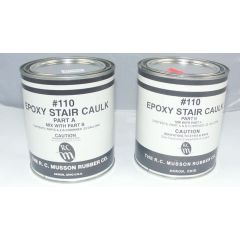
#110 Epoxy Nose Caulk
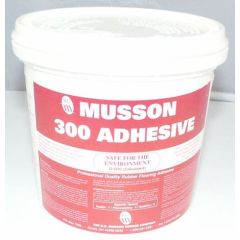
#300 Water Based Contact Adhesive
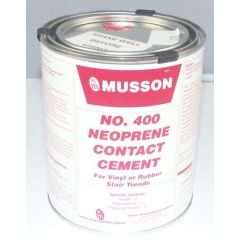
#400 Neoprene Contact Adhesive
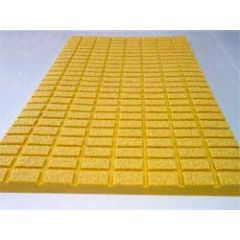
Rotary Table & Rig Floor Mats
Fore-Runner Mat
Safety Track Resilient Medium Non-Skid Tape
3M Vinyl Loop Wet Area Matting