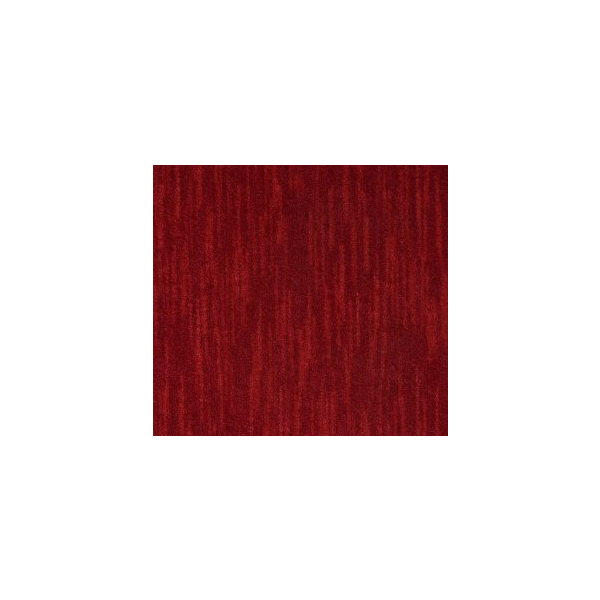
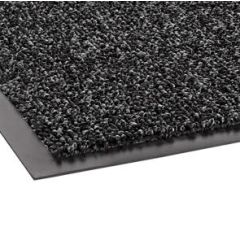
Kensington Carpet is the designer roll in our lineup: a tufted 30-ounce nylon carpet with a striated pattern drawn from the grain lines in stone and wood, in dark gray, charcoal black, navy blue, taupe, and red. It is an indoor product on a composite rubber backing, cut to length from a 6-foot-7-inch or 13-foot-2-inch roll. When a lobby or retail floor needs a commercial carpet roll that reads as interior design rather than matting, this is the one.
What Kensington Carpet Does Before the Lobby Stops Looking Finished
A lobby is specified for how it looks on opening day. The carpet that gets walked on afterward decides how long it keeps looking that way. Flat, single-color carpet shows every footpath, every coffee spill, and every dark drift of soil at the door, and a space that was designed with care starts reading tired within a season.
Kensington Carpet is built around appearance retention. The striated pattern is a field of fine, irregular lines in shifting tones of the same color, so soil that lands on it and the slight flattening in a walking lane both disappear into the pattern. The nylon fiber springs back from footfall in a way that softer fibers do not, and the tufted pile stays even across the run.
The stakes are the impression at the threshold. A hotel guest, a client, or a shopper forms an opinion of the building in the first few steps, and the floor is a large share of what they see. Carpet that still looks intended after two years of traffic is doing brand work. Carpet that looks worn is undoing it.
Why Tufted Space-Dyed Nylon, and Why This One
Most of our roll carpets are needlepunched polypropylene, a dense felt patterned on the surface. Kensington Carpet is a different construction. It is tufted: nylon yarn is stitched through a primary backing in rows, then bonded to a composite rubber backing. Tufting is how most commercial broadloom is made, and it is what gives Kensington its cut-pile hand and finished look.
The fiber is 100 percent PA6 nylon, space dyed. Space dyeing colors the yarn in short, shifting segments before it is tufted, which is what produces the striated pattern: no two inches of the roll repeat exactly, and the color reads as a blend of light and dark tones rather than a flat field. It is a design technique, but it is also why soil and traffic are hard to see on this carpet.
The pile is 30 ounces per square yard at 0.275 inch high, on a total height of 0.375 inch and a total weight of 70 ounces per square yard. That is a low overall profile with a relatively tall, soft pile, which is where the underfoot comfort the maker describes comes from. The rubber backing holds the roll to the floor and keeps moisture in the pile rather than under it.
For the spec file, Kensington Carpet carries an ASTM E648 radiant panel rating of Class 1, the flooring flammability class most institutional and corridor specifications call for. It also passes ASTM E662 smoke density and ASTM D2859 surface flammability, passes ASTM D7570 for dimensional stability, and is Green Label Plus certified for indoor air quality. It can contribute toward LEED-NC MR Credit 4 and IEQ Credits 4.1, 4.3, and 5.
Where It Belongs and What It Is Not
The maker's suggested uses read like a hospitality and corporate list: office environments, airports, conference rooms, lobbies, libraries, retail and department stores, resorts, restaurant entryways, and spas. Its own photography shows the product in a shoe boutique, an elevator lobby, a lounge, and a poolside corridor. It belongs where the carpet is part of the room, not a mat placed in it.
It also belongs deeper into the building than a walk-off mat. The maker rates it for the second and third zones of an entrance system, meaning the vestibule interior and the lobby or corridor beyond, rather than the exposed first zone at the door itself. Put a scraper or a heavier walk-off roll at the threshold and let Kensington carry the finished space behind it.
Kensington Carpet is rated for indoor use only. Nylon space-dyed yarn is not the fiber for a sun-exposed vestibule or a covered exterior walkway, and the cut sheet does not extend it there. Keep it inside the outer door.
What it is not: a scraper, a wet-weather walk-off for the first step inside, or a runner for carts and rolling loads. Grit and standing water should be stopped before they reach it. Where the same look is wanted on a floor that will be lifted and replaced in sections, the maker also produces the pattern as a 19.69-inch carpet tile and as custom logo matting.
Three Things to Check Before You Spec It
First, what sits ahead of it at the door? Kensington Carpet is a second- and third-zone product. It wants a scraper or a dense walk-off roll at the threshold to take the grit and the wet, so the striated pile gets clean shoes and does its appearance work. If the entry has no first-zone mat, add one before you specify this carpet.
Second, plan the run for pattern, not just length. Because the striae run the length of the roll, decide which direction the lines should read in the room before the cut. A 13-foot-2-inch width covers most lobbies without a center seam; where a seam is unavoidable, a striated pattern hides it far better than a solid, but the two pieces should run the same direction.
Third, choose the color for the room, then check it in the room. Dark gray and charcoal black suit cool, modern interiors and hide the most soil. Taupe warms up wood and stone. Navy blue and red carry a stronger design or brand statement. Space-dyed yarn shifts under different lighting, so ask us for a swatch and look at it under the actual fixtures.
Why Mats Inc.
Kensington Carpet is the roll our customers buy for the way a space looks, so the conversation is about pattern direction, seam placement, and what goes at the door ahead of it. Send the room dimensions and door location; we will tell you whether one 13-foot width clears the space and set up a first-zone mat in front so the carpet keeps the look you chose it for. Rolls are cut to length, and the matching tile and logo versions are available on request.
| Specifications |
|---|
| Construction | Tufted |
| Surface | Designer striae (striated) pattern |
| Fiber | 100% PA6 space-dyed nylon |
| Backing (roll goods) | Composite rubber |
| Pile height | 0.275" (±0.5 mm) |
| Total height | 0.375" (±7.5%) |
| Pile weight | 30 oz/sq yd (±7.5%) |
| Total weight | 70 oz/sq yd (±7.5%) |
| Roll width | 6' 7" or 13' 2" (±2%) |
| Lengths | 10' to 100' in 10' steps; custom lengths available |
| Also available as | Carpet tile (19.69" x 19.69") and custom logo matting, on request |
| Use | Indoor only; entrance zones 2 and 3 (interior vestibule, lobby, corridor) |
| Colors | Dark Gray, Charcoal Black, Navy Blue, Taupe, Red |
| Flammability | Radiant panel (ASTM E648): Class 1; Smoke density (ASTM E662): Pass; Surface flammability (FF 1-70 / ASTM D2859): Pass |
| Dimensional stability | ASTM D7570: Pass |
| Indoor air quality | Green Label Plus certified |
| LEED-NC | May contribute to MR Credit 4; IEQ Credits 4.1, 4.3, 5 |
| Maintenance | Vacuum with a motor-driven brush and beater bar: weekly in low-traffic areas, daily or twice daily in high-traffic areas |
| Warranty | 1-year limited (Mats Inc.) |
Frequently Asked Questions
How is a tufted nylon carpet different from the needlepunched rolls?
Answered by Dustin Thompson, Owner & CEO
A needlepunched carpet is a felt: loose polypropylene fibers locked together by needles and patterned on top. Kensington Carpet is tufted, which means nylon yarn is stitched through a backing in rows and then bonded to a composite rubber base. Tufting gives a true cut pile with a soft hand and a finished, upholstered look.
Nylon also behaves differently underfoot. It springs back from compression better than polypropylene, so the pile stays even in the walking lane, and its 30-ounce weight sits on a low 0.375-inch overall profile. The trade-off is that nylon is an indoor fiber here; the needlepunched rolls take the door, and Kensington takes the room behind it.
How long will Kensington Carpet keep its look, and what ends it?
Answered by Dustin Thompson, Owner & CEO
The maker warrants the material against wear for five years of commercial use, defining wear as complete removal of the wear layer, pattern, and color. Because the striated, space-dyed pattern hides soil and lane flattening, this carpet tends to look acceptable well past the point where a solid would look tired, and a lobby that keeps grit off it at the door commonly reaches that mark still looking intended. Mats Inc. covers the product with a 1-year limited warranty.
What ends it early is grit that gets past the door. Sand works into a cut pile and abrades the yarn from inside, and the maker notes that about 15 percent of tracked-in soil is oil that binds that grit to the fiber. A first-zone scraper ahead of it and a beater-bar vacuum on schedule, daily in busy areas and weekly in quiet ones, are what protect the look.
Can it go in a vestibule or outdoors, and how is it installed?
Answered by Dustin Thompson, Owner & CEO
Indoors only, and preferably one step back from the door. The cut sheet rates Kensington Carpet for indoor use and for the second and third entrance zones, meaning the interior side of the vestibule, the lobby, and the corridors beyond. The first zone at the threshold, where the wet and the grit land, should be a scraper or a dense walk-off roll.
The maker requires professional installation to honor its own warranty, and for a carpet chosen for its look we agree. A glued-down run stays flat, keeps the pattern direction true, and lets a seam be placed and matched properly. Tell us the room and we will recommend the adhesive and the layout.
What widths and lengths does it come in, and how do seams work with a pattern?
Answered by Jinna Hopson, Vice President of Marketing
Rolls come 6 feet 7 inches wide and are cut in ten-foot steps from 10 to 100 feet; a 13-foot-2-inch width is available for lobbies and wide corridors so most rooms can be covered without a center seam. Custom lengths between the steps are routine.
Where a seam is unavoidable, the striated pattern is your friend. Its irregular lines break up the seam far better than a solid color would, provided both pieces run the same direction. Send us the room dimensions and door location and we will plan the layout so the lines read consistently across the space.
How does the striated pattern look in a real space?
Answered by Jinna Hopson, Vice President of Marketing
Warm and in motion. The maker describes the design as inspired by striae patterns found in nature, and that is how it reads: fine, shifting lines of lighter and darker tone within one color, like the grain in stone or wood. It gives a large floor energy without a repeating motif, so it works in a lounge, a boutique, or an elevator lobby without competing with the rest of the room.
Dark gray and charcoal black lean modern and corporate. Taupe is the warm neutral for hospitality and wood-heavy interiors. Navy blue and red are the statement colors, often used to carry a brand palette across a whole floor. Because space-dyed yarn changes character under different lighting, look at a swatch under your fixtures before you commit.
Can Kensington Carpet be matched to carpet tile or made into a logo mat?
Answered by Jinna Hopson, Vice President of Marketing
Yes to both. The maker produces the same striated pattern as a 19.69-inch carpet tile and as custom logo matting, so a building can run the roll in the lobby, tile in an office area that will be lifted and replaced in sections, and a logo mat at the elevator bank, all in one pattern and palette. Ask us for the tile or logo version when you order.
For a logo, the striated field is a flattering background: a solid-color mark set into the moving pattern reads as intentional rather than stamped on. Send your artwork through the proof request on this page and we will return a digital proof before anything is made.
By Jinna Hopson, Vice President of Marketing, Mats Inc.