




More Information
| Manufacturer | Dimex |
|---|

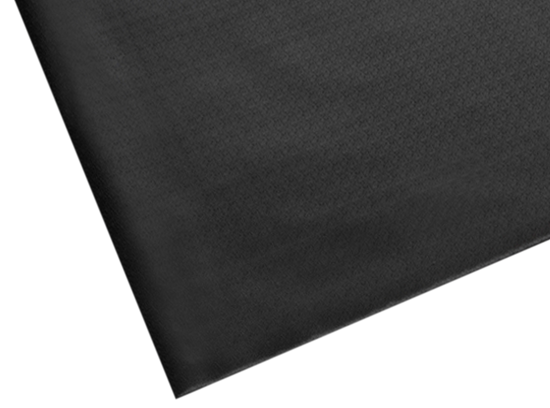
Smooth Vinyl Switchboard Matting (Mil Spec)
Product Number:
#0213S
$969.00

Have a question? We're here to help!
Description
This is smooth-surface vinyl switchboard matting built to MIL-DTL-15562G, Type II — a fire-retardant insulating runner for use in front of equipment and on workbenches. It's proof tested across its entire surface at 15,000 VAC with a recommended maximum use voltage of 3,000 VAC, and it comes in black, blue, or green at 1/8 inch thick.
What a Smooth Insulating Runner Does That a Textured Mat Can't
The insulating job is the same as any mat in this family. Current needs a complete circuit, and a worker standing on bare floor in front of live equipment is half of one. Put a non-conductive barrier underfoot and the circuit has nowhere to close.
What's different here is the surface, and it's a deliberate trade rather than a lesser version. Textured mats grip better. Smooth mats clean better, sit lower, and lie flat on a bench — and there are places where those matter more than traction does.
On a workbench, traction is irrelevant; nobody is standing on it. What matters is that the surface doesn't trap solder splash, metal filings, or flux residue in a pattern you can't get clean. A smooth face wipes down completely, which is why bench-top insulating matting is smooth almost everywhere you find it.
The thinness works the same way. At 1/8 inch this is the slimmest mat in the switchboard family, so it slides under a door swing, sits flat against a bench edge, and creates almost no step where somebody transitions onto it. In tight equipment rooms that's often the deciding factor.
The trade is real and worth stating plainly. On a floor that gets wet, oily, or greasy, a smooth surface offers no traction help. In those areas, a textured mat is the correct choice and this one isn't.
Why MIL-DTL-15562G Type II, and What Gets Tested
MIL-DTL-15562G is the military detail specification for insulating switchboard matting and sheet floor covering. It's approved for use by the Department of the Navy and available across all departments and agencies of the Department of Defense. It supersedes MIL-M-15562F, which still turns up on older drawings.
Type II within that specification means the smooth surface. It has no relationship to ASTM D178's Type II — same words, unrelated numbering systems, and both standards sit side by side in this catalog. Read which standard a drawing names before you read the type number.
The voltage figures are identical across all three MIL types, because the type describes surface and construction rather than rating. Dielectric test voltage is 30,000 VAC. Proof testing runs at 15,000 VAC over the entire surface of every roll, not sampled sections. Recommended maximum use voltage is 3,000 VAC.
That last number is the one that governs placement, and it's worth reading carefully. Military specification does not mean higher rated — commercial ASTM D178 Class 2 matting is cleared to 17,000 volts, well above this. The military standard applies a much wider margin between test and service, which is a different philosophy, not a better material.
Where this specification does go further is aging and chemical durability. The material meets additional property requirements for oxygen bomb aging, sulfuric acid exposure, and ultraviolet light exposure. Those test how the compound holds up over time and against conditions that degrade vinyl, which is exactly what matters on a mat that stays in place for years.
The surface is also fire-retardant, and each roll is certified to the specification. It's manufactured in black, blue, and green — the only mat in our switchboard line offering a color choice.
Where It Belongs, and Where It Doesn't
Electrical workbenches first. The smooth face cleans completely, the 1/8 inch profile sits flat without lifting tools or fixtures, and the insulation is there if something energized touches down. It also works as a portable runner in front of equipment where a mat needs to be rolled out, used, and moved. It sits with the rest of our electrical and switchboard matting, which covers the other types and the commercial standards.
The color options open up something the rest of the line can't do. Facilities commonly color-code by voltage class, by zone, or by department, and three colors in an identical specification lets you build that system without mixing products. Blue for one bench area, green for another, black everywhere else — same rating, same certification, immediate visual distinction.
The voltage boundary is 3,000 VAC. Control cabinets, benches, and low-voltage panels fit. Medium and high voltage switchgear do not, and the specification name doesn't change that.
Where it's the wrong choice: any floor that sees water, oil, or grease. Smooth vinyl gives no traction assistance, and putting it in a wet area trades an electrical hazard for a slip hazard. Diamond plate or corrugated belongs there instead.
What it is not: an ESD or anti-static mat. Those are conductive by design, built to drain static charge to ground and protect sensitive electronics — which matters here, because bench mats are exactly where people expect ESD function. This is an insulator. It blocks the path to ground, offers no static control, and must never be grounded.
And it is not primary protection. De-energizing, verification, protective equipment, and trained procedure come first. This is the layer beneath all of that.
Three Things to Check Before You Spec It
First, confirm 3,000 VAC covers your equipment. Find the actual working voltage rather than assuming, because the military designation suggests capability the rating doesn't support. If your equipment runs higher, you need a different product — and if a drawing names the military spec but the voltage exceeds 3,000, that's a conflict to raise with whoever wrote it.
Second, be honest about the floor. Smooth is right on a bench, in a dry equipment room, or as a portable runner. It is wrong anywhere water, oil, or coolant reaches the floor. Walk the space and look at what's actually on the ground before you choose surface over texture.
Third, decide whether color earns its place. Black is the default and disappears into most spaces. Blue and green let you build a visual system — marking voltage classes, separating zones, or distinguishing departments. If you're outfitting more than one area, deciding the color scheme up front costs nothing and saves relabeling later.
Why Mats Inc.
Since 1964 we've noticed that the smooth version gets overlooked because it looks like the plain option. It isn't — it's the one that belongs on a bench, where texture would trap debris and thickness would get in the way. We'll ask whether the mat is going on a bench or a floor, and whether that floor stays dry, because those two answers decide this more reliably than any spec sheet does.
| Product Type | Insulating (non-conductive) switchboard matting and sheet floor covering |
| Standard | MIL-DTL-15562G (formerly MIL-M-15562F), Type II |
| Approvals | Approved for use by the Department of the Navy; available to all Department of Defense departments and agencies |
| Dielectric Test Voltage | 30,000 VAC |
| Proof Test | 15,000 VAC, tested over the entire surface |
| Recommended Max Use Voltage | 3,000 VAC |
| Additional Testing | Oxygen bomb aging, sulfuric acid, ultraviolet light exposure |
| Material | Vinyl, fire-retardant |
| Surface | Smooth |
| Colors | Black, blue, or green |
| Thickness | 1/8 inch |
| Size | 36 inch width x 75 ft. length |
| Roll Weight | 220 lb. |
| Certification | Every roll certified to MIL-DTL-15562G |
| Recommended For | Electrical workbenches, portable runners in front of equipment, dry electrical rooms |
| Static Control | None — this is an insulator, not an ESD or anti-static product |
| Warranty | 1-year limited (Mats Inc.) |
Frequently Asked Questions
Why choose a smooth surface instead of a textured one?
Because smooth solves different problems. On a workbench, nobody is standing on the mat, so traction is irrelevant — what matters is that solder splash, metal filings, and flux residue wipe off completely rather than lodging in a pattern. A smooth face cleans in one pass. Textured surfaces don't.
The 1/8 inch thickness works the same way. It's the thinnest mat in the switchboard family, so it lies flat against a bench without lifting fixtures, slides under a door swing, and creates almost no step where someone transitions onto it. The trade is genuine and worth naming: on a floor that gets wet, oily, or greasy, smooth vinyl offers no traction assistance at all. That's where diamond plate or corrugated belongs, and this one doesn't. — Dustin Thompson, Owner & CEO, Mats Inc.
What are the ratings, and what does the extra testing cover?
Dielectric test voltage is 30,000 VAC, proof testing runs at 15,000 VAC across the entire surface of every roll, and the recommended maximum use voltage is 3,000 VAC. Work to 3,000 — that's the number that governs where the mat can go, and the margin above it is deliberate rather than headroom to spend.
Beyond the electrical testing, this specification requires performance against oxygen bomb aging, sulfuric acid, and ultraviolet light exposure. Those aren't voltage tests — they're durability tests, checking how the compound holds up as it ages and against conditions that break vinyl down. On a mat that stays in service for years, that's what determines whether it's still performing in year six or just still present. The material is also fire-retardant, and every roll is certified to the specification. — Dustin Thompson, Owner & CEO, Mats Inc.
Can I use this as a bench mat for electronics work, and does it need grounding?
You can use it as a bench mat, but be clear about what it does. This is an insulator — it blocks the path to ground. An ESD bench mat is conductive, built to drain static charge away from sensitive components. If you're handling circuit boards and worried about static damage, this is not that product and won't protect them.
And no, it must never be grounded. Grounding an insulating mat destroys its entire function, because the mechanism is that no path exists from the worker through the mat to ground. That confusion is especially live on a bench, where people are used to seeing a ground cord attached. If your bench needs both shock protection and static control, those are two separate products and we'll walk you through how they coexist. On fastening, it's meant to lie loose so it can be lifted, inspected underneath, and replaced. — Dustin Thompson, Owner & CEO, Mats Inc.
What size does it come in, and how much should I order?
It ships in 36 inch by 75 foot rolls at 1/8 inch thick, and each roll weighs 220 pounds — the lightest in the switchboard line, though still a two-person job with equipment.
For bench work, measure each bench top and add a little margin at the edges. For floor runs, go position by position: measure the width of each panel or cabinet, add margin on both sides so a worker never runs out of mat when they shift or step back, and total those lengths. Seventy-five feet usually covers several positions once cut, so one roll often does a whole area. If you're ordering more than one color, tell us how you want to split the run and we'll sort it out with you. — Jinna Hopson, Vice President of Marketing, Mats Inc.
What do the three colors look like, and why would I use them?
Black, blue, and green — all identical in specification, thickness, certification, and rating. Black is the default and recedes into most industrial spaces. Blue and green read clearly as deliberate choices rather than as generic flooring, which is precisely their usefulness.
Color-coding is standard practice in electrical facilities, and this is the only mat in our switchboard line that supports it. You might mark voltage classes so nobody has to read a label to know what zone they're in, separate departments sharing a floor, or distinguish training benches from production ones. The advantage over tape or paint is that the coding lives on the equipment itself and moves with it. If you're outfitting several areas, work out the scheme before you order — it costs nothing to plan and it's awkward to retrofit. — Jinna Hopson, Vice President of Marketing, Mats Inc.
Do I need this or one of the commercial ASTM mats?
Two questions decide it. First, does your paperwork name the standard? If a contract, drawing, or facility standard calls for MIL-DTL-15562G or the older MIL-M-15562F, buy this — a commercial mat won't satisfy that call-out however it's rated. Navy and Department of Defense work often specifies it directly.
Second, what's the voltage and where is the mat going? This is rated to 3,000 VAC, while commercial ASTM D178 Class 2 reaches 17,000 and higher classes go further, so equipment above 3,000 volts needs the commercial line regardless. And for a bench or a dry equipment room where you want a thin, easily cleaned surface — or where color-coding helps — this is the better product even without a military call-out. Tell us the specification, the voltage, and whether it's a bench or a floor, and the answer usually resolves itself. — Jinna Hopson, Vice President of Marketing, Mats Inc.
Written by Jinna Hopson, Vice President of Marketing, Mats Inc.
Ordering Info
| Size | Qty 1 Price |
| Black - 36" x 75' x 1/8" | $735.00 |
| Blue - 36" x 75' x 1/8" | $735.00 |
| Green - 36" x 75' x 1/8" | $735.00 |
Reviews
Write Your Own Review
Related Products
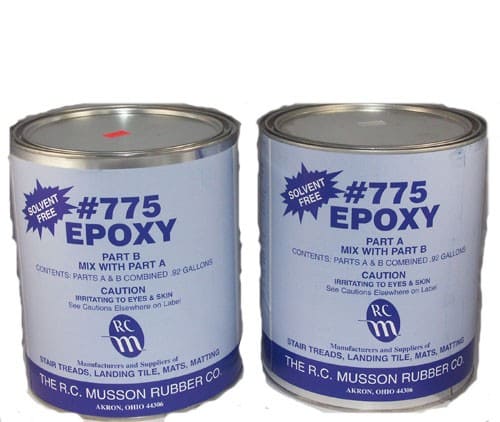
#775 Epoxy Flooring Adhesive
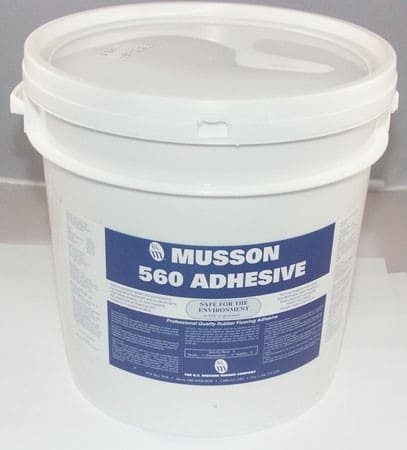
#560 Rubber Flooring Adhesive
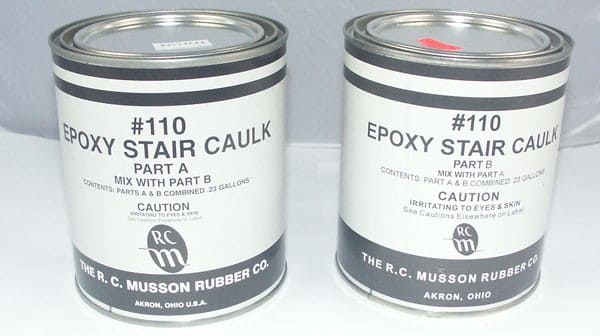
#110 Epoxy Nose Caulk
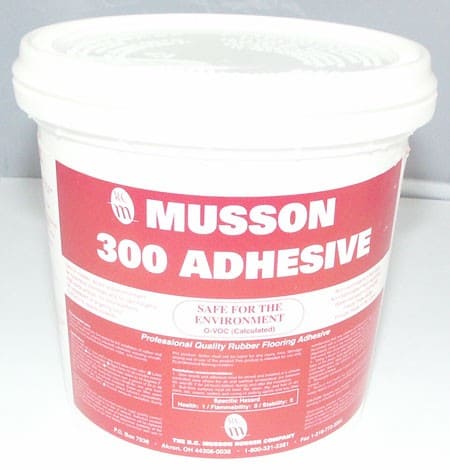
#300 Water Based Contact Adhesive

#400 Neoprene Contact Adhesive
Rotary Table & Rig Floor Mats
Fore-Runner Mat
Safety Track Resilient Medium Non-Skid Tape
3M Vinyl Loop Wet Area Matting
Protect Vinyl Matting