




More Information
| Manufacturer | Dimex |
|---|
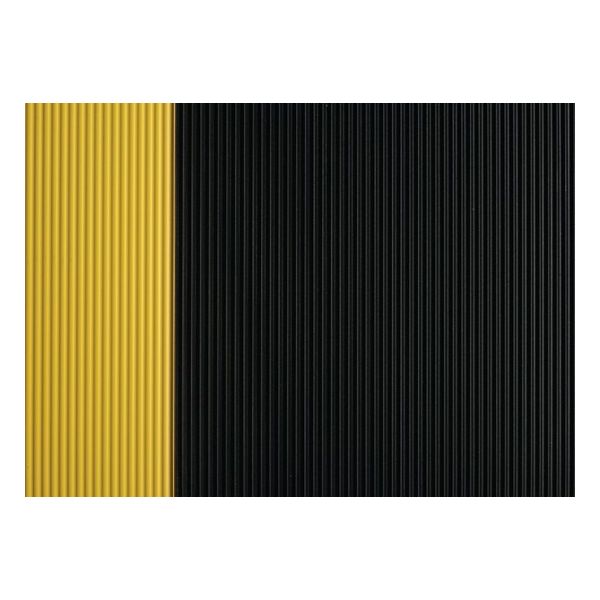
Corrugated Vinyl Switchboard Matting With Black and Yellow Safety Border (ASTM)
Product Number:
#0213VY
$1,528.00

Have a question? We're here to help!
Description
This is ASTM D178 Type II, Class 2 switchboard matting with a high-visibility yellow safety border along the edge. The black field is the insulating surface. The yellow tells everyone in the room exactly where it ends. It runs 36 inches wide by 75 feet at 1/4 inch thick, proof tested at 20,000 volts A.C. across the entire roll.
What a Safety Border Does That the Mat Alone Cannot
Insulating matting works by breaking the path between a worker and the ground. Stand on it while working a live panel and the circuit has nowhere to complete. That protection is real, and it's also entirely conditional on one thing: both feet actually being on the mat.
That condition fails more often than people expect, and it fails quietly. A technician shifts their weight to reach a terminal on the far side of a cabinet. Somebody steps back to let a colleague past. A heel lands two inches off the edge on a dark floor where black matting and grey concrete look nearly identical under overhead light.
Nobody notices, because there's nothing to notice. The mat gives no feedback when you leave it. A yellow border changes that — it puts a visible line at the edge of the protected zone, so the boundary registers in peripheral vision instead of requiring somebody to look down and check.
The same marking works on everyone else in the room. A yellow-bordered mat reads as a designated zone from across a plant floor, which keeps foot traffic clear while work is in progress. It also stops the mat from getting treated as ordinary flooring by people who don't know what it's for.
Why Type II Vinyl With a Bonded Border, and Why Class 2
Type II designates the compound. This is a vinyl formulation built for electrical insulation, and it carries two properties that matter on a working floor: it's oil resistant and flame resistant. In an electrical room, the equipment you're protecting people from is itself a potential ignition source, which makes flame resistance more than a checkbox.
Oil resistance matters for a different reason. Shop and plant floors accumulate oils and greases, and contaminants that soak into a mat can compromise the insulating barrier over time. A compound that resists absorption keeps the barrier intact and lets the corrugations be wiped out rather than slowly loading up.
Class 2 sets the electrical rating. Dielectric strength is 30,000 volts A.C., every roll is proof tested at 20,000 volts A.C., and the recommended maximum use voltage is 17,000. That gap between the proof test and the use rating is deliberate margin — treat 17,000 as your ceiling, not 20,000.
The proof test detail is worth understanding. Testing runs across the entire surface of every roll rather than sampling sections. An insulating barrier is only as good as its weakest square inch, and spot-checking a 75-foot roll would leave most of that material unverified.
The corrugated surface adds traction underfoot, which matters where people stand for long stretches and where floors pick up moisture or oil. A mat that solved an electrical hazard by creating a slip hazard wouldn't be much of a trade.
Where It Belongs, and Where It Doesn't
Distribution boards, switchgear, sub-stations, transformers, generators, and electrical workbenches — anywhere someone works at or near energized equipment. It sits with the rest of our electrical and switchboard matting, which covers the other type and class combinations.
The bordered version earns its place in specific conditions. Dimly lit electrical rooms and mechanical spaces, where a plain black mat disappears against a dark floor. Shared or high-traffic areas where people who aren't doing the work walk past. Sites with contractors and visitors who won't recognize an unmarked mat for what it is. And anywhere your safety program already uses yellow to mark zones, so the floor speaks a language people have been trained on.
What it is not: an ESD or anti-static mat. Those are conductive by design, built to drain static charge to ground and protect sensitive electronics. This does the opposite — it blocks the path to ground entirely. Grounding it would defeat the entire purpose, and the two are not interchangeable in either direction.
It's also not general-purpose safety marking. If you want to delineate a walkway or a storage area, floor tape does that job at a fraction of the cost. The border here is a feature of an insulating mat, not a reason to put insulating matting somewhere it isn't needed.
And it is not primary protection. De-energizing, verification, protective equipment, and trained procedure all come first. This is the layer underneath, and the border is what keeps that layer working when attention drifts.
Three Things to Check Before You Spec It
First, confirm Class 2 matches your equipment. The recommended maximum use voltage is 17,000 volts A.C. Check the actual working voltage at each panel rather than assuming, and if anything sits near that ceiling, step up to a higher class instead. The border is a visibility feature — it does nothing to change the electrical rating.
Second, look at the room in its real lighting. The border is worth most where the floor is dark, the lighting is poor, or people move through while work is happening. Stand in the space at the hour the work actually gets done. If a plain black mat would read clearly against that floor, you may not need the border. In most electrical rooms, it will not.
Third, plan the coverage and the orientation together. This comes 36 inches wide, so work out whether one run gives a worker enough room to shift, step back, and reach without leaving the mat. Then decide which way the border faces — it should sit on the side people are most likely to step off, which is usually the open side away from the equipment.
Why Mats Inc.
Since 1964 we've learned that the safety products people actually use are the ones that work without anybody thinking about them. That's the argument for the bordered version — the insulation is identical to the plain mat, but the yellow edge keeps working on the afternoon when someone is tired and reaching sideways without looking down. We'll ask about your voltage and your lighting before we quote, because one of those determines the class and the other determines whether the border is worth it.
| Product Type | Insulating (non-conductive) switchboard matting with safety border |
| Standard | ANSI/ASTM D178, Type II, Class 2 |
| Dielectric Strength | 30,000 volts A.C. |
| Proof Test | 20,000 volts A.C., tested over the entire surface of every roll |
| Recommended Max Use Voltage | 17,000 volts A.C. |
| Material | High-quality vinyl compound, oil resistant and flame resistant |
| Surface | Corrugated |
| Color | Black with yellow safety border |
| Border | Yellow safety border along one long edge |
| Size | 36 inch width x 75 ft. length x 1/4 inch thickness |
| Roll Weight | 350 lb. |
| Roll Supply | Full rolls only, single piece |
| Recommended For | Distribution boards, switchgear, sub-stations, transformers, generators, electrical workbenches |
| Static Control | None — this is an insulator, not an ESD or anti-static product |
| Warranty | 1-year limited (Mats Inc.) |
Frequently Asked Questions
Does the yellow border change the electrical protection in any way?
No. The insulating performance comes from the vinyl compound and its thickness, and both are identical to the unbordered version of this mat. Same Type II compound, same Class 2 rating, same 1/4 inch thickness, same full-surface proof test at 20,000 volts A.C. on every roll.
The border is a visibility feature layered onto a mat that already meets the standard. Think of it as solving a different problem than the insulation does. The vinyl handles the electrical hazard; the yellow handles the human one, which is that people step off mats without realizing it. Neither substitutes for the other, and you're not trading any electrical performance to get the marking. — Dustin Thompson, Owner & CEO, Mats Inc.
What are the ratings, and what does oil and flame resistance actually get me?
Class 2 gives you 30,000 volts A.C. dielectric strength, a 20,000 volt A.C. proof test across the entire surface of every roll, and a recommended maximum use voltage of 17,000. Work to the 17,000 figure. The gap above it is engineered margin for real conditions, not headroom to spend.
The oil and flame resistance matter over the mat's life rather than on day one. Flame resistance is straightforward in a room where the equipment is itself an ignition risk. Oil resistance is the quieter one: floors around panels and benches collect oils and greases, and a compound that absorbs them can have its insulating barrier degraded from within while the surface still looks fine. Resisting absorption is what keeps the mat performing in year four the way it did in year one. — Dustin Thompson, Owner & CEO, Mats Inc.
Which way should the border face, and does the mat need to be grounded or fastened down?
Orient the border toward the side people are most likely to step off — usually the open side facing away from the equipment, since that's where somebody backs up to let a colleague past or turns to reach a tool. Walk the space and watch how people actually move around that panel before you cut and place it. The border runs along one long edge, so decide before you unroll which side faces the open floor.
On grounding: absolutely not, and this one is worth saying plainly. Grounding an insulating mat destroys its purpose, because the entire mechanism is that no path exists from the worker through the floor to ground. Anyone accustomed to installing ESD matting may reach for a ground cord from habit, and on this product that habit is dangerous. On fastening, it's meant to lie loose so it can be lifted, inspected underneath, and replaced without demolition — and adhesives or fasteners can puncture or contaminate the barrier. — Dustin Thompson, Owner & CEO, Mats Inc.
What size does it come in, and how do I work out how much I need?
One size: 36 inches wide by 75 feet long at 1/4 inch thick, sold as a full single-piece roll. That 75 feet usually covers several pieces of equipment once it's cut to length, so most facilities buy one roll and section it.
Work equipment by equipment rather than room by room. Measure the width of each panel or bench, then add margin on both sides so a worker never runs out of mat when they shift their stance or step back. Total those lengths and you have your run. Cut with a sharp blade against a straightedge so the edges sit tight and don't catch a boot. A full roll runs 350 pounds, so plan on two people and equipment to move it. Send us your equipment list and we'll size it with you. — Jinna Hopson, Vice President of Marketing, Mats Inc.
How visible is the border in a real electrical room?
Very, and that's the whole design intent. Yellow against black is one of the highest-contrast pairings available to the human eye, which is why it shows up on stair nosings, machine guarding, and hazard marking everywhere. It reads at a distance, at an angle, and in the kind of mediocre overhead lighting most electrical rooms actually have.
What matters more than absolute brightness is that it works peripherally. Somebody focused on a terminal block isn't looking at the floor, but a strong contrast line still registers at the edge of vision when a foot approaches it. That's the difference between a boundary you have to check for and one that simply tells you it's there. It also signals the zone to everyone else in the room, which keeps traffic clear while work is underway. — Jinna Hopson, Vice President of Marketing, Mats Inc.
Should I buy the bordered version or the plain one?
Go plain when the mat sits in a well-lit, dedicated electrical room with a light floor, used only by trained people who know exactly what's underfoot. In that setting the border is buying visibility you already have.
Go bordered in the situations where the edge genuinely disappears or the audience is wider — dim mechanical spaces, dark or grey floors where black-on-grey blends together, shared areas where non-electrical staff walk past, and any site with contractors or visitors who won't recognize an unmarked mat for what it is. It's also the right call if your safety program already uses yellow for zone marking, since the floor then matches training people have already had. When it's a close call, we'd lean bordered — the insulation is identical either way, and visibility is the thing you can't add later. — Jinna Hopson, Vice President of Marketing, Mats Inc.
Written by Jinna Hopson, Vice President of Marketing, Mats Inc.
Reviews
Write Your Own Review
Related Products
Heritage Personalized Coir Door Mat
#775 Epoxy Flooring Adhesive
#560 Rubber Flooring Adhesive
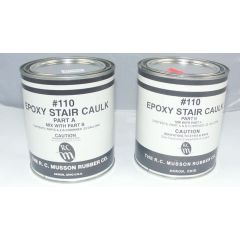
#110 Epoxy Nose Caulk
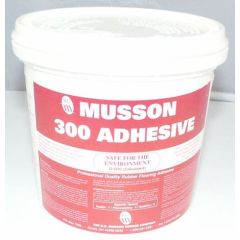
#300 Water Based Contact Adhesive
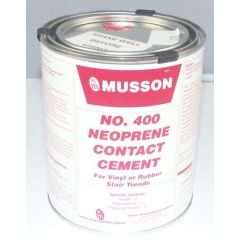
#400 Neoprene Contact Adhesive
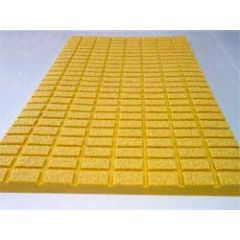
Rotary Table & Rig Floor Mats
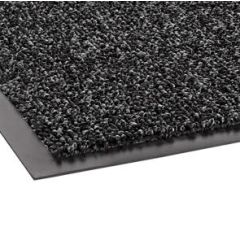
Fore-Runner Mat
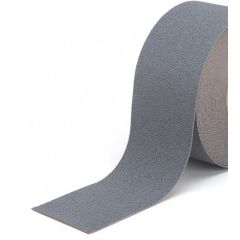
Safety Track Resilient Medium Non-Skid Tape
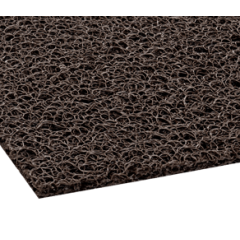
3M Vinyl Loop Wet Area Matting