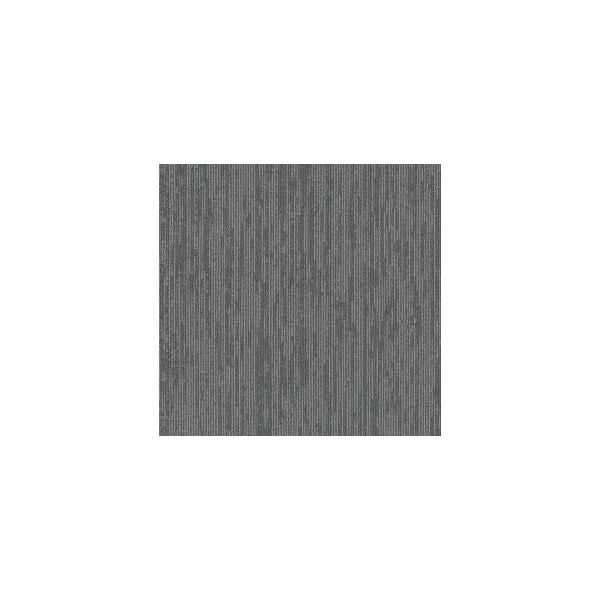
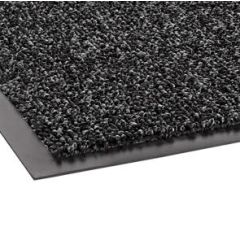
Noordic is a textured loop tile built for the floors people actually walk across all day — lobbies, library floors, retail aisles and the stretch of floor just inside an entryway. It is an indoor tile, and it is meant to look presentable years into its life rather than only on the day it goes down.
Most of what determines that is the surface. A loop that scatters light and a color that runs all the way through the fiber will hide a working floor's ordinary soil far longer than a smooth, surface-dyed one.
What a Textured Loop Tile Does Before Your Floor Starts Looking Tired
Commercial carpet tiles rarely fail by wearing through. They fail by looking dull. Soil works its way down into the fiber, dulls the color, and the floor reads dirty even after it has been vacuumed. Once that happens, nobody cares how much life is technically left in the tile.
A textured loop surface fights that. The loops sit at varying heights, so the surface breaks up light instead of reflecting it evenly. Footprints, vacuum lines and light soil scatter across that texture rather than showing as clean marks on a flat field.
Routine vacuuming with a motor-driven brush and beater bar pulls up to 80% of surface dirt off a carpet tile floor, and doing it on schedule is the single most effective thing you can do for the floor's appearance. Weekly is enough in light-use rooms. Higher-traffic areas want daily, sometimes twice daily.
The remaining fraction is the problem. Roughly 15% of soil content clings to the fiber and resists vacuuming outright, building into soil reservoirs that get tracked deeper into the building over time. Frequent light cleaning keeps that from accumulating; waiting until the floor looks bad means a much harder restoration.
Why a Solution-Dyed Textured Loop, and Why This One
The fiber is PET — polyethylene terephthalate, the same polymer family as a beverage bottle — and it is solution dyed. That means the color is added while the fiber is still liquid, so it runs through the strand instead of sitting on the outside of it.
The practical result is color that holds. There is no dyed surface layer to abrade off in a traffic lane, and the tile passes lightfastness testing, so a floor near a glass entry or a south-facing window does not fade unevenly against the rest of the room.
Construction is a 20 oz per square yard face weight at a 1/10 gauge, on a modular backing, with a total nominal thickness of 0.246 inches. That is a mid-weight commercial specification: substantial enough for a library or a retail floor, and honestly not the tile for a loading corridor or an industrial floor.
A soil-release treatment is applied to the face, which is what makes routine vacuuming and light cleaning work as well as they do. The tile also carries a static rating below 3.0 kV under AATCC-134 — enough to keep ordinary walking shocks down in a dry building, though not a substitute for a dedicated static-control tile in a room full of electronics.
On the environmental side, the tile is NSF/ANSI 140 Gold certified with 40.71% total recycled content, and it contributes to LEED-NC under MR Credit 4 and IEQ Credits 4.1, 4.3 and 5. It is Class 1 under the flooring radiant panel test, passes the pill test, holds smoke density under 450 flaming per ASTM E 662, and is compliant for ADA accessible routes.
Where It Belongs, and Where It Is Not the Right Tile
The sweet spot is indoor floors that carry steady foot traffic and still have to look composed: lobbies, library reading rooms and stacks, retail and department store floors, and the interior stretch behind an entryway. It handles the traffic those spaces see without reading as a heavy-duty industrial product.
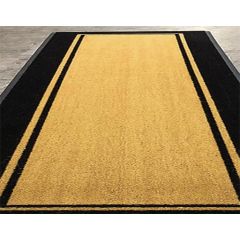
It belongs behind an entrance mat, not in place of one. Grit walked in from outside is abrasive, and a mid-weight loop is not built to absorb that job. Let a scraping and moisture-holding construction handle the first several feet inside the door and let Noordic take the floor beyond it.
Two situations rule it out. It is an indoor tile, so exterior and covered-exterior positions are off the table. And because a carpet tile has a high insulation value, it is not recommended over under-floor heating systems that are in use — the heat does not pass through it usefully and the assembly is working against itself.
It also is not the answer for a room full of sensitive electronics. The static rating is good for a general-purpose floor, but a server room or an electronics assembly bench needs a purpose-built static-control tile. When you are working out which tile handles which zone, the full range of carpet tiles sorts by exactly that question.
Three Things to Check Before You Spec It
First, check the subfloor before you check anything else. Tiles can be loose laid over a flat, dry floor that is free of oil, grease and other impurities. Cracks need filling, uneven floors need hardboard over them, and dusty floors need priming. Let the tiles acclimate at 60 to 70 degrees Fahrenheit for 24 hours before laying.
Second, check what rolls across it. Loose laid works for ordinary foot traffic, and securing one row in five with double-sided tape is advisable on large installations. Under caster chairs, that is not enough — those areas need to be fully secured, or the chairs will walk the tiles apart over a few months.
Third, check your quantities and your batch numbers. Tiles are 24 inches by 24 inches and ship 18 to a carton, covering 72 square feet at 43.4 pounds per carton. Order attic stock in the same run, and only lay tiles from the same batch together — mixed batches will read as a shading difference across the floor.
Why Mats Inc.
We specify rather than install, which means we have no reason to push a heavier tile than your traffic warrants or a lighter one than it needs. A 20 oz textured loop is right for a lot of floors and wrong for some, and we will tell you which one you have. Since 1964 that has been the whole job: matching the construction to the zone.
| Construction | Textured loop |
| Fiber | PET (polyethylene terephthalate) |
| Dye method | Solution dyed |
| Face weight | 20 oz/sy (678 g/m²) |
| Gauge | 1/10 (3.94 rows/cm) |
| Total thickness | 0.246 in. nominal average |
| Tile size | 18 in. x 18 in. approx. (45.72 x 45.72 cm) |
| Coverage per case | 27 sq. ft. (2.51 m²) |
| Pattern repeat | None |
| Backing | Modular; cushion backing available as an option |
| Surface treatment | Soil release |
| Adhesive | Commercial premium modular and LVT adhesive; adhesive tabs optional |
| Packaging | 12 tiles per case, 27 sq. ft., [CONFIRM case weight] lbs. |
| Recycled content | 40.71% total |
| NSF/ANSI 140 | Gold certified |
| Flooring radiant panel | Class 1 |
| Smoke density | Less than 450.0 flaming (ASTM E 662) |
| Static | Less than 3.0 kV (AATCC-134) |
| Accessibility | Compliant for ADA accessible routes |
| LEED-NC | MR Credit 4; IEQ Credits 4.1, 4.3, 5 |
| Warranty | 1-year limited (Mats Inc.) |
Frequently Asked Questions
What is a textured loop, and how is it different from a cut pile carpet tile?
Answered by Dustin Thompson, Owner & CEO
In a loop construction the yarn stays looped at the surface instead of being sheared open. A textured loop varies the height of those loops, so the surface is uneven rather than flat and uniform. Nothing is exposed at the fiber tip the way it is in a cut pile.
That matters for how the floor ages. Cut pile shows footprints, vacuum tracks and crushing plainly, because you are looking at a smooth surface. A textured loop scatters all of that. It is the reason loop constructions dominate commercial and high traffic carpet tiles while cut pile stays mostly residential.
How long will this tile last, and what shortens it?
Answered by Dustin Thompson, Owner & CEO
For a 20 oz commercial loop tile, plan on roughly ten to fifteen years in offices, libraries and other moderate-use rooms, and seven to ten years across busier lobby and retail floors. Traffic lanes inside an entryway are the first area to show age, and often need replacing before the field does.
What ends it early is almost always soil, not wear. Abrasive grit tracked in from outside grinds at the fiber, and the 15% of soil that resists vacuuming builds up until the color dulls permanently. An entrance mat at the door and a real vacuuming schedule do more for service life than anything else. The tile carries a 1-year limited warranty from Mats Inc.
What does the subfloor need before installation, and can we lay it ourselves?
Answered by Dustin Thompson, Owner & CEO
A capable in-house crew can handle it. The floor needs to be flat, dry and free of oil, grease and other impurities. Fill cracks, cover uneven areas with hardboard, prime anything dusty, and let the tiles sit at 60 to 70 degrees Fahrenheit for 24 hours first.
Snap a marker cross at the center of the room and work outward, shifting the cross if it helps land full tiles in doorways. Turn every alternate tile 90 degrees for a checkerboard — an arrow on the back shows pile direction. Tiles can be loose laid, with one row in five taped on large jobs, but any area under caster chairs has to be fully secured.
Will the color fade or shade unevenly over time?
Answered by Jinna Hopson, Vice President of Marketing
Fading is not the concern here. The fiber is solution dyed, so the color is locked into the strand rather than applied to the outside of it, and the tile passes lightfastness testing. A floor beside a glass entry will hold its color against a shaded corner of the same room.
Shading is a different issue, and it is an installation one. Lay tiles from two different batch numbers side by side and the eye will pick up the difference under raking light. Keep batches together, and if you are patching years later, pull from attic stock rather than ordering fresh.
Can this be used in a home, or is it strictly commercial?
Answered by Jinna Hopson, Vice President of Marketing
It works in a home, and people use commercial carpet squares residentially for exactly the reason you would expect — one damaged square comes up and gets replaced without touching the rest of the room. Home offices, finished basements and family rooms are the usual spots.
Two cautions. This is an indoor tile, so a sunroom or a covered porch is out. And if the room has under-floor heating in use, this is the wrong product — a carpet tile insulates well enough that the heat does not come through usefully.
Are there cushioned or coordinating options if the space needs something softer?
Answered by Jinna Hopson, Vice President of Marketing
Yes. A cushion backing is available as an option in place of the standard modular backing, which gives you a softer step and a quieter room without laying a separate underlay. That is worth considering for a library, a waiting area, or anywhere people stand rather than pass through.
For a floor that needs more than one look, the 24 by 24 module lets you build a pattern from stock. Two colorways in a checkerboard or plank layout, or a darker run down a corridor, reads as a designed floor while keeping every square individually replaceable. Tell us the space and we will work out the layout with you.
By Dustin Thompson, Owner & CEO, Mats Inc.