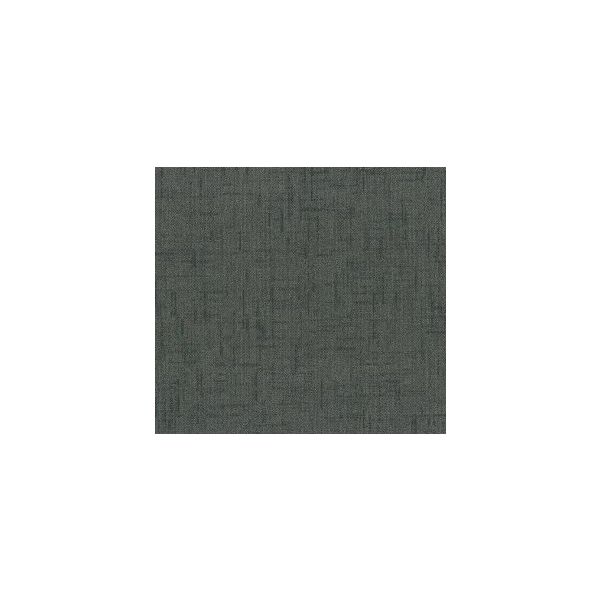
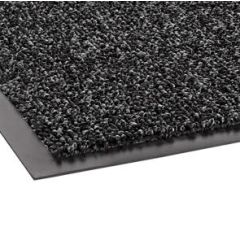
Cross Guard is built for the parts of a building that take the most walking. The pattern comes from intersecting urban pathways — layered lines running across a textured base in neutral earth tones — and the construction is aimed squarely at handling heavy traffic without the floor looking beaten down.
It comes in a 24 inch by 24 inch module at a 1/12 gauge, which is a fine gauge for a commercial carpet tile. That density is the whole reason it holds up where a lighter tile would flatten out.
What a Fine-Gauge Tile Does Before Your Traffic Lanes Give Out
Walk any commercial building and you can trace the routes people take without being told. The path from the door to the elevator, the line between a service counter and a back room — those strips wear out years ahead of the floor around them, and they are what makes an otherwise sound floor look old.
Two things happen in those lanes. The pile gets crushed flat under repeated footfall, so the surface loses its texture and starts reflecting light differently than the field around it. And grit walked in from outside grinds at the fiber every time somebody steps on it, dulling the color permanently.
Density is the main defense against the first problem. Packing more yarn ends into the same square inch means each individual tuft carries less of the load, so the surface springs back instead of matting down. A tile with room between the tufts crushes; a tightly packed one resists.
Pattern handles what density cannot. A layered, multi-directional design with tonal variation across it disguises the wear and soil that does accumulate, because there is no flat uniform field for a traffic lane to show up against.
Why a 1/12 Gauge and a Layered Pattern, and Why This One
Gauge describes how closely the needle rows sit across the width of the machine. At 1/12 there are twelve rows per inch — 4.72 rows per centimeter — which puts this at the finer end of the commercial range. More rows means more yarn ends per square inch and a denser surface underfoot.
That density does two jobs at once. It resists crushing in the lanes, and it holds pattern definition. A coarse-gauge tile blurs a fine pattern into mush; a fine gauge keeps the intersecting lines legible, which is why this design can carry detail without turning muddy.
The pattern itself is doing real work rather than decorating. Layered lines crossing at angles over a textured base break up the straight wear paths that form between two fixed points in a building. Where a solid tile would show a visible track, this one absorbs it into the design.
The palette is neutral earth tones, which is a deliberate choice for a high-traffic product. Earth tones hide tracked-in soil between cleanings far better than pale neutrals or saturated colors do, so the floor looks maintained on a normal cleaning schedule rather than an aggressive one.
Where It Belongs, and Where It Is Not the Right Tile
Put this where traffic concentrates: corridors, elevator approaches, the stretch of lobby behind an entrance, and the paths that cut across an open floor plate. Corporate offices, retail and mass merchandise floors, hospitality spaces, schools, government interiors, pharmacies and specialty stores all have those zones.
It also works as a whole-floor tile when the whole floor is busy. In a building where there is no quiet zone to speak of, specifying one dense tile throughout is simpler than mapping grades room by room, and the earth-tone palette carries across mixed spaces without looking utilitarian.
What it is not is a threshold product. Heavy traffic and entrance duty are different jobs — the entry zone needs a construction that scrapes grit and holds moisture, and no interior tile does that. Put a proper entrance mat in the first several feet and let this take the floor behind it. Sorting which construction handles which zone is what the full range of carpet tiles is organized around.
It is also not an industrial floor covering. Heavy foot traffic in a commercial building is a different load than pallet jacks, forklifts and dropped tooling. If that is your environment, carpet of any construction is the wrong category.
Three Things to Check Before You Spec It
First, walk the building and mark where people actually go. The value of a dense tile is concentrated in the lanes, so knowing where those run tells you whether you need it across the whole floor or only through the corridors and approaches. Watch during a busy hour rather than guessing from a floor plan.
Second, check what is happening at your entrances before you spend anything on the interior. A dense tile behind an unprotected door still eats grit all day. Fix the entry zone first, then specify the floor behind it — that order matters more than the grade you land on.
Third, confirm your subfloor and your quantities together. Tiles need a flat, dry, clean floor with cracks filled and dusty surfaces primed. At 24 inches square, calculate coverage, add for perimeter cuts, then add five to ten percent attic stock from the same run so a patch years from now still matches on shade and pattern alignment.
Why Mats Inc.
A heavy-traffic tile is the easiest place in a building to overspend and the easiest to underspend, usually in the same order. We have been sorting floors by zone since 1964, and the useful question is not which tile is toughest — it is where your traffic concentrates and what is stopping grit at the door. Tell us the building and the doors, and we will tell you where the density earns its place and where a lighter grade is fine.
| Tile size | 24 in. x 24 in. approx. (60.96 x 60.96 cm) |
| Tiles per carton | 18 |
| Coverage per carton | 72 sq. ft. (8 sq. yd.) |
| Carton weight | 43.27 lbs. |
| Total thickness | 0.273 in. nominal average |
| Colorways | Three: Dapple Grey, Slate, Steel |
| Construction | Patterned scroll |
| Fiber | Solution-dyed PET |
| Dye method | Solution dyed |
| Face weight | 20 oz/sy (678 g/m²) |
| Pile density | 10,141 oz/yd³ (376.03 kg/m³) |
| Gauge | 1/12 (4.72 rows/cm) |
| Standard backing | Modular |
| Optional backing | Cushion |
| Surface treatment | Soil release |
| Standard adhesive | Commercial premium modular and LVT adhesive |
| Recycled content | 40.71% total |
| NSF/ANSI 140 | Gold certified |
| Flooring radiant panel | Class 1 |
| Smoke density | Less than 450.0 flaming (ASTM E 662) |
| Static | Less than 3.0 kV (AATCC-134) |
| Pill test | Pass |
| Light fastness | Pass |
| Accessibility | Compliant for ADA accessible routes |
| Warranty | 1-year limited (Mats Inc.) |
Frequently Asked Questions
What does 1/12 gauge mean, and why does it matter for a high-traffic floor?
Answered by Dustin Thompson, Owner & CEO
Gauge counts the needle rows across the width of the tufting machine. At 1/12 you get twelve rows per inch, or 4.72 per centimeter, which sits at the finer end of the commercial range and puts more yarn ends into every square inch of surface.
On a busy floor that density does the heavy lifting. When tufts are packed tightly, each one carries a smaller share of every footstep, so the pile springs back rather than matting flat. A coarser tile with more space between tufts crushes in the lanes first, and crushed pile is what makes a floor look worn out long before it has worn through.
How long will it hold up in a busy corridor?
Answered by Dustin Thompson, Owner & CEO
As a planning range for commercial carpet tile, expect ten to fifteen years in moderate-use rooms, seven to ten across busy retail and lobby floors, and five to seven in the hardest-worked lanes. A denser construction pushes you toward the upper end of whichever range applies rather than changing the range itself.
What decides it is grit, not footfall. Abrasive material tracked in from outside cuts at the fiber constantly, so an entrance construction at the door does more for service life than any upgrade to the field tile. Vacuum the lanes on a real schedule and this floor will outlast a lighter tile in the same position by a comfortable margin. Cross Guard carries a 1-year limited warranty from Mats Inc.
How do we work out quantities, and does the layout need planning?
Answered by Dustin Thompson, Owner & CEO
Tiles are 24 inches by 24 inches, so four cover a square yard. Take the room's square footage, add for cuts at the perimeter, then add five to ten percent attic stock ordered in the same run and stored flat, dry and out of sunlight.
Layout deserves a decision before the first tile goes down. This pattern has direction in it, so running every tile the same way versus quarter-turning alternates produces two different floors — both fine, but only if the crew holds to one. Snap a center line, work outward, and shift it if that lands full tiles in the doorways.
What does the pattern actually look like once it is down?
Answered by Jinna Hopson, Vice President of Marketing
Less busy than a sample implies. The lines layer and intersect the way paths cross in a city block, but they sit over a textured base in earth tones, so from standing height the floor reads as a rich neutral with movement in it rather than as a graphic pattern.
That restraint is what lets it work in a lobby as well as a corridor. It has enough going on to disguise soil and traffic marks, and not so much that it competes with furniture, signage or whatever else the room is meant to show off.
Is it too heavy-duty for a lobby or a customer-facing space?
Answered by Jinna Hopson, Vice President of Marketing
Not at all, and that is the point of it. Plenty of high traffic carpet tiles look like what they are — utilitarian, obviously chosen for wear. This one was designed to handle the traffic and still belong in a space customers walk through.
Retail floors, hotel corridors, school common areas and pharmacy aisles are exactly the situations it suits: places that see constant footfall and still have to look considered. If anything, the risk runs the other way, since people specify something prettier and lighter for those rooms and then replace it early.
Can we get it in our brand colors or a custom pattern?
Answered by Jinna Hopson, Vice President of Marketing
The palette here is neutral earth tones, chosen deliberately because those shades hide tracked-in soil better than pale or saturated ones do. Tell us the colorway you have in mind and we will confirm what is currently available in the range.
For brand color at floor level, the better answer is usually placement rather than a custom tile. A logo mat or a printed entrance construction at the door carries your color and artwork where people actually look for it, and the field tile behind it stays neutral and replaceable square by square.
By Dustin Thompson, Owner & CEO, Mats Inc.