




More Information
| Manufacturer | Musson Rubber Company |
|---|
$71.00

Have a question? We're here to help!
Description
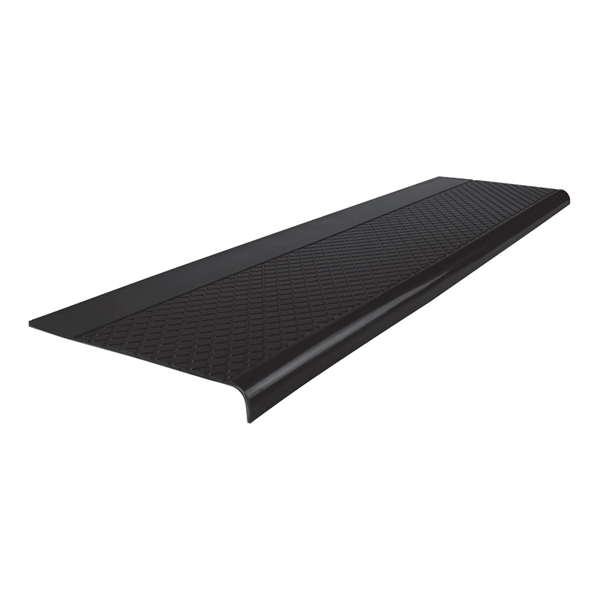
Diamond design rubber stair treads put a raised diamond field across the walking surface of a step and wrap a molded nose over the leading edge. They come in two nose profiles: a square nose for steps with a squared-off edge, and a round nose shaped to a 3/4 inch radius for bullnose steps.
Picking the wrong one is the most common way this goes badly. The two configurations differ in depth, gauge, length range and whether the nose adjusts at all, so the decision has to happen before the order rather than on the stairs.
What a Rubber Stair Tread Does Before a Worn Nose Becomes the Thing People Trip On
Stairs fail at the front edge first. Every foot going up lands on the nose, and every foot coming down pushes off it. Concrete crumbles there, terrazzo polishes smooth, wood splinters and rounds over, and the edge that people rely on to judge where the step ends stops being a crisp line.
That matters more than the wear looks like it should. On a descending flight, people read the nosing rather than the tread, often at speed and often without looking directly at it. A rounded, chipped or shiny edge gives them worse information about where to put their foot.
The usual response is patching, and patching the nose of a stair rarely holds. A skim of repair mortar on a high-traffic edge takes the same abuse that destroyed the original and starts breaking up again within a season, this time with a joint underneath it to fail along.
A rubber tread cover takes that abuse instead of the step. The molded nose absorbs impact and rebuilds the visual edge, the diamond field gives the walking surface texture, and the whole assembly is replaceable when it wears rather than requiring the stair itself to be repaired. The full range of stair treads, risers and landing tiles is organised around that difference.
Why Two Nose Profiles, and Which One Your Stairs Take
The square nose version is the flexible one. It runs 12-1/16 inches deep from inside the nose at 3/16 inch thick, tapering to 1/8 inch at the back edge, with a 1-9/16 inch nose at 1/8 inch thick. Both tapered and adjustable, so it accommodates the variation you find in existing steps.
That adjustability is why it handles retrofit work well. Steps that have been walked on for thirty years are not uniform, and a nose with some give in it sits tight against edges that a rigid profile would bridge. It also comes in lengths from 36 inches to 108 inches, which covers wide institutional stairs without a joint.
The round nose version is a different part with a different job. It is shaped to a 3/4 inch radius to wrap a bullnose step, running 12-5/16 inches deep at 1/4 inch thick tapering to 3/16 inch, with a shorter 1-3/8 inch nose at 7/64 inch. It is heavier gauge across the whole tread.
The trade-off is that the round nose is neither tapered nor adjustable. The radius is fixed, so the step it goes on has to actually match it. Lengths also top out at 72 inches rather than 108, which rules it out for the widest stairs.
Read that as a decision rather than a preference. If the steps are squared off, the square nose is the answer and the adjustability is a bonus. If they are bullnosed, measure the radius before ordering, because a fixed 3/4 inch profile on a step with a different curve leaves either a gap under the nose or an edge standing proud of it.
Both configurations weigh 2.25 pounds per linear foot and carry the same raised diamond field. The pattern is a continuous field rather than a directional rib, so it presents the same texture whichever way a foot crosses it and does not create an edge running along the direction of travel.
Where It Belongs, and Where It Is Not the Right Tread
Specify it on interior stairs carrying steady traffic where the existing steps are structurally sound but worn at the edges: schools, offices, hospitals, apartment blocks, municipal buildings and back-of-house stairs. It works over concrete, terrazzo, wood and metal pan stairs, provided the surface underneath is solid and flat.
It is a strong retrofit choice specifically because it covers rather than replaces. A stair with chipped nosings and a scuffed walking surface can be brought back to a uniform finished condition without touching the structure, and each tread is independently replaceable afterward.
Where it is not the right answer is a stair that has lost its geometry. If noses are broken back an inch, if the tread surface has deep spalling, or if steps vary noticeably in depth from one to the next, a cover follows those problems rather than fixing them. Repair the substrate first or the finished stair shows every flaw.
It also is not a riser product. This covers the horizontal step and the leading edge only, so a stairwell that needs the vertical faces finished as well takes a separate riser or a one-piece tread and riser assembly instead.
Three Things to Check Before You Spec It
First, identify the nose profile on the actual stairs, not from the original drawings. Squared-off steps take the square nose. Bullnosed steps need the radius measured against the 3/4 inch round nose profile before anything is ordered. Buildings that have been renovated in stages sometimes have both in the same stairwell.
Second, measure the widest step and check it against the length range. The square nose configuration goes to 108 inches, the round nose to 72. Anything wider than the available length means a butt joint mid-step, which is a seam in exactly the spot you least want one.
Third, confirm depth against the actual tread. The square nose covers 12-1/16 inches from inside the nose, the round nose 12-5/16 inches. Stairs shallower than that need the tread trimmed at the back; stairs deeper than that leave an exposed strip behind the covering that has to be dealt with deliberately.
Why Mats Inc.
Most stair tread orders that go wrong go wrong on geometry, not on product choice. Somebody measures one step, assumes the rest match, and finds out at installation that the nose profile changes halfway up the flight. We have been supplying commercial stair coverings since 1964, and the useful half hour is the one spent measuring before anything is ordered.
| Specification | Square nose | Round nose |
| Lengths | 36 in. to 108 in. | 36 in. to 72 in. |
| Depth from inside of nose | 12-1/16 in. nominal | 12-5/16 in. nominal |
| Thickness | 3/16 in. tapering to 1/8 in. | 1/4 in. tapering to 3/16 in. |
| Nose length | 1-9/16 in. | 1-3/8 in. |
| Nose thickness | 1/8 in. | 7/64 in. |
| Nose radius | — | 3/4 in. |
| Tapered nose | Yes | No |
| Adjustable nose | Yes | No |
| Per carton | 6 up to 72 in.; 4 for lengths over 6 ft. | 6 |
| Weight | 2.25 lbs. per linear foot | 2.25 lbs. per linear foot |
| Surface | Raised diamond pattern, continuous field | |
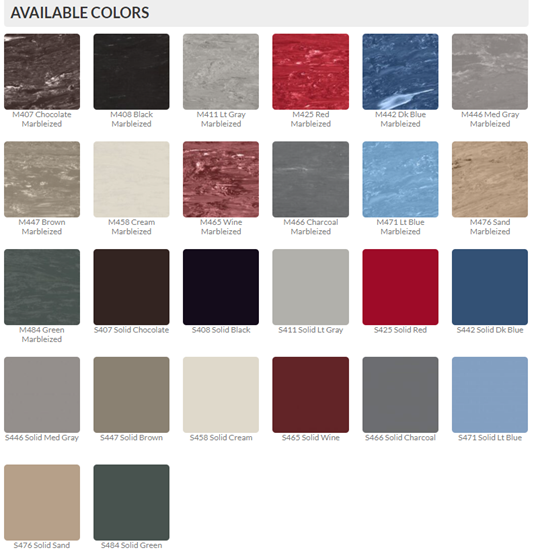
| Colorways | 26 total — 13 solid, 13 marbleized | |
| Solid colors | Black, chocolate, charcoal, wine, light gray, medium gray, red, sand, dark blue, brown, light blue, green, cream | |
| Marbleized colors | Black, chocolate, charcoal, wine, light gray, medium gray, red, sand, dark blue, brown, light blue, green, cream | |
| Warranty | 1-year limited (Mats Inc.); professional installation required for coverage | |
Frequently Asked Questions
How do I tell which nose profile my stairs need?
Answered by Dustin Thompson, Owner & CEO
Look at the leading edge of a step from the side. If it comes to a squared corner, you want the square nose version. If it curves over, you want the round nose, and you need to check that the curve is close to a 3/4 inch radius rather than assuming it.
Check several steps, not one. Buildings renovated in phases often have different stair construction on different flights, and a landing rebuilt at some point may not match the flight above it. It is also worth checking the top and bottom steps specifically, because those get modified more often than the ones in between.
What happens if the nose profile is close but not exact?
Answered by Dustin Thompson, Owner & CEO
It depends which version you are fitting. The square nose is tapered and adjustable, so it absorbs a reasonable amount of variation and still sits tight against the edge. That tolerance is the practical reason it is the safer specification when the stairs are old and nobody is certain what they will find.
The round nose has no adjustment in it. The 3/4 inch radius is molded and fixed, so a step with a tighter or looser curve leaves a void under the nose or an edge standing proud. A void under a nose is the worst outcome, since it flexes underfoot, works the adhesive loose, and eventually becomes the loose edge somebody catches a toe on.
What does the step underneath need to look like, and how does it install?
Answered by Dustin Thompson, Owner & CEO
Sound, flat, clean and dry. Strip any previous covering and get the old adhesive off completely, because a ridge of dried mastic telegraphs straight through a 3/16 inch tread. Fill spalled areas and chipped nosings, and let patching material cure fully before anything goes over it.
Treads are cut to length on site and bedded in full-spread adhesive, worked from the nose backward so air escapes rather than getting trapped at the front edge. Let the cartons acclimate to room temperature first, and keep the flight closed until the adhesive has set. Most crews do a stairwell in halves so the building keeps a usable route.
What do the colors look like, and which suit a busy stairwell?
Answered by Jinna Hopson, Vice President of Marketing
Twenty-six in total, and they pair up: thirteen solids with a marbleized version of each. The range covers the expected neutrals in black, charcoal, light and medium gray, plus warmer options in chocolate, brown, sand and cream, and stronger tones including wine, red, green and two blues.
For a working stairwell, the marbleized version of whatever color you like is almost always the better call. The swirl breaks up the surface so scuffs, tracked grit and the sheen that develops in the main walking path disappear into the pattern. A flat solid on a busy flight shows every mark until the next deep clean.
Can the treads contrast with the rest of the stairwell?
Answered by Jinna Hopson, Vice President of Marketing
They can, and a deliberate contrast is often the better design decision. Running darker treads against a lighter landing, or the reverse, makes the change in level obvious to anyone glancing down a flight, which is worth real consideration in a stairwell that is not brightly lit.
A matching landing tile in the same diamond pattern is available if you would rather the surface read as continuous from the bottom step onto the floor. Either approach works. What tends to look unresolved is the near-match, where the landing almost agrees with the treads but sits slightly off, which reads as a mistake rather than a choice.
How many do I order, and what ships in a carton?
Answered by Jinna Hopson, Vice President of Marketing
Count the steps, measure the widest one, and order to that length so everything can be trimmed down on site. Square nose treads ship six to a carton up to 72 inches and four to a carton above six feet. Round nose treads ship six to a carton. Both run 2.25 pounds per linear foot.
Add a spare piece to the order. Color runs vary between production batches, so a replacement tread bought a year later may sit visibly against its neighbors, and a single damaged step over a stairwell's life is routine rather than unusual. One extra piece turns that into a straight swap.
By Dustin Thompson, Owner & CEO, Mats Inc.
Ordering Info
Reviews
Write Your Own Review
Related Products
Heritage Personalized Coir Door Mat

#775 Epoxy Flooring Adhesive
#560 Rubber Flooring Adhesive
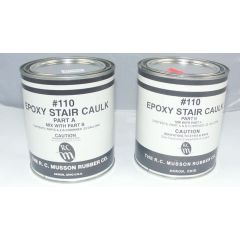
#110 Epoxy Nose Caulk
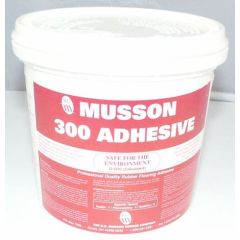
#300 Water Based Contact Adhesive
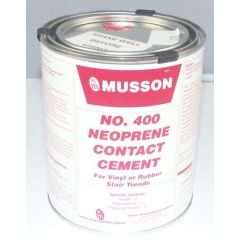
#400 Neoprene Contact Adhesive
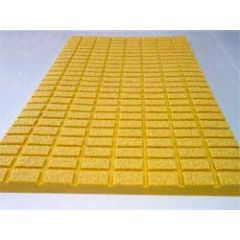
Rotary Table & Rig Floor Mats
Fore-Runner Mat
Safety Track Resilient Medium Non-Skid Tape
3M Vinyl Loop Wet Area Matting