




More Information
| Manufacturer | M+A Matting |
|---|
$295.00

Have a question? We're here to help!
Description
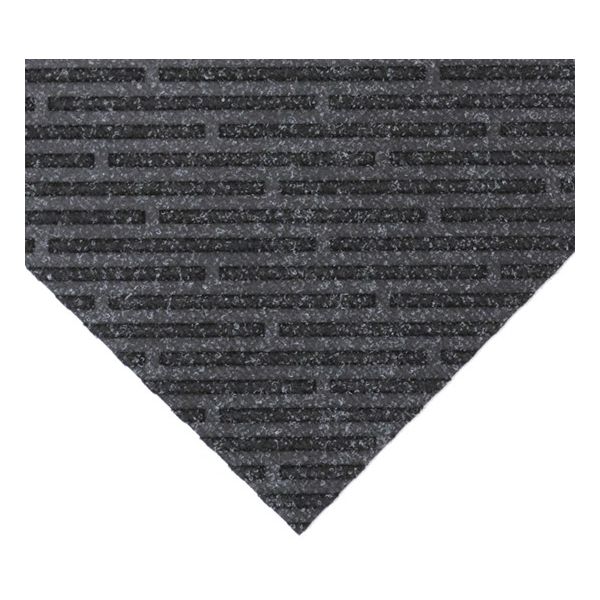
REPP-Tile is a commercial carpet tile made entirely from recycled PET, finished in a broken diagonal design. It's built for the part of a building that takes the most abuse and gets judged the hardest — the entrance and the floor immediately behind it. When a tile finally gives out, you pull that one and leave the rest alone.
What a Recycled Carpet Tile Does Before Your Entrance Starts Showing Its Age
An entrance floor fights on three fronts at once. Soil and moisture arrive on every shoe. Rolling luggage, carts, and hand trucks concentrate load into the same narrow lanes. And in most modern buildings, daylight pours through a glass storefront onto that exact spot for hours a day.
A dense commercial carpet tile handles the first two directly. The face holds soil and moisture down below the walking plane so it stops spreading deeper into the building, and it absorbs the abrasion that would otherwise land on your finished flooring. ISSA data puts wet-weather soil loading at roughly twelve times what a dry day brings in, which is why entrance flooring ages on a different clock than everything else.
The third front — sunlight — is where a lot of entrance carpet quietly loses. Traffic wear you expect and plan around. Fading you don't, until one afternoon you notice the strip near the window has drifted a shade lighter than the rest of the floor and no amount of cleaning brings it back. That's a material problem, and it gets solved at the fiber, not with maintenance.
Why 100% Recycled PET, and Why This Tile
PET is the polymer family behind beverage bottles, and it brings two properties that matter enormously on a floor. It's naturally stain resistant — that resistance is part of the material itself, not a topical treatment sprayed on at the factory that wears thin after a few extraction cycles. Spills sit on the surface long enough for you to get to them.
The fiber in REPP-Tile is solution-dyed, which is the answer to that fading problem. Instead of dyeing finished yarn from the outside, the color is mixed into the molten polymer before the fiber is ever extruded. Color runs all the way through every strand rather than coating it, so UV exposure and aggressive cleaning have far less to work with.
Then there's the weight. At 70 oz. per square yard, this sits at the heavy end of commercial carpet tile. In an entrance, face weight is what stands between constant traffic and a visible lane, because density is what resists crushing when the same three feet of floor absorbs every person who walks through the door.
The recycled content runs both directions, which is the part worth understanding. The tile is made from 100% recycled PET, and at end of life it can be recycled again — a genuine closed loop rather than a one-time diversion. If you're tracking material circularity for a sustainability standard or a client requirement, that distinction is usually the one being asked about.
Where It Belongs, and Where It Doesn't
Entrances first. Vestibules, storefront thresholds, lobby transitions, and the corridors that carry traffic away from a main door — that's what this tile is built for. It also holds up across retail sales floors, office circulation, and any modular carpet flooring run where the load is heavy and the floor still has to look composed.
Think of it as the durable interior surface working behind your scraper matting rather than replacing it. Heavy grit and standing water should be caught at the door by a dedicated scraper and wiper system. REPP-Tile takes what gets past that, along with the sustained abrasion of daily traffic. It sits with the rest of our commercial carpet tiles that share that role.
What it isn't: a padded or cushion-backed tile. There's no foam, felt, or underlay bonded to this one, and it isn't engineered for impact absorption or plush underfoot softness. If you're after cushioning for a basement, a bedroom, or an area where people are on their feet all day and comfort is the goal, that's a different construction and we'll point you to it.
It's also not a glue-down permanent field or an outdoor surface. Installation runs on an adhesive tape system rather than full-spread adhesive, which is a real advantage when you want tiles to come up individually — but it does mean the subfloor has to be genuinely clean, dry, and flat before you start.
Three Things to Check Before You Spec It
First, run your square footage against the tile size. Each tile is 19.5 inches square and cases hold sixteen, which works out to about 42 square feet of coverage per case. Measure each area, total it, then add roughly ten percent for cuts around columns and door frames plus attic stock for replacements down the road.
Second, sort out the subfloor and the tape. The adhesive tape system installs separately and isn't included, so it needs to be on the order. More importantly, tape-set tiles telegraph whatever is underneath them — a high spot, leftover adhesive ridges, or a damp slab will show up in the finished floor within weeks. Prep the substrate before the tiles arrive, not after.
Third, commit to the maintenance schedule honestly. REPP-Tile is specified for daily vacuuming with a commercial machine running a rotary brush or beater bar, plus hot water extraction at least four times a year — closer to six if you're in a salt-and-sand climate. Start that clock on installation day. A tile maintained from day one and a tile rescued at year two are not the same floor.
Why Mats Inc.
We've been specifying commercial flooring since 1964, and REPP-Tile earns its spot in our line for a combination that's genuinely uncommon: full recycled content and closed-loop recyclability paired with a 70 oz. face weight that can actually survive an entrance. Most tiles deliver one or the other. We'll also tell you plainly that it comes in one design and one color, which makes the specification decision fast and the floor consistent. It ships with our 1-year limited warranty.
| Product Type | Modular commercial carpet tile |
| Tile Size | 19.5 in. x 19.5 in. |
| Case Quantity | 16 tiles per case |
| Material | Solution-dyed PET, 100% recycled content |
| Face Weight | 70 oz. per square yard |
| Design | Broken diagonal |
| Color | Anthracite |
| Performance | Fade resistant, stain resistant |
| Flammability | Passes DOC FF1-70 |
| Installation | Adhesive tape system, sold separately |
| Cushion Backing | None — hard-backed tile |
| Recyclability | Recyclable at end of life, closed-loop |
| Maintenance | Daily vacuum with rotary brush or beater bar; hot water extraction 4 to 6 times per year |
| Warranty | 1-year limited (Mats Inc.) |
Frequently Asked Questions
What does 100% recycled PET mean, and is it as tough as a virgin fiber?
PET is the polymer used in beverage bottles, and recycled PET carpet fiber is made by reprocessing that material back into fiber. The important thing to understand is that recycling PET doesn't meaningfully degrade what it does on a floor — the abrasion resistance and the natural stain resistance come from the polymer chemistry, and that chemistry survives the process intact.
So you're not making a durability trade to get the recycled content. And because REPP-Tile can be recycled again at the end of its life rather than heading to a landfill, the material stays in circulation. If a client or a sustainability standard is asking you about circularity rather than just recycled input, that closed loop is the answer they're looking for. — Dustin Thompson, Owner & CEO, Mats Inc.
How much traffic will this actually take?
The number to anchor on is 70 oz. per square yard. That's a heavy face weight for a carpet tile, and in an entrance or a corridor, weight is what resists crushing — a denser face keeps its structure under repeated load instead of matting down into a lane you can see from across the lobby. It also passes DOC FF1-70 flammability, which is the standard most commercial specs are checking for.
Where I'd set expectations honestly: durability here depends on maintenance more than most people want to hear. The daily vacuum and the quarterly hot water extraction aren't suggestions. Abrasive soil left sitting in the fiber is what actually kills entrance carpet, and no face weight fully compensates for skipping that. — Dustin Thompson, Owner & CEO, Mats Inc.
Where should this go in a building, and how does it install?
Put it at the entrance and immediately behind it — vestibules, storefront thresholds, lobby transitions, and the corridors carrying traffic inward. It works well across retail floors and office circulation too. What it shouldn't be is the very first surface a wet shoe touches; give it a scraper and wiper system at the door doing the heavy lifting ahead of it.
Installation uses an adhesive tape system rather than full-spread glue, and that tape is ordered separately. The upside is real: individual tiles lift out and get replaced without disturbing the field, which is the whole argument for modular flooring in the first place. The requirement is a clean, dry, flat subfloor. Tape-set tiles will telegraph anything you leave underneath them. — Dustin Thompson, Owner & CEO, Mats Inc.
What size are the tiles, and how do I figure out how many cases I need?
Each tile is 19.5 inches square and they ship sixteen to a case, which comes out to roughly 42 square feet of coverage per case. That number is your starting point for the whole estimate.
Measure each area's length and width in feet, multiply for square footage, add your areas together, then add about ten percent on top. That extra covers the cuts you'll make around columns, door frames, and irregular walls, plus attic stock so you have matching tiles on hand when one gets damaged in a year or two. Divide the total by 42 and round up for your case count — or send us the room dimensions and we'll run it with you. — Jinna Hopson, Vice President of Marketing, Mats Inc.
What does the broken diagonal design look like installed, and will it fade?
The design is a broken diagonal in anthracite — a deep charcoal. Broken diagonal reads as texture rather than as an obvious repeating motif, so it gives a large floor visual movement without ever competing with the rest of your space. Depending on how you orient the tiles, you can run it as a continuous directional look or rotate for a subtler crosshatch.
On fading, this is where the solution-dyed fiber earns its place. Color is locked into the polymer before the fiber is formed rather than applied to the outside, so sunlight through a glass entrance and repeated hot water extraction don't lift it the way they can with surface-dyed carpet. The practical upshot is that the strip by the window still matches the middle of the floor in year three. — Jinna Hopson, Vice President of Marketing, Mats Inc.
How does REPP-Tile fit into a branded or designed entrance?
Beautifully, and the reason is that anthracite is a genuine neutral. A deep charcoal field doesn't fight your brand colors, your signage, or your millwork — it sits underneath everything and lets the elements you actually want people looking at do the work. Designers reach for that tone constantly for exactly this reason.
The approach we'd suggest is a custom logo mat right at the door, where people naturally slow down and glance at the floor, with this tile carrying the field behind it. Your brand gets one clean, intentional moment at the threshold, and the rest of the entrance stays quiet and durable. If you're working to an existing brand standard, send it over and we'll talk through how it sits against the charcoal. — Jinna Hopson, Vice President of Marketing, Mats Inc.
Written by Jinna Hopson, Vice President of Marketing, Mats Inc.
Reviews
Write Your Own Review
Related Products
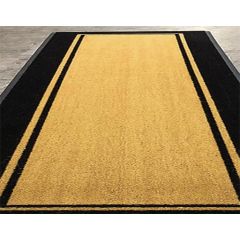
Heritage Personalized Coir Door Mat
#775 Epoxy Flooring Adhesive
#560 Rubber Flooring Adhesive
#110 Epoxy Nose Caulk
#300 Water Based Contact Adhesive
#400 Neoprene Contact Adhesive
Rotary Table & Rig Floor Mats
Fore-Runner Mat
Safety Track Resilient Medium Non-Skid Tape
3M Vinyl Loop Wet Area Matting