




Description
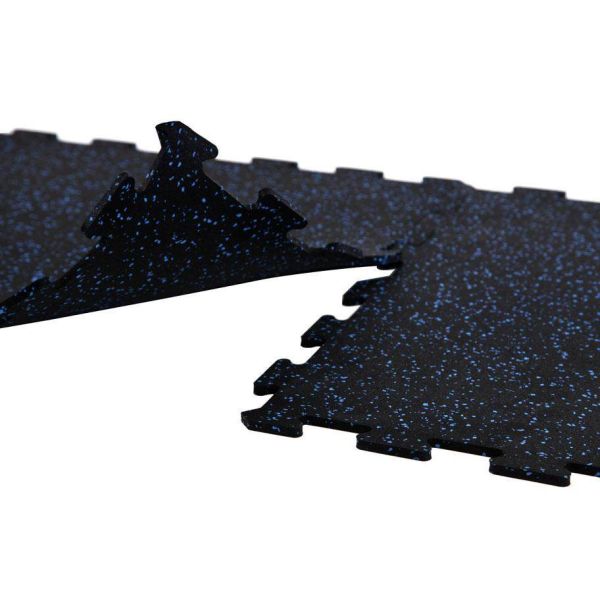
Interlocking rubber tiles are the gym floor you can put down yourself. They snap together edge to edge — no glue, no adhesive, no installer — so a garage, basement, or home gym goes from bare slab to finished rubber floor in an afternoon. And because they lock rather than bond, you can add to them, pull them up, or take them with you when the space changes.
What Interlocking Rubber Tiles Do Before Your Floor Pays for It
A workout floor takes a beating — dropped dumbbells, dragged equipment, foot traffic, sweat. On bare concrete or a finished floor, that wear lands directly on the surface. Interlocking tiles put a layer of dense rubber between the workout and the floor, soaking up impact and protecting what's underneath.
They also give you grip and a little cushion underfoot, which matters for safety and comfort during a session. Because each tile locks to the next, the surface holds together as a single floor instead of sliding mats — no shifting, no gaps to trip on, no edges curling up mid-workout.
Why Interlocking Tiles, and Why These
The whole idea of a tile is the locking edge. Each one snaps into its neighbors with no adhesive, so you cover exactly the area you want and can expand or rearrange it later — something a glued roll can't do. That makes tiles the easiest rubber floor to install, and the only one you can realistically take with you.
These are made from recycled rubber diverted from the waste stream, so the same density that makes them tough also keeps material out of a landfill. They're tested low for VOCs — the gases that flooring can off-gas indoors — and they contribute toward LEED credits, which matters on commercial and institutional projects.
They come in three thicknesses, from 1/4 inch up to 1/2 inch, so you can match the tile to the load, and in 19 colors with a standard 10% color fleck mixed into the rubber — so the floor can match a brand palette or simply look better than plain black.
Where Interlocking Tiles Belong, and Where They Don't
Tiles are the natural pick for spaces that change or grow: home and garage gyms, basements, multi-use rooms, studios, and any layout you might rearrange. The no-adhesive install means no damage to the floor below, which is ideal for a rental or a finished basement.
Where they're less suited is a dedicated heavy-drop zone — for repeated dropped barbells and Olympic lifts, our heavy-duty gym matting is built for that punishment. And for a large, permanent, wall-to-wall commercial floor, rolls give you fewer seams.
Tiles win on flexibility; rolls win on seamlessness; heavy-duty matting wins in the drop zone. All three are part of the wider gym flooring lineup, because different spaces call for different surfaces.
Three Things to Check Before You Spec Them
Three things decide whether tiles are right and which ones you need.
First, thickness against use. For bodyweight training, cardio, and general fitness, 1/4 inch to 3/8 inch is usually enough. For busier rooms and heavier equipment, step up to 1/2 inch. If you're regularly dropping loaded barbells, that's past what tiles are for — the heavy-duty matting is the surface built to absorb it.
Second, the coverage and layout. Each tile is 25 inches across including the locking tabs, so measure your space and plan for the border tiles you'll trim to fit walls, doorways, and equipment. Decide on color while you're at it — there are 19 to choose from.
Third, the subfloor. Tiles want a clean, flat, dry surface to lock over. They go down without adhesive and hold together by the locks and their own weight, so the prep is simple — but a level subfloor keeps the seams tight and the floor flat over time.
Why Mats Inc.
Mats Inc. has matched surfaces to floors since 1964, and a tile floor is a friendly project once we know the room and how it gets used. We'll help you settle on a thickness, pick from the 19 colors, and work out the tile count so you order the right amount with the fewest offcuts.
We specify rather than install, so the focus is getting the spec and the layout right — and pointing you to recycled, low-emitting tiles that earn their place on a green-building project. Every order is backed by our one-year limited warranty.
| Format | Interlocking tiles — snap together, no adhesive |
| Tile size | 25″ across, including locking tabs (24″ square style also available) |
| Thickness | 1/4″ (6 mm), 3/8″ (9 mm), 1/2″ (12 mm) |
| Material | Recycled rubber, diverted from the waste stream |
| Colors | 19 colors, standard 10% color fleck |
| Density | 68.3 lb/ft³ (ASTM E96) |
| Tensile strength | 265 psi (ASTM D412) |
| Hardness | Shore A 65 ±5 (ASTM D2240) |
| Slip resistance | Coefficient of friction 0.84–0.90 (ASTM C1028) |
| Abrasion | 0.33–0.35 g loss, 2,000 cycles (Taber, ASTM D4060) |
| VOC emissions | < 0.05 mg/m³ (CDPH v1.2 — low-emitting) |
| LEED | Contributes toward MR and EQ credits |
| Installation | Snap-together over a clean, flat, dry subfloor; no adhesive |
| Maintenance | Sweep or vacuum; damp mop with a neutral cleaner |
| Warranty | 1-year limited (Mats Inc.) |
Frequently Asked Questions
What are interlocking rubber tiles made of?
Answered by Dustin Thompson, Owner & CEO
They're made from recycled rubber — material diverted from the waste stream and bound into a dense, solid tile. That density is what does the work: at about 68 pounds per cubic foot with a firm Shore A 65 hardness, the rubber absorbs impact and stands up to equipment without compressing. The recycled content puts reclaimed material back to use, and the tiles test low for VOCs, so they're a sound choice for indoor air.
How durable are they, and what wears them out?
Answered by Dustin Thompson, Owner & CEO
Built right, a rubber tile floor lasts many years — often a decade or more — because dense recycled rubber shrugs off foot traffic and equipment. The numbers back it up, with 265 psi tensile strength and very low abrasion loss in standard Taber testing.
What shortens their life is usually the wrong thickness for the load, gaps left between poorly fitted tiles, or harsh solvent cleaners. A thickness matched to use and a neutral cleaner keep them going.
How do interlocking tiles install — do I need glue?
Answered by Dustin Thompson, Owner & CEO
No glue. Each tile has interlocking edges that snap into the next, so the floor goes down as a connected sheet held by the locks and its own weight. Start from one corner, work across a clean, flat, dry subfloor, and trim the border tiles to fit walls and around racks.
Because there's no adhesive, you can lift and relock them later — which is what makes tiles so easy to live with, and so kind to the floor underneath.
What size are the tiles, and how many do I need?
Answered by Jinna Hopson, Vice President of Marketing
Each interlocking tile is 25 inches across, including the locking tabs, so a handful covers a surprising amount of floor. Measure your space, then plan for the border tiles you'll trim to fit walls, doorways, and equipment.
Tell us the room dimensions and we'll help you work out the tile count — and whether a 24-inch square tile style suits a glued or loose-laid layout better for your room.
What colors do they come in?
Answered by Jinna Hopson, Vice President of Marketing
Nineteen, which is unusual for gym flooring. Every tile comes with a standard 10% color fleck mixed into the rubber, in shades from grey, blue, and teal to red, green, gold and more, plus near-solid charcoal and black.
A commercial studio can match its brand palette, and a home gym can pick something that doesn't look industrial. Because the color is part of the rubber rather than a coating, it won't wear off underfoot.
Are interlocking tiles a good choice for a home or basement gym?
Answered by Jinna Hopson, Vice President of Marketing
They're one of the best, especially when you don't want to glue anything down. The tiles lock together over a basement, garage, or spare-room floor with no adhesive and no damage to what's underneath, so they suit a rental or a finished space. You can floor just the training area, add tiles as the gym grows, and pull them up if you move. For the heaviest lifting, pair them with heavier matting in the drop zone.
By Jinna Hopson, Vice President of Marketing, Mats Inc.
Q&A
Frequently Asked Questions
What are interlocking rubber tiles made of?
Answered by Dustin Thompson, Owner & CEO
They're made from recycled rubber — material diverted from the waste stream and bound into a dense, solid tile. That density is what does the work: at about 68 pounds per cubic foot with a firm Shore A 65 hardness, the rubber absorbs impact and stands up to equipment without compressing. The recycled content puts reclaimed material back to use, and the tiles test low for VOCs, so they're a sound choice for indoor air.
How durable are they, and what wears them out?
Answered by Dustin Thompson, Owner & CEO
Built right, a rubber tile floor lasts many years — often a decade or more — because dense recycled rubber shrugs off foot traffic and equipment. The numbers back it up, with 265 psi tensile strength and very low abrasion loss in standard Taber testing.
What shortens their life is usually the wrong thickness for the load, gaps left between poorly fitted tiles, or harsh solvent cleaners. A thickness matched to use and a neutral cleaner keep them going.
How do interlocking tiles install — do I need glue?
Answered by Dustin Thompson, Owner & CEO
No glue. Each tile has interlocking edges that snap into the next, so the floor goes down as a connected sheet held by the locks and its own weight. Start from one corner, work across a clean, flat, dry subfloor, and trim the border tiles to fit walls and around racks.
Because there's no adhesive, you can lift and relock them later — which is what makes tiles so easy to live with, and so kind to the floor underneath.
What size are the tiles, and how many do I need?
Answered by Jinna Hopson, Vice President of Marketing
Each interlocking tile is 25 inches across, including the locking tabs, so a handful covers a surprising amount of floor. Measure your space, then plan for the border tiles you'll trim to fit walls, doorways, and equipment.
Tell us the room dimensions and we'll help you work out the tile count — and whether a 24-inch square tile style suits a glued or loose-laid layout better for your room.
What colors do they come in?
Answered by Jinna Hopson, Vice President of Marketing
Nineteen, which is unusual for gym flooring. Every tile comes with a standard 10% color fleck mixed into the rubber, in shades from grey, blue, and teal to red, green, gold and more, plus near-solid charcoal and black.
A commercial studio can match its brand palette, and a home gym can pick something that doesn't look industrial. Because the color is part of the rubber rather than a coating, it won't wear off underfoot.
Are interlocking tiles a good choice for a home or basement gym?
Answered by Jinna Hopson, Vice President of Marketing
They're one of the best, especially when you don't want to glue anything down. The tiles lock together over a basement, garage, or spare-room floor with no adhesive and no damage to what's underneath, so they suit a rental or a finished space. You can floor just the training area, add tiles as the gym grows, and pull them up if you move. For the heaviest lifting, pair them with heavier matting in the drop zone.
By Jinna Hopson, Vice President of Marketing, Mats Inc.
Reviews
Write Your Own Review
Related Products
Super Scrape Rubber Mats
Safety Track Non-Skid Tape - Coarse

Smooth Marbleized Vinyl Switchboard Matting (Mil Spec)
Super Scrape Rubber Logo Mats
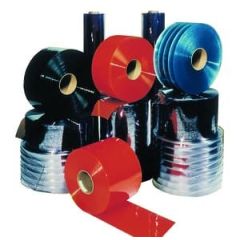
Strip Doors
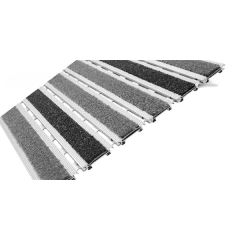
Perfec Clean 3/8" Rollup Mats - Aluminum Hinge
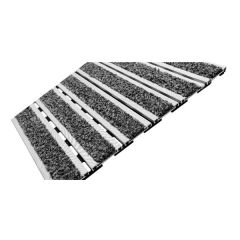
Perfec Clean 3/8" Rollup Mats - Rubber Hinge
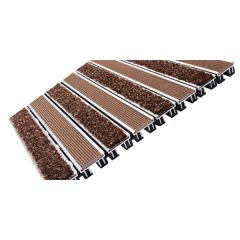
Perfec Clean 3/4" Rollup Grate - Rubber Hinge
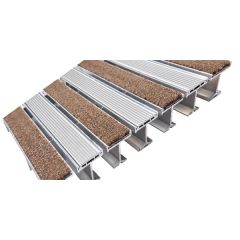
Perfec Clean 1-5/8" Grate
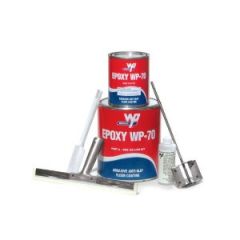
WP-70 Non-Skid Epoxy Coating