




More Information
| Manufacturer | Musson Rubber Company |
|---|
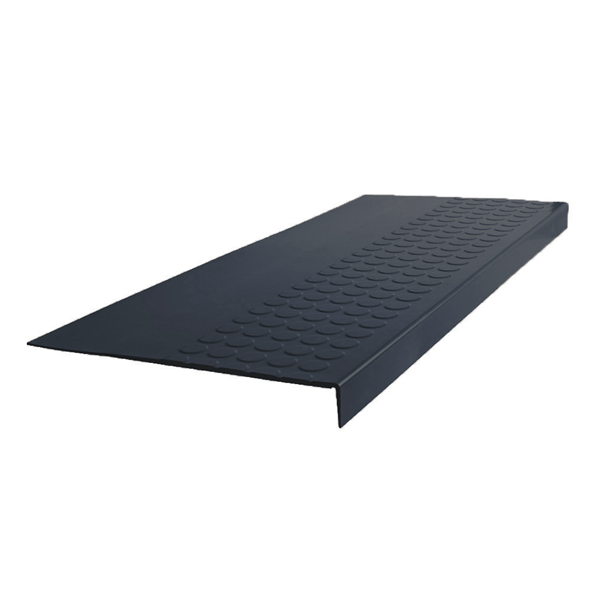
High Profile Raised Disc Pattern Stair Tread
Product Number:
#780R
$78.00

Have a question? We're here to help!
Description
What a Raised Disc Stair Tread Does Before Someone Misses a Step
A stair tread cover is the last surface between a shoe and a hard landing. On interior stairs the failure almost never starts in the middle of the step. It starts at the nose, where the edge wears round, loses grip, and stops reading as an edge at all. A raised disc tread rebuilds that edge and puts a textured walking surface on top of it.
The disc pattern works by contact geometry. Raised circular buttons stand above the field of the tread, so a sole meets many small high points instead of one flat plane. Water, grit, or floor finish that would sheet across a smooth step gets displaced into the low areas between the discs, and the shoe keeps finding rubber.
That matters most on stairs carrying the same footfall every day — school corridors, hospital wings, apartment cores, plant mezzanines. Once a nosing wears round, the choices narrow to rebuilding the step or covering it. Non slip stair treads bonded over the existing step restore both the edge and the walking surface without taking the stairwell out of service for long.
Why the Raised Disc Profile, and Why This One
This is the high-profile version of the disc design. The disc surface runs 7 inches deep across the walking area, backed by a 4-1/4 inch smooth section toward the rear of the step. Depth is 12-1/16 inches nominal measured from inside the nose, and the tread is 3/16 inch thick at the front, tapering to 1/8 inch at the back so it feathers out rather than leaving a lip to catch.
The nose is where the engineering shows. It runs 1-9/16 inches long at 1/8 inch thick, and it is both tapered and adjustable — a trim mark is molded into the underside behind the nose so the drop can be set to the actual step edge instead of hoping the step matches the tread. That adjustability is the difference between a tread that sits down flat and one that bridges.
Profile height is the real decision between this tread and a low-profile disc. Taller discs give a more aggressive footing and a texture that reads clearly underfoot, which is why raised patterns land on stairs that run wet, dirty, or heavily loaded. A flatter disc gives up some of that bite in exchange for a surface that sweeps clean with less effort.
For stairs that need more than pattern alone, an abrasive-strip version is available — either 2-3/4 inch strips or a single 2 inch strip. The single-strip configuration is the visually impaired option, marking the leading edge with contrast as well as grit. Strip colors are black as standard, with safety yellow, beige, gray, and brown also offered.
Color is a specification choice too, not an afterthought. Thirteen colors are stocked, each available in both a solid and a marbleized finish: black, chocolate, charcoal, wine, light gray, medium gray, red, sand, dark blue, brown, light blue, green, and cream. Marbleized surfaces carry the scuffing and tracked grit a stairwell collects between cleanings better than a flat solid does.
Where It Belongs, and What It Is Not
This is an interior tread. It is built for commercial, industrial, and institutional buildings — the stairwells in schools, hospitals, offices, plants, and multifamily properties that see continuous traffic and get cleaned on a schedule. It works as a cover bonded over an existing step rather than as a structural tread, so the step underneath still carries the load.
What it is not is an exterior tread. Rubber stair treads for outdoor steps use a compound built for UV exposure and freeze-thaw cycling, and this one is specified for interior use. Putting an indoor tread on an exterior stair shortens its service life and puts the adhesive bond under conditions it was never chosen for.
On a full stairwell job the tread is one part of an assembly. Coved risers close the back of the step and cut the fitting work at the riser joint, and a matching high-profile disc landing tile carries the same pattern and color across landings. It sits alongside the rest of the interior stair treads Mats Inc. stocks, which share the same adhesive families and the same color logic.
Three Things to Check Before You Spec It
First, match the profile to the traffic. High profile is the answer when the stair sees constant volume, tracked-in grit, or wet shoes, because the raised discs keep working when the surface is contaminated. If the stair is quiet and the priority is a fast mop, a low-profile disc pattern covers the same ground with less texture to clean around.
Second, measure the step, not the stair. Depth is 12-1/16 inches nominal from inside the nose, and the nose itself is square nose only at 1-9/16 inches long — so a rounded or bullnose step edge is worth confirming before you order. Because the nose is adjustable at the trim mark, the drop has some give; the depth and the width do not.
Third, decide what goes around it. Three adhesive families are specified for this tread — acrylic, neoprene contact, and water-based contact — and which one fits depends on the substrate and site conditions, so settle that before the treads arrive. If risers and landings fall inside the same scope, coved risers and the matching disc landing tile keep pattern and color consistent.
Why Mats Inc.
Mats Inc. has been specifying stair treads for commercial buildings since 1964, and stair work is where the small details decide the outcome: nose length against the actual step, where the trim mark falls, which adhesive suits the substrate, whether the risers and landing tile need to match. We publish the spec figures the manufacturer documents and say plainly when a number is not published rather than filling the gap.
| Product type | Interior rubber stair tread cover, high-profile raised disc pattern |
| Thickness | 3/16 in., tapering to 1/8 in. at the back |
| Depth | 12-1/16 in. nominal, from inside of nose |
| Nose | Square nose only; 1-9/16 in. long, 1/8 in. thick; tapered and adjustable at molded trim mark |
| Disc pattern area | 7 in. deep |
| Smooth back area | 4-1/4 in. deep |
| Standard lengths | 36 in. to 108 in. in 6-in. increments |
| Weight | 2 lbs per linear foot |
| Packaging | 6 treads per carton through 72 in.; 4 treads per carton above 72 in. |
| Colors | 13 colors, each in solid and marbleized (26 total): black, chocolate, charcoal, wine, light gray, medium gray, red, sand, dark blue, brown, light blue, green, cream |
| Abrasive strip option | 2-3/4 in. strips or single 2 in. strip; black (standard), safety yellow, beige, gray, brown |
| Installation | Adhesive bonded — acrylic, neoprene contact, or water-based contact adhesive |
| Matching landing tile | 19-11/16 in. x 19-11/16 in. (50 x 50 cm); 5/32 in. overall thickness, 1/8 in. excluding disc profile; 3/64 in. profile height; 16 tiles / 43 sq. ft. per carton |
| Application | Interior use |
| Warranty | 1-year limited (Mats Inc.) |
Frequently Asked Questions
What does the raised disc pattern do that a smooth tread does not?
Answered by Dustin Thompson, Owner & CEO
It changes what the shoe actually touches. A smooth tread gives the sole one continuous plane, and anything sitting on that plane — water, dust, fresh floor finish — ends up between the shoe and the rubber. The raised discs break that plane into many small high points with channels between them, so contaminants have somewhere to go and the sole still finds rubber.
The high-profile version stands those discs up further than the low-profile version does. On a stair that stays clean and dry, the difference is modest. On a stair taking wet shoes off a lobby floor every morning, it is the whole reason you specified a textured tread.
How thick is this tread, and where does it wear first?
Answered by Dustin Thompson, Owner & CEO
It is 3/16 inch thick at the front and tapers to 1/8 inch at the back, over a depth of 12-1/16 inches measured from inside the nose. The disc pattern covers the front 7 inches, which is where people actually land, and the remaining 4-1/4 inches is smooth back sitting toward the riser. The nose is 1-9/16 inches long at 1/8 inch thick.
Wear concentrates at the nose, because that is where the foot strikes on the way down. A published wear-life figure is not part of the spec sheet for this tread, so we do not quote one. What we will say is that the nose is the part to inspect, and the abrasive-strip version exists for stairs where the nose takes an unusual beating.
Can these be installed on outdoor steps?
Answered by Dustin Thompson, Owner & CEO
No. This tread is specified for interior use. Exterior stairs need a compound formulated for UV exposure and freeze-thaw cycling, and putting an interior tread outside shortens its service life and stresses the adhesive bond under conditions it was not chosen for. If the stair is outside, ask us for the exterior tread instead.
Indoors, installation is adhesive bonded, with acrylic, neoprene contact, and water-based contact being the three specified. Whatever the step is built from, it needs to be sound, clean, and dry before adhesive goes down. A tread bonded over dust or trapped moisture lifts at the nose first, and the nose is the one place you cannot afford a loose edge.
What lengths do these come in, and what if my steps are wider than the longest tread?
Answered by Jinna Hopson, Vice President of Marketing
Standard lengths run from 36 inches to 108 inches in 6-inch increments. Depth is fixed at 12-1/16 inches from inside the nose, so length is really the only dimension you are choosing. The nose is adjustable at a molded trim mark, which gives you some latitude on the step edge but none on width. Treads pack 6 per carton through 72 inches and 4 per carton above that, at roughly 2 pounds per linear foot.
Measure each step width rather than assuming they all match, because older stairs drift more than people expect. For steps wider than 108 inches the usual approach is two treads butted at a seam, and where that seam lands is worth deciding on purpose rather than leaving to whoever shows up with the adhesive.
What colors are available, and which ones hold up best in a busy stairwell?
Answered by Jinna Hopson, Vice President of Marketing
Thirteen colors, each offered in a solid and a marbleized finish, so 26 choices in total: black, chocolate, charcoal, wine, light gray, medium gray, red, sand, dark blue, brown, light blue, green, and cream. We can send the current color card before you commit, because colors on a screen are never the colors on a stair.
For a stairwell with real traffic, marbleized almost always wins. A flat solid shows every scuff, every dropped coffee, and every bit of grit tracked up from the lobby between cleanings. Marbleized patterns carry that same soil without looking neglected, which is why they stay on institutional stairs year after year while solids get replaced early for looking tired.
Can the risers and landings be matched to the treads?
Answered by Jinna Hopson, Vice President of Marketing
Yes, and it is worth doing. Coved risers finish the back of the step and pull the same color up the riser face, so the stair reads as one surface instead of a tread stuck onto a bare step. They also cut down the fitting work where the tread meets the riser.
Landings are the other half. A matching high-profile disc landing tile carries the identical pattern and color across the landing at 19-11/16 inches square, 5/32 inch thick overall and 1/8 inch excluding the disc profile, so the pattern does not stop and restart at every turn. Each carton covers 43 square feet. Specifying tread, riser, and tile together in one color is the difference between a finished stairwell and a repaired one.
By Dustin Thompson, Owner & CEO, Mats Inc.
Reviews
Write Your Own Review
Related Products
Super Scrape Rubber Mats
Safety Track Non-Skid Tape - Coarse

Smooth Marbleized Vinyl Switchboard Matting (Mil Spec)
Super Scrape Rubber Logo Mats
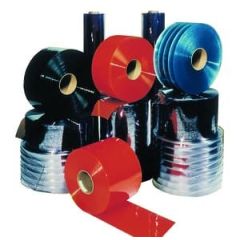
Strip Doors
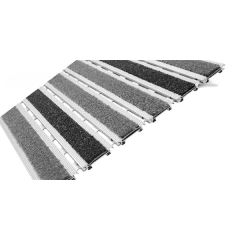
Perfec Clean 3/8" Rollup Mats - Aluminum Hinge
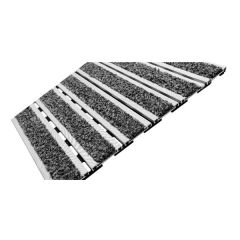
Perfec Clean 3/8" Rollup Mats - Rubber Hinge
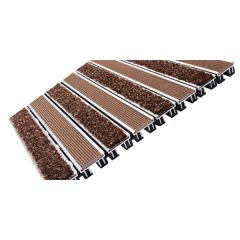
Perfec Clean 3/4" Rollup Grate - Rubber Hinge
Perfec Clean 1-5/8" Grate
WP-70 Non-Skid Epoxy Coating