




More Information
| Manufacturer | Musson Rubber Company |
|---|
$21.00

Have a question? We're here to help!
Description
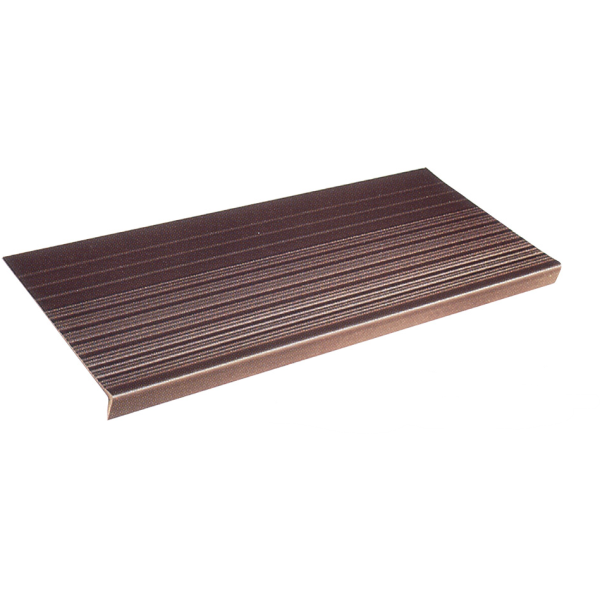
In a stairwell that moves real traffic, the tread is a consumable and the staircase is not. Every foot lands on the same few inches of nosing, hundreds of times a day, and once that edge is gone the repair means closing the flight. Heavy duty vinyl stair treads put a quarter inch of wear material exactly where the traffic concentrates, so the step underneath never becomes the problem.
What Heavy Duty Vinyl Stair Treads Do Before a Stairwell Becomes a Liability
A stair tread cover is a sacrificial surface. It absorbs the foot traffic, the tracked grit, and the daily cleaning that would otherwise abrade concrete, wear the finish off wood, or polish a terrazzo step into something slick. When the tread finally gives out, you pull one piece off one step. The structure was never in the wear path.
The nose carries the load. Worn, rounded, or chipped nosings are the leading physical cause of stair falls in commercial buildings, because a foot that lands on a degraded edge gets no defined stopping point. A full-depth tread holds a crisp edge and a ribbed walking surface across the whole step, which is why slip resistant stair treads are usually the first item specified in a stairwell renovation.
Why a 1/4" Sharp-Rib Vinyl Tread, and Why This One
This is the heavy gauge end of the vinyl range. The tread measures 1/4" thick at the wear area, with extra material built up at the front where the nose takes the concentrated traffic. That is meaningfully more material than a medium duty vinyl tread carries, and in a high-count stairwell that difference shows up as years of service rather than a thicker line on a spec sheet.
The surface is a sharp-rib design, engineered for the heaviest traffic loads. Ribs give the foot something to bite against and channel tracked water and grit off the walking line instead of letting it sit as a film across the step. The rib profile also hides the scuffing that a smooth vinyl surface displays from the landing.
The material is first quality homogeneous vinyl with color running through the full thickness. There is no printed layer to wear off and no different-colored substrate waiting underneath. A tread that abrades to a lighter shade in the traffic lane reads as neglected long before it has actually failed, and homogeneous construction removes that failure mode entirely.
The tread is 12" deep with a 1-1/4" square nose, contains no asbestos fiber, and meets Fed. Spec. RR-T-650E, Type B. It is trimmable, so a single stock length can be cut to fit the actual step rather than forcing the stair to match the catalog.
Where It Belongs — and Where It Doesn't
This tread installs over concrete, metal, wood, and terrazzo, which covers most of what a commercial stairwell is actually built from. It belongs in school and university egress stairs, hospital and municipal buildings, office towers, transit and back-of-house runs, apartment and multi-family stairwells, and any flight where the step count and the traffic count are both high. Among interior stair treads, it sits at the top of the vinyl gauge range.
It is specified for interior use. Outdoor steps introduce freeze-thaw cycling that works the bond loose at the nose, UV exposure that degrades vinyl over time, and water that migrates underneath and stays there. The usual result is a lifted nose after one winter, which converts a safety product into a trip hazard. Exterior stairs need a tread built for weather and an adhesive rated for it.
The nose is square only. On a step with a rounded or bullnose edge, a square-nose tread will not seat against the profile, and the gap that opens under the nose becomes the failure point. Bullnose steps need a curved-nose tread instead. This is also not the answer for steel-wheeled cart traffic or tool-cart impact, where a rubber tread handles the point loading better.
Three Things to Check Before You Spec It
Most stair tread failures start as measurement or preparation problems, not product problems. Three checks before the order goes in will keep the install clean and prevent a second delivery mid-project.
First, confirm the step edge is square. Walk the flight and look at the nosing profile, not just the step surface. A square-edged concrete, metal-pan, wood, or terrazzo step takes this tread directly. A worn edge that has rounded over from years of traffic needs to be built back square during prep, or the tread will bridge the gap instead of bonding to it.
Second, measure the run and the width at three points in the flight. The depth is fixed at 12", so a step with a deeper run leaves an exposed strip at the back — usually fine against a riser, but you want to know before delivery. Widths in older stairwells drift by a quarter inch or more from top to bottom, so measure the top, middle, and bottom step and order to the widest.
Third, plan the substrate prep and the bonding system. The manufacturer specifies a neoprene contact adhesive applied to the back of the tread, the back of the nose, and the step itself, plus an epoxy nose caulk inside the joint where the nose meets the tread. The surface has to be clean, sound, and dry first. Old adhesive residue and slab moisture both cause the nose to release before anything else does.
Why Mats Inc.
Mats Inc. has specified commercial stair treads since 1964, and a heavy-traffic stairwell is where a wrong order costs the most in labor. We work through step counts, run depths, edge profiles, substrate condition, and the adhesive and caulk together before the order is placed, rather than shipping treads and leaving the crew to sort out the bonding system on site. If your flight has an odd measurement or a mixed substrate, tell us and we will spec around it.
| Material | First quality homogeneous vinyl, color throughout thickness |
|---|---|
| Surface design | Heavy gauge sharp-rib, for heaviest traffic |
| Thickness | 1/4" at wear area; extra thickness at the front |
| Depth | 12" |
| Nose | 1-1/4" square nose |
| Lengths | 24", 30", 36", 42", 48", 54", 60", 72", 84", 96" |
| Colors | Brown, Sand, Gray, Black |
| Substrates | Concrete, metal, wood, terrazzo |
| Composition | Contains no asbestos fiber |
| Standard | Meets Fed. Spec. RR-T-650E, Type B |
| Application | Interior use |
| Installation | Neoprene contact adhesive plus epoxy nose caulk |
| Warranty | 1-year limited (Mats Inc.) |
Frequently Asked Questions
What does "heavy gauge sharp-rib" actually mean on a stair tread?
Answered by Dustin Thompson, Owner & CEO
Two separate things. Heavy gauge refers to the amount of material — 1/4" at the wear area, which is the thickest vinyl tread commonly specified for interior stairs. Sharp-rib refers to the surface profile: defined raised ribs running across the walking direction rather than a smooth or lightly textured face.
The ribs do real work. They give the sole of a shoe an edge to engage, and they keep tracked water and grit from spreading into an even film across the step. On a smooth tread, that film is what makes a stairwell slippery on a wet morning. The rib channels also hide scuff marks, which matters in a stairwell that gets looked at from the landing above.
How much difference does the 1/4" thickness make in a busy stairwell?
Answered by Dustin Thompson, Owner & CEO
More than the number suggests. A medium duty vinyl tread runs 3/16" at the wear area; this one runs 1/4", with additional material built up at the front nose. Wear is not spread evenly across a tread — it concentrates in a narrow band on the nose and the first few inches behind it, so the extra material sits exactly where the abrasion happens.
In a stairwell with heavy daily traffic, that difference is the gap between replacing treads on a maintenance cycle and replacing them because the nose wore through. The color also runs through the full thickness, so the tread looks the same at year six as it did at year one even as the rib profile softens.
Can these be installed on metal pan stairs, or only concrete?
Answered by Dustin Thompson, Owner & CEO
Metal is one of the four approved substrates, along with concrete, wood, and terrazzo. Metal pan stairs are a common application, and the tread bonds directly to the pan surface once it is clean, sound, and dry. What matters more than the substrate material is the condition of the surface and the squareness of the nose edge.
One caution on metal: pan stairs sometimes have a filled or poured surface that has cracked or separated from the pan. Bonding a tread over a loose fill puts the adhesive on something that is already moving, and the tread releases at the nose within a season. Resolve the fill before the treads go down. These are interior treads and should not be used on exterior stairs regardless of substrate.
What lengths are available, and what if my stairs measure between sizes?
Answered by Jinna Hopson, Vice President of Marketing
Stock lengths run 24", 30", 36", 42", 48", 54", 60", 72", 84", and 96", all at a fixed 12" depth. If your stair width falls between two sizes, order the next length up and trim to fit on site — the vinyl cuts cleanly with a straightedge and a sharp blade, and trimming to the step is how these are designed to be installed.
Measure more than one step. Stairwells built before the 1990s frequently vary by a quarter inch or more across a flight, and ordering to a single measurement means the last few treads come up short. Short is the one error that cannot be corrected on site. Note that this tread does not come in an 18" length; the range starts at 24".
Which color works best in a high-traffic commercial stairwell?
Answered by Jinna Hopson, Vice President of Marketing
There are four standard colors: Brown, Sand, Gray, and Black. Gray is the workhorse in commercial and institutional buildings — it sits between what gets tracked in and what shows against a dark surface, so grit, dust, and salt residue are all less visible between cleanings. Sand behaves similarly in buildings with lighter finishes.
Black looks sharp against a painted riser and reads as intentional in a finished lobby stair, but it shows winter salt clearly and needs a tighter cleaning cadence to keep looking right. Brown reads warmer and works well in residential and multi-family stairwells. Whichever you pick, the color runs through the material, so it does not shift as the surface wears.
Can I match risers to these treads for a finished stairwell?
Answered by Jinna Hopson, Vice President of Marketing
Yes. Coved vinyl risers are ordered separately in matching colors and cover the vertical face of each step, and they can be trimmed in both height and length to fit the actual stair. Some specifiers match tread and riser exactly; others run a contrasting riser, which gives each step a visible horizontal line and helps people read the flight on the way down.
Covering treads, noses, risers, and landings together is what makes a renovated stairwell read as new rather than patched. Send us the step count and the flight dimensions and we will work out tread, riser, and adhesive quantities in one pass so nothing arrives short mid-install.
Written by Dustin Thompson, Owner & CEO, Mats Inc.
Reviews
Write Your Own Review
Related Products
Heritage Personalized Coir Door Mat
#775 Epoxy Flooring Adhesive
#560 Rubber Flooring Adhesive
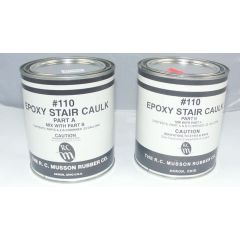
#110 Epoxy Nose Caulk
#300 Water Based Contact Adhesive
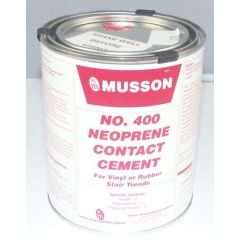
#400 Neoprene Contact Adhesive
Rotary Table & Rig Floor Mats
Fore-Runner Mat
Safety Track Resilient Medium Non-Skid Tape
3M Vinyl Loop Wet Area Matting