




More Information
| Manufacturer | M+A Matting |
|---|
Reviews
- Great MatJust what I needed and arrived quickly
Posted on
$52.00

Have a question? We're here to help!
Description
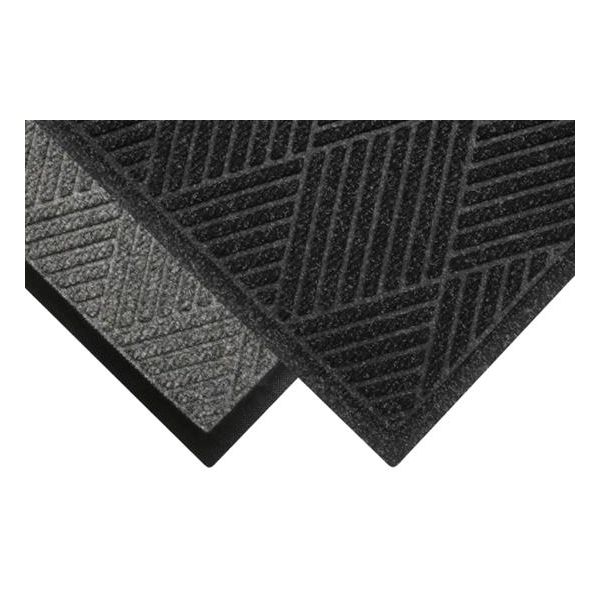
Waterhog Eco Premier Mats put a heavy-duty bi-level Waterhog surface at the door, with a diamond-pattern face that scrapes grit and pulls water off shoes from any direction. The raised pattern traps dirt and moisture below the walking surface so it isn't tracked deeper inside, and a rubber-reinforced face keeps the mat doing that for years instead of crushing flat under traffic.
What a Waterhog Eco Premier Mat Stops Before It Reaches Your Floor
Most of the dirt and water in a building comes in on shoes. ISSA field data shows a building takes on up to 12 times more dirt during wet weather, and it takes six to eight steps to walk a sole dry. A mat at the entrance is what decides whether that grit and moisture get caught — or get ground into the floor past the door.
The Waterhog surface is bi-level: raised ridges scrape grit and water off shoes, and recessed channels hold both below the walking surface so they aren't picked back up. A raised water-dam border rings the mat and keeps what it collects — up to 1.5 gallons of water per square yard — on the mat instead of spreading toward your floor.
Why the Diamond Waterhog Surface, and Why This One
The face is solution-dyed PET fiber, 24 ounces per square yard, made from at least 90% recycled content reclaimed from plastic bottles. The diamond pattern gives it multi-directional bite — it scrapes just as well whether foot or cart traffic crosses it straight on or at an angle, which is how traffic actually moves through a wide doorway.
What keeps it working is the rubber reinforcement molded through the raised pattern. It stops the pile from crushing flat under steady traffic, and a crushed mat is the usual reason an entrance mat gets pulled early — once it lies down it stops scraping and starts looking worn. The solution-dyed fiber also resists staining and won't fade or rot, so it keeps its color and grip.
Underneath is a 78-mil SBR rubber backing with 20% recycled tire content, in a universal cleated version for carpet or a smooth version for hard floors. Beveled edges ease the step on and off. You choose a classic rubber border for a tougher, more utilitarian edge, or a fashion fabric border that color-matches the mat for a cleaner, more finished look.
Where It Belongs (and Where It Doesn't)
This is a workhorse entrance mat for indoor and outdoor commercial entries — hotel and office lobbies, retail and restaurant doors, healthcare entrances, schools, and similar high-traffic thresholds. The PET face is rated for indoor or outdoor use and isn't bothered by salt or ice melt, so it holds up at a real front door through the seasons. It's also certified high-traction by the National Floor Safety Institute.
Where it's less suited is the heaviest coarse-debris duty — a loading dock caked in mud and gravel, or a job-site door. It scrapes and holds a lot, but for that kind of punishment you'd put a coarse outdoor scraper first and let the Waterhog finish the job a step inside. As the main entrance mat for ordinary commercial traffic, though, it's built to be the one that does the work.
Three Things to Check Before You Spec It
Three things decide whether this is the right Waterhog for your door.
First, the floor under it. A universal cleated backing grips carpet and stops the mat creeping; a smooth backing is the one for tile, stone, polished concrete, or other hard floors, where cleats can rock. Match the backing to the surface or the mat will shift as people walk it.
Second, the size of the run. It comes in standard sizes from 2'×3' up to 6'×20', plus longer custom lengths. Size it to cover the six-to-eight steps it takes to dry a sole, not just the door opening — an undersized mat lets damp shoes finish the job on your floor and takes all the wear in one strip.
Third, the border. A classic rubber border is the more rugged, lower-maintenance edge for heavy or outdoor use; a fashion fabric border color-matches the mat for a more polished look indoors. Pick by how exposed the spot is and how much the appearance matters at that threshold.
Why Mats Inc.
Mats Inc. has specified commercial entrance matting since 1964, so when you're choosing a Waterhog for a specific door, you're working with people who match the surface, backing, and border to your floor and your traffic rather than reading a box. We help you size the run, pick the backing for your floor, and choose the border for the look you want — and we'll tell you when a coarser scraper belongs in front of it. For the rest of the indoor range, see our all indoor entrance mats.
| Type | Indoor/outdoor commercial entrance mat |
| Surface | Solution-dyed PET, needle-punched, bi-level diamond pattern |
| Face weight | 24 oz/yd² |
| Recycled content | At least 90% recycled PET face; SBR rubber backing with 20% recycled tire content |
| Thickness | 3/8" overall (78-mil SBR backing) |
| Backing | SBR rubber — universal cleated (carpet) or smooth (hard floors) |
| Border | Classic rubber or fashion fabric |
| Water capacity | Up to 1.5 gallons per square yard |
| Edges / traction | Beveled edges; certified high-traction by the National Floor Safety Institute (NFSI) |
| Flammability | Passes DOC-FF1-70 (CPSC FF 1-70) |
| Colors | 11 |
| Sizes | Standard 2'×3' to 6'×20'; longer custom lengths available |
| Warranty | 1-year limited (Mats Inc.) |
Frequently Asked Questions
How does the bi-level diamond surface work?
Answered by Dustin Thompson, Owner & CEO
It works on two levels. The raised diamond ridges scrape grit and water off the bottom of shoes, and the recessed channels between them hold what's scraped below the walking surface, so it isn't picked up again and tracked deeper inside. The diamond layout also means it scrapes from any direction — useful at a wide door where people cross at all angles. A raised water-dam border rings the mat and holds the moisture it collects, up to 1.5 gallons per square yard, keeping it on the mat instead of on your floor.
How long does it hold up, and what wears it out?
Answered by Dustin Thompson, Owner & CEO
In ordinary commercial traffic, expect years of service. The reason it lasts is the rubber reinforcement molded through the raised pattern — it keeps the pile from crushing flat. A crushed pile is what usually ends a mat's life: once it lies down it stops scraping and starts looking worn.
The 24-ounce solution-dyed PET face resists staining and won't fade or rot, so it holds its look indoors or out. What shortens its life early is the wrong backing for the floor, or sizing it too small so a narrow strip takes all the traffic.
Can I use it outside, and how do I clean it?
Answered by Dustin Thompson, Owner & CEO
Yes — the PET face is rated for indoor or outdoor use and isn't affected by salt or ice melt, so it works at a real exterior door through the seasons, or just inside one. The main limit is the heaviest coarse debris: against mud and gravel, put a rugged scraper first and let this mat finish the job. Cleaning is simple — vacuum regularly, and hose or extract it when it's heavily soiled, then hang it to dry before putting it back down.
What sizes can I get?
Answered by Jinna Hopson, Vice President of Marketing
Standard sizes run from 2'×3' up to 6'×20', and longer custom lengths are available for a wide entry or a long walkway.
Size it to the traffic, not just the door. Aim to cover the six-to-eight steps it takes to dry a sole, so the mat protects the floor across the whole approach rather than getting walked past in a stride or two. For a busy entrance, lean toward the larger end.
What does it look like, and what colors are there?
Answered by Jinna Hopson, Vice President of Marketing
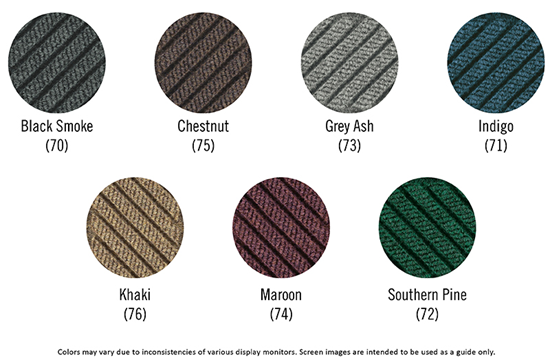
The diamond pattern gives it a more refined, finished look than a plain ribbed or waffle mat — it reads as upscale enough for a lobby while still being a serious working mat. There are 11 colors to match a building palette, and darker or neutral tones hide tracked-in dirt better between cleanings. Because the reinforced surface doesn't crush into shiny lanes, it keeps an even appearance across the whole mat instead of showing where everyone walks.
What's the difference between the classic and fashion border?
Answered by Jinna Hopson, Vice President of Marketing
The border changes both the look and the durability. A classic rubber border is the tougher, lower-maintenance edge — a good match for heavy traffic or outdoor exposure, where it takes abuse without showing it. A fashion fabric border color-matches the mat for a cleaner, more seamless look that suits a polished indoor entrance. Neither changes how the mat cleans shoes; it's about how rugged versus how finished you want the edge to look at that particular door.
By Dustin Thompson, Owner & CEO, Mats Inc.
Ordering Info
Reviews
Customer Reviews
- Great MatJust what I needed and arrived quickly
Posted on
Write Your Own Review
Related Products
Super Scrape Rubber Mats
Safety Track Non-Skid Tape - Coarse
Smooth Marbleized Vinyl Switchboard Matting (Mil Spec)
Super Scrape Rubber Logo Mats
Strip Doors
Perfec Clean 3/8" Rollup Mats - Aluminum Hinge
Perfec Clean 3/8" Rollup Mats - Rubber Hinge
Perfec Clean 3/4" Rollup Grate - Rubber Hinge
Perfec Clean 1-5/8" Grate
WP-70 Non-Skid Epoxy Coating