




Description
What Comfort King Does Before a Standing Shift Wears People Down
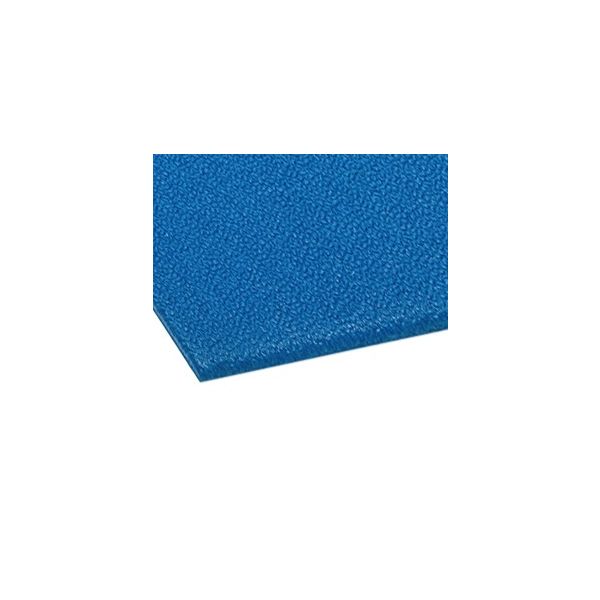
Comfort King is a cushioned anti-fatigue mat built for dry-area standing work. Its foam core delivers three times more resilience than a regular mat — every small weight shift gets a gentle push back instead of dead compression, and that steady rebound relieves stress on knees, feet, ankle joints, and pressure points over a long stretch of standing.
Anyone who has stood on bare concrete all day knows how it ends: sore feet, stiff knees, a back that complains before the shift does. Left alone, that fatigue turns into slower work, more breaks, and a higher risk of injury at cashier stations, benches, and counters. A standing mat with real rebound changes what the floor asks of the body.
Why This Foam, and Why This One
Plenty of foam mats feel soft the first week and flat by the third. Comfort King's core is a patented anti-fatigue PVC foam engineered for rebound rather than plain squish — measured at 30 percent resiliency per ASTM D-2632. That spring is what actually eases pressure on knee, foot, and ankle joints; softness alone doesn't do it.
The surface holds up too. A pebble-textured top gives shoes something to grip, and abrasion testing comes in at half a gram or less of material lost under the Taber method — a genuine wear surface, not a throwaway pad. Anti-microbial additives throughout the mat help hold off mold, mildew, and bacterial growth between cleanings.
Two thicknesses cover different kinds of days. The 3/8-inch version suits typical standing stations, while the 1/2-inch version adds 33 percent more cushioning for long hours over hard floors. Both come as standard mats, long runners, and full rolls, so one construction can serve a single register or a whole assembly line.
Where It Belongs, and What It Is Not
Comfort King belongs anywhere people stand in a dry area: workstations, finishing and assembly benches, cashier stations, pharmacy counters, and standing posts in hospitals and care facilities. It's equally at home on a salon or barber shop floor, where a stylist holds the same spot behind a chair for hours, and at a dry home kitchen sink or standing desk.
What it is not: a wet-area mat. There are no drainage holes here, and the foam is meant to stay dry — greasy dish lines and washdown zones call for the drainage-style options elsewhere in our anti-fatigue mats and runners lineup. Keeping Comfort King in dry service is what keeps the cushion doing its job.
Three Things to Check Before You Spec It
First, match the thickness to the hours. Where people rotate through a station, the 3/8-inch version carries the load comfortably. Where one person holds the same spot on concrete most of the day, the 1/2-inch version's 33 percent extra cushioning earns its place.
Second, size to the actual standing path. Standard mats run from 2 by 3 feet up to 4 by 12 feet, rolls come in widths from 2 to 6 feet at 60-foot lengths, and custom lengths up to 60 feet let one continuous mat trace a counter or work line without seams underfoot.
Third, pick the color for the setting. Black hides scuffs in back-of-house spaces, black with yellow borders makes the mat edge obvious where foot traffic and equipment mix, and blue or steel gray sit comfortably in front-of-house and clinical settings. One note: the 6-foot-wide roll isn't offered with yellow borders.
Why Mats Inc.
We've been matching mats to standing work since 1964, and Comfort King earns its spot in our line because it answers the most common complaint about foam mats: losing their bounce. We verify the construction and test figures behind every product we carry, and we back this one with a 1-year limited Mats Inc. warranty — so the mat that arrives is the mat the spec promised.
| Material | Patented anti-fatigue PVC foam |
| Thickness | 3/8" and 1/2" (1/2" provides 33% more cushioning) |
| Standard Sizes | 2' x 3', 3' x 5', 3' x 12', 4' x 6', 4' x 12' |
| Roll Sizes | 2' x 60', 3' x 60', 4' x 60', 6' x 60' |
| Custom Lengths | Up to 60' |
| Colors | Black, Black/Yellow, Blue, Steel Gray (6' x 60' roll not available with yellow borders) |
| Surface Pattern | Pebble |
| Resiliency | 30% per ASTM D-2632 |
| Abrasion | ≤ 0.5 gram (Taber) |
| Electrical Resistance | 10⁹ ohms per square (ASTM D-257) |
| Use Area | Dry areas only |
| Warranty | 1-year limited (Mats Inc.) |
Frequently Asked Questions
What makes this different from an ordinary foam kitchen mat?
Answered by Dustin Thompson, Owner & CEO
Most household foam pads compress once and stay compressed — soft on day one, flat by the end of the month. Comfort King's core is a patented anti-fatigue PVC foam engineered for rebound, delivering three times more resilience than a regular mat and measuring 30 percent resiliency under ASTM D-2632. That spring, not plain softness, is what relieves pressure on knees, feet, and ankles. The foam also carries anti-microbial additives to help resist mold, mildew, and bacterial growth.
How well does the surface hold up under daily use?
Answered by Dustin Thompson, Owner & CEO
The pebble-textured top is a tested wear surface: Taber abrasion results show half a gram or less of material lost, which is the difference between a mat that keeps its texture through years of shoe traffic and a pad that scuffs smooth. The one condition is keeping it in dry service — this construction has no drainage and isn't built for greasy or washdown environments. In a dry station with routine cleaning, the surface and the cushion age together gracefully.
Should I choose the 3/8-inch or the 1/2-inch thickness?
Answered by Dustin Thompson, Owner & CEO
Think about how long one person holds one spot. The 3/8-inch version handles stations where staff rotate through — checkout lanes with shift changes, shared benches, a home kitchen sink. The 1/2-inch version provides 33 percent more cushioning, and that extra give matters most where someone stands on concrete in the same footprint for most of a shift: an assembly post, a pharmacy fill counter, a machine station. When in doubt for all-day concrete work, go thicker.
Does it work in customer-facing spaces like salons and checkout lanes?
Answered by Jinna Hopson, Vice President of Marketing
That's exactly where it shines. Cashier stations, pharmacy counters, and salon and barber floors are dry areas where staff stand for hours in full view of customers — the mat has to work hard and still look like it belongs. The pebble surface reads clean and intentional rather than industrial, and the blue and steel gray colorways sit comfortably in front-of-house and clinical settings where a plain black shop mat would feel out of place.
Can I get it sized to a full counter run or work line?
Answered by Jinna Hopson, Vice President of Marketing
Yes — this is one of the few anti-fatigue constructions offered as a true roll. Widths run 2, 3, 4, and 6 feet at 60-foot lengths, and custom lengths up to 60 feet mean one continuous mat can follow your counter, line, or corridor without seams underfoot. That matters day to day: no edges creeping apart mid-shift, no gaps collecting debris, and a run that looks like it was planned for the space rather than pieced together.
Which color should I pick for my space?
Answered by Jinna Hopson, Vice President of Marketing
Let the setting decide. Black is the workhorse for back-of-house stations because it hides scuffs and shoe marks. Black with yellow borders makes the mat edge unmistakable where foot traffic and rolling equipment share an aisle. Blue and steel gray belong out front — salons, pharmacies, retail counters — where the mat is part of what customers see. One planning note: the 6-foot-wide roll isn't offered with yellow borders, so wide safety-bordered runs should be built from the narrower widths.
By Jinna Hopson, Vice President of Marketing, Mats Inc.
Ordering Info
Color: Black, Royal Blue, Steel Gray
| Thickness | ||
| Size | 3/8" | 5/8" |
| 2' x 3' | $70.00 | $83.00 |
| 3' x 5' | $122.00 | $146.00 |
| 3' x 12' | $264.00 | $321.00 |
| 4' x 6' | $226.00 | $265.00 |
| 4' x 12' | $388.00 | $464.00 |
| 2' x 60' | $768.00 | $935.00 |
| 3' x 60' | $1,040.00 | $1,290.00 |
| 4' x 60' | $1,312.00 | $1,646.00 |
| 6' x 60' | $1,948.00 | $2,419.00 |
Reviews
Write Your Own Review
Related Products
Heritage Personalized Coir Door Mat
#775 Epoxy Flooring Adhesive
#560 Rubber Flooring Adhesive
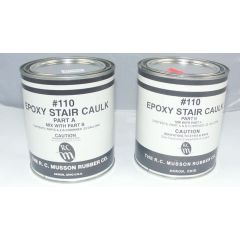
#110 Epoxy Nose Caulk
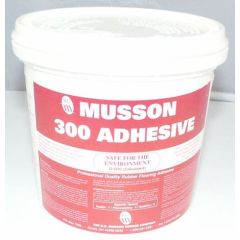
#300 Water Based Contact Adhesive
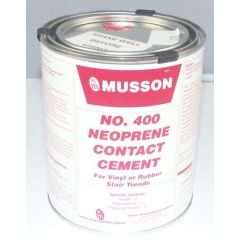
#400 Neoprene Contact Adhesive
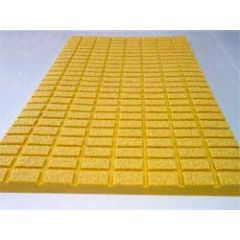
Rotary Table & Rig Floor Mats
Fore-Runner Mat
Safety Track Resilient Medium Non-Skid Tape
3M Vinyl Loop Wet Area Matting