




- Home
- Products
- Pool & Drainage Mats
- Boat Mats
Boat Mats
A boat is the one place where the wet floor never gets a day off. Spray, rain, dripping swimmers, and washdowns keep decks, compartments, and cockpit floors damp, and the surface underneath is usually smooth fiberglass or painted metal — slick the moment water lands on it. Boat mats give all of that somewhere to go.
Three products cover the marine side of the range: Dri-Dek interlocking tiles for decks, lockers, and storage compartments, Cushion Tile for standing zones and equipment bays, and Heronrib Duckboard for walkways, swim platforms, and docks. All three drain through, dry fast, and hold their grip wet.
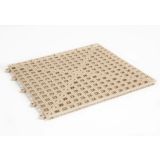 Dri-Dek Interlocking Tiles
Starting at $2.66
What Dri-Dek does before standing water turns a floor slick and moldy In a shower, sauna, locker room, or pool deck, water doesn't just make the floor slick — it sits. A flat surface, even a textured one, holds a film of water right where bare feet land, and the...
What Dri-Dek does before standing water turns a floor slick and moldy In a shower, sauna, locker room, or pool...
What Dri-Dek does before standing water turns a floor slick and moldy
In a shower, sauna, locker room, or pool deck, water doesn't just make the floor slick — it sits. A flat surface, even a textured one, holds a film of water right where bare feet land, and the warm, damp film that lingers between uses is exactly what mold, mildew, and germs feed on. Mopping buys you a few minutes; the water comes back.
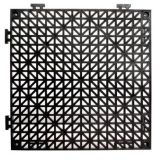
Dri-Dek solves it from a different angle: it lifts you above the water. Each tile is a raised, knobby, perforated grid, so water drains straight through and flows away underneath while you stand on the dry high points on top. Air circulates in the gap below, so the floor actually dries between uses instead of staying wet. You get grip up top and a floor that isn't a permanent puddle.
That combination matters in barefoot wet areas. Hygiene and cleaning authorities like ISSA stress that standing water and damp, hard-to-dry floors are what drive both slip risk and microbial growth in showers and locker rooms. A surface that keeps feet up out of the water and lets the floor beneath dry is tackling the slip and the mold problem at the same time.
Why an interlocking raised-vinyl build, and why this one
Dri-Dek is molded from a tough, UV-stabilized virgin vinyl in a flame- and chemical-resistant formulation, which is what lets it live on a wet floor for years. It resists the inorganic acids, oils, grease, detergents, and brine that wet areas and cleaning routines throw at it, holds up from -30°F to 167°F, and carries UV stabilizers so outdoor sun doesn't break it down. The same material is made to resist mold, mildew, and bacteria rather than harbor them.
The design is the other half. Each 12-by-12-inch tile is 9/16 inch thick with a knobby, perforated top, so it drains in every direction and cushions underfoot at the same time — the flex in the raised knobs takes some of the ache out of standing on hard concrete or tile. It's also flame resistant, having passed the UL 94V-0 vertical flame test, and it's tough, with a tensile strength around 2,750 PSI.
Best of all, it goes down without a contractor. The tiles, sheets, and rolls snap together on all four sides to build a surface of any size or shape, and they trim with a knife to fit wall-to-wall or around a drain, a bench, or a corner. Beveled edge and corner pieces finish the exposed borders into gentle ramps. When it's time to clean, you hose it, pressure-wash it, or lift a section and rinse under it.
Where it belongs — and what it isn't
Dri-Dek is at home anywhere a floor gets wet and stays wet. That's pool decks and pool surrounds, showers, saunas, steam and changing rooms, locker rooms, and the damp ring around a spa or hot tub. Because it interlocks into any shape and handles sun and temperature swings, it works indoors and out, in commercial facilities and in a home bathroom, basement, or patio alike.
It helps to be clear about what this isn't. It's a walk-on modular floor surface, not a flotation device, and not the liner sheet that goes under an above-ground pool. If you want a mat to put under a pool or a float for the water, this isn't that product. Dri-Dek installs on top of your existing floor — concrete, tile, or decking — and turns it into a dry, draining surface.
One honest note on chemistry: the vinyl resists most acids, oils, and solvents, but a few aggressive industrial solvents are the exception, so for a specialized chemical environment it's worth checking the specifics with us. In a normal pool, shower, or locker-room setting, chlorine, cleaning products, and daily wear are well within what it's built to take.
Three Things to Check Before You Spec It
Dri-Dek is simple to order once you've settled three things.
First, choose your format. Loose 1-by-1-foot tiles are the most flexible for a small or intricate space and for lifting individually to clean. Pre-assembled 3-by-4-foot sheets or 3-by-12-foot rolls cover a big pool deck or locker room far faster, snapping to each other just like the tiles. Many jobs mix them: rolls for the open floor, loose tiles to fill the edges.
Second, plan your edges. Wherever the surface meets open floor that people step onto, the beveled edge strips and corner pieces turn the 9/16-inch height into a gentle ramp, so there's no lip to trip on and carts or wheelchairs can roll on. Decide which sides are exposed before you order so you have the right trim on hand.
Third, pick a color with the room in mind. It comes in twelve colors, so you can go practical or design-led. Pool Blue and Blue lean fresh and aquatic on a deck; gray, black, and almond read neutral and hide grit in a locker room; brighter colors can zone an area or match a brand. Darker, muted tones show debris the least between cleanings.
Why Mats Inc.
We've been matching mats to real floors since 1964, and a wet floor is one place where the right surface pays off every single day. We'll help you work out how many tiles, sheets, or rolls your space needs, which edge and corner pieces to add, and which of the twelve colors suits the room — and we'll flag anything about your setting that matters before you order. It's part of our wider lineup of pool and wet-area matting, and every order is backed by our 1-year limited warranty.
Material UV-stabilized virgin vinyl (PVC); flame- and chemical-resistant formulation Construction Interlocking modular tile; raised knobby, perforated self-draining surface Tile size 12" x 12" x 9/16" Formats 1' x 1' tiles; 3' x 4' sheets; 3' x 12' rolls (all interlock) Edge / corner pieces 2" x 12" beveled edge; 2" x 2" corner Weight ~14.5 oz per tile (~0.9 lb/sq ft) Colors Twelve (Pool Blue, Blue, Teal, Gray, Black, Almond, Green, Hunter Green, Burgundy, Yellow, White, Red) Temperature range -30°F to 167°F (ASTM D746) Chemical resistance Resists inorganic acids, oils, grease, detergents, brine, most solvents (a few aggressive solvents excepted) Tensile strength ~2,750 PSI (ASTM D412); elongation 348% Weather / UV UV-stabilized; ~98–99% retention of tensile strength and color at 720 hrs Flammability Passed UL 94V-0 vertical flame test Hygiene Resists mold, mildew, and bacteria Installation Snaps together on all sides; trims with a knife Warranty 1-year limited (Mats Inc.) Frequently Asked Questions
How does Dri-Dek keep you out of the water, exactly?
Answered by Dustin Thompson, Owner & CEO
It works by lifting you above the floor instead of just draining the top. Each tile is a raised grid of knobs with a perforated, open surface, so water falls straight through and flows away underneath while your feet rest on the dry high points. The gap beneath lets air move and the floor dry between uses, which is what stops the standing water and the mold and mildew that come with it. It's molded from a tough, UV-stabilized vinyl in a flame- and chemical-resistant formulation built to live in that wet environment.
Will it hold up to chlorine, sun, and years of wet use?
Answered by Dustin Thompson, Owner & CEO
It's built for exactly that. The vinyl resists inorganic acids, oils, grease, detergents, and the brine and chlorine of a pool environment, and it's UV-stabilized so sun doesn't make it brittle — in weatherometer testing it held around 98 to 99 percent of its tensile strength and color. It works continuously from -30°F to 167°F, so an outdoor deck through summer and winter is no problem, and it passed the UL 94V-0 vertical flame test. A couple of aggressive industrial solvents are the exception, so for a specialized chemical setting, check with us first.
How do the tiles, sheets, and rolls differ, and which should I get?
Answered by Dustin Thompson, Owner & CEO
They're the same surface in three formats, and they all interlock with each other. Loose 1-by-1-foot tiles are the most flexible — best for small or intricate spaces and for lifting one at a time to clean under. The 3-by-4-foot sheets and 3-by-12-foot rolls are pre-assembled tiles that cover a big pool deck or locker room much faster. Most large jobs mix them: rolls or sheets for the open floor, loose tiles to fill in edges and odd corners.
Where does Dri-Dek work best?
Answered by Jinna Hopson, VP of Marketing
Anywhere a floor gets wet and stays wet, indoors or out. It's a natural on pool decks and surrounds, in showers, saunas, steam and changing rooms, and locker rooms, and around the damp base of a spa or hot tub. Because it snaps into any shape and handles sun and temperature swings, it's just as at home in a commercial aquatic center as in a home bathroom, basement, mudroom, or patio. If the floor gets wet, it has a place there.
What colors does it come in, and how should I choose?
Answered by Jinna Hopson, VP of Marketing
It comes in twelve colors, which is part of what makes it easy to fit a space rather than fight it. Pool Blue and Blue feel fresh and aquatic on a deck or around a spa; gray, black, and almond read neutral and professional in a locker room and hide grit well; and the brighter colors — red, yellow, teal, green — can zone an area or pick up a facility's branding. If you want the floor to disappear and stay looking clean between washes, the darker, muted tones show the least debris.
My space is an odd shape — can I make it fit, and even design a pattern?
Answered by Jinna Hopson, VP of Marketing
Yes, and that's one of the best things about it. Because every piece interlocks on all sides and trims with a knife, you can build a surface to any footprint — around a drain, a bench, a curved pool edge — and finish the exposed sides with beveled edge and corner pieces for a clean, ramped border. And since it comes in twelve colors, you can mix them to create borders, lanes, or a simple pattern, or match a brand color. Send us your layout and we'll help you plan the pieces and colors.
Written by Jinna Hopson, VP of Marketing, Mats Inc.
↑
What Dri-Dek does before standing water turns a floor slick and moldy
In a shower, sauna, locker room, or pool deck, water doesn't just make the floor slick — it sits. A flat surface, even a textured one, holds a film of water right where bare feet land, and the warm, damp film that lingers between uses is exactly what mold, mildew, and germs feed on. Mopping buys you a few minutes; the water comes back.
Dri-Dek solves it from a different angle: it lifts you above the water. Each tile is a raised, knobby, perforated grid, so water drains straight through and flows away underneath while you stand on the dry high points on top. Air circulates in the gap below, so the floor actually dries between uses instead of staying wet. You get grip up top and a floor that isn't a permanent puddle.
That combination matters in barefoot wet areas. Hygiene and cleaning authorities like ISSA stress that standing water and damp, hard-to-dry floors are what drive both slip risk and microbial growth in showers and locker rooms. A surface that keeps feet up out of the water and lets the floor beneath dry is tackling the slip and the mold problem at the same time.
Why an interlocking raised-vinyl build, and why this one
Dri-Dek is molded from a tough, UV-stabilized virgin vinyl in a flame- and chemical-resistant formulation, which is what lets it live on a wet floor for years. It resists the inorganic acids, oils, grease, detergents, and brine that wet areas and cleaning routines throw at it, holds up from -30°F to 167°F, and carries UV stabilizers so outdoor sun doesn't break it down. The same material is made to resist mold, mildew, and bacteria rather than harbor them.
The design is the other half. Each 12-by-12-inch tile is 9/16 inch thick with a knobby, perforated top, so it drains in every direction and cushions underfoot at the same time — the flex in the raised knobs takes some of the ache out of standing on hard concrete or tile. It's also flame resistant, having passed the UL 94V-0 vertical flame test, and it's tough, with a tensile strength around 2,750 PSI.
Best of all, it goes down without a contractor. The tiles, sheets, and rolls snap together on all four sides to build a surface of any size or shape, and they trim with a knife to fit wall-to-wall or around a drain, a bench, or a corner. Beveled edge and corner pieces finish the exposed borders into gentle ramps. When it's time to clean, you hose it, pressure-wash it, or lift a section and rinse under it.
Where it belongs — and what it isn't
Dri-Dek is at home anywhere a floor gets wet and stays wet. That's pool decks and pool surrounds, showers, saunas, steam and changing rooms, locker rooms, and the damp ring around a spa or hot tub. Because it interlocks into any shape and handles sun and temperature swings, it works indoors and out, in commercial facilities and in a home bathroom, basement, or patio alike.
It helps to be clear about what this isn't. It's a walk-on modular floor surface, not a flotation device, and not the liner sheet that goes under an above-ground pool. If you want a mat to put under a pool or a float for the water, this isn't that product. Dri-Dek installs on top of your existing floor — concrete, tile, or decking — and turns it into a dry, draining surface.
One honest note on chemistry: the vinyl resists most acids, oils, and solvents, but a few aggressive industrial solvents are the exception, so for a specialized chemical environment it's worth checking the specifics with us. In a normal pool, shower, or locker-room setting, chlorine, cleaning products, and daily wear are well within what it's built to take.
Three Things to Check Before You Spec It
Dri-Dek is simple to order once you've settled three things.
First, choose your format. Loose 1-by-1-foot tiles are the most flexible for a small or intricate space and for lifting individually to clean. Pre-assembled 3-by-4-foot sheets or 3-by-12-foot rolls cover a big pool deck or locker room far faster, snapping to each other just like the tiles. Many jobs mix them: rolls for the open floor, loose tiles to fill the edges.
Second, plan your edges. Wherever the surface meets open floor that people step onto, the beveled edge strips and corner pieces turn the 9/16-inch height into a gentle ramp, so there's no lip to trip on and carts or wheelchairs can roll on. Decide which sides are exposed before you order so you have the right trim on hand.
Third, pick a color with the room in mind. It comes in twelve colors, so you can go practical or design-led. Pool Blue and Blue lean fresh and aquatic on a deck; gray, black, and almond read neutral and hide grit in a locker room; brighter colors can zone an area or match a brand. Darker, muted tones show debris the least between cleanings.
Why Mats Inc.
We've been matching mats to real floors since 1964, and a wet floor is one place where the right surface pays off every single day. We'll help you work out how many tiles, sheets, or rolls your space needs, which edge and corner pieces to add, and which of the twelve colors suits the room — and we'll flag anything about your setting that matters before you order. It's part of our wider lineup of pool and wet-area matting, and every order is backed by our 1-year limited warranty.
Material UV-stabilized virgin vinyl (PVC); flame- and chemical-resistant formulation Construction Interlocking modular tile; raised knobby, perforated self-draining surface Tile size 12" x 12" x 9/16" Formats 1' x 1' tiles; 3' x 4' sheets; 3' x 12' rolls (all interlock) Edge / corner pieces 2" x 12" beveled edge; 2" x 2" corner Weight ~14.5 oz per tile (~0.9 lb/sq ft) Colors Twelve (Pool Blue, Blue, Teal, Gray, Black, Almond, Green, Hunter Green, Burgundy, Yellow, White, Red) Temperature range -30°F to 167°F (ASTM D746) Chemical resistance Resists inorganic acids, oils, grease, detergents, brine, most solvents (a few aggressive solvents excepted) Tensile strength ~2,750 PSI (ASTM D412); elongation 348% Weather / UV UV-stabilized; ~98–99% retention of tensile strength and color at 720 hrs Flammability Passed UL 94V-0 vertical flame test Hygiene Resists mold, mildew, and bacteria Installation Snaps together on all sides; trims with a knife Warranty 1-year limited (Mats Inc.) Frequently Asked Questions
How does Dri-Dek keep you out of the water, exactly?
Answered by Dustin Thompson, Owner & CEO
It works by lifting you above the floor instead of just draining the top. Each tile is a raised grid of knobs with a perforated, open surface, so water falls straight through and flows away underneath while your feet rest on the dry high points. The gap beneath lets air move and the floor dry between uses, which is what stops the standing water and the mold and mildew that come with it. It's molded from a tough, UV-stabilized vinyl in a flame- and chemical-resistant formulation built to live in that wet environment.
Will it hold up to chlorine, sun, and years of wet use?
Answered by Dustin Thompson, Owner & CEO
It's built for exactly that. The vinyl resists inorganic acids, oils, grease, detergents, and the brine and chlorine of a pool environment, and it's UV-stabilized so sun doesn't make it brittle — in weatherometer testing it held around 98 to 99 percent of its tensile strength and color. It works continuously from -30°F to 167°F, so an outdoor deck through summer and winter is no problem, and it passed the UL 94V-0 vertical flame test. A couple of aggressive industrial solvents are the exception, so for a specialized chemical setting, check with us first.
How do the tiles, sheets, and rolls differ, and which should I get?
Answered by Dustin Thompson, Owner & CEO
They're the same surface in three formats, and they all interlock with each other. Loose 1-by-1-foot tiles are the most flexible — best for small or intricate spaces and for lifting one at a time to clean under. The 3-by-4-foot sheets and 3-by-12-foot rolls are pre-assembled tiles that cover a big pool deck or locker room much faster. Most large jobs mix them: rolls or sheets for the open floor, loose tiles to fill in edges and odd corners.
Where does Dri-Dek work best?
Answered by Jinna Hopson, VP of Marketing
Anywhere a floor gets wet and stays wet, indoors or out. It's a natural on pool decks and surrounds, in showers, saunas, steam and changing rooms, and locker rooms, and around the damp base of a spa or hot tub. Because it snaps into any shape and handles sun and temperature swings, it's just as at home in a commercial aquatic center as in a home bathroom, basement, mudroom, or patio. If the floor gets wet, it has a place there.
What colors does it come in, and how should I choose?
Answered by Jinna Hopson, VP of Marketing
It comes in twelve colors, which is part of what makes it easy to fit a space rather than fight it. Pool Blue and Blue feel fresh and aquatic on a deck or around a spa; gray, black, and almond read neutral and professional in a locker room and hide grit well; and the brighter colors — red, yellow, teal, green — can zone an area or pick up a facility's branding. If you want the floor to disappear and stay looking clean between washes, the darker, muted tones show the least debris.
My space is an odd shape — can I make it fit, and even design a pattern?
Answered by Jinna Hopson, VP of Marketing
Yes, and that's one of the best things about it. Because every piece interlocks on all sides and trims with a knife, you can build a surface to any footprint — around a drain, a bench, a curved pool edge — and finish the exposed sides with beveled edge and corner pieces for a clean, ramped border. And since it comes in twelve colors, you can mix them to create borders, lanes, or a simple pattern, or match a brand color. Send us your layout and we'll help you plan the pieces and colors.
Written by Jinna Hopson, VP of Marketing, Mats Inc.
↑
View Details
View Details
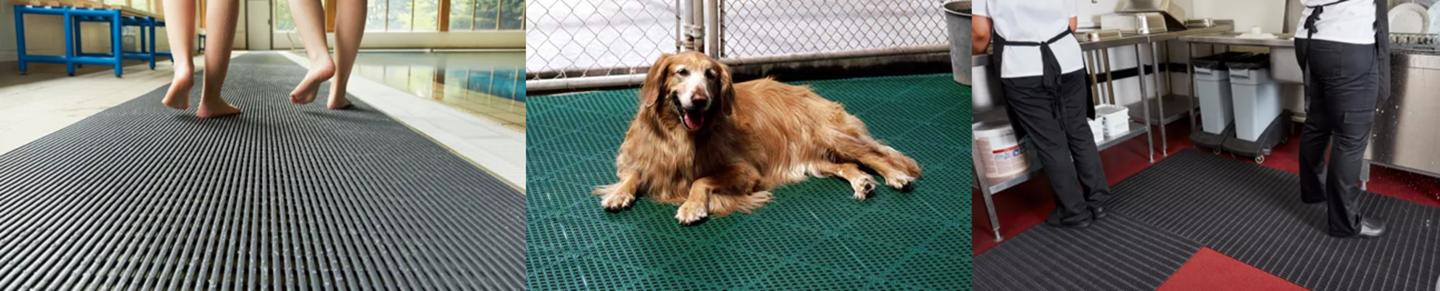
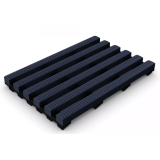 Heronrib Matting$1,020.00What Heronrib does before a wet pool deck takes someone's feet out A poolside or locker-room floor seems harmless until someone crosses it barefoot and the water underfoot decides the rest. It's tempting to trust textured tile or a fast mop. But on a flat surface, water spreads into a
...
What Heronrib does before a wet pool deck takes someone's feet out A poolside or locker-room floor seems harmless until...
What Heronrib does before a wet pool deck takes someone's feet out
A poolside or locker-room floor seems harmless until someone crosses it barefoot and the water underfoot decides the rest. It's tempting to trust textured tile or a fast mop. But on a flat surface, water spreads into a thin film right where bare feet land, and tile that grips when dry turns slick the moment it's wet.
Heronrib is built to clear that film. Its two-layer body sits on channelled underbars that self-drain in four directions, so water runs off and away instead of pooling on top. The embossed surface gives bare feet a firm grip. That's what makes it a true non-slip pool mat rather than one that only feels safe dry.
On a barefoot wet floor, a slip isn't minor. The National Floor Safety Institute links wet, hard floors to a large share of slip-and-fall injuries, and pools, showers, and changing rooms keep those floors wet from open to close. A mat that drains water away and holds grip underfoot is doing safety work every hour it's down.
Why a self-draining PVC build, and why this one
Heronrib is made from strong, non-porous PVC, and non-porous is the word that matters in a barefoot wet area. Because water can't soak in, the mat doesn't stay damp or harbor the bacteria and fungus that thrive on wet floors. On top of that, it's built with anti-microbial and anti-fungal properties, so it actively resists the athlete's foot fungus and mildew that locker rooms and showers tend to grow.
The two-layer construction is what makes the drainage work. Channelled underbars lift the walking surface off the floor and send water away in four directions, while the embossed top holds traction. That grip is certified — Classification C on the DIN 51097 barefoot ramp test, and a 0.9 dry / 0.7 wet reading on ASTM F1677 — strong figures for a surface people cross with no shoes on.
It's also made to last in tough conditions. The PVC resists most acids, alkalines, and oils, stands up to UV without degrading, and works from below freezing up to 140°F, so an outdoor deck and an indoor shower are both fair game. The two-layer body adds cushioning and sound absorption underfoot, so a busy pool hall is a little softer and quieter to walk through.
Where it belongs — and what it isn't
Heronrib earns its place wherever bare feet meet a wet floor. That's the pool deck and pool surround, but also changing rooms, locker rooms, shower rooms, spa and sauna areas, and the wet zones of gyms and recreation centers. Because it works indoors or out and contours to uneven surfaces, it suits both a tiled shower floor and a textured outdoor deck.
It's worth being clear about what this mat is not. It's a walk-on barefoot surface, not a flotation device, and not the liner-protector sheet that goes under an above-ground pool. If you're after a mat to put under a pool or a float for the water, this isn't that product. Heronrib works on top of the deck, under your feet — on concrete, tile, or a finished pool surround.
For larger areas it behaves like a system. Rolls join edge-to-edge with connector clips or welded snap track to cover a whole pool hall seamlessly, ramped edging finishes the borders so there's no trip lip, and floor hooks anchor sections where they need to stay put. The same mat scales from a single shower bay to a wall-to-wall deck.
Three Things to Check Before You Spec It
Heronrib is easy to order well once you've settled three things.
First, plan the layout and joins. For a single shower or changing bay, one cut piece does it. For a full deck or pool hall, rolls join side-to-side and end-to-end with connector clips or welded snap track, so map where the seams fall and where you'll want ramped edging to finish an exposed border cleanly.
Second, measure the whole wet path, not just the obvious spot. The walk from the pool to the showers, the full changing-room floor, the lip around a spa — size the mat to cover wherever feet are actually wet, because a dry-foot gap is exactly where the next slip happens. It cuts to fit on site, so odd shapes and obstacles aren't a problem.
Third, plan for heat and movement outdoors. The PVC handles sun and a wide temperature range, but like any thermoplastic it can shrink slightly — up to about 2%, faster in heat — so on a hot, exposed deck, anchor sections with floor hooks and leave a little room at fixed edges rather than butting it tight wall to wall.
Why Mats Inc.
We've been matching mats to real floors since 1964, and barefoot wet areas are where the wrong choice gets noticed fastest — by feet, by inspectors, and by anyone who slips. We'll help you size Heronrib to your actual wet path, plan the seams and edging for a clean install, and choose the right anchoring for an outdoor deck. It's part of our wider lineup of pool and wet-area matting, and every order is backed by our 1-year limited warranty.
Material Non-porous flexible PVC Construction Two-layer with channelled underbars; embossed top surface Thickness 13/32" (10.5 mm) Weight 1.10 lb / sq ft Roll options 33' lengths in 2', 3', and 4' widths (cut to fit on site) Custom sizes Custom matting available Slip resistance DIN 51097: Class C; ASTM F1677 dry/wet: 0.9/0.7 Drainage Four-way self-draining (channelled underbars) Chemical resistance Most acids, alkalines, and oils Temperature range -9°F to +140°F Hygiene Non-porous; anti-microbial and anti-fungal Acoustic Sound absorption Environmental 100% recyclable; no SVHC substances (REACH) UV Resists PVC degradation Warranty 1-year limited (Mats Inc.) Frequently Asked Questions
What's Heronrib made of, and how does it drain so well?
Answered by Dustin Thompson, Owner & CEO
It's made from strong, non-porous PVC in a two-layer build. The top layer carries an embossed surface that grips bare feet; underneath, a set of channelled underbars lifts that surface off the floor and lets water run away in four directions. So instead of sitting in a puddle, water clears the moment it lands. The non-porous PVC won't soak up moisture, and it's built with anti-microbial and anti-fungal properties, so the same mat that drains also resists the bacteria and fungus wet floors tend to breed.
How slip-resistant is it for bare feet, and will it last outdoors?
Answered by Dustin Thompson, Owner & CEO
Its grip is certified for barefoot use specifically — Classification C on the DIN 51097 ramp test, with a 0.9 dry / 0.7 wet reading on ASTM F1677, both strong for a no-shoes surface. As for lasting outdoors, the PVC resists UV without degrading, shrugs off most acids, alkalines, and oils, and works from below freezing up to 140°F. That combination is why the same mat holds up on a sun-exposed deck and in a daily-use shower room without going brittle or slick.
What sizes does it come in, and can it cover a big area?
Answered by Dustin Thompson, Owner & CEO
It comes in 33-foot rolls in 2-, 3-, and 4-foot widths, and you cut it to fit on site. For a large pool hall or deck, rolls join side-to-side and end-to-end with connector clips or welded snap track, so there's no practical limit to the area you can cover in one continuous, seamless surface. For a small space like a shower bay, a single cut piece does the job. Custom matting is available when a standard width won't fit the layout.
Besides right at the pool, where does Heronrib make sense?
Answered by Jinna Hopson, VP of Marketing
Anywhere people go barefoot on a wet floor. It's a natural fit for changing rooms, locker rooms, and shower rooms, the surrounds of spas and saunas, and the wet zones of gyms and recreation centers — not just the pool deck itself. Because it works indoors or outdoors and contours to uneven ground, it's as comfortable on a textured outdoor deck as on a tiled indoor floor. If a space mixes bare feet, water, and foot traffic, it belongs there.
What does it look and feel like underfoot?
Answered by Jinna Hopson, VP of Marketing
It has a clean, ribbed, embossed surface that reads as purposeful — clearly there to grip and drain rather than to decorate. The look is low-key and functional, the kind of surface that signals the floor is handled without drawing attention to itself. Underfoot, the two-layer body adds a bit of cushioning and even absorbs sound, so a busy, echoey pool hall feels a touch warmer and quieter to cross. If a specific color or finish matters for your space, let us know and we'll confirm what's available.
My pool area is an odd shape with drains and corners — will it fit?
Answered by Jinna Hopson, VP of Marketing
Almost certainly. Because it cuts to fit on site and contours to uneven surfaces, you can shape a run around drains, ladders, corners, and changing benches instead of forcing the space to match a fixed mat. Ramped edging finishes any exposed border so there's no trip lip, and for a tricky footprint custom matting is available. Send us the dimensions and the obstacles, and we'll map out a layout that covers the wet path cleanly.
Written by Dustin Thompson, Owner & CEO, Mats Inc.
↑
What Heronrib does before a wet pool deck takes someone's feet out
A poolside or locker-room floor seems harmless until someone crosses it barefoot and the water underfoot decides the rest. It's tempting to trust textured tile or a fast mop. But on a flat surface, water spreads into a thin film right where bare feet land, and tile that grips when dry turns slick the moment it's wet.
Heronrib is built to clear that film. Its two-layer body sits on channelled underbars that self-drain in four directions, so water runs off and away instead of pooling on top. The embossed surface gives bare feet a firm grip. That's what makes it a true non-slip pool mat rather than one that only feels safe dry.
On a barefoot wet floor, a slip isn't minor. The National Floor Safety Institute links wet, hard floors to a large share of slip-and-fall injuries, and pools, showers, and changing rooms keep those floors wet from open to close. A mat that drains water away and holds grip underfoot is doing safety work every hour it's down.
Why a self-draining PVC build, and why this one
Heronrib is made from strong, non-porous PVC, and non-porous is the word that matters in a barefoot wet area. Because water can't soak in, the mat doesn't stay damp or harbor the bacteria and fungus that thrive on wet floors. On top of that, it's built with anti-microbial and anti-fungal properties, so it actively resists the athlete's foot fungus and mildew that locker rooms and showers tend to grow.
The two-layer construction is what makes the drainage work. Channelled underbars lift the walking surface off the floor and send water away in four directions, while the embossed top holds traction. That grip is certified — Classification C on the DIN 51097 barefoot ramp test, and a 0.9 dry / 0.7 wet reading on ASTM F1677 — strong figures for a surface people cross with no shoes on.
It's also made to last in tough conditions. The PVC resists most acids, alkalines, and oils, stands up to UV without degrading, and works from below freezing up to 140°F, so an outdoor deck and an indoor shower are both fair game. The two-layer body adds cushioning and sound absorption underfoot, so a busy pool hall is a little softer and quieter to walk through.
Where it belongs — and what it isn't
Heronrib earns its place wherever bare feet meet a wet floor. That's the pool deck and pool surround, but also changing rooms, locker rooms, shower rooms, spa and sauna areas, and the wet zones of gyms and recreation centers. Because it works indoors or out and contours to uneven surfaces, it suits both a tiled shower floor and a textured outdoor deck.
It's worth being clear about what this mat is not. It's a walk-on barefoot surface, not a flotation device, and not the liner-protector sheet that goes under an above-ground pool. If you're after a mat to put under a pool or a float for the water, this isn't that product. Heronrib works on top of the deck, under your feet — on concrete, tile, or a finished pool surround.
For larger areas it behaves like a system. Rolls join edge-to-edge with connector clips or welded snap track to cover a whole pool hall seamlessly, ramped edging finishes the borders so there's no trip lip, and floor hooks anchor sections where they need to stay put. The same mat scales from a single shower bay to a wall-to-wall deck.
Three Things to Check Before You Spec It
Heronrib is easy to order well once you've settled three things.
First, plan the layout and joins. For a single shower or changing bay, one cut piece does it. For a full deck or pool hall, rolls join side-to-side and end-to-end with connector clips or welded snap track, so map where the seams fall and where you'll want ramped edging to finish an exposed border cleanly.
Second, measure the whole wet path, not just the obvious spot. The walk from the pool to the showers, the full changing-room floor, the lip around a spa — size the mat to cover wherever feet are actually wet, because a dry-foot gap is exactly where the next slip happens. It cuts to fit on site, so odd shapes and obstacles aren't a problem.
Third, plan for heat and movement outdoors. The PVC handles sun and a wide temperature range, but like any thermoplastic it can shrink slightly — up to about 2%, faster in heat — so on a hot, exposed deck, anchor sections with floor hooks and leave a little room at fixed edges rather than butting it tight wall to wall.
Why Mats Inc.
We've been matching mats to real floors since 1964, and barefoot wet areas are where the wrong choice gets noticed fastest — by feet, by inspectors, and by anyone who slips. We'll help you size Heronrib to your actual wet path, plan the seams and edging for a clean install, and choose the right anchoring for an outdoor deck. It's part of our wider lineup of pool and wet-area matting, and every order is backed by our 1-year limited warranty.
Material Non-porous flexible PVC Construction Two-layer with channelled underbars; embossed top surface Thickness 13/32" (10.5 mm) Weight 1.10 lb / sq ft Roll options 33' lengths in 2', 3', and 4' widths (cut to fit on site) Custom sizes Custom matting available Slip resistance DIN 51097: Class C; ASTM F1677 dry/wet: 0.9/0.7 Drainage Four-way self-draining (channelled underbars) Chemical resistance Most acids, alkalines, and oils Temperature range -9°F to +140°F Hygiene Non-porous; anti-microbial and anti-fungal Acoustic Sound absorption Environmental 100% recyclable; no SVHC substances (REACH) UV Resists PVC degradation Warranty 1-year limited (Mats Inc.) Frequently Asked Questions
What's Heronrib made of, and how does it drain so well?
Answered by Dustin Thompson, Owner & CEO
It's made from strong, non-porous PVC in a two-layer build. The top layer carries an embossed surface that grips bare feet; underneath, a set of channelled underbars lifts that surface off the floor and lets water run away in four directions. So instead of sitting in a puddle, water clears the moment it lands. The non-porous PVC won't soak up moisture, and it's built with anti-microbial and anti-fungal properties, so the same mat that drains also resists the bacteria and fungus wet floors tend to breed.
How slip-resistant is it for bare feet, and will it last outdoors?
Answered by Dustin Thompson, Owner & CEO
Its grip is certified for barefoot use specifically — Classification C on the DIN 51097 ramp test, with a 0.9 dry / 0.7 wet reading on ASTM F1677, both strong for a no-shoes surface. As for lasting outdoors, the PVC resists UV without degrading, shrugs off most acids, alkalines, and oils, and works from below freezing up to 140°F. That combination is why the same mat holds up on a sun-exposed deck and in a daily-use shower room without going brittle or slick.
What sizes does it come in, and can it cover a big area?
Answered by Dustin Thompson, Owner & CEO
It comes in 33-foot rolls in 2-, 3-, and 4-foot widths, and you cut it to fit on site. For a large pool hall or deck, rolls join side-to-side and end-to-end with connector clips or welded snap track, so there's no practical limit to the area you can cover in one continuous, seamless surface. For a small space like a shower bay, a single cut piece does the job. Custom matting is available when a standard width won't fit the layout.
Besides right at the pool, where does Heronrib make sense?
Answered by Jinna Hopson, VP of Marketing
Anywhere people go barefoot on a wet floor. It's a natural fit for changing rooms, locker rooms, and shower rooms, the surrounds of spas and saunas, and the wet zones of gyms and recreation centers — not just the pool deck itself. Because it works indoors or outdoors and contours to uneven ground, it's as comfortable on a textured outdoor deck as on a tiled indoor floor. If a space mixes bare feet, water, and foot traffic, it belongs there.
What does it look and feel like underfoot?
Answered by Jinna Hopson, VP of Marketing
It has a clean, ribbed, embossed surface that reads as purposeful — clearly there to grip and drain rather than to decorate. The look is low-key and functional, the kind of surface that signals the floor is handled without drawing attention to itself. Underfoot, the two-layer body adds a bit of cushioning and even absorbs sound, so a busy, echoey pool hall feels a touch warmer and quieter to cross. If a specific color or finish matters for your space, let us know and we'll confirm what's available.
My pool area is an odd shape with drains and corners — will it fit?
Answered by Jinna Hopson, VP of Marketing
Almost certainly. Because it cuts to fit on site and contours to uneven surfaces, you can shape a run around drains, ladders, corners, and changing benches instead of forcing the space to match a fixed mat. Ramped edging finishes any exposed border so there's no trip lip, and for a tricky footprint custom matting is available. Send us the dimensions and the obstacles, and we'll map out a layout that covers the wet path cleanly.
Written by Dustin Thompson, Owner & CEO, Mats Inc.
↑
View Details
View Details
 Cushion Tile
Starting at $10.00
What Cushion Tile does before a hard, wet floor wears people out A wet concrete or tile floor around a pool, in a plant room, or behind a counter does two kinds of damage you don't always connect. It's slick where water sits, and it's punishing to stand on for...
What Cushion Tile does before a hard, wet floor wears people out A wet concrete or tile floor around a...
What Cushion Tile does before a hard, wet floor wears people out
A wet concrete or tile floor around a pool, in a plant room, or behind a counter does two kinds of damage you don't always connect. It's slick where water sits, and it's punishing to stand on for hours — hard, cold, and unforgiving on legs, backs, and feet. Most people notice the slip risk and miss the standing fatigue, but both come from the same hard, wet surface.
Cushion Tile takes on both at once. Each tile is a thick, flexible vinyl square with a waffle-grid, open-mesh surface, so it lifts your feet up out of the water while water drains away through the grid below. At the same time, the give in the recycled vinyl cushions every step, so a floor that used to punish now gives a little back. You stand drier and more comfortably on the same spot.
On a wet, hard floor, that combination matters more than it looks. Standing all day on unforgiving concrete is a genuine source of fatigue and strain, and standing water on top of it adds a slip risk. A cushioned tile that raises feet above the water and softens the surface underneath is protecting the people on it and the floor itself.
Why a recycled cushioned tile, and why this one
Cushion Tile is molded from recycled flexible vinyl, which does two useful things. It gives the tile its cushioning flex — enough to conform to an uneven floor and soften a hard surface underfoot — and it puts a recycled material to work instead of a virgin one, which matters if sustainability is part of your spec. The vinyl is grease and moisture resistant, so a wet or greasy floor doesn't break it down.
The surface is a waffle-grid, open-mesh top on a 3/4-inch-thick tile — noticeably thicker than a thin drainage mat, which is where the cushioning comes from. The open grid lets water and debris fall through and away, keeping the top of the tile clear while your feet stay up above any standing water. It guards against slipping and against the wear that vibration and moisture put on a floor.
It goes down without tools or a contractor. The 12-by-12-inch tiles interlock on every side to build a surface of any size or shape, and they trim to fit around a drain, a bench, or a corner. Interlocking beveled edge and corner pieces ramp the 3/4-inch height down to the floor for a finished, trip-free border. When it's time to clean, you lift a section, rinse, and drop it back.
Where it belongs — and what it isn't
Cushion Tile suits any hard, wet, or greasy floor where people stand or move around. That includes pool decks and surrounds, locker and changing rooms, and shower approaches, but also the wet, standing-work zones it was bred for — behind bars and counters, in plant and equipment rooms, workshops, and washdown areas. Because it handles indoors and out and conforms to an uneven floor, it covers a lot of different ground.
It's worth being clear about what this isn't. It's a walk-on cushioned floor tile, not a flotation device, and not the liner sheet that goes under an above-ground pool. If you want a mat to put under a pool or a float for the water, this isn't that product. Cushion Tile installs on top of your existing floor and turns a hard, wet surface into a cushioned, draining one.
One honest note on grip: this tile's strength is cushioning and lifting feet above the water, and its waffle surface gives solid footing for a walkway or standing area. For the most slip-critical wet spots — a steep, constantly streaming surface where aggressive traction is the priority — a coarser, grittier surface may serve better, and we can point you to one. For general wet-area comfort and safety, this is a strong fit.
Three Things to Check Before You Spec It
Cushion Tile is simple to order once you've thought through three things.
First, size the coverage and count your tiles. Each tile covers one square foot, so a deck or work zone is just its area in tiles, plus edge and corner pieces for any exposed sides. Because it's ideal for covering large surfaces, map the whole area you want cushioned and draining, not just a single standing spot.
Second, plan your edges. Wherever the tiled surface meets open floor people step onto, the beveled edge and corner pieces ramp the 3/4-inch height down so there's no lip to trip on and carts can roll on and off. Decide which sides are exposed before you order so the right ramp pieces come with the tiles.
Third, pick a color for the setting. It comes in several colors, including blue, green, gray, red, and beige, with more available. Blue and gray read clean and neutral around a pool or in a locker room; beige is easy and warm; brighter colors can zone an area or mark a walkway. Darker, muted tones show grit the least between cleanings.
Why Mats Inc.
We've been matching mats to real floors since 1964, and a hard, wet floor is one of the clearest cases for the right surface — it shows up in comfort, safety, and how the floor holds up. We'll help you work out how many tiles and edge pieces your space needs, choose a color for the room, and flag whether Cushion Tile's cushioned surface or a grittier one suits your particular wet spot. It's part of our wider lineup of pool and wet-area matting, and every order is backed by our 1-year limited warranty.
Material Recycled flexible vinyl Surface Waffle-grid, open-mesh top Tile size 12" x 12" Thickness 3/4" Weight ~1.5 lb per tile Colors Blue, green, gray, red, beige (more available) Edge / corner pieces Interlocking beveled edge (2" x 12") and corner (2" x 13.6") ramps Installation Interlocking modular; snaps together; trims to fit any size or shape Use Indoor or outdoor; grease and moisture resistant; conforms to uneven floors Sustainability Made from recycled material Warranty 1-year limited (Mats Inc.) Frequently Asked Questions
How does Cushion Tile keep feet out of the water and still feel soft?
Answered by Dustin Thompson, Owner & CEO
It does both jobs with one design. Each tile is a 3/4-inch-thick square of flexible recycled vinyl with a waffle-grid, open-mesh top. The grid raises your feet above the floor and lets water drain straight through and away, so you're standing on the tile rather than in a puddle. And because the vinyl is thick and flexible, it gives underfoot — that cushioning is where the "cushion" in the name comes from. The same flex also lets it conform to a floor that isn't perfectly flat.
Will it hold up on a wet, greasy, or outdoor floor?
Answered by Dustin Thompson, Owner & CEO
It's built for exactly those conditions. The recycled vinyl is grease and moisture resistant, so a wet pool deck, a greasy back-of-house floor, or a damp plant room won't degrade it, and it works indoors or outdoors. It also guards the floor beneath it from the wear that vibration and moisture cause. At 3/4 inch thick it's a substantial tile rather than a thin mat, and while the maker rates it for years of service, through us it's backed by our 1-year limited warranty.
What size are the tiles, and can I cover a big area?
Answered by Dustin Thompson, Owner & CEO
Each tile is 12 by 12 inches — one square foot — and they interlock on every side, so you can build a surface of any size or shape by snapping more together. It's specifically suited to covering large surfaces, so a whole pool deck or work floor is very doable. The tiles trim to fit around drains, corners, and equipment, and interlocking beveled edge and corner pieces finish the exposed borders. Custom sizing is available if you need it.
Where does Cushion Tile make the most sense?
Answered by Jinna Hopson, VP of Marketing
Anywhere a hard floor is wet or greasy and people stand or move on it. Around water, that's pool decks and surrounds, locker and changing rooms, and shower approaches. It's just as at home in the standing-work spots it was designed for — behind a bar or counter, in a plant or equipment room, a workshop, or a washdown area. Because it works indoors and out and conforms to uneven ground, it fits both a poolside setting and a working back-of-house floor.
What colors does it come in, and how should I choose?
Answered by Jinna Hopson, VP of Marketing
It comes in several colors, including blue, green, gray, red, and beige, with more available. The color is a chance to fit the tile to the room: blue and gray feel clean and neutral around a pool or in a locker room, beige reads warm and low-key, and brighter shades like green or red can mark off a walkway or zone an area for safety. If you want the floor to stay looking tidy between cleanings, the darker, muted tones hide grit and debris best.
My space is an odd shape — can I make it fit, and even zone areas by color?
Answered by Jinna Hopson, VP of Marketing
Yes to both. Because every tile interlocks on all sides and trims with a knife, you can build a surface to any footprint — around a curved pool edge, a drain, or a bench — and finish the exposed sides with beveled edge and corner ramps for a clean border. And with several colors to choose from, you can mix them to mark walkways, zone a wet area, or match a facility's look. Send us your layout and we'll help you plan the tiles, edges, and colors.
Written by Dustin Thompson, Owner & CEO, Mats Inc.
↑
What Cushion Tile does before a hard, wet floor wears people out
A wet concrete or tile floor around a pool, in a plant room, or behind a counter does two kinds of damage you don't always connect. It's slick where water sits, and it's punishing to stand on for hours — hard, cold, and unforgiving on legs, backs, and feet. Most people notice the slip risk and miss the standing fatigue, but both come from the same hard, wet surface.
Cushion Tile takes on both at once. Each tile is a thick, flexible vinyl square with a waffle-grid, open-mesh surface, so it lifts your feet up out of the water while water drains away through the grid below. At the same time, the give in the recycled vinyl cushions every step, so a floor that used to punish now gives a little back. You stand drier and more comfortably on the same spot.
On a wet, hard floor, that combination matters more than it looks. Standing all day on unforgiving concrete is a genuine source of fatigue and strain, and standing water on top of it adds a slip risk. A cushioned tile that raises feet above the water and softens the surface underneath is protecting the people on it and the floor itself.
Why a recycled cushioned tile, and why this one
Cushion Tile is molded from recycled flexible vinyl, which does two useful things. It gives the tile its cushioning flex — enough to conform to an uneven floor and soften a hard surface underfoot — and it puts a recycled material to work instead of a virgin one, which matters if sustainability is part of your spec. The vinyl is grease and moisture resistant, so a wet or greasy floor doesn't break it down.
The surface is a waffle-grid, open-mesh top on a 3/4-inch-thick tile — noticeably thicker than a thin drainage mat, which is where the cushioning comes from. The open grid lets water and debris fall through and away, keeping the top of the tile clear while your feet stay up above any standing water. It guards against slipping and against the wear that vibration and moisture put on a floor.
It goes down without tools or a contractor. The 12-by-12-inch tiles interlock on every side to build a surface of any size or shape, and they trim to fit around a drain, a bench, or a corner. Interlocking beveled edge and corner pieces ramp the 3/4-inch height down to the floor for a finished, trip-free border. When it's time to clean, you lift a section, rinse, and drop it back.
Where it belongs — and what it isn't
Cushion Tile suits any hard, wet, or greasy floor where people stand or move around. That includes pool decks and surrounds, locker and changing rooms, and shower approaches, but also the wet, standing-work zones it was bred for — behind bars and counters, in plant and equipment rooms, workshops, and washdown areas. Because it handles indoors and out and conforms to an uneven floor, it covers a lot of different ground.
It's worth being clear about what this isn't. It's a walk-on cushioned floor tile, not a flotation device, and not the liner sheet that goes under an above-ground pool. If you want a mat to put under a pool or a float for the water, this isn't that product. Cushion Tile installs on top of your existing floor and turns a hard, wet surface into a cushioned, draining one.
One honest note on grip: this tile's strength is cushioning and lifting feet above the water, and its waffle surface gives solid footing for a walkway or standing area. For the most slip-critical wet spots — a steep, constantly streaming surface where aggressive traction is the priority — a coarser, grittier surface may serve better, and we can point you to one. For general wet-area comfort and safety, this is a strong fit.
Three Things to Check Before You Spec It
Cushion Tile is simple to order once you've thought through three things.
First, size the coverage and count your tiles. Each tile covers one square foot, so a deck or work zone is just its area in tiles, plus edge and corner pieces for any exposed sides. Because it's ideal for covering large surfaces, map the whole area you want cushioned and draining, not just a single standing spot.
Second, plan your edges. Wherever the tiled surface meets open floor people step onto, the beveled edge and corner pieces ramp the 3/4-inch height down so there's no lip to trip on and carts can roll on and off. Decide which sides are exposed before you order so the right ramp pieces come with the tiles.
Third, pick a color for the setting. It comes in several colors, including blue, green, gray, red, and beige, with more available. Blue and gray read clean and neutral around a pool or in a locker room; beige is easy and warm; brighter colors can zone an area or mark a walkway. Darker, muted tones show grit the least between cleanings.
Why Mats Inc.
We've been matching mats to real floors since 1964, and a hard, wet floor is one of the clearest cases for the right surface — it shows up in comfort, safety, and how the floor holds up. We'll help you work out how many tiles and edge pieces your space needs, choose a color for the room, and flag whether Cushion Tile's cushioned surface or a grittier one suits your particular wet spot. It's part of our wider lineup of pool and wet-area matting, and every order is backed by our 1-year limited warranty.
Material Recycled flexible vinyl Surface Waffle-grid, open-mesh top Tile size 12" x 12" Thickness 3/4" Weight ~1.5 lb per tile Colors Blue, green, gray, red, beige (more available) Edge / corner pieces Interlocking beveled edge (2" x 12") and corner (2" x 13.6") ramps Installation Interlocking modular; snaps together; trims to fit any size or shape Use Indoor or outdoor; grease and moisture resistant; conforms to uneven floors Sustainability Made from recycled material Warranty 1-year limited (Mats Inc.) Frequently Asked Questions
How does Cushion Tile keep feet out of the water and still feel soft?
Answered by Dustin Thompson, Owner & CEO
It does both jobs with one design. Each tile is a 3/4-inch-thick square of flexible recycled vinyl with a waffle-grid, open-mesh top. The grid raises your feet above the floor and lets water drain straight through and away, so you're standing on the tile rather than in a puddle. And because the vinyl is thick and flexible, it gives underfoot — that cushioning is where the "cushion" in the name comes from. The same flex also lets it conform to a floor that isn't perfectly flat.
Will it hold up on a wet, greasy, or outdoor floor?
Answered by Dustin Thompson, Owner & CEO
It's built for exactly those conditions. The recycled vinyl is grease and moisture resistant, so a wet pool deck, a greasy back-of-house floor, or a damp plant room won't degrade it, and it works indoors or outdoors. It also guards the floor beneath it from the wear that vibration and moisture cause. At 3/4 inch thick it's a substantial tile rather than a thin mat, and while the maker rates it for years of service, through us it's backed by our 1-year limited warranty.
What size are the tiles, and can I cover a big area?
Answered by Dustin Thompson, Owner & CEO
Each tile is 12 by 12 inches — one square foot — and they interlock on every side, so you can build a surface of any size or shape by snapping more together. It's specifically suited to covering large surfaces, so a whole pool deck or work floor is very doable. The tiles trim to fit around drains, corners, and equipment, and interlocking beveled edge and corner pieces finish the exposed borders. Custom sizing is available if you need it.
Where does Cushion Tile make the most sense?
Answered by Jinna Hopson, VP of Marketing
Anywhere a hard floor is wet or greasy and people stand or move on it. Around water, that's pool decks and surrounds, locker and changing rooms, and shower approaches. It's just as at home in the standing-work spots it was designed for — behind a bar or counter, in a plant or equipment room, a workshop, or a washdown area. Because it works indoors and out and conforms to uneven ground, it fits both a poolside setting and a working back-of-house floor.
What colors does it come in, and how should I choose?
Answered by Jinna Hopson, VP of Marketing
It comes in several colors, including blue, green, gray, red, and beige, with more available. The color is a chance to fit the tile to the room: blue and gray feel clean and neutral around a pool or in a locker room, beige reads warm and low-key, and brighter shades like green or red can mark off a walkway or zone an area for safety. If you want the floor to stay looking tidy between cleanings, the darker, muted tones hide grit and debris best.
My space is an odd shape — can I make it fit, and even zone areas by color?
Answered by Jinna Hopson, VP of Marketing
Yes to both. Because every tile interlocks on all sides and trims with a knife, you can build a surface to any footprint — around a curved pool edge, a drain, or a bench — and finish the exposed sides with beveled edge and corner ramps for a clean border. And with several colors to choose from, you can mix them to mark walkways, zone a wet area, or match a facility's look. Send us your layout and we'll help you plan the tiles, edges, and colors.
Written by Dustin Thompson, Owner & CEO, Mats Inc.
↑
View Details
View Details
What Makes a Mat Marine-Ready
Water on a boat comes with company — salt, sun, and motion. A marine mat has to pass water through instead of holding it, resist the mildew that damp compartments breed, and stay put on a floor that tilts and vibrates. Vinyl construction handles the salt and rinses clean with fresh water, and open designs keep air moving so surfaces underneath actually dry.
This is the marine corner of our pool and drainage mats range, and the same logic runs through it: keep the water below the surface people and gear sit on. On a boat, that protects more than footing — trapped moisture is what stains gelcoat, corrodes fittings, and turns a locker musty by August.
The Shore-Mat Mistake
The mistake that shows up every season is bringing shore mats onto the water. A carpet-faced entrance mat or a household runner is built to absorb — so on a boat it soaks up spray, stays wet for days, and holds that moisture directly against the deck. The mat becomes the problem: mildew underneath, odor in the cabin, and a soggy surface nobody wants barefoot.
Motion makes it worse. A flat mat with no way to lock down or drain slides on a wet, moving deck, and a sliding mat is its own hazard the moment someone steps aboard with wet feet. Marine matting solves both halves — open construction that never saturates, and formats that interlock, trim to fit, or lie flat in defined runs.
How the Three Options Compare
Each one earns a different part of the boat. Here's how they split the job.
Dri-Dek Interlocking Tiles are the marine classic. The 12-inch square tiles snap together, trim to fit any compartment wall to wall, and their open design lets water and debris fall through and out — salt water included, since the vinyl is unaffected by it. Oxy-B1 in the material inhibits mold, mildew, and bacteria in spaces that stay damp, and sheets, rolls, ramped edges, and corner pieces finish larger layouts cleanly. Use them in storage compartments, anchor lockers, cockpit floors, dock boxes, and anywhere gear needs to sit dry.
Cushion Tile is the standing-zone pick. It's the original interlocking cushion tile, built to take fatigue, vibration, and slipping out of hard floors at once — which is why it earned its keep in fire and rescue apparatus compartments before it ever reached a marina. The open grid keeps air moving under feet and equipment, the vinyl is made from 100% recycled PVC, and black or yellow ramped edges finish the borders. Put it at helm stations, workboat decks, equipment bays, and any spot where someone stands through the trip.
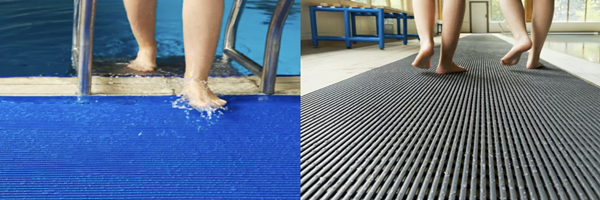
Heronrib Duckboard Vinyl Matting handles the walkways. The ribbed vinyl surface grips wet bare feet while raised underbars lift the walking line above the water, and the rolls — two to four feet wide, in 33- and 40-foot lengths — cut to fit on site. It's the barefoot-friendly one of the three, which makes it the pick for swim platforms, dock walkways, marina shower and changing rooms, and cabin sole runners.
Three Things to Check Before You Pick
First, underway or dockside. Anything that rides on the boat should interlock or trim to fit its space so it stays put in motion — that's Dri-Dek and Cushion Tile territory. Fixed walkways, docks, and platforms can take roll goods like Duckboard, laid in defined runs and cut around cleats and hardware.
Second, feet, gear, or both. Barefoot zones — swim platforms, marina showers — want Duckboard's ribbed surface or Dri-Dek's smooth open grid. Standing work in deck shoes or boots, especially around engines and equipment where vibration wears people down, is Cushion Tile's job.
Third, the drying plan. All three pass water through, but the space underneath still needs to breathe. In sealed compartments, that open airflow is the whole point — gear sits above the wet instead of in it. Rinse everything with fresh water at season's end, let it dry, and it stores flat or rolled until spring.
Why Choose Mats Inc.?
Wet floors are our specialty, and boats are the wettest floors there are. Mats Inc. has matched matting to hard-working spaces since 1964, and the marine lineup carries the same range as the rest of the catalog — single tiles for one locker, trimmed layouts for a cockpit, and full walkway rolls for a marina.
Tell us the vessel or the dock and we'll spec it with you — tile counts and edge pieces for a compartment, cut plans for a platform, or walkway runs for a full facility. Orders ship free, and every format here trims or configures to spaces that stock sizes don't fit.
Frequently Asked Questions
Which boat mat is right for which part of the boat?
Match the mat to the job. Dri-Dek covers compartments, lockers, and cockpit floors — anywhere water collects and gear sits. Cushion Tile takes the standing zones, adding fatigue and vibration relief at helm stations and equipment bays. Heronrib Duckboard handles the barefoot stretches: swim platforms, dock walkways, and the runs between slip and shore.
Do boat mats help inside storage compartments and lockers?
That's one of the strongest uses. Lining a locker or forepeak with interlocking tiles lifts everything stored there above the water that inevitably finds its way in, and the open design keeps air circulating so the compartment actually dries. Mold-inhibiting vinyl works on the musty-smell problem at its source. Ropes, fenders, and gear come out dry instead of mildewed.
How long do boat mats last?
Plan on five to ten years in marine service, and the salt isn't what ends them — the vinyl is unaffected by it. Sun is the real ager on exposed decks, so darker colors hold up longest in constant direct light. A freshwater rinse at haul-out, a full dry, and flat or rolled storage over the winter is all the off-season care these need.
What do boat mats look like installed?
Trim and intentional. Interlocked tiles read as a fitted deck surface rather than loose mats, and ramped edge pieces finish borders cleanly with no raw tile line showing. Color options let you keep it quiet in a cabin, match a cockpit scheme, or use a brighter tone to mark a step or a wet zone — Cushion Tile's yellow edging does exactly that where visibility helps.
Can boat mats be cut to fit odd-shaped spaces?
Yes — odd shapes are the marine norm and these formats expect it. Tiles trim with a utility knife to follow curved hulls and compartment walls, sheets and rolls cut down the same way, and edge and corner pieces finish whatever outline you end up with. Duckboard rolls cut to length on site. Trace the space, trim to the line, and the layout looks factory-fitted.
Do these mats work on docks and around marinas?
Naturally — a marina is just a wet facility that floats. Duckboard runs make comfortable barefoot walkways on docks and swim platforms, Dri-Dek lines dock boxes and fish-cleaning stations, and the same wet area matting carries into marina showers and changing rooms. One product family can cover a facility from the slip to the locker room.
Written by Dustin Thompson, Owner & CEO, Mats Inc.