




- Home
- Commercial
Commercial Building Mats
Mats, Inc. provides many styles of mats & matting used in Retail Stores & Establishments. Our mat selection includes exterior & interior floor mats, carpet tiles, stair treads & risers. Please see the selection below for commercial mats bought most often.
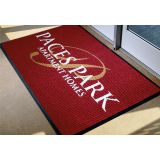 Waterhog Inlay Logo Mats$227.00Waterhog Inlay Logo Mats put your logo into the proven Waterhog bi-level mat rather than on top of it. The inlay is the difference: the area that will carry the logo is cut out of the mat and the colors are hand-laid into the cut-out like a jigsaw, so
...
Waterhog Inlay Logo Mats put your logo into the proven Waterhog bi-level mat rather than on top of it....
Waterhog Inlay Logo Mats put your logo into the proven Waterhog bi-level mat rather than on top of it. The inlay is the difference: the area that will carry the logo is cut out of the mat and the colors are hand-laid into the cut-out like a jigsaw, so the logo becomes part of the surface and wears with it. It's the most precise of our Waterhog branding options, which is why it leads our indoor logo mats for a sharp, lasting brand at the door.
Under the logo, it's a full Waterhog. The bi-level surface scrapes dirt and moisture off shoes and traps them below shoe level so they don't track inside, and the raised water-dam border holds moisture on the mat — up to about 1.5 gallons per square yard — keeping it off your floors. Most of the dirt inside a building arrives on foot traffic, per ISSA, and that bi-level scrape-and-trap design is built to handle the load.
It's made to keep its look. Reinforced rubber nubs hold the pile up so it resists crushing under traffic, and the solution-dyed fabric resists fading, so both the mat and the inlaid logo stay sharp longer. It runs on a 68-mil SBR rubber backing in smooth or universal-cleated, with beveled edges for a safe floor-to-mat transition, and it's certified high-traction by the NFSI. The rubber backing also carries 20% post-consumer recycled content from car tires.
It's built for branding at commercial entrances — hotels, retail, restaurants, offices, schools and universities, and commercial buildings — and it's rated for indoor and outdoor use. There are 19 colors to work from, with a choice of a classic rubber border or a fashion fabric border, and it's made to order in sizes up to 6' x 20'. Because the nubs and solution-dyeing slow both crushing and fading, it holds appearance for years; replace it when the inlaid logo finally dulls or the surface packs down in the main traffic path.
Surface Solution-dyed fabric, 24 oz/yd², needle-punched (bi-level) Logo method Inlay — colors cut in and hand-laid into the surface Overall thickness 3/8" (0.375") Backing SBR rubber, 68-mil, smooth or universal cleated Border Classic rubber or fashion fabric Colors 19 (no PMS matching) Minimum lettering Text 3" tall; lines and spacing 3/8" (no gradients, tints, or screens) Water retention Up to 1.5 gal/yd² (water-dam border) Traction NFSI Certified high-traction Recycled content Backing contains 20% post-consumer recycled rubber Sizes 2'×3' to 6'×20'; custom within 3', 4', and 6' widths Use Indoor and outdoor commercial entrances Warranty 1-year limited (Mats Inc.) Frequently Asked Questions
How is the logo made, and will it wear off?
Answered by Jinna Hopson, Vice President of Marketing
It's an inlay, not a print. The logo area is cut out of the mat and the colored sections are hand-laid into the cut-out like a jigsaw, so the logo is built into the surface rather than coated on top — there's no print layer to scuff away. The fabric is solution-dyed, which means color runs through the fiber and resists fading. Between the inlay construction and the solution-dyeing, the logo holds up about as well as the mat itself does, which is the point of choosing this one for branding.
What colors and border options are available?
Answered by Jinna Hopson, Vice President of Marketing
There are 19 colors to build the logo and field from, plus a choice of border: a classic rubber border for a clean, utilitarian edge, or a fashion fabric border when you want the surround to feel more finished. Because the inlay is hand-laid in distinct color sections, it suits bold, well-defined logos and lettering — text at least 3 inches tall, lines at least 3/8 inch — rather than fine gradients or tiny detail. Send us your artwork and brand colors and we'll lay out how it translates into the inlay and confirm the color match before production.
How well does it handle dirt and water?
Answered by Dustin Thompson, Owner & CEO
This is where the Waterhog construction earns its name. The bi-level surface scrapes dirt and moisture off shoes and drops it below shoe level, so it's held in the mat instead of tracking across your floors, and the raised water-dam border keeps moisture on the mat — up to roughly 1.5 gallons of water per square yard. That makes it a strong performer at a busy or wet entrance, not just a branded mat. Lifting it periodically so the floor underneath dries keeps it working at its best.
Can it go outside, and is it slip-safe?
Answered by Dustin Thompson, Owner & CEO
Yes on both. It's rated for indoor and outdoor commercial entrances, and the solution-dyed fabric resists fading outdoors. On safety, it has beveled edges that give a safe transition from floor to mat instead of a trip lip, and it's certified high-traction by the NFSI, so it holds grip as people come through. The 68-mil SBR rubber backing — smooth or universal-cleated — keeps it planted; choose cleated for hard floors where you want extra grip underneath.
By Jinna Hopson, Vice President of Marketing, Mats Inc.
↑
Waterhog Inlay Logo Mats put your logo into the proven Waterhog bi-level mat rather than on top of it. The inlay is the difference: the area that will carry the logo is cut out of the mat and the colors are hand-laid into the cut-out like a jigsaw, so the logo becomes part of the surface and wears with it. It's the most precise of our Waterhog branding options, which is why it leads our indoor logo mats for a sharp, lasting brand at the door.
Under the logo, it's a full Waterhog. The bi-level surface scrapes dirt and moisture off shoes and traps them below shoe level so they don't track inside, and the raised water-dam border holds moisture on the mat — up to about 1.5 gallons per square yard — keeping it off your floors. Most of the dirt inside a building arrives on foot traffic, per ISSA, and that bi-level scrape-and-trap design is built to handle the load.
It's made to keep its look. Reinforced rubber nubs hold the pile up so it resists crushing under traffic, and the solution-dyed fabric resists fading, so both the mat and the inlaid logo stay sharp longer. It runs on a 68-mil SBR rubber backing in smooth or universal-cleated, with beveled edges for a safe floor-to-mat transition, and it's certified high-traction by the NFSI. The rubber backing also carries 20% post-consumer recycled content from car tires.
It's built for branding at commercial entrances — hotels, retail, restaurants, offices, schools and universities, and commercial buildings — and it's rated for indoor and outdoor use. There are 19 colors to work from, with a choice of a classic rubber border or a fashion fabric border, and it's made to order in sizes up to 6' x 20'. Because the nubs and solution-dyeing slow both crushing and fading, it holds appearance for years; replace it when the inlaid logo finally dulls or the surface packs down in the main traffic path.
Surface Solution-dyed fabric, 24 oz/yd², needle-punched (bi-level) Logo method Inlay — colors cut in and hand-laid into the surface Overall thickness 3/8" (0.375") Backing SBR rubber, 68-mil, smooth or universal cleated Border Classic rubber or fashion fabric Colors 19 (no PMS matching) Minimum lettering Text 3" tall; lines and spacing 3/8" (no gradients, tints, or screens) Water retention Up to 1.5 gal/yd² (water-dam border) Traction NFSI Certified high-traction Recycled content Backing contains 20% post-consumer recycled rubber Sizes 2'×3' to 6'×20'; custom within 3', 4', and 6' widths Use Indoor and outdoor commercial entrances Warranty 1-year limited (Mats Inc.) Frequently Asked Questions
How is the logo made, and will it wear off?
Answered by Jinna Hopson, Vice President of Marketing
It's an inlay, not a print. The logo area is cut out of the mat and the colored sections are hand-laid into the cut-out like a jigsaw, so the logo is built into the surface rather than coated on top — there's no print layer to scuff away. The fabric is solution-dyed, which means color runs through the fiber and resists fading. Between the inlay construction and the solution-dyeing, the logo holds up about as well as the mat itself does, which is the point of choosing this one for branding.
What colors and border options are available?
Answered by Jinna Hopson, Vice President of Marketing
There are 19 colors to build the logo and field from, plus a choice of border: a classic rubber border for a clean, utilitarian edge, or a fashion fabric border when you want the surround to feel more finished. Because the inlay is hand-laid in distinct color sections, it suits bold, well-defined logos and lettering — text at least 3 inches tall, lines at least 3/8 inch — rather than fine gradients or tiny detail. Send us your artwork and brand colors and we'll lay out how it translates into the inlay and confirm the color match before production.
How well does it handle dirt and water?
Answered by Dustin Thompson, Owner & CEO
This is where the Waterhog construction earns its name. The bi-level surface scrapes dirt and moisture off shoes and drops it below shoe level, so it's held in the mat instead of tracking across your floors, and the raised water-dam border keeps moisture on the mat — up to roughly 1.5 gallons of water per square yard. That makes it a strong performer at a busy or wet entrance, not just a branded mat. Lifting it periodically so the floor underneath dries keeps it working at its best.
Can it go outside, and is it slip-safe?
Answered by Dustin Thompson, Owner & CEO
Yes on both. It's rated for indoor and outdoor commercial entrances, and the solution-dyed fabric resists fading outdoors. On safety, it has beveled edges that give a safe transition from floor to mat instead of a trip lip, and it's certified high-traction by the NFSI, so it holds grip as people come through. The 68-mil SBR rubber backing — smooth or universal-cleated — keeps it planted; choose cleated for hard floors where you want extra grip underneath.
By Jinna Hopson, Vice President of Marketing, Mats Inc.
↑
View Details
View Details
 Cushion-Lok Mats
Starting at $139.00
What Cushion-Lok Does Before Spillage Decides Where People Stand Cushion-Lok is a raised, interlocking drainage mat that turns a wet, oily workstation into a dry standing platform. Hundreds of portholes carry liquids and debris down through the surface, while a series of blades elevates the worker above the spillage —...
What Cushion-Lok Does Before Spillage Decides Where People Stand Cushion-Lok is a raised, interlocking drainage mat that turns a wet,...
What Cushion-Lok Does Before Spillage Decides Where People Stand
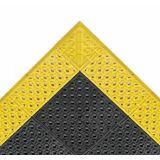
Cushion-Lok is a raised, interlocking drainage mat that turns a wet, oily workstation into a dry standing platform. Hundreds of portholes carry liquids and debris down through the surface, while a series of blades elevates the worker above the spillage — footing stays gripped and dry even when the floor beneath isn't.
On a plant floor, spills don't wait for cleanup schedules. Cutting fluids drift off machines, wash water travels, and the person stationed in the middle of it stands there for a full shift. Without a raised platform, the choice is bad footing or constant mopping. With one, the liquid goes down and the work goes on.
Why Injection-Molded PVC, and Why This One
The material is a tough, injection-molded PVC — with black components manufactured from 100 percent recycled PVC — chosen for its resistance to harsh industrial chemicals, cutting fluids, oils, and greases. That chemistry is what lets the mat live where it's needed most: directly in the splash zone that destroys ordinary rubber and foam.
The build quality reads in the numbers: a 7/8-inch overall thickness, 1.9 pounds per square foot of injection-molded structure, beveled edges, and a heavy-duty usage rating. The manufacturer rates it "Best" — its top tier — for anti-fatigue, slip resistance, and wear resistance all at once, a rare trifecta in one construction.
The compliance sheet is equally clean: the available yellow borders along the sides comply with OSHA code 1910-144, the mat passes US fire rating requirements, it's REACH compliant, and the material is free of DOP, DMF, ozone-depleting substances, silicone, and heavy metals.
Where It Belongs, and What It Is Not
Cushion-Lok belongs in wet, dry, and oily industrial spaces: manufacturing plants, assembly lines, picking, packing and logistics warehouses, and individual work stations wherever spillage meets standing work. Because it interlocks, it's as much a flooring system as a mat — sized to a single post or built out across an entire work cell.
What it is not: a plush front-of-house comfort mat. This is industrial platform equipment, engineered for chemical exposure and heavy duty rather than for a hotel front desk — those softer stations are served by the comfort options in our anti-fatigue mats and runners lineup. Match the tool to the floor, and this one owns the harsh end.
Three Things to Check Before You Spec It
First, decide between stock and built-to-fit. Eight assembled stock sizes run from 30 by 36 inches up to 42 inches by 10 feet — or the interlocking tiles, ramps, and corners let you create your own configuration around machines, columns, and odd footprints. Factory-assembled custom configurations are available too.
Second, plan the borders and transitions. Yellow side borders meeting OSHA code 1910-144 mark the platform edge where forklifts and foot traffic pass close, and the yellow ramp and corner pieces give carts and hurried feet a proper transition onto the raised surface instead of a step up.
Third, match the chemistry to your floor. The PVC resists most chemicals, cutting fluids, oils, and greases — but "most" deserves a check when your process uses something aggressive. Tell us what actually reaches the floor at the station, and we'll verify compatibility before the mat ships.
Why Mats Inc.
Some stations don't need a mat so much as a small piece of infrastructure — and since 1964 we've helped plants build exactly that, one interlocking section at a time. We carry this system for the wet, oily floors that defeat everything simpler, we verify every claim here against the manufacturer's published specifications, and we back it with a 1-year limited Mats Inc. warranty.
Construction Raised interlocking drainage mat; porthole drainage surface over blade footing; injection molded Material PVC; black components manufactured from 100% recycled PVC; resistant to most chemicals, cutting fluids, oils, and greases Thickness 7/8" Colors Black, with yellow border options (yellow side borders comply with OSHA code 1910-144) Standard Sizes 30" x 36", 30" x 48", 30" x 60", 30" x 72", 30" x 96", 42" x 72", 42" x 96", 42" x 120" Modular Components 12" x 12" tiles (black), 6" x 12" ramps (yellow), 6" x 6" corners (yellow); factory-assembled custom configurations available Edges Beveled Weight 1.9 lbs per square foot Ratings Heavy duty; manufacturer-rated "Best" for anti-fatigue, slip resistance, and wear resistance Compliance US fire rating: pass; REACH compliant; free of DOP, DMF, ozone-depleting substances, silicone, and heavy metals Use Area Wet, dry, and oily areas; manufacturing, assembly, picking/packing and logistics, individual workstations Warranty 1-year limited (Mats Inc.) Frequently Asked Questions
How does the raised design actually keep feet out of spills?
Answered by Dustin Thompson, Owner & CEO
Two mechanisms stacked. The surface carries hundreds of portholes, so liquids and debris drop through instead of sitting where shoes land. Beneath the surface, the worker stands on a series of molded blades that elevate footing above whatever collected below — traction up top, spillage down below, and the two never meet. It's the difference between a mat that gets wet with the floor and a platform that stands above it.
Will cutting fluids and industrial chemicals break it down?
Answered by Dustin Thompson, Owner & CEO
Resisting them is this construction's reason for existing. The injection-molded PVC — 100 percent recycled in the black components — was chosen specifically for resistance to harsh industrial chemicals, cutting fluids, oils, and greases, and the manufacturer rates the mat at its top tier for wear resistance on a heavy-duty rating. For genuinely aggressive process chemistry, name the specific exposure and we'll confirm compatibility before you commit a work cell to it.
What does the compliance list actually cover?
Answered by Dustin Thompson, Owner & CEO
More than most mats bother to document. The available yellow side borders comply with OSHA code 1910-144 for safety color marking, the mat passes US fire rating requirements, and the material is REACH compliant and free of DOP, DMF, ozone-depleting substances, silicone, and heavy metals. For facilities where purchasing has to answer to a safety office, that paper trail is part of what you're buying.
Can it really be built around machines and odd layouts?
Answered by Jinna Hopson, Vice President of Marketing
That's the system's signature. Interlocking 12 by 12 inch tiles build the platform in any footprint — an L around a press, a ring around a column, a full runway down a work cell — and the yellow ramps and corners finish every open edge with a proper transition. If assembling it yourself isn't appealing, factory-assembled custom configurations arrive ready to lay down. The mat fits the station instead of the station adapting to the mat.
Which stock size fits a single workstation versus a line?
Answered by Jinna Hopson, Vice President of Marketing
Match the width to the stance and the length to the walk. The 30-inch width covers a single planted post — the 30 by 36 or 30 by 48 for one operator at one machine. Where workers slide station to station, step up to the longer runs: 30 inches by 8 feet, or the 42-inch width at 6, 8, and 10 feet for lines where people pass behind each other. Eight assembled stock sizes cover most stations before custom work even enters the conversation.
What does the yellow border communicate on a busy floor?
Answered by Jinna Hopson, Vice President of Marketing
It draws the official line between the standing platform and everything moving past it. Yellow is the recognized safety-marking color — these borders comply with OSHA code 1910-144 — so forklift operators, cart pushers, and visitors read the platform edge at a glance, from a distance, without a painted line that wears away. And because the border travels with the mat, the marking stays accurate every time the layout changes.
By Dustin Thompson, Owner & CEO, Mats Inc.
↑
What Cushion-Lok Does Before Spillage Decides Where People Stand
Cushion-Lok is a raised, interlocking drainage mat that turns a wet, oily workstation into a dry standing platform. Hundreds of portholes carry liquids and debris down through the surface, while a series of blades elevates the worker above the spillage — footing stays gripped and dry even when the floor beneath isn't.
On a plant floor, spills don't wait for cleanup schedules. Cutting fluids drift off machines, wash water travels, and the person stationed in the middle of it stands there for a full shift. Without a raised platform, the choice is bad footing or constant mopping. With one, the liquid goes down and the work goes on.
Why Injection-Molded PVC, and Why This One
The material is a tough, injection-molded PVC — with black components manufactured from 100 percent recycled PVC — chosen for its resistance to harsh industrial chemicals, cutting fluids, oils, and greases. That chemistry is what lets the mat live where it's needed most: directly in the splash zone that destroys ordinary rubber and foam.
The build quality reads in the numbers: a 7/8-inch overall thickness, 1.9 pounds per square foot of injection-molded structure, beveled edges, and a heavy-duty usage rating. The manufacturer rates it "Best" — its top tier — for anti-fatigue, slip resistance, and wear resistance all at once, a rare trifecta in one construction.
The compliance sheet is equally clean: the available yellow borders along the sides comply with OSHA code 1910-144, the mat passes US fire rating requirements, it's REACH compliant, and the material is free of DOP, DMF, ozone-depleting substances, silicone, and heavy metals.
Where It Belongs, and What It Is Not
Cushion-Lok belongs in wet, dry, and oily industrial spaces: manufacturing plants, assembly lines, picking, packing and logistics warehouses, and individual work stations wherever spillage meets standing work. Because it interlocks, it's as much a flooring system as a mat — sized to a single post or built out across an entire work cell.
What it is not: a plush front-of-house comfort mat. This is industrial platform equipment, engineered for chemical exposure and heavy duty rather than for a hotel front desk — those softer stations are served by the comfort options in our anti-fatigue mats and runners lineup. Match the tool to the floor, and this one owns the harsh end.
Three Things to Check Before You Spec It
First, decide between stock and built-to-fit. Eight assembled stock sizes run from 30 by 36 inches up to 42 inches by 10 feet — or the interlocking tiles, ramps, and corners let you create your own configuration around machines, columns, and odd footprints. Factory-assembled custom configurations are available too.
Second, plan the borders and transitions. Yellow side borders meeting OSHA code 1910-144 mark the platform edge where forklifts and foot traffic pass close, and the yellow ramp and corner pieces give carts and hurried feet a proper transition onto the raised surface instead of a step up.
Third, match the chemistry to your floor. The PVC resists most chemicals, cutting fluids, oils, and greases — but "most" deserves a check when your process uses something aggressive. Tell us what actually reaches the floor at the station, and we'll verify compatibility before the mat ships.
Why Mats Inc.
Some stations don't need a mat so much as a small piece of infrastructure — and since 1964 we've helped plants build exactly that, one interlocking section at a time. We carry this system for the wet, oily floors that defeat everything simpler, we verify every claim here against the manufacturer's published specifications, and we back it with a 1-year limited Mats Inc. warranty.
Construction Raised interlocking drainage mat; porthole drainage surface over blade footing; injection molded Material PVC; black components manufactured from 100% recycled PVC; resistant to most chemicals, cutting fluids, oils, and greases Thickness 7/8" Colors Black, with yellow border options (yellow side borders comply with OSHA code 1910-144) Standard Sizes 30" x 36", 30" x 48", 30" x 60", 30" x 72", 30" x 96", 42" x 72", 42" x 96", 42" x 120" Modular Components 12" x 12" tiles (black), 6" x 12" ramps (yellow), 6" x 6" corners (yellow); factory-assembled custom configurations available Edges Beveled Weight 1.9 lbs per square foot Ratings Heavy duty; manufacturer-rated "Best" for anti-fatigue, slip resistance, and wear resistance Compliance US fire rating: pass; REACH compliant; free of DOP, DMF, ozone-depleting substances, silicone, and heavy metals Use Area Wet, dry, and oily areas; manufacturing, assembly, picking/packing and logistics, individual workstations Warranty 1-year limited (Mats Inc.) Frequently Asked Questions
How does the raised design actually keep feet out of spills?
Answered by Dustin Thompson, Owner & CEO
Two mechanisms stacked. The surface carries hundreds of portholes, so liquids and debris drop through instead of sitting where shoes land. Beneath the surface, the worker stands on a series of molded blades that elevate footing above whatever collected below — traction up top, spillage down below, and the two never meet. It's the difference between a mat that gets wet with the floor and a platform that stands above it.
Will cutting fluids and industrial chemicals break it down?
Answered by Dustin Thompson, Owner & CEO
Resisting them is this construction's reason for existing. The injection-molded PVC — 100 percent recycled in the black components — was chosen specifically for resistance to harsh industrial chemicals, cutting fluids, oils, and greases, and the manufacturer rates the mat at its top tier for wear resistance on a heavy-duty rating. For genuinely aggressive process chemistry, name the specific exposure and we'll confirm compatibility before you commit a work cell to it.
What does the compliance list actually cover?
Answered by Dustin Thompson, Owner & CEO
More than most mats bother to document. The available yellow side borders comply with OSHA code 1910-144 for safety color marking, the mat passes US fire rating requirements, and the material is REACH compliant and free of DOP, DMF, ozone-depleting substances, silicone, and heavy metals. For facilities where purchasing has to answer to a safety office, that paper trail is part of what you're buying.
Can it really be built around machines and odd layouts?
Answered by Jinna Hopson, Vice President of Marketing
That's the system's signature. Interlocking 12 by 12 inch tiles build the platform in any footprint — an L around a press, a ring around a column, a full runway down a work cell — and the yellow ramps and corners finish every open edge with a proper transition. If assembling it yourself isn't appealing, factory-assembled custom configurations arrive ready to lay down. The mat fits the station instead of the station adapting to the mat.
Which stock size fits a single workstation versus a line?
Answered by Jinna Hopson, Vice President of Marketing
Match the width to the stance and the length to the walk. The 30-inch width covers a single planted post — the 30 by 36 or 30 by 48 for one operator at one machine. Where workers slide station to station, step up to the longer runs: 30 inches by 8 feet, or the 42-inch width at 6, 8, and 10 feet for lines where people pass behind each other. Eight assembled stock sizes cover most stations before custom work even enters the conversation.
What does the yellow border communicate on a busy floor?
Answered by Jinna Hopson, Vice President of Marketing
It draws the official line between the standing platform and everything moving past it. Yellow is the recognized safety-marking color — these borders comply with OSHA code 1910-144 — so forklift operators, cart pushers, and visitors read the platform edge at a glance, from a distance, without a painted line that wears away. And because the border travels with the mat, the marking stays accurate every time the layout changes.
By Dustin Thompson, Owner & CEO, Mats Inc.
↑
View Details
View Details
 Rubber Gym Flooring Rolls
Starting at $2.99
Rubber gym flooring rolls give you the most floor with the fewest seams. Where tiles and single mats leave you lines to manage, a roll lays down in long, continuous runs — cleaner to look at, faster to cover a big room, and harder for equipment to shift around. These...
Rubber gym flooring rolls give you the most floor with the fewest seams. Where tiles and single mats leave you...
Rubber gym flooring rolls give you the most floor with the fewest seams. Where tiles and single mats leave you lines to manage, a roll lays down in long, continuous runs — cleaner to look at, faster to cover a big room, and harder for equipment to shift around. These are recycled-rubber rolls built to take dropped weights and heavy machines without passing the damage into the floor below.
What Rubber Gym Flooring Rolls Do Before Your Subfloor Pays for It
Every dropped dumbbell and loaded barbell sends force somewhere. On a bare slab or a finished floor, that force goes straight into the surface — cracked tile, dented concrete, gouged wood, and noise that travels through the building. A rubber roll sits between the workout and the floor and absorbs most of that energy before it lands.
That's the real job here: protecting the subfloor, the equipment, and the people training. The rolls also knock down the noise and shock that carry to rooms below — independent testing rates them high for both airborne sound (STC 59) and impact sound (IIC 69), strong marks for a floor over an occupied space. And the dense surface gives shoes and equipment enough grip to stay put.
Why Recycled Rubber Rolls, and Why This One
These rolls are made from recycled tire rubber — SBR (styrene-butadiene rubber) bound with polyurethane — at about 92% recycled content, so the same density that makes them tough also keeps a lot of scrap tire out of a landfill. That density is real, 65 to 80 pounds per cubic foot, which is what lets the rubber absorb impact and stay flat under weights instead of bouncing.
They come in three thicknesses, from 1/4 inch up to 1/2 inch, so you can match the floor to the load instead of buying one thickness for the whole building. Thinner runs suit cardio and general fitness; the half-inch handles busier rooms and heavier equipment. Because they're cut to length, a roll can cover a full room edge to edge with very few seams. For the heaviest lifting — dropped barbells and Olympic platforms — our heavy-duty gym matting is the surface built for that punishment.
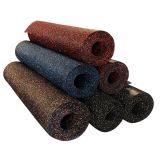
Color isn't an afterthought either. Beyond solid black, the rolls come in fleck blends across blues, grays, reds, greens and more, so a commercial studio can match a brand palette and a home gym can skip the plain-industrial look.
Where Rolls Belong, and Where They Don't
Rolls are at their best in big, open, more-or-less permanent floors: commercial gyms, school and team weight rooms, fitness studios, and full garage or basement builds where you want wall-to-wall coverage. The flat, continuous surface makes a large room look finished and stay put under heavy traffic.
Where they're not the easy answer is a space that changes often. If you expect to rearrange the room, move equipment between spots, or take the floor with you, interlocking tiles handle that better — they come up and go back down without adhesive.
And for a dedicated drop zone — a deadlift or Olympic platform — our heavy-duty gym matting is purpose-built to take repeated heavy drops, rather than rolling the whole room. Rolls are one option in the wider gym flooring lineup, because different spaces call for different surfaces.
Three Things to Check Before You Spec Rolls
Three things decide whether a roll is right and which one to order.
First, thickness against the load. For bodyweight training, stretching, and cardio, 1/4 inch to 3/8 inch is usually enough. For busier rooms and heavier equipment, the 1/2 inch gives you more cushion and protection. If you're regularly dropping loaded barbells, that's past what these rolls are for — the heavy-duty gym matting is the surface built to absorb it. Speccing thin to save on material is the most common way subfloors get damaged.
Second, the room and the length. Measure the actual training area, not the whole slab — rolls cut to any length, so you only cover what you use. Note the doorways, posts, and racks you'll trim around, and decide whether you want one continuous run or a couple of shorter pieces that are easier to handle.
Third, how it attaches. A roll can sit loose under light use, but most installs use double-sided tape or adhesive so edges stay down and seams stay tight, especially in high-traffic and commercial rooms. Let the rubber relax to room temperature first, then trim to fit — that keeps it from shifting or curling later.
Why Mats Inc.
Mats Inc. has spent since 1964 figuring out which surface belongs on which floor, and rubber rolls are a straightforward call once we know the load and the room. We'll help you land on a thickness instead of guessing, work out how much length the space actually needs, and flag the install method that fits your subfloor.
We specify rather than install, so the advice is about getting the spec right the first time — not selling you more rubber than the room calls for. Every order is backed by our one-year limited warranty.
Material Recycled SBR (styrene-butadiene) tire rubber with polyurethane binder; ~92% recycled content Thickness options 1/4″ (6 mm), 3/8″ (9 mm), 1/2″ (12 mm) Roll width 4 ft (48″) Length Cut to length (standard runs 15–100 ft) Density 65–80 lb/ft³ Slip resistance Coefficient of friction > 0.9 (ASTM D2047) Acoustics STC 59 (airborne sound) / IIC 69 (impact sound) Durability Tensile > 220 psi; elongation 155%; tear 80 pli; abrasion < 1.7 g (1,000 cycles) Flammability Passes burning pill test Color options Solid black plus fleck blends — blues, grays, reds, greens, cocoa, and granite/sandstone tones Installation Acclimate to room temperature, trim to fit, secure with adhesive or double-sided tape Maintenance Sweep or vacuum; damp mop with a neutral cleaner Warranty 1-year limited (Mats Inc.) Frequently Asked Questions
What are these rolls actually made of?
Answered by Dustin Thompson, Owner & CEO
They're made from recycled tire rubber — SBR, short for styrene-butadiene rubber — ground down and bound with polyurethane into a dense, solid sheet at about 92% recycled content. That density is the point, around 65 to 80 pounds per cubic foot: it's what lets the roll absorb the impact of dropped weights and stay flat under heavy machines instead of compressing or bouncing. It also puts a lot of scrap tire to good use instead of a landfill.
How long will rubber gym flooring rolls last, and what wears them out?
Answered by Dustin Thompson, Owner & CEO
In a normal gym, quality rubber rolls last many years — often a decade or more — because dense recycled rubber handles foot traffic and equipment without breaking down. What ends their life early is usually the wrong thickness for the load: a thin roll under a platform takes punishment it wasn't built for.
Standing water trapped underneath and harsh solvent cleaners can also shorten the life. A thickness matched to the load, and a neutral cleaner instead of solvents, go a long way.
Do I have to glue them down?
Answered by Dustin Thompson, Owner & CEO
Not always. For a small, low-traffic area a roll can lie loose, held by its own weight. For most rooms — and almost any commercial floor — double-sided tape or adhesive is worth it, because it keeps the edges flat and the seams tight under daily use.
Whatever the method, let the roll relax to room temperature first and trim it to fit. Rubber that's been rolled tight needs time to settle before it lies flat.
How do I know how much to order if they're cut to length?
Answered by Jinna Hopson, Vice President of Marketing
Measure the area you'll actually train on, not the entire floor — most home and garage gyms only need the working zone covered. Because the rolls are cut to any length, you order to that measurement rather than forcing the room to fit fixed sizes.
Map out where doorways, racks, and posts fall so we can plan trims and seams, and tell us if you'd rather have one long run or a few shorter pieces that are easier to move and lay.
What colors do they come in?
Answered by Jinna Hopson, Vice President of Marketing
More than you might expect. The base is solid black, which hides scuffs and is the usual pick for hard-working commercial floors. From there, the rolls come in fleck blends — flecks of color mixed into the black rubber — in blues, grays, reds, greens, cocoa, and stone-like granite and sandstone tones.
A studio can pull its brand colors into the floor, and a home gym can land on something warmer than plain black. Because the color is in the material rather than a top coating, it won't wear off where you walk and train.
Will rubber rolls work in a home or basement gym, or are they just for commercial spaces?
Answered by Jinna Hopson, Vice President of Marketing
Both. The same rolls that go into commercial gyms work just as well in a basement, garage, or spare-room setup — you're just covering a smaller area. In a basement, the impact absorption and noise dampening are a real plus over a finished room or bedroom below.
Pick a thickness that matches what you'll lift, cover the training zone, and a home space gets the same protected, finished floor a commercial gym has — without redoing the whole slab.
By Jinna Hopson, Vice President of Marketing, Mats Inc.
↑
Rubber gym flooring rolls give you the most floor with the fewest seams. Where tiles and single mats leave you lines to manage, a roll lays down in long, continuous runs — cleaner to look at, faster to cover a big room, and harder for equipment to shift around. These are recycled-rubber rolls built to take dropped weights and heavy machines without passing the damage into the floor below.
What Rubber Gym Flooring Rolls Do Before Your Subfloor Pays for It
Every dropped dumbbell and loaded barbell sends force somewhere. On a bare slab or a finished floor, that force goes straight into the surface — cracked tile, dented concrete, gouged wood, and noise that travels through the building. A rubber roll sits between the workout and the floor and absorbs most of that energy before it lands.
That's the real job here: protecting the subfloor, the equipment, and the people training. The rolls also knock down the noise and shock that carry to rooms below — independent testing rates them high for both airborne sound (STC 59) and impact sound (IIC 69), strong marks for a floor over an occupied space. And the dense surface gives shoes and equipment enough grip to stay put.
Why Recycled Rubber Rolls, and Why This One
These rolls are made from recycled tire rubber — SBR (styrene-butadiene rubber) bound with polyurethane — at about 92% recycled content, so the same density that makes them tough also keeps a lot of scrap tire out of a landfill. That density is real, 65 to 80 pounds per cubic foot, which is what lets the rubber absorb impact and stay flat under weights instead of bouncing.
They come in three thicknesses, from 1/4 inch up to 1/2 inch, so you can match the floor to the load instead of buying one thickness for the whole building. Thinner runs suit cardio and general fitness; the half-inch handles busier rooms and heavier equipment. Because they're cut to length, a roll can cover a full room edge to edge with very few seams. For the heaviest lifting — dropped barbells and Olympic platforms — our heavy-duty gym matting is the surface built for that punishment.
Color isn't an afterthought either. Beyond solid black, the rolls come in fleck blends across blues, grays, reds, greens and more, so a commercial studio can match a brand palette and a home gym can skip the plain-industrial look.
Where Rolls Belong, and Where They Don't
Rolls are at their best in big, open, more-or-less permanent floors: commercial gyms, school and team weight rooms, fitness studios, and full garage or basement builds where you want wall-to-wall coverage. The flat, continuous surface makes a large room look finished and stay put under heavy traffic.
Where they're not the easy answer is a space that changes often. If you expect to rearrange the room, move equipment between spots, or take the floor with you, interlocking tiles handle that better — they come up and go back down without adhesive.
And for a dedicated drop zone — a deadlift or Olympic platform — our heavy-duty gym matting is purpose-built to take repeated heavy drops, rather than rolling the whole room. Rolls are one option in the wider gym flooring lineup, because different spaces call for different surfaces.
Three Things to Check Before You Spec Rolls
Three things decide whether a roll is right and which one to order.
First, thickness against the load. For bodyweight training, stretching, and cardio, 1/4 inch to 3/8 inch is usually enough. For busier rooms and heavier equipment, the 1/2 inch gives you more cushion and protection. If you're regularly dropping loaded barbells, that's past what these rolls are for — the heavy-duty gym matting is the surface built to absorb it. Speccing thin to save on material is the most common way subfloors get damaged.
Second, the room and the length. Measure the actual training area, not the whole slab — rolls cut to any length, so you only cover what you use. Note the doorways, posts, and racks you'll trim around, and decide whether you want one continuous run or a couple of shorter pieces that are easier to handle.
Third, how it attaches. A roll can sit loose under light use, but most installs use double-sided tape or adhesive so edges stay down and seams stay tight, especially in high-traffic and commercial rooms. Let the rubber relax to room temperature first, then trim to fit — that keeps it from shifting or curling later.
Why Mats Inc.
Mats Inc. has spent since 1964 figuring out which surface belongs on which floor, and rubber rolls are a straightforward call once we know the load and the room. We'll help you land on a thickness instead of guessing, work out how much length the space actually needs, and flag the install method that fits your subfloor.
We specify rather than install, so the advice is about getting the spec right the first time — not selling you more rubber than the room calls for. Every order is backed by our one-year limited warranty.
Material Recycled SBR (styrene-butadiene) tire rubber with polyurethane binder; ~92% recycled content Thickness options 1/4″ (6 mm), 3/8″ (9 mm), 1/2″ (12 mm) Roll width 4 ft (48″) Length Cut to length (standard runs 15–100 ft) Density 65–80 lb/ft³ Slip resistance Coefficient of friction > 0.9 (ASTM D2047) Acoustics STC 59 (airborne sound) / IIC 69 (impact sound) Durability Tensile > 220 psi; elongation 155%; tear 80 pli; abrasion < 1.7 g (1,000 cycles) Flammability Passes burning pill test Color options Solid black plus fleck blends — blues, grays, reds, greens, cocoa, and granite/sandstone tones Installation Acclimate to room temperature, trim to fit, secure with adhesive or double-sided tape Maintenance Sweep or vacuum; damp mop with a neutral cleaner Warranty 1-year limited (Mats Inc.) Frequently Asked Questions
What are these rolls actually made of?
Answered by Dustin Thompson, Owner & CEO
They're made from recycled tire rubber — SBR, short for styrene-butadiene rubber — ground down and bound with polyurethane into a dense, solid sheet at about 92% recycled content. That density is the point, around 65 to 80 pounds per cubic foot: it's what lets the roll absorb the impact of dropped weights and stay flat under heavy machines instead of compressing or bouncing. It also puts a lot of scrap tire to good use instead of a landfill.
How long will rubber gym flooring rolls last, and what wears them out?
Answered by Dustin Thompson, Owner & CEO
In a normal gym, quality rubber rolls last many years — often a decade or more — because dense recycled rubber handles foot traffic and equipment without breaking down. What ends their life early is usually the wrong thickness for the load: a thin roll under a platform takes punishment it wasn't built for.
Standing water trapped underneath and harsh solvent cleaners can also shorten the life. A thickness matched to the load, and a neutral cleaner instead of solvents, go a long way.
Do I have to glue them down?
Answered by Dustin Thompson, Owner & CEO
Not always. For a small, low-traffic area a roll can lie loose, held by its own weight. For most rooms — and almost any commercial floor — double-sided tape or adhesive is worth it, because it keeps the edges flat and the seams tight under daily use.
Whatever the method, let the roll relax to room temperature first and trim it to fit. Rubber that's been rolled tight needs time to settle before it lies flat.
How do I know how much to order if they're cut to length?
Answered by Jinna Hopson, Vice President of Marketing
Measure the area you'll actually train on, not the entire floor — most home and garage gyms only need the working zone covered. Because the rolls are cut to any length, you order to that measurement rather than forcing the room to fit fixed sizes.
Map out where doorways, racks, and posts fall so we can plan trims and seams, and tell us if you'd rather have one long run or a few shorter pieces that are easier to move and lay.
What colors do they come in?
Answered by Jinna Hopson, Vice President of Marketing
More than you might expect. The base is solid black, which hides scuffs and is the usual pick for hard-working commercial floors. From there, the rolls come in fleck blends — flecks of color mixed into the black rubber — in blues, grays, reds, greens, cocoa, and stone-like granite and sandstone tones.
A studio can pull its brand colors into the floor, and a home gym can land on something warmer than plain black. Because the color is in the material rather than a top coating, it won't wear off where you walk and train.
Will rubber rolls work in a home or basement gym, or are they just for commercial spaces?
Answered by Jinna Hopson, Vice President of Marketing
Both. The same rolls that go into commercial gyms work just as well in a basement, garage, or spare-room setup — you're just covering a smaller area. In a basement, the impact absorption and noise dampening are a real plus over a finished room or bedroom below.
Pick a thickness that matches what you'll lift, cover the training zone, and a home space gets the same protected, finished floor a commercial gym has — without redoing the whole slab.
By Jinna Hopson, Vice President of Marketing, Mats Inc.
↑
View Details
View Details
 Waterhog Carpet Tiles$215.00Waterhog Carpet Tiles are an entrance system built in modular form. The surface is bi-level — raised nubs that scrape dirt and moisture off shoes and drop it below shoe level, where it stops getting tracked forward. The backing is 100-mil cleated SBR rubber, which is what holds the whole
...
Waterhog Carpet Tiles are an entrance system built in modular form. The surface is bi-level — raised nubs that scrape...
Waterhog Carpet Tiles are an entrance system built in modular form. The surface is bi-level — raised nubs that scrape dirt and moisture off shoes and drop it below shoe level, where it stops getting tracked forward. The backing is 100-mil cleated SBR rubber, which is what holds the whole thing flat and in place.
What the tile format adds is scale. Entrance protection is usually sold as a mat, and a mat covers whatever area a mat covers. Tiles come 18 inches square, 12 to a case covering 27 square feet, so you cover the area the entrance actually needs.
What a Modular Entrance System Does Before Half Your Traffic Walks Around It
Here is the failure nobody notices until it is pointed out. A building puts a mat inside its main door. The door is twelve feet wide, the mat is five. People come in at an angle, cut toward the elevator, and a large share of them never set foot on it.
The mat is doing its job perfectly. It is just not in the path of most of the traffic, so most of what walks in walks straight past it and onto the finished floor beyond.
Getting soil off a shoe also takes distance, not just contact. One or two steps on a scraping surface removes a fraction of what is on a sole. It takes several strides of continuous walk-off to get the bulk of it, which a single mat length cannot physically provide.
A tile system fixes both problems at once, because you are no longer buying a mat size — you are covering an area. Run the tiles wall to wall across the entry and out as far as the traffic pattern needs, and there is no way around and no shortage of distance.
Why a Bi-Level Surface Over Cleated Rubber, and Why This One
Bi-level means the surface works on two planes. Reinforced rubber nubs stand up through the fabric and do the scraping, and the space between them is where the debris goes. Once it drops below the level a shoe touches, it stops being picked back up and carried inside.
Those nubs do a second job. They hold the surrounding fibers upright under traffic, so the pile does not crush flat in the highest-use strip. Crushed pile is what kills an entrance surface — once it flattens, the scraping action goes with it.
The fabric is solution-dyed PET at 30 ounces per square yard, so color is locked into the fiber rather than applied to it. It resists staining, dries quickly, and will not fade or rot — which matters at an entrance more than anywhere else in a building, since that is the surface that gets wet.
The backing is 100-mil universal cleated SBR rubber, bringing overall tile thickness to 1/4 inch. Cleated means it grips both hard floors and carpet, so the tiles lie flat rather than creeping under traffic. The tiles are certified high-traction by the National Floor Safety Institute, which is a tested slip-resistance rating rather than a marketing claim.
The modular format also changes what happens when something goes wrong. A worn or damaged tile lifts out and gets replaced on its own, so a burn mark or a torn corner is a single 18 inch square rather than a reason to pull the whole entrance.
There is a recycled-content story here that holds up to scrutiny. The PET fabric is made from at least 90% recycled content reclaimed from plastic, and the rubber backing contains 20% recycled rubber from car tires.
Where It Belongs, and Where It Is Not the Right Tile
This belongs at entrances, and specifically at wide or busy ones. Main building doors, storefronts, lobby entries, school and office front doors, and vestibules where traffic arrives from several directions at once. Anywhere the entry is too wide for a mat to cover honestly.
It also suits large-format applications a mat cannot address — long entry corridors, transitional areas between an exterior door and an interior floor, or a whole vestibule floor treated as one continuous walk-off surface. The tiles can be installed inside or outside, so a covered entry approach and the vestibule behind it can run the same surface without a change of product at the threshold.
The tiles work in surface or recessed installations. Recessed is worth considering on new construction or a renovation with a mat well, since it brings the entrance flush with the surrounding floor and removes the edge entirely.
What this is not is a field tile. A rubber-backed scraping surface is the wrong thing to run through an open office or a conference room, and at 1/4 inch it is a different height than most interior tiles. Its role is to protect what comes after it, which is how the full range of carpet tiles is organized — entrance construction first, interior floor behind it.
Three Things to Check Before You Spec It
First, measure the door and watch the traffic, not the entry mat you already have. Note how wide the opening is and which directions people actually travel once inside. That walking pattern, not the doorway dimension, tells you how much area the tiles need to cover, and at 27 square feet per case the arithmetic is straightforward once you know the area.
Second, decide surface or recessed early, and plan the edge either way. Recessed installation needs a mat well of the right depth, which is a construction decision rather than a flooring one. Surface installation works anywhere but leaves a perimeter, and vinyl nosing is available to finish that border — worth deciding on before the order rather than after the tiles are down.
Third, order the adhesive with the tiles. Installation requires a solvent-free adhesive, supplied separately, and confirming that at order time avoids a crew arriving with tiles and nothing to bond them with. While you are at it, confirm the 1/4 inch overall height against the adjoining floor so the transition is designed rather than discovered.
Why Mats Inc.
Entrance protection is the one flooring decision where the common mistake is buying too little rather than the wrong thing. We have been specifying entrance systems since 1964, and the question we ask first is how wide your doors are and where people go once they are through them. Send us the opening dimensions and a description of the traffic and we will work out how much area actually needs covering.
Tile size 18 in. x 18 in. Tiles per case 12 Coverage per case 27 sq. ft. Case weight 29 lbs. Overall thickness 1/4 in. Construction Bi-level with reinforced rubber nubs Surface material Solution-dyed PET (polyethylene terephthalate) Surface weight 30 oz/yd² Backing SBR rubber, universal cleated, 100-mil Patterns Diamond, diagonal, geometric Colors Seven: Black Smoke, Chestnut Brown, Grey Ash, Indigo, Khaki, Maroon, Southern Pine Application Indoor or outdoor Installation Surface or recessed; solvent-free adhesive required, supplied separately Border option Vinyl nosing, supplied separately Traction Certified high-traction (NFSI) Recycled content Surface at least 90% recycled PET; backing 20% recycled rubber Warranty 1-year limited (Mats Inc.) Frequently Asked Questions
What does bi-level mean, and why does it beat a flat surface?
Answered by Dustin Thompson, Owner & CEO
Bi-level means the surface operates on two heights. Reinforced rubber nubs project up through the fabric and scrape the sole of the shoe, and the recessed space between them collects what comes off. Once debris is below the level a shoe reaches, it stays there instead of being picked up again on the next pass.
A flat surface has nowhere to put anything. It holds soil at the same height the shoe contacts, so a good portion gets redistributed with every step across it and eventually walked onto your floor. The nubs also hold the surrounding fibers upright under traffic, which keeps the pile from crushing flat and losing its scraping action.
How well does it hold up in constant entrance traffic?
Answered by Dustin Thompson, Owner & CEO
The construction is aimed squarely at that. A 30 ounce per square yard PET surface over a 100-mil cleated rubber backing is a substantial build, and the reinforced nubs are specifically there to extend performance life by stopping the pile from crushing under the heaviest footfall.
PET also handles what entrances actually face. It is solution dyed, so color runs through the fiber rather than sitting on it, and it resists staining, sheds water quickly, and will not fade or rot. And because the system is modular, a tile that does eventually give out is replaced on its own rather than triggering a whole new entrance. Vacuum regularly, daily in the busiest areas, and let it dry fully before it goes back into service. Waterhog Carpet Tiles carry a 1-year limited warranty from Mats Inc.
How much area do we need to cover, and how does it install?
Answered by Dustin Thompson, Owner & CEO
Cover the full width of the opening, then run it inward far enough that people take several strides on it. Tiles are 18 inches square and ship 12 to a case covering 27 square feet at 29 pounds, so once you know the area the count works itself out. The most common mistake is treating an entrance as a doormat-sized problem.
Installation goes surface or recessed, and either way it is a bonded installation — a solvent-free adhesive is required and is supplied separately, so order it alongside the tiles. Surface installation needs a flat, dry subfloor and leaves a perimeter, which vinyl nosing can finish. Recessed drops the system into a mat well and brings it flush with the surrounding floor. Confirm the 1/4 inch height against the adjoining floor before ordering either way.
What do the three patterns actually look like?
Answered by Jinna Hopson, Vice President of Marketing
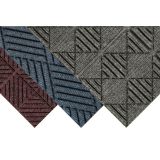
Diamond is the most familiar and the most forgiving — a repeating diamond grid that reads as texture and hides soil well between cleanings. Diagonal runs on the angle, which draws the eye forward into the building and works nicely where the entry leads somewhere specific.
Geometric is the most contemporary of the three and holds its own in a designed lobby rather than looking like protective equipment. All three are working surfaces first, so none of them will disappear into a room, but the pattern choice genuinely changes how deliberate the entrance looks.
How do we pick a color that works with the floor behind it?
Answered by Jinna Hopson, Vice President of Marketing
Seven colors gives you real room: Black Smoke, Grey Ash and Indigo on the cooler side, Chestnut Brown and Khaki running warm, plus Maroon and Southern Pine when the entrance should carry some depth. The useful instinct is to go darker than your interior floor rather than matching it, since this is the surface holding everything that came in off the street.
Beyond that, treat it as the transition rather than a match. An entrance that relates to your interior palette without copying it reads as intentional, and it keeps the eye moving into the space instead of stopping at a seam where two nearly-identical tones meet.
Can we get a logo or custom artwork in the entrance?
Answered by Jinna Hopson, Vice President of Marketing
These tiles are a stock program — three patterns, seven colors, no custom artwork built into the tile itself. That is deliberate, since the modular format is about covering an area properly rather than about branding.
The usual approach is to do both jobs in sequence. Custom branded entrance products do exist, and pairing one with a tiled walk-off area gives you the logo where people look and the coverage where the traffic actually is. Tell us your entrance dimensions and what you want to display and we will lay out how the two pieces work together.
By Dustin Thompson, Owner & CEO, Mats Inc.
↑
Waterhog Carpet Tiles are an entrance system built in modular form. The surface is bi-level — raised nubs that scrape dirt and moisture off shoes and drop it below shoe level, where it stops getting tracked forward. The backing is 100-mil cleated SBR rubber, which is what holds the whole thing flat and in place.
What the tile format adds is scale. Entrance protection is usually sold as a mat, and a mat covers whatever area a mat covers. Tiles come 18 inches square, 12 to a case covering 27 square feet, so you cover the area the entrance actually needs.
What a Modular Entrance System Does Before Half Your Traffic Walks Around It
Here is the failure nobody notices until it is pointed out. A building puts a mat inside its main door. The door is twelve feet wide, the mat is five. People come in at an angle, cut toward the elevator, and a large share of them never set foot on it.
The mat is doing its job perfectly. It is just not in the path of most of the traffic, so most of what walks in walks straight past it and onto the finished floor beyond.
Getting soil off a shoe also takes distance, not just contact. One or two steps on a scraping surface removes a fraction of what is on a sole. It takes several strides of continuous walk-off to get the bulk of it, which a single mat length cannot physically provide.
A tile system fixes both problems at once, because you are no longer buying a mat size — you are covering an area. Run the tiles wall to wall across the entry and out as far as the traffic pattern needs, and there is no way around and no shortage of distance.
Why a Bi-Level Surface Over Cleated Rubber, and Why This One
Bi-level means the surface works on two planes. Reinforced rubber nubs stand up through the fabric and do the scraping, and the space between them is where the debris goes. Once it drops below the level a shoe touches, it stops being picked back up and carried inside.
Those nubs do a second job. They hold the surrounding fibers upright under traffic, so the pile does not crush flat in the highest-use strip. Crushed pile is what kills an entrance surface — once it flattens, the scraping action goes with it.
The fabric is solution-dyed PET at 30 ounces per square yard, so color is locked into the fiber rather than applied to it. It resists staining, dries quickly, and will not fade or rot — which matters at an entrance more than anywhere else in a building, since that is the surface that gets wet.
The backing is 100-mil universal cleated SBR rubber, bringing overall tile thickness to 1/4 inch. Cleated means it grips both hard floors and carpet, so the tiles lie flat rather than creeping under traffic. The tiles are certified high-traction by the National Floor Safety Institute, which is a tested slip-resistance rating rather than a marketing claim.
The modular format also changes what happens when something goes wrong. A worn or damaged tile lifts out and gets replaced on its own, so a burn mark or a torn corner is a single 18 inch square rather than a reason to pull the whole entrance.
There is a recycled-content story here that holds up to scrutiny. The PET fabric is made from at least 90% recycled content reclaimed from plastic, and the rubber backing contains 20% recycled rubber from car tires.
Where It Belongs, and Where It Is Not the Right Tile
This belongs at entrances, and specifically at wide or busy ones. Main building doors, storefronts, lobby entries, school and office front doors, and vestibules where traffic arrives from several directions at once. Anywhere the entry is too wide for a mat to cover honestly.
It also suits large-format applications a mat cannot address — long entry corridors, transitional areas between an exterior door and an interior floor, or a whole vestibule floor treated as one continuous walk-off surface. The tiles can be installed inside or outside, so a covered entry approach and the vestibule behind it can run the same surface without a change of product at the threshold.
The tiles work in surface or recessed installations. Recessed is worth considering on new construction or a renovation with a mat well, since it brings the entrance flush with the surrounding floor and removes the edge entirely.
What this is not is a field tile. A rubber-backed scraping surface is the wrong thing to run through an open office or a conference room, and at 1/4 inch it is a different height than most interior tiles. Its role is to protect what comes after it, which is how the full range of carpet tiles is organized — entrance construction first, interior floor behind it.
Three Things to Check Before You Spec It
First, measure the door and watch the traffic, not the entry mat you already have. Note how wide the opening is and which directions people actually travel once inside. That walking pattern, not the doorway dimension, tells you how much area the tiles need to cover, and at 27 square feet per case the arithmetic is straightforward once you know the area.
Second, decide surface or recessed early, and plan the edge either way. Recessed installation needs a mat well of the right depth, which is a construction decision rather than a flooring one. Surface installation works anywhere but leaves a perimeter, and vinyl nosing is available to finish that border — worth deciding on before the order rather than after the tiles are down.
Third, order the adhesive with the tiles. Installation requires a solvent-free adhesive, supplied separately, and confirming that at order time avoids a crew arriving with tiles and nothing to bond them with. While you are at it, confirm the 1/4 inch overall height against the adjoining floor so the transition is designed rather than discovered.
Why Mats Inc.
Entrance protection is the one flooring decision where the common mistake is buying too little rather than the wrong thing. We have been specifying entrance systems since 1964, and the question we ask first is how wide your doors are and where people go once they are through them. Send us the opening dimensions and a description of the traffic and we will work out how much area actually needs covering.
Tile size 18 in. x 18 in. Tiles per case 12 Coverage per case 27 sq. ft. Case weight 29 lbs. Overall thickness 1/4 in. Construction Bi-level with reinforced rubber nubs Surface material Solution-dyed PET (polyethylene terephthalate) Surface weight 30 oz/yd² Backing SBR rubber, universal cleated, 100-mil Patterns Diamond, diagonal, geometric Colors Seven: Black Smoke, Chestnut Brown, Grey Ash, Indigo, Khaki, Maroon, Southern Pine Application Indoor or outdoor Installation Surface or recessed; solvent-free adhesive required, supplied separately Border option Vinyl nosing, supplied separately Traction Certified high-traction (NFSI) Recycled content Surface at least 90% recycled PET; backing 20% recycled rubber Warranty 1-year limited (Mats Inc.) Frequently Asked Questions
What does bi-level mean, and why does it beat a flat surface?
Answered by Dustin Thompson, Owner & CEO
Bi-level means the surface operates on two heights. Reinforced rubber nubs project up through the fabric and scrape the sole of the shoe, and the recessed space between them collects what comes off. Once debris is below the level a shoe reaches, it stays there instead of being picked up again on the next pass.
A flat surface has nowhere to put anything. It holds soil at the same height the shoe contacts, so a good portion gets redistributed with every step across it and eventually walked onto your floor. The nubs also hold the surrounding fibers upright under traffic, which keeps the pile from crushing flat and losing its scraping action.
How well does it hold up in constant entrance traffic?
Answered by Dustin Thompson, Owner & CEO
The construction is aimed squarely at that. A 30 ounce per square yard PET surface over a 100-mil cleated rubber backing is a substantial build, and the reinforced nubs are specifically there to extend performance life by stopping the pile from crushing under the heaviest footfall.
PET also handles what entrances actually face. It is solution dyed, so color runs through the fiber rather than sitting on it, and it resists staining, sheds water quickly, and will not fade or rot. And because the system is modular, a tile that does eventually give out is replaced on its own rather than triggering a whole new entrance. Vacuum regularly, daily in the busiest areas, and let it dry fully before it goes back into service. Waterhog Carpet Tiles carry a 1-year limited warranty from Mats Inc.
How much area do we need to cover, and how does it install?
Answered by Dustin Thompson, Owner & CEO
Cover the full width of the opening, then run it inward far enough that people take several strides on it. Tiles are 18 inches square and ship 12 to a case covering 27 square feet at 29 pounds, so once you know the area the count works itself out. The most common mistake is treating an entrance as a doormat-sized problem.
Installation goes surface or recessed, and either way it is a bonded installation — a solvent-free adhesive is required and is supplied separately, so order it alongside the tiles. Surface installation needs a flat, dry subfloor and leaves a perimeter, which vinyl nosing can finish. Recessed drops the system into a mat well and brings it flush with the surrounding floor. Confirm the 1/4 inch height against the adjoining floor before ordering either way.
What do the three patterns actually look like?
Answered by Jinna Hopson, Vice President of Marketing
Diamond is the most familiar and the most forgiving — a repeating diamond grid that reads as texture and hides soil well between cleanings. Diagonal runs on the angle, which draws the eye forward into the building and works nicely where the entry leads somewhere specific.
Geometric is the most contemporary of the three and holds its own in a designed lobby rather than looking like protective equipment. All three are working surfaces first, so none of them will disappear into a room, but the pattern choice genuinely changes how deliberate the entrance looks.
How do we pick a color that works with the floor behind it?
Answered by Jinna Hopson, Vice President of Marketing
Seven colors gives you real room: Black Smoke, Grey Ash and Indigo on the cooler side, Chestnut Brown and Khaki running warm, plus Maroon and Southern Pine when the entrance should carry some depth. The useful instinct is to go darker than your interior floor rather than matching it, since this is the surface holding everything that came in off the street.
Beyond that, treat it as the transition rather than a match. An entrance that relates to your interior palette without copying it reads as intentional, and it keeps the eye moving into the space instead of stopping at a seam where two nearly-identical tones meet.
Can we get a logo or custom artwork in the entrance?
Answered by Jinna Hopson, Vice President of Marketing
These tiles are a stock program — three patterns, seven colors, no custom artwork built into the tile itself. That is deliberate, since the modular format is about covering an area properly rather than about branding.
The usual approach is to do both jobs in sequence. Custom branded entrance products do exist, and pairing one with a tiled walk-off area gives you the logo where people look and the coverage where the traffic actually is. Tell us your entrance dimensions and what you want to display and we will lay out how the two pieces work together.
By Dustin Thompson, Owner & CEO, Mats Inc.
↑
View Details
View Details
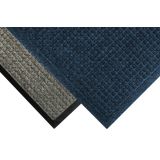 Waterhog Classic Entrance Mats$54.00The Classic Waterhog is the mat most people picture when they think "Waterhog" — the original bi-level scraper built to handle a busy door and keep what's outside from ending up on your floor. It's the workhorse of the line: dependable dirt and moisture control, indoors or out, in a
...
The Classic Waterhog is the mat most people picture when they think "Waterhog" — the original bi-level scraper built to...
The Classic Waterhog is the mat most people picture when they think "Waterhog" — the original bi-level scraper built to handle a busy door and keep what's outside from ending up on your floor. It's the workhorse of the line: dependable dirt and moisture control, indoors or out, in a surface made to take real daily traffic. Part of the broader Waterhog entrance mat family, the Classic is the default pick for primary entrances.
What a Waterhog Mat Does Before Dirt Reaches Your Floor
Most of the dirt in a building walks in through the front door. ISSA data shows up to 12 times more dirt enters during wet weather, and it takes six to eight footsteps for someone to wipe their shoes clean. The Classic Waterhog is built to catch that in those first steps inside.
The bi-level surface does the work. Raised ridges scrape grit and moisture off shoes and drop it down between them, below shoe level, where it stays put instead of tracking inside. The water-dam border holds the moisture on the mat — up to 1.5 gallons of water per square yard — so the floor past the door stays dry and safer underfoot.
Why the Bi-Level Construction Holds Up
The surface is a 24 oz/yd² solution-dyed PET fiber, made from at least 90% recycled plastic. Solution-dyed means the color goes all the way through the fiber, so it resists staining and won't fade or rot — it dries fast and keeps its look through repeated cleanings. The waffle pattern's reinforced rubber nubs are what stop the pile from crushing flat, which is how a cheaper mat loses its scrape and starts to look tired.
Under that sits a 78-mil SBR rubber backing — with about 20% recycled rubber from car tires — that grips the floor and resists curling and cracking through temperature swings. Beveled edges give a safe step up onto the mat, and the surface is certified high-traction by the National Floor Safety Institute. It's made in the USA.
Where It Belongs — and What It Isn't
The Classic earns its place at primary entrances that see steady traffic all day — office lobbies, storefronts, schools, restaurants, healthcare entries, and busy homes. It works indoors and out, which is why it's the one mat that covers most doorways without much fuss. Pick smooth backing for hard floors and cleated backing for carpet.
What it isn't is a decorative accent or a logo mat. The Classic is the plain performance surface — bold, even color and a square scraping pattern, not custom artwork or fine print. If a space needs branding at the door, that's a different build; the Classic is for when the job is simply to keep the floor clean and dry.
Three Things to Check Before You Spec It
First, match the backing to the floor. Smooth backing grips hard surfaces like tile, stone, and sealed concrete; cleated backing is made to sit on carpet without shifting. The wrong backing is how a mat creeps or ripples underfoot.
Second, size the mat to the walking path, not just the door. Because it takes several steps to wipe shoes clean, a mat that's too short lets grit past it. The Classic comes in standard sizes through 6 by 20 feet and custom lengths up to 60 feet, so you can cover the real path.
Third, choose the border for the job. The classic rubber border is the tougher, more weather-ready edge — the better call for outdoor or high-abuse entrances. The fashion fabric border gives a softer, more finished look for indoor lobbies. Both use the same surface and colors, so it's really about wear and setting.
Why Mats Inc.
The Classic Waterhog is the mat we reach for most, because it solves the common problem — a busy door tracking dirt and water inside — without overcomplicating it. Our job is getting the details right for your space: the backing for your floor, the size for your traffic, and the border and color for where it sits. We specify rather than install, and every order is backed by our one-year limited warranty.
Waterhog Classic Entrance Mat — Specifications Surface fiber Solution-dyed PET, 24 oz/yd² Surface pattern Bi-level raised-square (waffle) scraper surface Profile 3/8" thick Recycled content PET surface ≥90% recycled; SBR backing ~20% post-consumer recycled Backing 78-mil SBR rubber — smooth (hard floors) or universal cleated (carpet) Border options Classic rubber or fashion fabric Water retention Up to 1.5 gallons per square yard Edges Beveled for a safe floor-to-mat transition Traction NFSI-certified high-traction Colors 11 — including Bluestone, Charcoal, Medium Grey, Navy, Evergreen, Bordeaux, Red/Black (Solid Red in 3' and 4' widths only) Sizes Standard 18"×27" through 6'×20'; custom widths 3', 4', 6' in whole-foot lengths up to 60' Origin Made in the USA Warranty One-year limited (Mats Inc.) Frequently Asked Questions
What makes a Waterhog mat better at trapping dirt than a regular doormat?
Answered by Dustin Thompson, Owner & CEO
It's the bi-level surface. Instead of one flat layer, the Classic Waterhog has raised ridges with channels between them. The ridges scrape grit and water off your shoes, and the low channels catch it and hold it below shoe level — so it stays in the mat instead of getting carried in on the next step. A water-dam border around the edge keeps the moisture from running off, holding up to 1.5 gallons of water per square yard. A standard doormat just sits there and gets walked over; this one actively pulls the dirt down and keeps it.
How durable is it, and how long should it last?
Answered by Dustin Thompson, Owner & CEO
It's built to take daily commercial traffic. The surface is a 24-ounce solution-dyed PET fiber — the color runs through the fiber, so it resists stains and won't fade or rot — and reinforced rubber nubs keep the pile from crushing flat, which is what usually wears a mat out. The 78-mil SBR backing resists curling and cracking through temperature changes. Kept clean and sized right, it holds up for years in a busy entrance; what ends a mat early is usually an undersized one taking abuse, or grit left to grind in. Mats Inc. backs every order with a one-year limited warranty.
Can I use it outdoors, and which backing should I choose?
Answered by Dustin Thompson, Owner & CEO
Yes — it's an indoor/outdoor mat, so it works at exterior entries as well as indoor lobbies and foyers. The backing is the choice that matters: pick smooth backing for hard floors like tile, stone, or sealed concrete, and cleated backing for carpet, where the cleats keep it from sliding. For a fully exposed outdoor spot, the classic rubber border holds up better than the fabric one against weather. If you're not sure, tell us where it's going and we'll point you to the right pairing.
What colors does the Classic Waterhog come in?
Answered by Jinna Hopson, Vice President of Marketing
There are 11 colors, from neutrals like Charcoal, Medium Grey, and Bluestone to richer tones like Navy, Evergreen, Bordeaux, and Red/Black. For a busy entrance, a mid-tone or darker color is the practical choice — it hides everyday soil between cleanings and still looks intentional at the door, while lighter shades show dirt faster. Solid Red is offered in 3- and 4-foot widths. Whatever you pick, the color is dyed through the fiber, so it stays true instead of washing out over time.
What's the difference between the rubber and fashion borders?
Answered by Jinna Hopson, Vice President of Marketing
It comes down to look and setting. The classic rubber border is the more rugged edge — clean, utilitarian, and the better pick for outdoor or high-abuse entrances. The fashion fabric border wraps the mat in a softer, more finished surround, which suits indoor lobbies and reception areas where the entrance is part of the first impression. Both use the same bi-level Waterhog surface and the same colors underneath, so you're really choosing the frame, not the performance.
Can I get it in a custom size to fit my entrance?
Answered by Jinna Hopson, Vice President of Marketing
Yes. Beyond the standard sizes, the Classic is made to order in 3-, 4-, and 6-foot widths in whole-foot lengths up to 60 feet, so you can match the mat to the actual opening and walking path rather than settling for the closest stock size. That's especially useful for wide entries, long runners down a corridor, or covering the full stretch where people walk in. Send us the dimensions of the space and how it's used, and we'll help you land on a size and layout that fits.
By Dustin Thompson, Owner & CEO, Mats Inc.
↑
The Classic Waterhog is the mat most people picture when they think "Waterhog" — the original bi-level scraper built to handle a busy door and keep what's outside from ending up on your floor. It's the workhorse of the line: dependable dirt and moisture control, indoors or out, in a surface made to take real daily traffic. Part of the broader Waterhog entrance mat family, the Classic is the default pick for primary entrances.
What a Waterhog Mat Does Before Dirt Reaches Your Floor
Most of the dirt in a building walks in through the front door. ISSA data shows up to 12 times more dirt enters during wet weather, and it takes six to eight footsteps for someone to wipe their shoes clean. The Classic Waterhog is built to catch that in those first steps inside.
The bi-level surface does the work. Raised ridges scrape grit and moisture off shoes and drop it down between them, below shoe level, where it stays put instead of tracking inside. The water-dam border holds the moisture on the mat — up to 1.5 gallons of water per square yard — so the floor past the door stays dry and safer underfoot.
Why the Bi-Level Construction Holds Up
The surface is a 24 oz/yd² solution-dyed PET fiber, made from at least 90% recycled plastic. Solution-dyed means the color goes all the way through the fiber, so it resists staining and won't fade or rot — it dries fast and keeps its look through repeated cleanings. The waffle pattern's reinforced rubber nubs are what stop the pile from crushing flat, which is how a cheaper mat loses its scrape and starts to look tired.
Under that sits a 78-mil SBR rubber backing — with about 20% recycled rubber from car tires — that grips the floor and resists curling and cracking through temperature swings. Beveled edges give a safe step up onto the mat, and the surface is certified high-traction by the National Floor Safety Institute. It's made in the USA.
Where It Belongs — and What It Isn't
The Classic earns its place at primary entrances that see steady traffic all day — office lobbies, storefronts, schools, restaurants, healthcare entries, and busy homes. It works indoors and out, which is why it's the one mat that covers most doorways without much fuss. Pick smooth backing for hard floors and cleated backing for carpet.
What it isn't is a decorative accent or a logo mat. The Classic is the plain performance surface — bold, even color and a square scraping pattern, not custom artwork or fine print. If a space needs branding at the door, that's a different build; the Classic is for when the job is simply to keep the floor clean and dry.
Three Things to Check Before You Spec It
First, match the backing to the floor. Smooth backing grips hard surfaces like tile, stone, and sealed concrete; cleated backing is made to sit on carpet without shifting. The wrong backing is how a mat creeps or ripples underfoot.
Second, size the mat to the walking path, not just the door. Because it takes several steps to wipe shoes clean, a mat that's too short lets grit past it. The Classic comes in standard sizes through 6 by 20 feet and custom lengths up to 60 feet, so you can cover the real path.
Third, choose the border for the job. The classic rubber border is the tougher, more weather-ready edge — the better call for outdoor or high-abuse entrances. The fashion fabric border gives a softer, more finished look for indoor lobbies. Both use the same surface and colors, so it's really about wear and setting.
Why Mats Inc.
The Classic Waterhog is the mat we reach for most, because it solves the common problem — a busy door tracking dirt and water inside — without overcomplicating it. Our job is getting the details right for your space: the backing for your floor, the size for your traffic, and the border and color for where it sits. We specify rather than install, and every order is backed by our one-year limited warranty.
Waterhog Classic Entrance Mat — Specifications Surface fiber Solution-dyed PET, 24 oz/yd² Surface pattern Bi-level raised-square (waffle) scraper surface Profile 3/8" thick Recycled content PET surface ≥90% recycled; SBR backing ~20% post-consumer recycled Backing 78-mil SBR rubber — smooth (hard floors) or universal cleated (carpet) Border options Classic rubber or fashion fabric Water retention Up to 1.5 gallons per square yard Edges Beveled for a safe floor-to-mat transition Traction NFSI-certified high-traction Colors 11 — including Bluestone, Charcoal, Medium Grey, Navy, Evergreen, Bordeaux, Red/Black (Solid Red in 3' and 4' widths only) Sizes Standard 18"×27" through 6'×20'; custom widths 3', 4', 6' in whole-foot lengths up to 60' Origin Made in the USA Warranty One-year limited (Mats Inc.) Frequently Asked Questions
What makes a Waterhog mat better at trapping dirt than a regular doormat?
Answered by Dustin Thompson, Owner & CEO
It's the bi-level surface. Instead of one flat layer, the Classic Waterhog has raised ridges with channels between them. The ridges scrape grit and water off your shoes, and the low channels catch it and hold it below shoe level — so it stays in the mat instead of getting carried in on the next step. A water-dam border around the edge keeps the moisture from running off, holding up to 1.5 gallons of water per square yard. A standard doormat just sits there and gets walked over; this one actively pulls the dirt down and keeps it.
How durable is it, and how long should it last?
Answered by Dustin Thompson, Owner & CEO
It's built to take daily commercial traffic. The surface is a 24-ounce solution-dyed PET fiber — the color runs through the fiber, so it resists stains and won't fade or rot — and reinforced rubber nubs keep the pile from crushing flat, which is what usually wears a mat out. The 78-mil SBR backing resists curling and cracking through temperature changes. Kept clean and sized right, it holds up for years in a busy entrance; what ends a mat early is usually an undersized one taking abuse, or grit left to grind in. Mats Inc. backs every order with a one-year limited warranty.
Can I use it outdoors, and which backing should I choose?
Answered by Dustin Thompson, Owner & CEO
Yes — it's an indoor/outdoor mat, so it works at exterior entries as well as indoor lobbies and foyers. The backing is the choice that matters: pick smooth backing for hard floors like tile, stone, or sealed concrete, and cleated backing for carpet, where the cleats keep it from sliding. For a fully exposed outdoor spot, the classic rubber border holds up better than the fabric one against weather. If you're not sure, tell us where it's going and we'll point you to the right pairing.
What colors does the Classic Waterhog come in?
Answered by Jinna Hopson, Vice President of Marketing
There are 11 colors, from neutrals like Charcoal, Medium Grey, and Bluestone to richer tones like Navy, Evergreen, Bordeaux, and Red/Black. For a busy entrance, a mid-tone or darker color is the practical choice — it hides everyday soil between cleanings and still looks intentional at the door, while lighter shades show dirt faster. Solid Red is offered in 3- and 4-foot widths. Whatever you pick, the color is dyed through the fiber, so it stays true instead of washing out over time.
What's the difference between the rubber and fashion borders?
Answered by Jinna Hopson, Vice President of Marketing
It comes down to look and setting. The classic rubber border is the more rugged edge — clean, utilitarian, and the better pick for outdoor or high-abuse entrances. The fashion fabric border wraps the mat in a softer, more finished surround, which suits indoor lobbies and reception areas where the entrance is part of the first impression. Both use the same bi-level Waterhog surface and the same colors underneath, so you're really choosing the frame, not the performance.
Can I get it in a custom size to fit my entrance?
Answered by Jinna Hopson, Vice President of Marketing
Yes. Beyond the standard sizes, the Classic is made to order in 3-, 4-, and 6-foot widths in whole-foot lengths up to 60 feet, so you can match the mat to the actual opening and walking path rather than settling for the closest stock size. That's especially useful for wide entries, long runners down a corridor, or covering the full stretch where people walk in. Send us the dimensions of the space and how it's used, and we'll help you land on a size and layout that fits.
By Dustin Thompson, Owner & CEO, Mats Inc.
↑
View Details
View Details
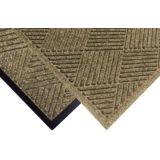 Waterhog Diamond Mats$50.00The Waterhog Diamond is the version of the mat you reach for when the entrance is on display. It does the same dirt-and-water work as the rest of the Waterhog entrance mat line, but with a diamond surface pattern and a heavier face that give it a more finished look
...
The Waterhog Diamond is the version of the mat you reach for when the entrance is on display. It does...
The Waterhog Diamond is the version of the mat you reach for when the entrance is on display. It does the same dirt-and-water work as the rest of the Waterhog entrance mat line, but with a diamond surface pattern and a heavier face that give it a more finished look at the door. It's the step up for lobbies and front entries where you want the mat to look as intentional as it performs.
What a Waterhog Diamond Mat Does Before Dirt Reaches Your Floor
The job of any entrance mat is to take the dirt and water off shoes before either reaches your floor. The Diamond does that with a bi-level surface: raised nubs scrape grit and moisture off the sole and drop it into the channels below shoe level, where it stays instead of tracking inside.
The diamond layout adds something the square pattern doesn't — it scrapes from every direction, so it catches feet approaching the door from any angle. The raised water-dam border then holds the moisture on the mat, up to 1.5 gallons per square yard, keeping the floor past it dry and safer underfoot.
Why the Heavier Diamond Construction Holds Up
The surface is a 30 oz/yd² solution-dyed PET fiber — a heavier face than the standard Waterhog line, which means more material doing the scraping and a denser, more substantial feel underfoot. Solution-dyed means the color runs through the fiber, so it resists staining and won't fade or rot, and the PET is made from at least 90% recycled plastic.
Reinforced rubber nubs keep that heavier pile from crushing flat, which is what protects both the look and the scrape over time. Underneath is a 78-mil SBR rubber backing — with 20% recycled rubber — in smooth or cleated form, with beveled edges for a safe step onto the mat and NFSI-certified high-traction underfoot.
Where It Belongs — and What It Isn't
The Diamond earns its place at entrances that are part of the first impression — hotel and office lobbies, retail entries, restaurants, and healthcare reception areas — and at wide doorways where people come in from several directions. Indoors or out, it pairs strong scraping with a look that reads more finished than a utilitarian mat.
What it isn't is the cheapest way to cover a back door. The heavier face and diamond pattern are an upgrade you choose for appearance and feel; if a service entrance just needs to catch grit and nobody's looking at it, the standard square Waterhog does that job without the step up. The Diamond is for when the entrance is meant to be seen.
Three Things to Check Before You Spec It
First, match the backing to the floor. Smooth backing is for hard floors like tile, stone, and sealed concrete; cleated backing is made to sit on carpet without shifting. The wrong one is how a mat creeps or ripples underfoot.
Second, plan the size around the walking path and the backing rules. It takes several steps to wipe shoes clean, so cover the real path, not just the threshold. Mats up to 40 feet come with either backing; longer runs come in smooth backing only, which matters for long lobby or corridor layouts.
Third, choose the border and color for the setting. The classic rubber border is the more rugged, weather-ready edge; the fashion fabric border gives a softer, more finished surround for indoor lobbies. Since the diamond look is the reason to choose this mat, pick a color that suits the space and hides everyday soil between cleanings.
Why Mats Inc.
The Diamond is the mat we point to when the entrance has to look good and still do the work — but it isn't the right answer for every door, and that's the part we help with. We'll tell you honestly when the heavier diamond face earns its place and when the standard square Waterhog would do the same job, then spec the size, backing, and border to fit. Every order is backed by our one-year limited warranty.
Waterhog Diamond Mat — Specifications Surface fiber Solution-dyed PET, 30 oz/yd², needle-punched Surface pattern Bi-level diamond Recycled content PET surface ≥90% recycled; SBR backing 20% recycled rubber Backing 78-mil SBR rubber (143-mil border) — smooth (hard floors) or universal cleated (carpet) Border options Classic rubber or fashion fabric Water retention Up to 1.5 gallons per square yard Edges Beveled for a safe floor-to-mat transition Traction NFSI-certified high-traction Sizing & backing Mats up to 40' in smooth or cleated backing; over 40' in smooth backing only Warranty One-year limited (Mats Inc.) Frequently Asked Questions
How does the diamond pattern trap dirt and water?
Answered by Dustin Thompson, Owner & CEO
The mat has a bi-level surface — raised nubs with recessed channels between them. The nubs scrape grit and moisture off your shoes, and it drops into the channels below shoe level, so it stays in the mat instead of getting tracked across the floor. The diamond layout adds multi-directional scraping: where a square pattern works best with traffic moving straight across, the diamond catches shoes approaching from any angle, which helps at busy or wide entrances. A raised water-dam border around the edge holds the moisture in — up to 1.5 gallons per square yard.
Is the heavier face actually more durable?
Answered by Dustin Thompson, Owner & CEO
The face is a 30-ounce solution-dyed PET fiber, heavier than the standard Waterhog line, so there's more material taking the abuse before it shows wear. The color is dyed through the fiber, so it resists staining and won't fade or rot, and reinforced rubber nubs keep the pile from crushing flat — the thing that usually makes a mat look tired. The 78-mil SBR backing resists curling and cracking through temperature changes. Kept clean and sized right, it holds up for years in a busy entrance, and Mats Inc. backs every order with a one-year limited warranty.
Can I use it outside, and which backing should I pick?
Answered by Dustin Thompson, Owner & CEO
Yes — it's an indoor/outdoor mat, so it works at exterior entries as well as indoor lobbies, and it isn't bothered by salt or ice melt. The backing is the choice that matters: smooth backing for hard floors like tile, stone, or sealed concrete, and cleated backing for carpet, where the cleats keep it from sliding. One thing to plan for on long runs — mats up to 40 feet come with either backing, but anything longer comes in smooth backing only. Tell us the floor and the length and we'll match it.
Why choose the diamond pattern over the standard square?
Answered by Jinna Hopson, Vice President of Marketing
It comes down to the look. The classic Waterhog uses a square "waffle" pattern; the Diamond uses a diamond layout that reads as more finished and less utilitarian, which is why it's the usual pick for entrances people actually notice — lobbies, reception areas, hotel and retail entries. The performance is in the same family, so you're really choosing the diamond for its appearance and the heavier, more substantial feel it gives the doorway. If the look of the entrance matters, the diamond is the more polished choice.
What colors does it come in, and how do I choose?
Answered by Jinna Hopson, Vice President of Marketing
It comes in a range of colors with a choice of classic rubber or fashion fabric border, so you can tune it to the space. The practical advice is the same for any entrance mat: a mid-tone or darker color hides everyday soil between cleanings and keeps the mat looking intentional, while very light shades show dirt quickly in a high-traffic doorway. Since the diamond pattern is the reason to choose this mat, pick a color that lets the look land while staying realistic about traffic. We can confirm the current color options for the size you need.
When is the heavier 30-ounce Diamond worth it over a standard mat?
Answered by Jinna Hopson, Vice President of Marketing
When the entrance is on display and gets real traffic. The heavier face and diamond pattern are an upgrade you choose for appearance and a more substantial feel, so they make the most sense at front entries, lobbies, and wide doorways where the mat is part of the first impression and catches feet from several directions. For a back door or service entrance where nobody's looking and the job is just to grab grit, a standard square Waterhog does that with less fuss. We're happy to help you draw that line for each doorway.
By Jinna Hopson, Vice President of Marketing, Mats Inc.
↑
The Waterhog Diamond is the version of the mat you reach for when the entrance is on display. It does the same dirt-and-water work as the rest of the Waterhog entrance mat line, but with a diamond surface pattern and a heavier face that give it a more finished look at the door. It's the step up for lobbies and front entries where you want the mat to look as intentional as it performs.
What a Waterhog Diamond Mat Does Before Dirt Reaches Your Floor
The job of any entrance mat is to take the dirt and water off shoes before either reaches your floor. The Diamond does that with a bi-level surface: raised nubs scrape grit and moisture off the sole and drop it into the channels below shoe level, where it stays instead of tracking inside.
The diamond layout adds something the square pattern doesn't — it scrapes from every direction, so it catches feet approaching the door from any angle. The raised water-dam border then holds the moisture on the mat, up to 1.5 gallons per square yard, keeping the floor past it dry and safer underfoot.
Why the Heavier Diamond Construction Holds Up
The surface is a 30 oz/yd² solution-dyed PET fiber — a heavier face than the standard Waterhog line, which means more material doing the scraping and a denser, more substantial feel underfoot. Solution-dyed means the color runs through the fiber, so it resists staining and won't fade or rot, and the PET is made from at least 90% recycled plastic.
Reinforced rubber nubs keep that heavier pile from crushing flat, which is what protects both the look and the scrape over time. Underneath is a 78-mil SBR rubber backing — with 20% recycled rubber — in smooth or cleated form, with beveled edges for a safe step onto the mat and NFSI-certified high-traction underfoot.
Where It Belongs — and What It Isn't
The Diamond earns its place at entrances that are part of the first impression — hotel and office lobbies, retail entries, restaurants, and healthcare reception areas — and at wide doorways where people come in from several directions. Indoors or out, it pairs strong scraping with a look that reads more finished than a utilitarian mat.
What it isn't is the cheapest way to cover a back door. The heavier face and diamond pattern are an upgrade you choose for appearance and feel; if a service entrance just needs to catch grit and nobody's looking at it, the standard square Waterhog does that job without the step up. The Diamond is for when the entrance is meant to be seen.
Three Things to Check Before You Spec It
First, match the backing to the floor. Smooth backing is for hard floors like tile, stone, and sealed concrete; cleated backing is made to sit on carpet without shifting. The wrong one is how a mat creeps or ripples underfoot.
Second, plan the size around the walking path and the backing rules. It takes several steps to wipe shoes clean, so cover the real path, not just the threshold. Mats up to 40 feet come with either backing; longer runs come in smooth backing only, which matters for long lobby or corridor layouts.
Third, choose the border and color for the setting. The classic rubber border is the more rugged, weather-ready edge; the fashion fabric border gives a softer, more finished surround for indoor lobbies. Since the diamond look is the reason to choose this mat, pick a color that suits the space and hides everyday soil between cleanings.
Why Mats Inc.
The Diamond is the mat we point to when the entrance has to look good and still do the work — but it isn't the right answer for every door, and that's the part we help with. We'll tell you honestly when the heavier diamond face earns its place and when the standard square Waterhog would do the same job, then spec the size, backing, and border to fit. Every order is backed by our one-year limited warranty.
Waterhog Diamond Mat — Specifications Surface fiber Solution-dyed PET, 30 oz/yd², needle-punched Surface pattern Bi-level diamond Recycled content PET surface ≥90% recycled; SBR backing 20% recycled rubber Backing 78-mil SBR rubber (143-mil border) — smooth (hard floors) or universal cleated (carpet) Border options Classic rubber or fashion fabric Water retention Up to 1.5 gallons per square yard Edges Beveled for a safe floor-to-mat transition Traction NFSI-certified high-traction Sizing & backing Mats up to 40' in smooth or cleated backing; over 40' in smooth backing only Warranty One-year limited (Mats Inc.) Frequently Asked Questions
How does the diamond pattern trap dirt and water?
Answered by Dustin Thompson, Owner & CEO
The mat has a bi-level surface — raised nubs with recessed channels between them. The nubs scrape grit and moisture off your shoes, and it drops into the channels below shoe level, so it stays in the mat instead of getting tracked across the floor. The diamond layout adds multi-directional scraping: where a square pattern works best with traffic moving straight across, the diamond catches shoes approaching from any angle, which helps at busy or wide entrances. A raised water-dam border around the edge holds the moisture in — up to 1.5 gallons per square yard.
Is the heavier face actually more durable?
Answered by Dustin Thompson, Owner & CEO
The face is a 30-ounce solution-dyed PET fiber, heavier than the standard Waterhog line, so there's more material taking the abuse before it shows wear. The color is dyed through the fiber, so it resists staining and won't fade or rot, and reinforced rubber nubs keep the pile from crushing flat — the thing that usually makes a mat look tired. The 78-mil SBR backing resists curling and cracking through temperature changes. Kept clean and sized right, it holds up for years in a busy entrance, and Mats Inc. backs every order with a one-year limited warranty.
Can I use it outside, and which backing should I pick?
Answered by Dustin Thompson, Owner & CEO
Yes — it's an indoor/outdoor mat, so it works at exterior entries as well as indoor lobbies, and it isn't bothered by salt or ice melt. The backing is the choice that matters: smooth backing for hard floors like tile, stone, or sealed concrete, and cleated backing for carpet, where the cleats keep it from sliding. One thing to plan for on long runs — mats up to 40 feet come with either backing, but anything longer comes in smooth backing only. Tell us the floor and the length and we'll match it.
Why choose the diamond pattern over the standard square?
Answered by Jinna Hopson, Vice President of Marketing
It comes down to the look. The classic Waterhog uses a square "waffle" pattern; the Diamond uses a diamond layout that reads as more finished and less utilitarian, which is why it's the usual pick for entrances people actually notice — lobbies, reception areas, hotel and retail entries. The performance is in the same family, so you're really choosing the diamond for its appearance and the heavier, more substantial feel it gives the doorway. If the look of the entrance matters, the diamond is the more polished choice.
What colors does it come in, and how do I choose?
Answered by Jinna Hopson, Vice President of Marketing
It comes in a range of colors with a choice of classic rubber or fashion fabric border, so you can tune it to the space. The practical advice is the same for any entrance mat: a mid-tone or darker color hides everyday soil between cleanings and keeps the mat looking intentional, while very light shades show dirt quickly in a high-traffic doorway. Since the diamond pattern is the reason to choose this mat, pick a color that lets the look land while staying realistic about traffic. We can confirm the current color options for the size you need.
When is the heavier 30-ounce Diamond worth it over a standard mat?
Answered by Jinna Hopson, Vice President of Marketing
When the entrance is on display and gets real traffic. The heavier face and diamond pattern are an upgrade you choose for appearance and a more substantial feel, so they make the most sense at front entries, lobbies, and wide doorways where the mat is part of the first impression and catches feet from several directions. For a back door or service entrance where nobody's looking and the job is just to grab grit, a standard square Waterhog does that with less fuss. We're happy to help you draw that line for each doorway.
By Jinna Hopson, Vice President of Marketing, Mats Inc.
↑
View Details
View Details
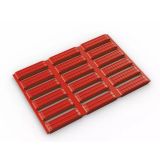 Floorline Matting$765.00What Floorline does before a wet floor sends someone down Around a pool, behind a bar, or across a changing-room floor, the wet patch you don't notice is the one that trips someone. It's easy to assume textured tile or a quick mop has it covered. But water spreads into
...
What Floorline does before a wet floor sends someone down Around a pool, behind a bar, or across a changing-room...
What Floorline does before a wet floor sends someone down
Around a pool, behind a bar, or across a changing-room floor, the wet patch you don't notice is the one that trips someone. It's easy to assume textured tile or a quick mop has it covered. But water spreads into a thin film on a flat surface, right where feet land, and a surface that grips dry can turn slick the instant it's wet — in shoes or bare feet.
Floorline is built to clear that film. Its open-grid, embossed surface lets water and spills drain straight through to the floor below, so the part you stand on stays above the puddle. The etched top gives shoes and bare skin a firm grip. That combination is what makes it a true non-slip wet-area mat rather than one that only behaves when it's dry.
A slick leisure or wet floor isn't a small problem. Hygiene and floor-care authorities like ISSA point to wet, soiled floors as a leading source of both slip injuries and sanitation issues, and a pool deck, bar, or changing room keeps those floors wet all day. A mat that drains the water away, grips underfoot, and rinses clean is doing real safety and hygiene work.
Why a thin, single-tier PVC build, and why this one
Floorline is made from a single tier of flexible, non-porous PVC in an open-grid form. That single-tier build is the heart of what sets it apart: at 1/4 inch thick and about 0.76 pounds per square foot, it's the lightest, thinnest mat of its kind we carry — genuinely easy to carry, move, and lift for cleaning, and soft enough underfoot that standing on it all shift is easy on the legs.
Thin doesn't mean it gives up grip. It carries the highest slip and drainage certifications of its family — R11 and V10 under DIN 51130, Classification C on the DIN 51097 barefoot ramp test, and a 1.0 dry / 0.8 wet reading on ASTM F1677. So it's rated for both shoes and bare feet, with water clearing through the grid the whole time. It's also built with anti-microbial and anti-fungal properties that protect bare feet against the fungus changing rooms tend to grow.
It holds up in tough, wet conditions too. The non-porous PVC resists most acids, alkalines, and oils, stands up to UV, and works from below freezing to 140°F, so an outdoor deck and an indoor shower are both fair game. It carries a EN13501-1 Cfl-s1 fire classification, absorbs sound, and is 100% recyclable with no SVHC substances.
Where it belongs — and what it isn't
Floorline earns its place anywhere water and feet meet. That's the pool deck and poolside walkway, shower floors, changing and locker rooms, and recreation centers — and just as much the wet floors of hospitality, like bar flooring, commercial kitchens, and the areas behind a counter where spills and breakages are constant. Because it's certified for shoes and bare feet alike, one mat covers a lot of ground.
It helps to be clear about what this mat is not. It's a walk-on surface mat, not a flotation device, and not the liner sheet that goes under an above-ground pool. If you're after a mat to put under a pool or a float for the water, this isn't that product. Floorline works on top of the floor, under your feet — on concrete, tile, decking, or a finished pool surround.
One honest note for outdoor use: the PVC resists sun, but the red color isn't colorfast in constant direct sunlight, so a red mat in full sun will fade over time. For exposed outdoor decks the darker color is the safer pick; in shaded or indoor spaces, either holds up fine.
Three Things to Check Before You Spec It
Floorline is easy to order well once you've settled three things.
First, match it to the duty. This is the light, thin, soft end of wet-area matting — ideal where comfort underfoot, easy handling, and reliable grip matter, like a bar floor, a changing room, or a poolside walkway. For the most punishing, heavy-rolling-load floors, a thicker, heavier mat may suit better. Be honest about how hard the floor gets worked before you choose.
Second, measure the whole wet path. The walk from the pool to the showers, the full length behind a bar, the changing-room floor — size the mat to cover wherever feet are actually wet, because a dry-foot gap is exactly where the next slip happens. It comes in 2- and 3-foot-wide rolls and cuts to fit on site, so odd shapes and obstacles aren't a problem.
Third, plan for sun and heat outdoors. Choose the darker color for spots in constant direct sun. And like any thermoplastic, the PVC can shrink slightly — up to about 2%, faster in heat — so on a hot, exposed deck, leave a little room at fixed edges rather than butting it tight wall to wall.
Why Mats Inc.
We've been matching mats to real floors since 1964, and wet leisure and hospitality floors are where the wrong choice shows up fastest — in slips, in sore feet, and in mats too awkward to lift and clean. We'll help you size Floorline to your actual wet path, choose between widths, and pick the right color for sun or shade. It's part of our wider lineup of pool and wet-area matting, and every order is backed by our 1-year limited warranty.
Material Single-tier non-porous flexible PVC Construction Open grid with embossed surface Thickness 1/4" (6 mm) Weight 0.76 lb / sq ft Roll options 33' lengths in 2' and 3' widths (cut to fit on site) Slip resistance DIN 51130: R11; DIN 51097: Class C (barefoot); ASTM F1677 dry/wet: 1.0/0.8 Drainage DIN 51130: V10 Hygiene Non-porous PVC; anti-microbial and anti-fungal Chemical resistance Most acids, alkalines, and oils Temperature range -9°F to +140°F Fire classification EN 13501-1:2007 Cfl-s1 Acoustic Sound absorption Environmental 100% recyclable; no SVHC substances (REACH) UV Resists PVC degradation (red not colorfast in direct sun) Colors Black and red Warranty 1-year limited (Mats Inc.) Frequently Asked Questions
What's Floorline made of, and how does it grip and drain?
Answered by Dustin Thompson, Owner & CEO
It's made from a single tier of non-porous, flexible PVC in an open-grid form with an embossed top. Two things make it work on a wet floor. First, the open grid lets water and spills drain straight through to the floor below, so you're standing on the mat instead of on a film of water. Second, the embossed surface gives shoes and bare feet edges to grip. The PVC is non-porous so it won't soak up moisture, and it's built with anti-microbial and anti-fungal properties to resist the fungus and bacteria wet floors breed.
How slip-resistant is it, for shoes and bare feet?
Answered by Dustin Thompson, Owner & CEO
It's rated for both, which is part of what makes it versatile. It carries R11 and V10 drainage under DIN 51130 for shod traffic, Classification C on the DIN 51097 barefoot ramp test, and a 1.0 dry / 0.8 wet reading on ASTM F1677 — among the strongest figures in its family. Grip comes from an etched surface, so traction is best across the lines of the pattern. In practice that means the same mat works under a lifeguard's shoes and a swimmer's bare feet without compromise.
What sizes does it come in, and can I cover a large area?
Answered by Dustin Thompson, Owner & CEO
It comes in 33-foot rolls in 2- and 3-foot widths, and you cut it to fit on site — no special tools or prep visit needed. For a longer run, like a poolside walkway or the length behind a bar, you simply lay and trim to the distance you need. Because it contours to uneven surfaces, it follows a real floor rather than needing a perfectly flat one. For widths beyond the standard rolls, ask us and we'll work out the best layout.
Where does Floorline work best?
Answered by Jinna Hopson, VP of Marketing
Anywhere water and feet meet, indoors or out. It's a natural around pool decks and poolside walkways, in showers, changing and locker rooms, and recreation centers. It's also a favorite in hospitality — bar floors, the area behind a counter, and commercial kitchens — where spills and the odd breakage are constant and staff are on their feet for hours. Because it's certified for both shoes and bare feet, one mat handles a lot of different spaces.
What does it look like, and what colors can I get?
Answered by Jinna Hopson, VP of Marketing
It has a clean, low-profile grid look that reads as tidy and purposeful rather than bulky — being thin, it sits close to the floor and doesn't dominate a space. It comes in black and red. Black is the easy, neutral choice that hides grit and debris around a pool or behind a bar, while red can mark off a zone or add a little warmth. Just keep the red out of constant direct sun, where it can fade over time.
My space is an odd shape and I'll be moving the mat to clean — is that easy?
Answered by Jinna Hopson, VP of Marketing
Both are easy, and they're where this mat shines. Because it cuts to fit on site and contours to uneven surfaces, you can shape a run around drains, corners, and fixtures instead of forcing the space to match a fixed mat. And being the lightest, thinnest mat of its kind, it's simple to roll or lift by hand for cleaning — rinse it, let the floor underneath dry, and lay it back down. Send us your layout and we'll help you plan it.
Written by Jinna Hopson, VP of Marketing, Mats Inc.
↑
What Floorline does before a wet floor sends someone down
Around a pool, behind a bar, or across a changing-room floor, the wet patch you don't notice is the one that trips someone. It's easy to assume textured tile or a quick mop has it covered. But water spreads into a thin film on a flat surface, right where feet land, and a surface that grips dry can turn slick the instant it's wet — in shoes or bare feet.
Floorline is built to clear that film. Its open-grid, embossed surface lets water and spills drain straight through to the floor below, so the part you stand on stays above the puddle. The etched top gives shoes and bare skin a firm grip. That combination is what makes it a true non-slip wet-area mat rather than one that only behaves when it's dry.
A slick leisure or wet floor isn't a small problem. Hygiene and floor-care authorities like ISSA point to wet, soiled floors as a leading source of both slip injuries and sanitation issues, and a pool deck, bar, or changing room keeps those floors wet all day. A mat that drains the water away, grips underfoot, and rinses clean is doing real safety and hygiene work.
Why a thin, single-tier PVC build, and why this one
Floorline is made from a single tier of flexible, non-porous PVC in an open-grid form. That single-tier build is the heart of what sets it apart: at 1/4 inch thick and about 0.76 pounds per square foot, it's the lightest, thinnest mat of its kind we carry — genuinely easy to carry, move, and lift for cleaning, and soft enough underfoot that standing on it all shift is easy on the legs.
Thin doesn't mean it gives up grip. It carries the highest slip and drainage certifications of its family — R11 and V10 under DIN 51130, Classification C on the DIN 51097 barefoot ramp test, and a 1.0 dry / 0.8 wet reading on ASTM F1677. So it's rated for both shoes and bare feet, with water clearing through the grid the whole time. It's also built with anti-microbial and anti-fungal properties that protect bare feet against the fungus changing rooms tend to grow.
It holds up in tough, wet conditions too. The non-porous PVC resists most acids, alkalines, and oils, stands up to UV, and works from below freezing to 140°F, so an outdoor deck and an indoor shower are both fair game. It carries a EN13501-1 Cfl-s1 fire classification, absorbs sound, and is 100% recyclable with no SVHC substances.
Where it belongs — and what it isn't
Floorline earns its place anywhere water and feet meet. That's the pool deck and poolside walkway, shower floors, changing and locker rooms, and recreation centers — and just as much the wet floors of hospitality, like bar flooring, commercial kitchens, and the areas behind a counter where spills and breakages are constant. Because it's certified for shoes and bare feet alike, one mat covers a lot of ground.
It helps to be clear about what this mat is not. It's a walk-on surface mat, not a flotation device, and not the liner sheet that goes under an above-ground pool. If you're after a mat to put under a pool or a float for the water, this isn't that product. Floorline works on top of the floor, under your feet — on concrete, tile, decking, or a finished pool surround.
One honest note for outdoor use: the PVC resists sun, but the red color isn't colorfast in constant direct sunlight, so a red mat in full sun will fade over time. For exposed outdoor decks the darker color is the safer pick; in shaded or indoor spaces, either holds up fine.
Three Things to Check Before You Spec It
Floorline is easy to order well once you've settled three things.
First, match it to the duty. This is the light, thin, soft end of wet-area matting — ideal where comfort underfoot, easy handling, and reliable grip matter, like a bar floor, a changing room, or a poolside walkway. For the most punishing, heavy-rolling-load floors, a thicker, heavier mat may suit better. Be honest about how hard the floor gets worked before you choose.
Second, measure the whole wet path. The walk from the pool to the showers, the full length behind a bar, the changing-room floor — size the mat to cover wherever feet are actually wet, because a dry-foot gap is exactly where the next slip happens. It comes in 2- and 3-foot-wide rolls and cuts to fit on site, so odd shapes and obstacles aren't a problem.
Third, plan for sun and heat outdoors. Choose the darker color for spots in constant direct sun. And like any thermoplastic, the PVC can shrink slightly — up to about 2%, faster in heat — so on a hot, exposed deck, leave a little room at fixed edges rather than butting it tight wall to wall.
Why Mats Inc.
We've been matching mats to real floors since 1964, and wet leisure and hospitality floors are where the wrong choice shows up fastest — in slips, in sore feet, and in mats too awkward to lift and clean. We'll help you size Floorline to your actual wet path, choose between widths, and pick the right color for sun or shade. It's part of our wider lineup of pool and wet-area matting, and every order is backed by our 1-year limited warranty.
Material Single-tier non-porous flexible PVC Construction Open grid with embossed surface Thickness 1/4" (6 mm) Weight 0.76 lb / sq ft Roll options 33' lengths in 2' and 3' widths (cut to fit on site) Slip resistance DIN 51130: R11; DIN 51097: Class C (barefoot); ASTM F1677 dry/wet: 1.0/0.8 Drainage DIN 51130: V10 Hygiene Non-porous PVC; anti-microbial and anti-fungal Chemical resistance Most acids, alkalines, and oils Temperature range -9°F to +140°F Fire classification EN 13501-1:2007 Cfl-s1 Acoustic Sound absorption Environmental 100% recyclable; no SVHC substances (REACH) UV Resists PVC degradation (red not colorfast in direct sun) Colors Black and red Warranty 1-year limited (Mats Inc.) Frequently Asked Questions
What's Floorline made of, and how does it grip and drain?
Answered by Dustin Thompson, Owner & CEO
It's made from a single tier of non-porous, flexible PVC in an open-grid form with an embossed top. Two things make it work on a wet floor. First, the open grid lets water and spills drain straight through to the floor below, so you're standing on the mat instead of on a film of water. Second, the embossed surface gives shoes and bare feet edges to grip. The PVC is non-porous so it won't soak up moisture, and it's built with anti-microbial and anti-fungal properties to resist the fungus and bacteria wet floors breed.
How slip-resistant is it, for shoes and bare feet?
Answered by Dustin Thompson, Owner & CEO
It's rated for both, which is part of what makes it versatile. It carries R11 and V10 drainage under DIN 51130 for shod traffic, Classification C on the DIN 51097 barefoot ramp test, and a 1.0 dry / 0.8 wet reading on ASTM F1677 — among the strongest figures in its family. Grip comes from an etched surface, so traction is best across the lines of the pattern. In practice that means the same mat works under a lifeguard's shoes and a swimmer's bare feet without compromise.
What sizes does it come in, and can I cover a large area?
Answered by Dustin Thompson, Owner & CEO
It comes in 33-foot rolls in 2- and 3-foot widths, and you cut it to fit on site — no special tools or prep visit needed. For a longer run, like a poolside walkway or the length behind a bar, you simply lay and trim to the distance you need. Because it contours to uneven surfaces, it follows a real floor rather than needing a perfectly flat one. For widths beyond the standard rolls, ask us and we'll work out the best layout.
Where does Floorline work best?
Answered by Jinna Hopson, VP of Marketing
Anywhere water and feet meet, indoors or out. It's a natural around pool decks and poolside walkways, in showers, changing and locker rooms, and recreation centers. It's also a favorite in hospitality — bar floors, the area behind a counter, and commercial kitchens — where spills and the odd breakage are constant and staff are on their feet for hours. Because it's certified for both shoes and bare feet, one mat handles a lot of different spaces.
What does it look like, and what colors can I get?
Answered by Jinna Hopson, VP of Marketing
It has a clean, low-profile grid look that reads as tidy and purposeful rather than bulky — being thin, it sits close to the floor and doesn't dominate a space. It comes in black and red. Black is the easy, neutral choice that hides grit and debris around a pool or behind a bar, while red can mark off a zone or add a little warmth. Just keep the red out of constant direct sun, where it can fade over time.
My space is an odd shape and I'll be moving the mat to clean — is that easy?
Answered by Jinna Hopson, VP of Marketing
Both are easy, and they're where this mat shines. Because it cuts to fit on site and contours to uneven surfaces, you can shape a run around drains, corners, and fixtures instead of forcing the space to match a fixed mat. And being the lightest, thinnest mat of its kind, it's simple to roll or lift by hand for cleaning — rinse it, let the floor underneath dry, and lay it back down. Send us your layout and we'll help you plan it.
Written by Jinna Hopson, VP of Marketing, Mats Inc.
↑
View Details
View Details
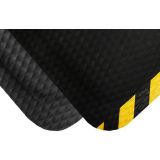 Hog Heaven Anti-Fatigue Mat
Starting at $64.00
Anti-fatigue kitchen mats have to survive the floor they are standing on. In a working kitchen that means grease, dropped oil, hot water, and cleaning chemicals, every day. This one is built from nitrile rubber for exactly that. It is the mat you put where a softer, prettier mat would...
Anti-fatigue kitchen mats have to survive the floor they are standing on. In a working kitchen that means grease, dropped...
Anti-fatigue kitchen mats have to survive the floor they are standing on. In a working kitchen that means grease, dropped oil, hot water, and cleaning chemicals, every day. This one is built from nitrile rubber for exactly that. It is the mat you put where a softer, prettier mat would be ruined inside a season.
What an Anti-Fatigue Mat Does Before a Hard Floor Catches Up With You
Standing still on quarry tile or sealed concrete is harder on a body than walking. Your legs lock in one position and take the load with no relief. The ache starts in the calves, moves to the knees, and settles in the lower back by the end of a shift.
A cushioned kitchen mat interrupts that. This one uses a high-density nitrile-blended cushion, which helps eliminate pressure on the lower back and legs. The cushion is what you are actually buying; the rubber on top is what keeps the cushion alive on a hostile floor.
The other half of the job is grip, and this is where the mat separates itself. Under ASTM C1028-96 it holds a static coefficient of friction of 0.87 dry and 0.85 wet. That wet figure is the one that matters on a kitchen floor, and it is barely below the dry number.
It is also certified high-traction by the National Floor Safety Institute, which runs independent slip-resistance testing for commercial floor products. Sloped edges give a safe transition from the floor onto the mat, and those edges will not crack or curl.
Why Nitrile Rubber, and Why This One
Most comfort mats fail from the top down. Vinyl goes brittle, foam compresses flat, and anything absorbent turns into a sponge for whatever is on the floor. Nitrile rubber is the answer to all three, which is why this construction shows up in the roughest indoor rooms.
The surface is grease and oil proof, and the cushion underneath is grease and oil resistant. It is chemical resistant, so a floor that gets sanitized daily does not degrade it. It is also welding safe, which matters more in a fabrication shop than a kitchen but tells you what the surface tolerates.
Underneath sits high-density, closed-cell nitrile and PVC-blended foam. Closed-cell means the cells are sealed, so the cushion is not an absorbent layer. The manufacturer states the cushion provides years of useful service life.
The two layers are molded together, not glued, so they will not separate. That is the failure you see on cheaper dual-layer mats, where the top lifts at a corner and the whole thing becomes a trip hazard within a year.
Cushion performance is measured, not claimed. The 5/8-inch version compresses 47.8% at 20 psi and 61.6% at 40 psi. The 7/8-inch version compresses 51.0% at 20 psi and 66.0% at 40 psi. In plain terms, the thicker mat gives more under the same weight, which is what you want for longer stretches of standing.
Two more specifications worth knowing. The mat carries an ESD rating of electrically conductive, so it can go in static-sensitive rooms. And it passes flammability standard BS-4790, tested by the metal nut method.
Where It Belongs, and Where It Is Overkill
This is the mat for the wet and greasy side of a kitchen. Cook lines, fry stations, prep tables, dish pits, bar wells, and walk-in approaches all qualify. Anywhere the floor gets mopped, drained, or hosed through a shift, this construction holds up where a fabric or foam mat would not.
It carries the same performance outside the kitchen. Assembly benches, packing stations, welding cells, labs, and any indoor floor where slag, oil, or chemicals are present are all standard placements. That is the same reasoning, applied to a different room.
Where it is more mat than you need is a quiet, dry, front-of-house spot. A hostess stand, a boutique counter, or a home kitchen island does not test any of this. Those spots want a fabric-topped comfort mat that looks like it belongs. The full range of kitchen mats covers both ends.
The real mistake with this mat is undersizing it. Buy one too small and people stand half on and half off it, which puts a foot on greasy tile and defeats the whole purpose. Cover the standing zone, not a token square of it.
Three Things to Check Before You Spec It
First, measure the working zone, not the room. Walk the station during a shift and mark where feet actually land. Stock sizes run 2' x 3' (23" x 32"), 3' x 5' (32" x 58"), 3' x 12' (32" x 142"), 4' x 6' (46" x 69"), and 4.8' x 8' (58" x 96"). A cook line usually needs a runner length rather than a mat.
Second, pick your thickness by how long people stand. The 5/8-inch version suits stations where staff move between tasks. The 7/8-inch version gives more compression and makes sense where someone holds one spot for hours. Check door swing and cart clearance before committing to the thicker one.
Third, decide whether you need the marked border. The mat comes with a solid black border or with OSHA-approved caution yellow borders on two sides. The yellow version makes the edge visible in a busy room, which is worth having where carts and foot traffic cross the same lane.
Why Mats Inc.
Buyers usually come to us after a comfort mat failed early, and it is almost always the same story: the mat was fine, but it was the wrong construction for that floor. We stock this nitrile mat because it is the one that survives a room with grease, chemicals, and constant washdown. Mats Inc. has been matching matting to real conditions since 1964, and this is what we reach for when the floor is the problem.
Specifications
Surface material Nitrile rubber; molded (not glued) to the cushion so it will not separate Cushion High-density, closed-cell nitrile/PVC-blended foam Overall thickness 5/8" (0.6250") or 7/8" (0.8750") Border options Solid black, or OSHA-approved caution yellow borders on two sides Traction Certified high-traction by the National Floor Safety Institute (NFSI); ASTM C1028-96 static coefficient of friction: dry 0.87, wet 0.85 Compression deflection 5/8": 47.8% at 20 psi, 61.6% at 40 psi
7/8": 51.0% at 20 psi, 66.0% at 40 psiStatic ESD rating of electrically conductive Resistance Welding safe; chemical resistant; surface grease/oil proof; cushion grease/oil resistant Flammability Passes BS-4790 (metal nut method) Edges Sloped for safe floor-to-mat transition; will not crack or curl Stock sizes 2' x 3' (23" x 32")
3' x 5' (32" x 58")
3' x 12' (32" x 142")
4' x 6' (46" x 69")
4.8' x 8' (58" x 96")Custom sizes Widths of 2' (23"), 3' (32"), 4' (46"), and 4.8' (58"); whole-foot lengths up to 100'. Mats over 60' have up to 2 seams. Size tolerance 3–5% manufacturing variance Recommended use Indoor commercial and industrial settings, including where slag, grease and oil, or chemicals are present Customization Can be customized with a logo, design, or message Cleaning Clean with a neutral pH detergent and rinse with a hose; lay flat or hang to dry; return to service dry Warranty 1-year limited (Mats Inc.) Frequently Asked Questions
What makes this different from a foam kitchen mat?
Answered by Dustin Thompson, Owner & CEO
Two layers instead of one. The top is nitrile rubber, and underneath is a high-density, closed-cell nitrile and PVC-blended foam cushion. A foam mat is just the cushion with nothing protecting it, which is why it flattens and tears.
The two layers here are molded together rather than glued, so they will not separate. Overall thickness is either 5/8 inch or 7/8 inch. The nitrile surface is grease and oil proof and chemical resistant, so a floor that gets sanitized every night does not eat the mat.
How well does it grip when the floor is wet?
Answered by Dustin Thompson, Owner & CEO
Better than most, and there are numbers for it. Under ASTM C1028-96 the static coefficient of friction measures 0.87 dry and 0.85 wet. The small gap between those two is the useful part — a lot of surfaces test well dry and fall apart wet. The mat is also certified high-traction by the National Floor Safety Institute.
Grip only helps if the mat is where feet are, though. The sloped edges give a safe transition on and off, and they will not crack or curl. If you undersize the mat, staff end up with one foot on greasy tile and the traction rating stops mattering.
Can I use this on a cook line, in a dish pit, or near a welding station?
Answered by Dustin Thompson, Owner & CEO
Yes to all three. This construction is made for indoor commercial and industrial rooms where slag, grease and oil, or chemicals are present. The surface is grease and oil proof, the cushion is grease and oil resistant, and the mat is welding safe.
It also carries an ESD rating of electrically conductive, which lets it go into static-sensitive areas that would rule out most comfort matting. Clean it with a neutral pH detergent and a hose rinse, then lay it flat or hang it to dry. Do not put it back down until it is dry.
What sizes are available, and can I get a length for a full cook line?
Answered by Jinna Hopson, Vice President of Marketing
Five stock sizes: 2' x 3' (23" x 32"), 3' x 5' (32" x 58"), 3' x 12' (32" x 142"), 4' x 6' (46" x 69"), and 4.8' x 8' (58" x 96"). The 3' x 12' is the usual answer for a galley kitchen or a long counter run.
For a full line, custom sizes come in widths of 2' (23"), 3' (32"), 4' (46"), and 4.8' (58") at whole-foot lengths up to 100 feet. Anything over 60 feet will have up to two seams. Allow a little tolerance in your measurements, since rubber shrinks and expands with temperature and time and finished sizes run within about 3% to 5% of nominal.
What does it actually look like on the floor?
Answered by Jinna Hopson, Vice President of Marketing
Purposeful rather than decorative. It reads as working equipment, which is right for a back-of-house kitchen and wrong for a dining room. Two border treatments are available: a solid black border, or OSHA-approved caution yellow borders on two sides.
The yellow border is worth considering in any room where carts, deliveries, and staff share the same lane, because it makes the mat's edge easy to see. If the mat is going somewhere customers look, a fabric-topped comfort mat is the better-looking choice for that spot.
Can I get one with our logo or a safety message on it?
Answered by Jinna Hopson, Vice President of Marketing
Yes. This construction can be customized with a logo, design, or message, which turns a functional comfort mat into something that also carries your branding or a standing safety reminder.
Custom work is quoted rather than ordered off a size chart, so tell us the artwork, the finished size, and where the mat is going. If the spot is greasy or gets washed down, say so up front, because that decides which construction the printed version should be built on.
By Dustin Thompson, Owner & CEO, Mats Inc.
↑
Anti-fatigue kitchen mats have to survive the floor they are standing on. In a working kitchen that means grease, dropped oil, hot water, and cleaning chemicals, every day. This one is built from nitrile rubber for exactly that. It is the mat you put where a softer, prettier mat would be ruined inside a season.
What an Anti-Fatigue Mat Does Before a Hard Floor Catches Up With You
Standing still on quarry tile or sealed concrete is harder on a body than walking. Your legs lock in one position and take the load with no relief. The ache starts in the calves, moves to the knees, and settles in the lower back by the end of a shift.
A cushioned kitchen mat interrupts that. This one uses a high-density nitrile-blended cushion, which helps eliminate pressure on the lower back and legs. The cushion is what you are actually buying; the rubber on top is what keeps the cushion alive on a hostile floor.
The other half of the job is grip, and this is where the mat separates itself. Under ASTM C1028-96 it holds a static coefficient of friction of 0.87 dry and 0.85 wet. That wet figure is the one that matters on a kitchen floor, and it is barely below the dry number.
It is also certified high-traction by the National Floor Safety Institute, which runs independent slip-resistance testing for commercial floor products. Sloped edges give a safe transition from the floor onto the mat, and those edges will not crack or curl.
Why Nitrile Rubber, and Why This One
Most comfort mats fail from the top down. Vinyl goes brittle, foam compresses flat, and anything absorbent turns into a sponge for whatever is on the floor. Nitrile rubber is the answer to all three, which is why this construction shows up in the roughest indoor rooms.
The surface is grease and oil proof, and the cushion underneath is grease and oil resistant. It is chemical resistant, so a floor that gets sanitized daily does not degrade it. It is also welding safe, which matters more in a fabrication shop than a kitchen but tells you what the surface tolerates.
Underneath sits high-density, closed-cell nitrile and PVC-blended foam. Closed-cell means the cells are sealed, so the cushion is not an absorbent layer. The manufacturer states the cushion provides years of useful service life.
The two layers are molded together, not glued, so they will not separate. That is the failure you see on cheaper dual-layer mats, where the top lifts at a corner and the whole thing becomes a trip hazard within a year.
Cushion performance is measured, not claimed. The 5/8-inch version compresses 47.8% at 20 psi and 61.6% at 40 psi. The 7/8-inch version compresses 51.0% at 20 psi and 66.0% at 40 psi. In plain terms, the thicker mat gives more under the same weight, which is what you want for longer stretches of standing.
Two more specifications worth knowing. The mat carries an ESD rating of electrically conductive, so it can go in static-sensitive rooms. And it passes flammability standard BS-4790, tested by the metal nut method.
Where It Belongs, and Where It Is Overkill
This is the mat for the wet and greasy side of a kitchen. Cook lines, fry stations, prep tables, dish pits, bar wells, and walk-in approaches all qualify. Anywhere the floor gets mopped, drained, or hosed through a shift, this construction holds up where a fabric or foam mat would not.
It carries the same performance outside the kitchen. Assembly benches, packing stations, welding cells, labs, and any indoor floor where slag, oil, or chemicals are present are all standard placements. That is the same reasoning, applied to a different room.
Where it is more mat than you need is a quiet, dry, front-of-house spot. A hostess stand, a boutique counter, or a home kitchen island does not test any of this. Those spots want a fabric-topped comfort mat that looks like it belongs. The full range of kitchen mats covers both ends.
The real mistake with this mat is undersizing it. Buy one too small and people stand half on and half off it, which puts a foot on greasy tile and defeats the whole purpose. Cover the standing zone, not a token square of it.
Three Things to Check Before You Spec It
First, measure the working zone, not the room. Walk the station during a shift and mark where feet actually land. Stock sizes run 2' x 3' (23" x 32"), 3' x 5' (32" x 58"), 3' x 12' (32" x 142"), 4' x 6' (46" x 69"), and 4.8' x 8' (58" x 96"). A cook line usually needs a runner length rather than a mat.
Second, pick your thickness by how long people stand. The 5/8-inch version suits stations where staff move between tasks. The 7/8-inch version gives more compression and makes sense where someone holds one spot for hours. Check door swing and cart clearance before committing to the thicker one.
Third, decide whether you need the marked border. The mat comes with a solid black border or with OSHA-approved caution yellow borders on two sides. The yellow version makes the edge visible in a busy room, which is worth having where carts and foot traffic cross the same lane.
Why Mats Inc.
Buyers usually come to us after a comfort mat failed early, and it is almost always the same story: the mat was fine, but it was the wrong construction for that floor. We stock this nitrile mat because it is the one that survives a room with grease, chemicals, and constant washdown. Mats Inc. has been matching matting to real conditions since 1964, and this is what we reach for when the floor is the problem.
Specifications
Surface material Nitrile rubber; molded (not glued) to the cushion so it will not separate Cushion High-density, closed-cell nitrile/PVC-blended foam Overall thickness 5/8" (0.6250") or 7/8" (0.8750") Border options Solid black, or OSHA-approved caution yellow borders on two sides Traction Certified high-traction by the National Floor Safety Institute (NFSI); ASTM C1028-96 static coefficient of friction: dry 0.87, wet 0.85 Compression deflection 5/8": 47.8% at 20 psi, 61.6% at 40 psi
7/8": 51.0% at 20 psi, 66.0% at 40 psiStatic ESD rating of electrically conductive Resistance Welding safe; chemical resistant; surface grease/oil proof; cushion grease/oil resistant Flammability Passes BS-4790 (metal nut method) Edges Sloped for safe floor-to-mat transition; will not crack or curl Stock sizes 2' x 3' (23" x 32")
3' x 5' (32" x 58")
3' x 12' (32" x 142")
4' x 6' (46" x 69")
4.8' x 8' (58" x 96")Custom sizes Widths of 2' (23"), 3' (32"), 4' (46"), and 4.8' (58"); whole-foot lengths up to 100'. Mats over 60' have up to 2 seams. Size tolerance 3–5% manufacturing variance Recommended use Indoor commercial and industrial settings, including where slag, grease and oil, or chemicals are present Customization Can be customized with a logo, design, or message Cleaning Clean with a neutral pH detergent and rinse with a hose; lay flat or hang to dry; return to service dry Warranty 1-year limited (Mats Inc.) Frequently Asked Questions
What makes this different from a foam kitchen mat?
Answered by Dustin Thompson, Owner & CEO
Two layers instead of one. The top is nitrile rubber, and underneath is a high-density, closed-cell nitrile and PVC-blended foam cushion. A foam mat is just the cushion with nothing protecting it, which is why it flattens and tears.
The two layers here are molded together rather than glued, so they will not separate. Overall thickness is either 5/8 inch or 7/8 inch. The nitrile surface is grease and oil proof and chemical resistant, so a floor that gets sanitized every night does not eat the mat.
How well does it grip when the floor is wet?
Answered by Dustin Thompson, Owner & CEO
Better than most, and there are numbers for it. Under ASTM C1028-96 the static coefficient of friction measures 0.87 dry and 0.85 wet. The small gap between those two is the useful part — a lot of surfaces test well dry and fall apart wet. The mat is also certified high-traction by the National Floor Safety Institute.
Grip only helps if the mat is where feet are, though. The sloped edges give a safe transition on and off, and they will not crack or curl. If you undersize the mat, staff end up with one foot on greasy tile and the traction rating stops mattering.
Can I use this on a cook line, in a dish pit, or near a welding station?
Answered by Dustin Thompson, Owner & CEO
Yes to all three. This construction is made for indoor commercial and industrial rooms where slag, grease and oil, or chemicals are present. The surface is grease and oil proof, the cushion is grease and oil resistant, and the mat is welding safe.
It also carries an ESD rating of electrically conductive, which lets it go into static-sensitive areas that would rule out most comfort matting. Clean it with a neutral pH detergent and a hose rinse, then lay it flat or hang it to dry. Do not put it back down until it is dry.
What sizes are available, and can I get a length for a full cook line?
Answered by Jinna Hopson, Vice President of Marketing
Five stock sizes: 2' x 3' (23" x 32"), 3' x 5' (32" x 58"), 3' x 12' (32" x 142"), 4' x 6' (46" x 69"), and 4.8' x 8' (58" x 96"). The 3' x 12' is the usual answer for a galley kitchen or a long counter run.
For a full line, custom sizes come in widths of 2' (23"), 3' (32"), 4' (46"), and 4.8' (58") at whole-foot lengths up to 100 feet. Anything over 60 feet will have up to two seams. Allow a little tolerance in your measurements, since rubber shrinks and expands with temperature and time and finished sizes run within about 3% to 5% of nominal.
What does it actually look like on the floor?
Answered by Jinna Hopson, Vice President of Marketing
Purposeful rather than decorative. It reads as working equipment, which is right for a back-of-house kitchen and wrong for a dining room. Two border treatments are available: a solid black border, or OSHA-approved caution yellow borders on two sides.
The yellow border is worth considering in any room where carts, deliveries, and staff share the same lane, because it makes the mat's edge easy to see. If the mat is going somewhere customers look, a fabric-topped comfort mat is the better-looking choice for that spot.
Can I get one with our logo or a safety message on it?
Answered by Jinna Hopson, Vice President of Marketing
Yes. This construction can be customized with a logo, design, or message, which turns a functional comfort mat into something that also carries your branding or a standing safety reminder.
Custom work is quoted rather than ordered off a size chart, so tell us the artwork, the finished size, and where the mat is going. If the spot is greasy or gets washed down, say so up front, because that decides which construction the printed version should be built on.
By Dustin Thompson, Owner & CEO, Mats Inc.
↑
View Details
View Details
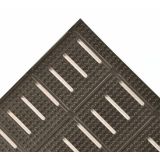 Versa Runner Rubber Matting$96.00What Versa Runner does before water and grime turn a floor slick In a wet area, the floor problem usually isn't the water you can see — it's the thin, greasy film that builds up where water mixes with whatever else is on the ground. You might figure a solid
...
What Versa Runner does before water and grime turn a floor slick In a wet area, the floor problem usually...
What Versa Runner does before water and grime turn a floor slick
In a wet area, the floor problem usually isn't the water you can see — it's the thin, greasy film that builds up where water mixes with whatever else is on the ground. You might figure a solid rubber mat handles it. The catch is that a solid mat traps that film on top, right where feet land, so the surface that's supposed to help can end up just as slick.
Versa Runner takes a different route. Its surface is cut with slotted perforations, so water and grime drain straight through instead of pooling on top. Side-to-side scraper ribs and a knobbed top give shoes something to grab, and the ribbed underside channels liquid out from beneath the mat. The result is a non-slip surface that keeps working while the floor around it stays wet.
A slick wet-area floor is one of the most common places people get hurt. The National Floor Safety Institute ties wet, hard floors to a large share of slip-and-fall injuries, and a pool deck, locker room, or wet work zone feeds that risk all day. A mat that drains the water away and holds traction underfoot is doing real safety work.
Why nitrile rubber, and why this one
Versa Runner is made from 100% nitrile rubber, and that choice does a lot of quiet work. Nitrile shrugs off grease, oils, and animal fats that would soften or break down lesser rubber, so the mat keeps its shape and grip in tough conditions. For a wet area that also sees cleaning chemicals or kitchen runoff, that chemical resistance is what keeps it from going gummy or brittle.
It's also built with a MicroStop anti-microbial compound, which inhibits the bacteria and fungi that love to settle into damp, warm spots like pool surrounds and shower floors. Pair that with the through-draining slotted surface and you get a mat that doesn't sit in its own moisture. At 3/8" thick, it stays low enough that carts and wheeled traffic roll on and off without catching an edge.
The same build that drains also cushions. The ribbed underside adds a measure of give, so standing on it for a stretch is easier on the legs than standing on bare concrete or tile. And because nitrile is genuinely durable, the mat takes foot traffic, rolling loads, and repeated wash-downs without falling apart — it's made to stay in service, not to be replaced every season.
Where it belongs — and what it isn't
Versa Runner belongs wherever a floor stays wet and people keep moving. Around a pool that means the service and back-of-house zones as much as the deck itself: the bar or concession floor, the path into the locker room, shower and changing areas, and equipment or pump rooms. It's just as at home in kitchens, food-prep areas, and other wet work zones where grease and water share the floor.
It's worth being clear about what this mat is not. It's a walk-on drainage runner, not a flotation mat and not the liner-protector sheet that goes under an above-ground pool. If you came looking for a mat to put under a pool or a float for the water, this isn't it. Versa Runner works on top of the floor, under your feet, on concrete, tile, or a finished deck.
One honest note: this is a rubber mat built for service and work areas, so it's happiest indoors or in covered, shaded wet zones. The source doesn't rate it for constant sun or direct pool-chemical contact, so for a fully exposed, barefoot sunbathing deck, ask us first — we'll tell you straight whether it's the right fit or point you to a mat that's purpose-built for that spot.
Three Things to Check Before You Spec It
Versa Runner is easy to order well if you sort out three things up front.
First, choose between a cut mat and a roll. Cut mats in set sizes drop in fast at a single station — a bar, a shower entry, a pump-room doorway. Rolls come in 2-, 3-, and 4-foot widths and run up to 60 feet, which you cut to length on site to cover a long deck run or a whole wet aisle in one continuous piece.
Second, map the width to your walkway. Measure the wettest path — pool edge to locker room, or the lane behind a bar — and pick the roll width that covers it without leaving a dry-foot gap where people step off the mat onto slick floor. A runner only protects the path it actually covers, so size it to the traffic, not just the doorway.
Third, think about edges and transitions. A cut mat sits with straight edges, which is fine in the middle of a run but can be a lip where people step on from a dry surface. Where that transition matters, plan the layout so the mat butts against a wall or threshold, or ask us about edge options, so the mat itself never becomes the thing someone trips over.
Why Mats Inc.
We've been matching mats to real floors since 1964, and wet areas punish the wrong pick fastest. We'll help you decide between cut mats and rolls, size the width to your actual traffic path, and flag the things that bite people later — sun exposure, transitions, chemical contact. It's part of our wider lineup of pool and wet-area matting, and every order is backed by our 1-year limited warranty.
Material 100% nitrile rubber (grease-proof) Anti-microbial MicroStop compound (inhibits bacteria and fungi) Top surface Slotted perforations with side-to-side scraper ribs and knobbed top Underside Ribbed; channels liquid away and adds anti-fatigue give Thickness 3/8" Formats Cut mats and rolls Roll widths 2', 3', and 4' Roll length Up to 60' Custom sizes Cut to size on site / custom lengths Cart traffic Low profile; suitable for wheeled traffic Color Black (standard) Warranty 1-year limited (Mats Inc.) Frequently Asked Questions
What exactly is Versa Runner made of, and how does it drain?
Answered by Dustin Thompson, Owner & CEO
It's made from 100% nitrile rubber, with a surface cut full of slotted perforations and a knobbed, scraper-ribbed top. Water and grime fall through the slots to the floor below instead of pooling where you step, while the ribs give shoes and bare feet traction. Underneath, a ribbed pattern channels liquid out from beneath the mat and adds a little cushioning. It's also built with a MicroStop anti-microbial compound that helps hold back bacteria and fungi in damp spots.
How well does it hold up to heavy use and chemicals?
Answered by Dustin Thompson, Owner & CEO
Nitrile rubber is the reason it lasts. It resists grease, oils, and animal fats that would break down ordinary rubber, so it keeps its grip and shape through wash-downs and daily traffic. At 3/8" thick it's low enough for carts and wheeled loads to roll on and off without snagging, yet substantial enough to take real foot traffic. For a wet area that also sees cleaning chemicals, that chemical resistance is what keeps the mat from turning gummy or brittle over time.
Can I get it in a custom size or just standard mats?
Answered by Dustin Thompson, Owner & CEO
Both. You can order set-size cut mats for a single spot like a doorway or a station, or buy it by the roll in 2-, 3-, or 4-foot widths up to 60 feet long. The roll is the flexible option — it cuts cleanly on site, so you can run one continuous piece down a long deck or wet aisle and trim it to the exact length your space needs.
Where around a pool does this actually make sense?
Answered by Jinna Hopson, VP of Marketing
Its sweet spot is the working, wet parts of a pool area rather than the open sunbathing deck. Think the floor behind the bar or concession stand, the walk into the locker room, shower and changing areas, and pump or equipment rooms — anywhere water and foot traffic mix indoors or under cover. It's a rubber mat built for service zones, so for a fully sun-exposed deck it's worth checking with us before you commit.
What does it look like underfoot?
Answered by Jinna Hopson, VP of Marketing
It has a practical, no-nonsense look — a black surface broken up by drainage slots and a ribbed, knobbed top that reads as purposeful, like equipment that's there to do a job. Black is the standard color, and it's a smart one for wet work areas because it hides the grit, scuffs, and bits of debris these floors collect between cleanings. It's not trying to be decorative; it's trying to keep people upright.
My space is an odd shape — will it fit?
Answered by Jinna Hopson, VP of Marketing
Almost certainly. Because the roll cuts easily on site, you can shape a run around drains, ladders, corners, and equipment instead of forcing your floor to match a fixed mat. That makes it a strong pick when an off-the-shelf size just won't sit right. If you'd like help planning the layout or choosing widths for a tricky footprint, send us the dimensions and we'll map it out with you.
Written by Dustin Thompson, Owner & CEO, Mats Inc.
↑
What Versa Runner does before water and grime turn a floor slick
In a wet area, the floor problem usually isn't the water you can see — it's the thin, greasy film that builds up where water mixes with whatever else is on the ground. You might figure a solid rubber mat handles it. The catch is that a solid mat traps that film on top, right where feet land, so the surface that's supposed to help can end up just as slick.
Versa Runner takes a different route. Its surface is cut with slotted perforations, so water and grime drain straight through instead of pooling on top. Side-to-side scraper ribs and a knobbed top give shoes something to grab, and the ribbed underside channels liquid out from beneath the mat. The result is a non-slip surface that keeps working while the floor around it stays wet.
A slick wet-area floor is one of the most common places people get hurt. The National Floor Safety Institute ties wet, hard floors to a large share of slip-and-fall injuries, and a pool deck, locker room, or wet work zone feeds that risk all day. A mat that drains the water away and holds traction underfoot is doing real safety work.
Why nitrile rubber, and why this one
Versa Runner is made from 100% nitrile rubber, and that choice does a lot of quiet work. Nitrile shrugs off grease, oils, and animal fats that would soften or break down lesser rubber, so the mat keeps its shape and grip in tough conditions. For a wet area that also sees cleaning chemicals or kitchen runoff, that chemical resistance is what keeps it from going gummy or brittle.
It's also built with a MicroStop anti-microbial compound, which inhibits the bacteria and fungi that love to settle into damp, warm spots like pool surrounds and shower floors. Pair that with the through-draining slotted surface and you get a mat that doesn't sit in its own moisture. At 3/8" thick, it stays low enough that carts and wheeled traffic roll on and off without catching an edge.
The same build that drains also cushions. The ribbed underside adds a measure of give, so standing on it for a stretch is easier on the legs than standing on bare concrete or tile. And because nitrile is genuinely durable, the mat takes foot traffic, rolling loads, and repeated wash-downs without falling apart — it's made to stay in service, not to be replaced every season.
Where it belongs — and what it isn't
Versa Runner belongs wherever a floor stays wet and people keep moving. Around a pool that means the service and back-of-house zones as much as the deck itself: the bar or concession floor, the path into the locker room, shower and changing areas, and equipment or pump rooms. It's just as at home in kitchens, food-prep areas, and other wet work zones where grease and water share the floor.
It's worth being clear about what this mat is not. It's a walk-on drainage runner, not a flotation mat and not the liner-protector sheet that goes under an above-ground pool. If you came looking for a mat to put under a pool or a float for the water, this isn't it. Versa Runner works on top of the floor, under your feet, on concrete, tile, or a finished deck.
One honest note: this is a rubber mat built for service and work areas, so it's happiest indoors or in covered, shaded wet zones. The source doesn't rate it for constant sun or direct pool-chemical contact, so for a fully exposed, barefoot sunbathing deck, ask us first — we'll tell you straight whether it's the right fit or point you to a mat that's purpose-built for that spot.
Three Things to Check Before You Spec It
Versa Runner is easy to order well if you sort out three things up front.
First, choose between a cut mat and a roll. Cut mats in set sizes drop in fast at a single station — a bar, a shower entry, a pump-room doorway. Rolls come in 2-, 3-, and 4-foot widths and run up to 60 feet, which you cut to length on site to cover a long deck run or a whole wet aisle in one continuous piece.
Second, map the width to your walkway. Measure the wettest path — pool edge to locker room, or the lane behind a bar — and pick the roll width that covers it without leaving a dry-foot gap where people step off the mat onto slick floor. A runner only protects the path it actually covers, so size it to the traffic, not just the doorway.
Third, think about edges and transitions. A cut mat sits with straight edges, which is fine in the middle of a run but can be a lip where people step on from a dry surface. Where that transition matters, plan the layout so the mat butts against a wall or threshold, or ask us about edge options, so the mat itself never becomes the thing someone trips over.
Why Mats Inc.
We've been matching mats to real floors since 1964, and wet areas punish the wrong pick fastest. We'll help you decide between cut mats and rolls, size the width to your actual traffic path, and flag the things that bite people later — sun exposure, transitions, chemical contact. It's part of our wider lineup of pool and wet-area matting, and every order is backed by our 1-year limited warranty.
Material 100% nitrile rubber (grease-proof) Anti-microbial MicroStop compound (inhibits bacteria and fungi) Top surface Slotted perforations with side-to-side scraper ribs and knobbed top Underside Ribbed; channels liquid away and adds anti-fatigue give Thickness 3/8" Formats Cut mats and rolls Roll widths 2', 3', and 4' Roll length Up to 60' Custom sizes Cut to size on site / custom lengths Cart traffic Low profile; suitable for wheeled traffic Color Black (standard) Warranty 1-year limited (Mats Inc.) Frequently Asked Questions
What exactly is Versa Runner made of, and how does it drain?
Answered by Dustin Thompson, Owner & CEO
It's made from 100% nitrile rubber, with a surface cut full of slotted perforations and a knobbed, scraper-ribbed top. Water and grime fall through the slots to the floor below instead of pooling where you step, while the ribs give shoes and bare feet traction. Underneath, a ribbed pattern channels liquid out from beneath the mat and adds a little cushioning. It's also built with a MicroStop anti-microbial compound that helps hold back bacteria and fungi in damp spots.
How well does it hold up to heavy use and chemicals?
Answered by Dustin Thompson, Owner & CEO
Nitrile rubber is the reason it lasts. It resists grease, oils, and animal fats that would break down ordinary rubber, so it keeps its grip and shape through wash-downs and daily traffic. At 3/8" thick it's low enough for carts and wheeled loads to roll on and off without snagging, yet substantial enough to take real foot traffic. For a wet area that also sees cleaning chemicals, that chemical resistance is what keeps the mat from turning gummy or brittle over time.
Can I get it in a custom size or just standard mats?
Answered by Dustin Thompson, Owner & CEO
Both. You can order set-size cut mats for a single spot like a doorway or a station, or buy it by the roll in 2-, 3-, or 4-foot widths up to 60 feet long. The roll is the flexible option — it cuts cleanly on site, so you can run one continuous piece down a long deck or wet aisle and trim it to the exact length your space needs.
Where around a pool does this actually make sense?
Answered by Jinna Hopson, VP of Marketing
Its sweet spot is the working, wet parts of a pool area rather than the open sunbathing deck. Think the floor behind the bar or concession stand, the walk into the locker room, shower and changing areas, and pump or equipment rooms — anywhere water and foot traffic mix indoors or under cover. It's a rubber mat built for service zones, so for a fully sun-exposed deck it's worth checking with us before you commit.
What does it look like underfoot?
Answered by Jinna Hopson, VP of Marketing
It has a practical, no-nonsense look — a black surface broken up by drainage slots and a ribbed, knobbed top that reads as purposeful, like equipment that's there to do a job. Black is the standard color, and it's a smart one for wet work areas because it hides the grit, scuffs, and bits of debris these floors collect between cleanings. It's not trying to be decorative; it's trying to keep people upright.
My space is an odd shape — will it fit?
Answered by Jinna Hopson, VP of Marketing
Almost certainly. Because the roll cuts easily on site, you can shape a run around drains, ladders, corners, and equipment instead of forcing your floor to match a fixed mat. That makes it a strong pick when an off-the-shelf size just won't sit right. If you'd like help planning the layout or choosing widths for a tricky footprint, send us the dimensions and we'll map it out with you.
Written by Dustin Thompson, Owner & CEO, Mats Inc.
↑
View Details
View Details
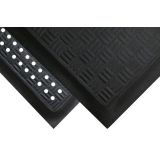 Cushion Station Anti-Fatigue Mats$64.00What Cushion Station Does Before Fatigue and Hygiene Become Competing Problems Cushion Station is an anti-fatigue mat built for floors where comfort alone isn't enough — the mat itself has to stay sanitary. A 7/16-inch high-density nitrile rubber foam cushions long standing shifts, while a lifetime anti-microbial treatment protects the
...
What Cushion Station Does Before Fatigue and Hygiene Become Competing Problems Cushion Station is an anti-fatigue mat built for floors...
What Cushion Station Does Before Fatigue and Hygiene Become Competing Problems
Cushion Station is an anti-fatigue mat built for floors where comfort alone isn't enough — the mat itself has to stay sanitary. A 7/16-inch high-density nitrile rubber foam cushions long standing shifts, while a lifetime anti-microbial treatment protects the mat against odors and degradation between cleanings.
In healthcare and food environments, an ordinary mat becomes a liability twice over: the crew still aches by mid-shift, and the mat quietly turns into the hardest thing in the room to keep clean. Floors like these need a mat that supports the people standing on it and survives the sanitation regimen the space demands.
Why Closed-Cell Nitrile, and Why This One
The cushion is a high-density, closed-cell nitrile foam — a material chosen for what it refuses to absorb. It's grease and oil proof, chemical resistant, and welding safe, so the exposures that soak into and destroy open foams simply stay on the surface here, where cleaning can remove them completely.
Safety is certified rather than claimed: the surface carries high-traction certification from the National Floor Safety Institute, and beveled edges give feet and cart wheels a safe transition from floor to mat. Two surface options cover both floor types — a solid top for dry areas, or drainage holes that carry liquids away from feet in wet zones.
Then comes the part that sets it apart: the sanitation ceiling. The flexible construction scrubs clean with a deck brush and neutral-pH detergent, rinses with a hose or pressure washer, hangs to dry — and when the protocol demands more, the mat can be autoclave sterilized. It also meets FDA and USDA standards for non-contact surfaces in food processing and preparation areas.
Where It Belongs, and What It Is Not
Cushion Station belongs where standing work and strict hygiene share a floor: healthcare facilities, food service and food manufacturing lines, and the industrial or commercial stations that get sanitized on a schedule. The holes version handles dish, prep, and washdown zones; the solid version covers dry stations in the same demanding buildings.
What it is not: the default for every standing post. Where hygiene protocols aren't part of the floor's life — a dry workshop bench, a cashier stand — the simpler dry-area options in our anti-fatigue mats and runners lineup do that job well. This mat earns its place where the cleaning regimen would defeat anything less.
Three Things to Check Before You Spec It
First, choose the surface by the floor's normal day. If liquid reaches the floor daily — dish spray, rinse-down, prep runoff — the drainage-hole version keeps water moving away from feet. If the station stays dry, the solid top gives a continuous standing surface with nothing for small items to fall through.
Second, size to the full working path. Eleven standard sizes run from a compact 2 by 3.2 feet up to 4 by 20.1 feet, in 38-inch and 48-inch widths — enough range to cover a single scrub sink or a whole production line in one piece. Sizes are approximate, with a 3 to 5 percent manufacturing variance, so leave allowance where the fit is tight.
Third, match the mat to your sanitation protocol before it arrives. Decide how it will be cleaned — deck brush and hose on the floor, pulled and pressure-washed, or autoclave sterilized — and who owns that cycle. A mat that fits the existing protocol gets cleaned on schedule; one that doesn't gets cleaned around.
Why Mats Inc.
Hygiene-critical floors are where mat choices get audited — by inspectors, infection-control teams, and food-safety programs — and we've been helping facilities pass those checks since 1964. We carry this mat because it's the rare cushion that keeps up with a sanitation regimen, we verify every claim against the manufacturer's published data, and we back it with a 1-year limited Mats Inc. warranty.
Material High-density, closed-cell nitrile rubber foam Thickness 7/16" Surface Options Solid (dry areas) or drainage holes (wet areas) Resistance Grease and oil proof; chemical resistant; welding safe Hygiene Lifetime anti-microbial treatment; autoclave sterilizable; meets FDA and USDA standards for non-contact surfaces Traction Certified high-traction by NFSI Edges Beveled for safe floor-to-mat transition Sizes Eleven standard sizes from 2' x 3.2' up to 4' x 20.1', in 38" and 48" widths; approximate, 3–5% variance Cleaning Deck brush with neutral-pH detergent; hose or pressure-washer rinse; hang to dry; autoclave sterilizable Use Area Healthcare, food service and manufacturing, industrial and commercial settings; wet or dry per surface option Warranty 1-year limited (Mats Inc.) Frequently Asked Questions
Why closed-cell nitrile for a hygiene-critical floor?
Answered by Dustin Thompson, Owner & CEO
Because sanitation only works on surfaces that don't absorb. Closed-cell nitrile foam keeps grease, oil, chemicals, and wash water on the outside of the material, where a brush and rinse can remove them completely — open foams drink those things in and slowly become what you're trying to clean off. Add the lifetime anti-microbial treatment guarding against odors and degradation, and the mat stays part of the sanitation solution instead of joining the problem.
How does it keep footing safe in wet, greasy conditions?
Answered by Dustin Thompson, Owner & CEO
Two certified and built-in ways. The surface carries high-traction certification from the National Floor Safety Institute — independent slip-resistance testing, not a marketing line — and the beveled edges slope to the floor so a hurried step on or off never catches a raised lip. In wet zones, the drainage-hole version adds the third layer: liquids pass through and away from feet rather than pooling where the next step lands.
Should I choose the solid top or the drainage holes?
Answered by Dustin Thompson, Owner & CEO
Walk the station during a real shift and watch the floor. Daily liquid — dish spray, prep runoff, washdown — calls for the holes, which keep water moving instead of sitting underfoot. A floor that stays dry calls for the solid top, which gives a continuous surface where dropped items stay in reach and cleaning is a straight wipe-down. Same nitrile construction, same certifications either way; the surface is purely a match to the floor's habits.
Can it really live in a healthcare facility?
Answered by Jinna Hopson, Vice President of Marketing
That's the environment it was designed to satisfy. The detail that wins over infection-control teams is the sterilization ceiling: beyond daily scrubbing and rinsing, the mat can be autoclave sterilized — the same standard the most demanding equipment in the building is held to. Combined with the lifetime anti-microbial treatment, it means the comfort under a standing team doesn't have to be the exception to the facility's hygiene rules.
What sizes make sense for a full production line?
Answered by Jinna Hopson, Vice President of Marketing
Think in continuous runs. With eleven standard sizes reaching 4 feet wide and just over 20 feet long, one mat can trace an entire line or sink row without seams collecting debris between sections. Choose the 38-inch width for standard aisleside stations and the 48-inch width where workers step back and pivot. And plan with a little slack: sizes are approximate, varying 3 to 5 percent as rubber expands and contracts, so a tight alcove deserves a measuring margin.
How much work is it to keep clean?
Answered by Jinna Hopson, Vice President of Marketing
Less than the environments it serves would suggest. The routine is honest floor-crew work: scrub with a deck brush and neutral-pH detergent as needed, rinse with a hose or pressure washer, hang it to dry. The flexible construction means lifting and moving it isn't a two-person project, which is what keeps the floor beneath it in the cleaning rotation too. When protocol calls for a deeper reset, the autoclave option is there — most mats can't follow you that far.
By Dustin Thompson, Owner & CEO, Mats Inc.
↑
What Cushion Station Does Before Fatigue and Hygiene Become Competing Problems
Cushion Station is an anti-fatigue mat built for floors where comfort alone isn't enough — the mat itself has to stay sanitary. A 7/16-inch high-density nitrile rubber foam cushions long standing shifts, while a lifetime anti-microbial treatment protects the mat against odors and degradation between cleanings.
In healthcare and food environments, an ordinary mat becomes a liability twice over: the crew still aches by mid-shift, and the mat quietly turns into the hardest thing in the room to keep clean. Floors like these need a mat that supports the people standing on it and survives the sanitation regimen the space demands.
Why Closed-Cell Nitrile, and Why This One
The cushion is a high-density, closed-cell nitrile foam — a material chosen for what it refuses to absorb. It's grease and oil proof, chemical resistant, and welding safe, so the exposures that soak into and destroy open foams simply stay on the surface here, where cleaning can remove them completely.
Safety is certified rather than claimed: the surface carries high-traction certification from the National Floor Safety Institute, and beveled edges give feet and cart wheels a safe transition from floor to mat. Two surface options cover both floor types — a solid top for dry areas, or drainage holes that carry liquids away from feet in wet zones.
Then comes the part that sets it apart: the sanitation ceiling. The flexible construction scrubs clean with a deck brush and neutral-pH detergent, rinses with a hose or pressure washer, hangs to dry — and when the protocol demands more, the mat can be autoclave sterilized. It also meets FDA and USDA standards for non-contact surfaces in food processing and preparation areas.
Where It Belongs, and What It Is Not
Cushion Station belongs where standing work and strict hygiene share a floor: healthcare facilities, food service and food manufacturing lines, and the industrial or commercial stations that get sanitized on a schedule. The holes version handles dish, prep, and washdown zones; the solid version covers dry stations in the same demanding buildings.
What it is not: the default for every standing post. Where hygiene protocols aren't part of the floor's life — a dry workshop bench, a cashier stand — the simpler dry-area options in our anti-fatigue mats and runners lineup do that job well. This mat earns its place where the cleaning regimen would defeat anything less.
Three Things to Check Before You Spec It
First, choose the surface by the floor's normal day. If liquid reaches the floor daily — dish spray, rinse-down, prep runoff — the drainage-hole version keeps water moving away from feet. If the station stays dry, the solid top gives a continuous standing surface with nothing for small items to fall through.
Second, size to the full working path. Eleven standard sizes run from a compact 2 by 3.2 feet up to 4 by 20.1 feet, in 38-inch and 48-inch widths — enough range to cover a single scrub sink or a whole production line in one piece. Sizes are approximate, with a 3 to 5 percent manufacturing variance, so leave allowance where the fit is tight.
Third, match the mat to your sanitation protocol before it arrives. Decide how it will be cleaned — deck brush and hose on the floor, pulled and pressure-washed, or autoclave sterilized — and who owns that cycle. A mat that fits the existing protocol gets cleaned on schedule; one that doesn't gets cleaned around.
Why Mats Inc.
Hygiene-critical floors are where mat choices get audited — by inspectors, infection-control teams, and food-safety programs — and we've been helping facilities pass those checks since 1964. We carry this mat because it's the rare cushion that keeps up with a sanitation regimen, we verify every claim against the manufacturer's published data, and we back it with a 1-year limited Mats Inc. warranty.
Material High-density, closed-cell nitrile rubber foam Thickness 7/16" Surface Options Solid (dry areas) or drainage holes (wet areas) Resistance Grease and oil proof; chemical resistant; welding safe Hygiene Lifetime anti-microbial treatment; autoclave sterilizable; meets FDA and USDA standards for non-contact surfaces Traction Certified high-traction by NFSI Edges Beveled for safe floor-to-mat transition Sizes Eleven standard sizes from 2' x 3.2' up to 4' x 20.1', in 38" and 48" widths; approximate, 3–5% variance Cleaning Deck brush with neutral-pH detergent; hose or pressure-washer rinse; hang to dry; autoclave sterilizable Use Area Healthcare, food service and manufacturing, industrial and commercial settings; wet or dry per surface option Warranty 1-year limited (Mats Inc.) Frequently Asked Questions
Why closed-cell nitrile for a hygiene-critical floor?
Answered by Dustin Thompson, Owner & CEO
Because sanitation only works on surfaces that don't absorb. Closed-cell nitrile foam keeps grease, oil, chemicals, and wash water on the outside of the material, where a brush and rinse can remove them completely — open foams drink those things in and slowly become what you're trying to clean off. Add the lifetime anti-microbial treatment guarding against odors and degradation, and the mat stays part of the sanitation solution instead of joining the problem.
How does it keep footing safe in wet, greasy conditions?
Answered by Dustin Thompson, Owner & CEO
Two certified and built-in ways. The surface carries high-traction certification from the National Floor Safety Institute — independent slip-resistance testing, not a marketing line — and the beveled edges slope to the floor so a hurried step on or off never catches a raised lip. In wet zones, the drainage-hole version adds the third layer: liquids pass through and away from feet rather than pooling where the next step lands.
Should I choose the solid top or the drainage holes?
Answered by Dustin Thompson, Owner & CEO
Walk the station during a real shift and watch the floor. Daily liquid — dish spray, prep runoff, washdown — calls for the holes, which keep water moving instead of sitting underfoot. A floor that stays dry calls for the solid top, which gives a continuous surface where dropped items stay in reach and cleaning is a straight wipe-down. Same nitrile construction, same certifications either way; the surface is purely a match to the floor's habits.
Can it really live in a healthcare facility?
Answered by Jinna Hopson, Vice President of Marketing
That's the environment it was designed to satisfy. The detail that wins over infection-control teams is the sterilization ceiling: beyond daily scrubbing and rinsing, the mat can be autoclave sterilized — the same standard the most demanding equipment in the building is held to. Combined with the lifetime anti-microbial treatment, it means the comfort under a standing team doesn't have to be the exception to the facility's hygiene rules.
What sizes make sense for a full production line?
Answered by Jinna Hopson, Vice President of Marketing
Think in continuous runs. With eleven standard sizes reaching 4 feet wide and just over 20 feet long, one mat can trace an entire line or sink row without seams collecting debris between sections. Choose the 38-inch width for standard aisleside stations and the 48-inch width where workers step back and pivot. And plan with a little slack: sizes are approximate, varying 3 to 5 percent as rubber expands and contracts, so a tight alcove deserves a measuring margin.
How much work is it to keep clean?
Answered by Jinna Hopson, Vice President of Marketing
Less than the environments it serves would suggest. The routine is honest floor-crew work: scrub with a deck brush and neutral-pH detergent as needed, rinse with a hose or pressure washer, hang it to dry. The flexible construction means lifting and moving it isn't a two-person project, which is what keeps the floor beneath it in the cleaning rotation too. When protocol calls for a deeper reset, the autoclave option is there — most mats can't follow you that far.
By Dustin Thompson, Owner & CEO, Mats Inc.
↑
View Details
View Details
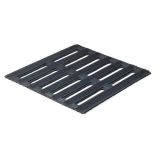 Nyracord Counter Tread Matting$799.00What Counter Tread Does Before Oil and Slag Own the Walkway Counter Tread is a heavy-duty, open-slot rubber drainage runner for the toughest walking paths in a facility. Open slots let oil, water, and debris drop through instead of pooling underfoot, a multi-directional rib surface grips shoes from every angle,
...
What Counter Tread Does Before Oil and Slag Own the Walkway Counter Tread is a heavy-duty, open-slot rubber drainage runner...
What Counter Tread Does Before Oil and Slag Own the Walkway
Counter Tread is a heavy-duty, open-slot rubber drainage runner for the toughest walking paths in a facility. Open slots let oil, water, and debris drop through instead of pooling underfoot, a multi-directional rib surface grips shoes from every angle, and the dense rubber body adds anti-fatigue give to floors that offer none.
The walkways it's built for punish everything: welding lines shedding slag, machine-shop aisles slick with cutting oil, catwalks and grating where footing is the whole safety story. Left bare, these paths collect the day's hazards exactly where boots land. A runner built for that duty changes the surface people actually walk on.
Why Dense Recycled Rubber in an Open-Slot Runner
The body is dense rubber manufactured with 50 percent recycled content — and made in the USA. Density is the design choice here: instead of a foam that harsh exposure would break down, the rubber itself provides the cushion, the wear resistance, and the mass that keeps a long runner lying flat under cart wheels and constant boots.
Up top, the multi-directional rib design does two jobs at once. The ribs give shoes traction in every direction of travel — forward down the line, sideways at a station, pivoting at a junction — while the raised profile adds comfort underfoot. Between the ribs, the open slots keep liquids moving through, and the water-repellant rubber sheds what lands on it.
The format is a true runner: rolls in 2, 3, and 4 foot widths at 20-foot lengths, with special cuts available in those widths up to 20 feet. One roll traces an entire welding line or catwalk in a single piece, so the protection has no gaps where a wet boot meets bare steel or concrete.
Where It Belongs, and What It Is Not
Counter Tread belongs on the hard-duty paths: welding areas, heavy assembly lines, grating and catwalks, and the machine shops and production floors where oil and solvents reach the ground daily. Anywhere a long walking or standing run needs drainage, traction, and cushioning at industrial strength, this is the format built for it.
What it is not: a lift-and-hose kitchen mat or a light station pad. This is walkway infrastructure — rolls run 90 to 176 pounds — meant to be placed deliberately and left working. Food-service lines and lighter standing stations are better matched to the options in our anti-fatigue mats and runners lineup built for daily handling.
Three Things to Check Before You Spec It
First, walk the run and measure the true path. Widths of 2, 3, and 4 feet at 20-foot lengths cover most lines and catwalks in one piece, and special cuts in the same widths handle in-between lengths — so map where boots actually travel, including the pivot points at each end, before choosing.
Second, plan the placement like an install, not a toss-down. At 90 to 176 pounds per roll, positioning is a two-person job done once — which is exactly what keeps a runner flat, aligned, and trip-free on a catwalk. Decide the layout, place it deliberately, and it stays where the work is.
Third, check every direction traffic crosses it. Because the rib design grips multi-directionally, junctions, station turn-ins, and crossing paths keep their traction — but the runner still needs to cover those spots. Extend coverage through intersections rather than stopping short, so no hurried sidestep lands on bare, oily floor.
Why Mats Inc.
Welding lines and catwalks are where we're most careful about what we recommend, because the floor is doing safety work every minute of a shift. We've specified runner matting for these paths since 1964, this one is American-made with half its rubber recycled, and every claim on this page is verified against the manufacturer's published materials. Backed by a 1-year limited Mats Inc. warranty.
Construction Heavy-duty open-slot rubber drainage runner; multi-directional rib surface Material Dense rubber, 50% recycled content; water repellant; wear resistant Color Black Roll Sizes 2' x 20', 3' x 20', 4' x 20' Custom Cuts 2', 3', and 4' widths up to 20' in length; custom configurations available Roll Weight 90–176 lbs depending on size Origin Made in USA Use Area Welding, heavy assembly, grating and catwalks, machine shops, production areas with oil and solvents Warranty 1-year limited (Mats Inc.) Frequently Asked Questions
How does dense rubber cushion without any foam?
Answered by Dustin Thompson, Owner & CEO
The give comes from the geometry as much as the material. The raised multi-directional ribs flex under each step, and the dense rubber body returns that energy instead of packing down the way foam does under harsh service. It's a deliberate trade: a foam core would cushion more softly and die quickly around slag and solvents, while dense rubber cushions honestly and simply refuses to quit — which is the right math for a welding line.
How does it hold up around slag, oil, and solvents?
Answered by Dustin Thompson, Owner & CEO
This is the environment it's recommended for by design — welding, heavy assembly, and the machine shops and production areas where oil and solvents are part of the floor's daily life. The wear-resistant, water-repellant rubber sheds what lands on it, and the open slots keep liquids from sitting on the walking surface at all. Half the rubber already survived a previous industrial life as recycled content, which tells you something about the material's temperament.
Why is it recommended for grating and catwalks specifically?
Answered by Dustin Thompson, Owner & CEO
Catwalks concentrate every footing risk in one narrow path: elevated, often slick, no room to step around a hazard. A runner there has to drain rather than pool, grip in every direction a worker might move, and lie dead flat without curling into a trip edge — which is exactly the open-slot, ribbed, heavy-bodied combination this construction delivers. Its own mass is part of the safety design: a runner this dense stays put.
What sizes should I order for a full line?
Answered by Jinna Hopson, Vice President of Marketing
Measure the walking path end to end, then pick the width by how people use it. The 2-foot width suits a strict single-file catwalk, 3 feet covers a standard working aisle, and 4 feet gives room where workers pass each other or step back from a station. Standard rolls run 20 feet, special cuts come in the same widths up to 20 feet, and custom configurations are available — so odd layouts don't have to settle for gaps.
How hard is it to handle and put in place?
Answered by Jinna Hopson, Vice President of Marketing
Treat it as a small install rather than a daily chore. Rolls weigh 90 to 176 pounds depending on size, so plan a two-person placement, decide the layout before unrolling, and set it once — after that, the weight works for you, holding the runner flat and in position through months of traffic. It's a different rhythm than a lift-and-rinse kitchen mat, and for a permanent walkway that's precisely the point.
Does the recycled content actually mean something?
Answered by Jinna Hopson, Vice President of Marketing
It's a real, reportable figure: the runner is manufactured with 50 percent recycled rubber content, and it's made in the USA. For facilities tracking sustainability goals or domestic-sourcing requirements, that's two line items satisfied by the same purchase — and neither comes at the cost of duty rating, since the recycled dense rubber is the very thing that makes the runner tough enough for welding lines in the first place.
By Dustin Thompson, Owner & CEO, Mats Inc.
↑
What Counter Tread Does Before Oil and Slag Own the Walkway
Counter Tread is a heavy-duty, open-slot rubber drainage runner for the toughest walking paths in a facility. Open slots let oil, water, and debris drop through instead of pooling underfoot, a multi-directional rib surface grips shoes from every angle, and the dense rubber body adds anti-fatigue give to floors that offer none.
The walkways it's built for punish everything: welding lines shedding slag, machine-shop aisles slick with cutting oil, catwalks and grating where footing is the whole safety story. Left bare, these paths collect the day's hazards exactly where boots land. A runner built for that duty changes the surface people actually walk on.
Why Dense Recycled Rubber in an Open-Slot Runner
The body is dense rubber manufactured with 50 percent recycled content — and made in the USA. Density is the design choice here: instead of a foam that harsh exposure would break down, the rubber itself provides the cushion, the wear resistance, and the mass that keeps a long runner lying flat under cart wheels and constant boots.
Up top, the multi-directional rib design does two jobs at once. The ribs give shoes traction in every direction of travel — forward down the line, sideways at a station, pivoting at a junction — while the raised profile adds comfort underfoot. Between the ribs, the open slots keep liquids moving through, and the water-repellant rubber sheds what lands on it.
The format is a true runner: rolls in 2, 3, and 4 foot widths at 20-foot lengths, with special cuts available in those widths up to 20 feet. One roll traces an entire welding line or catwalk in a single piece, so the protection has no gaps where a wet boot meets bare steel or concrete.
Where It Belongs, and What It Is Not
Counter Tread belongs on the hard-duty paths: welding areas, heavy assembly lines, grating and catwalks, and the machine shops and production floors where oil and solvents reach the ground daily. Anywhere a long walking or standing run needs drainage, traction, and cushioning at industrial strength, this is the format built for it.
What it is not: a lift-and-hose kitchen mat or a light station pad. This is walkway infrastructure — rolls run 90 to 176 pounds — meant to be placed deliberately and left working. Food-service lines and lighter standing stations are better matched to the options in our anti-fatigue mats and runners lineup built for daily handling.
Three Things to Check Before You Spec It
First, walk the run and measure the true path. Widths of 2, 3, and 4 feet at 20-foot lengths cover most lines and catwalks in one piece, and special cuts in the same widths handle in-between lengths — so map where boots actually travel, including the pivot points at each end, before choosing.
Second, plan the placement like an install, not a toss-down. At 90 to 176 pounds per roll, positioning is a two-person job done once — which is exactly what keeps a runner flat, aligned, and trip-free on a catwalk. Decide the layout, place it deliberately, and it stays where the work is.
Third, check every direction traffic crosses it. Because the rib design grips multi-directionally, junctions, station turn-ins, and crossing paths keep their traction — but the runner still needs to cover those spots. Extend coverage through intersections rather than stopping short, so no hurried sidestep lands on bare, oily floor.
Why Mats Inc.
Welding lines and catwalks are where we're most careful about what we recommend, because the floor is doing safety work every minute of a shift. We've specified runner matting for these paths since 1964, this one is American-made with half its rubber recycled, and every claim on this page is verified against the manufacturer's published materials. Backed by a 1-year limited Mats Inc. warranty.
Construction Heavy-duty open-slot rubber drainage runner; multi-directional rib surface Material Dense rubber, 50% recycled content; water repellant; wear resistant Color Black Roll Sizes 2' x 20', 3' x 20', 4' x 20' Custom Cuts 2', 3', and 4' widths up to 20' in length; custom configurations available Roll Weight 90–176 lbs depending on size Origin Made in USA Use Area Welding, heavy assembly, grating and catwalks, machine shops, production areas with oil and solvents Warranty 1-year limited (Mats Inc.) Frequently Asked Questions
How does dense rubber cushion without any foam?
Answered by Dustin Thompson, Owner & CEO
The give comes from the geometry as much as the material. The raised multi-directional ribs flex under each step, and the dense rubber body returns that energy instead of packing down the way foam does under harsh service. It's a deliberate trade: a foam core would cushion more softly and die quickly around slag and solvents, while dense rubber cushions honestly and simply refuses to quit — which is the right math for a welding line.
How does it hold up around slag, oil, and solvents?
Answered by Dustin Thompson, Owner & CEO
This is the environment it's recommended for by design — welding, heavy assembly, and the machine shops and production areas where oil and solvents are part of the floor's daily life. The wear-resistant, water-repellant rubber sheds what lands on it, and the open slots keep liquids from sitting on the walking surface at all. Half the rubber already survived a previous industrial life as recycled content, which tells you something about the material's temperament.
Why is it recommended for grating and catwalks specifically?
Answered by Dustin Thompson, Owner & CEO
Catwalks concentrate every footing risk in one narrow path: elevated, often slick, no room to step around a hazard. A runner there has to drain rather than pool, grip in every direction a worker might move, and lie dead flat without curling into a trip edge — which is exactly the open-slot, ribbed, heavy-bodied combination this construction delivers. Its own mass is part of the safety design: a runner this dense stays put.
What sizes should I order for a full line?
Answered by Jinna Hopson, Vice President of Marketing
Measure the walking path end to end, then pick the width by how people use it. The 2-foot width suits a strict single-file catwalk, 3 feet covers a standard working aisle, and 4 feet gives room where workers pass each other or step back from a station. Standard rolls run 20 feet, special cuts come in the same widths up to 20 feet, and custom configurations are available — so odd layouts don't have to settle for gaps.
How hard is it to handle and put in place?
Answered by Jinna Hopson, Vice President of Marketing
Treat it as a small install rather than a daily chore. Rolls weigh 90 to 176 pounds depending on size, so plan a two-person placement, decide the layout before unrolling, and set it once — after that, the weight works for you, holding the runner flat and in position through months of traffic. It's a different rhythm than a lift-and-rinse kitchen mat, and for a permanent walkway that's precisely the point.
Does the recycled content actually mean something?
Answered by Jinna Hopson, Vice President of Marketing
It's a real, reportable figure: the runner is manufactured with 50 percent recycled rubber content, and it's made in the USA. For facilities tracking sustainability goals or domestic-sourcing requirements, that's two line items satisfied by the same purchase — and neither comes at the cost of duty rating, since the recycled dense rubber is the very thing that makes the runner tough enough for welding lines in the first place.
By Dustin Thompson, Owner & CEO, Mats Inc.
↑
View Details
View Details
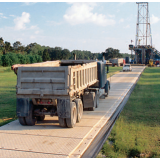 Temporary Road Mat$2,999.00A Temporary Road Mat is a single molded panel, 8 feet by 14 feet, that weighs about half a ton on its own. That mass is the point. This is not a cover laid over the dirt to keep boots clean. It is a structural element that takes concentrated load
...
A Temporary Road Mat is a single molded panel, 8 feet by 14 feet, that weighs about half a ton...
A Temporary Road Mat is a single molded panel, 8 feet by 14 feet, that weighs about half a ton on its own. That mass is the point. This is not a cover laid over the dirt to keep boots clean. It is a structural element that takes concentrated load off the soil and spreads it wide enough that a crane or a loaded truck can cross ground that would otherwise swallow it.
What a Temporary Road Mat Does Before the Access Lane Fails
Soil does not fail gradually. It holds, holds, holds, and then one wet morning a loaded truck sinks to the axle and the whole schedule stops while somebody finds a recovery machine. What precedes that moment is pressure: a few small contact patches carrying tens of thousands of pounds into ground that was never engineered to receive it.
The panel intercepts that. Load entering through a tire or a track gets carried across the full width and length of the mat before it reaches the soil, which drops the pressure at any single point by orders of magnitude. Rutting slows, the lane stays passable through weather, and the ground underneath comes back rather than needing to be rebuilt after demobilization.
That second consequence is easy to underrate until a property owner or a permit reviewer raises it. Deep rutting and compaction are damage you own, and restoring them is its own scope of work. Keeping traffic on a distributed surface is what keeps that scope from appearing on the back end of the project.
Why Compression-Molded Polyethylene, and Why This Panel
This panel is compression-molded high-density polyethylene, formed as one continuous piece. Nothing is laminated, bolted, or pinned together inside it. That matters because layered and assembled mats fail at their joints first, and once a joint opens, water and grit get inside and the failure accelerates. A single-piece body has no internal joint to open.
The formula is engineered rather than generic. It carries UV protection so the panel does not chalk and embrittle after seasons of open-air exposure, and it carries static dissipation. The body is sealed and non-permeable, so fuel, hydraulic fluid, mud, and standing water sit on the surface instead of soaking in, and the panel washes down before it goes on the next trailer.
What makes panels into a road is the connection. A locking pin with a stainless-steel rotor core inside a thermoplastic polyurethane housing joins each mat to its neighbors, so the finished lane behaves as one continuous surface instead of a row of loose pieces. Nothing moves independently, which removes the gapping and edge lift that turn a mat run into a trip hazard.
The panels are two-sided and flexible, so crews lay them either face up and let them follow the contour of uneven ground. Service life runs past 12 years with panels from early fleets still in rotation, and the polyethylene is fully recyclable when a panel finally comes out of service. You can see how this fits alongside project-length options on the Temporary Road Mats category page.
Where It Belongs, and Where It Doesn't
This panel earns its place where equipment crosses unimproved ground repeatedly: utility and pipeline right-of-way access, civil construction haul lanes, crane and staging pads, and the turning zones at either end of a lane where damage concentrates worst. It also suits work on turf, landscaped grounds, and event sites where the surface has to come back looking intact.
Two conditions make it a particularly strong specification. Sealed, non-permeable construction keeps soil, seed, and plant material from riding between sites, which matters where a permit carries invasive species conditions. And on chemically exposed sites, a non-absorbent body means a spill stays recoverable on the surface.
Where it is not the answer: this is temporary access, not a permanent road, and it does not replace an engineered subbase where the design loads call for one. It also is not a lightweight portable driveway. At roughly 1,000 pounds a panel, you need a telehandler or an excavator with a thumb on site to place and pull them, which rules it out for jobs where the only equipment is a pickup and a crew of two.
One clarification worth making plainly: static dissipation in the material is not the same thing as grounding. Work in energized environments that requires an equipotential zone needs a purpose-built grounding system, which is a separate specification from this panel. Ask us before you assume this covers it.
Three Things to Check Before You Spec It
First, confirm what is on site to move them. Each panel is about 1,000 pounds, and they arrive 46 to a standard 18-wheeler, which works out to more than 4,100 square feet of surface per load. If your site has a telehandler or a tracked machine with a thumb, placement is fast. If it does not, that is the constraint to solve before the delivery date, not after the truck is in the yard.
Second, size against contact pressure rather than gross vehicle weight. The panel is rated to 600 psi compressive strength, which converts to 86,400 pounds per square foot. A crane putting its full weight through four outrigger pads concentrates far more force per square inch than a heavier truck spreading its weight across six tires, so run the math against your worst point load, not your busiest vehicle.
Third, check the site conditions the panel material has to survive. Fuel and hydraulic exposure, long open-air seasons, and permit language about invasive species all point toward a sealed, UV-stable body rather than an absorbent one. If your access lane crosses any of those conditions, the material specification is doing as much work as the load rating.
Why Mats Inc.
Panel count and delivery sequencing are where these projects go sideways, and that is the part we work through with you directly. We have been specifying commercial and industrial flooring since 1964, and on ground protection that experience mostly shows up as knowing which questions to ask about your lane before anyone quotes a quantity. If this panel is more mat than your site needs, we will tell you that too.
Specifications
Material Compression-molded high-density polyethylene, single-piece construction Panel Size 8' x 14' x 4" (2.44 m x 4.27 m x 10.2 cm) Usable Coverage 91 sq ft per panel Panel Weight 1,000 lbs (454 kg) Compressive Strength 600 psi (86,400 psf) Connection System Interlocking locking pin; stainless-steel rotor core in thermoplastic polyurethane body Orientation Two-sided, flexible design; either face may be laid up Material Properties UV protection; static dissipation; non-permeable sealed body Service Life 12+ years Recyclability 100% recyclable Transport 46 panels per U.S. standard 18-wheeler; 4,100+ sq ft per load Warranty 1-year limited (Mats Inc.) Frequently Asked Questions
What does single-piece construction change compared with a layered or bolted mat?
Assembled mats have internal joints, and joints are where load concentrates and moisture gets in. Once a fastener works loose or a laminate layer separates, grit migrates into the void and the panel degrades from the inside where you cannot inspect it. Compression molding forms the whole panel as one continuous piece of polyethylene, so there is no internal seam to open and nothing to retorque between deployments. Practically, that means a panel coming off its fifth job site is structurally the same as it was on its first, and inspection is a visual check of the surface rather than a hardware audit. — Dustin Thompson
How long do these actually last, and what wears out first?
Service life runs past 12 years, and some of the earliest panels manufactured are still in working rotation today. The realistic wear pattern is surface abrasion from tracked equipment and gradual scuffing at the edges where mats are handled, neither of which affects load capacity. The failure mode you are avoiding with an engineered formula is UV degradation, since untreated polyethylene chalks and grows brittle after repeated seasons in open sun. This panel carries UV protection in the material rather than as a coating that can wear off. When one finally does come out of service, the polyethylene is fully recyclable. — Dustin Thompson
Where on a site should these go first if I cannot mat everything?
Start with the turning zones and the staging pad, not the straight runs. Damage concentrates where equipment pivots, brakes, and sits under load, because that is where tires and tracks scrub laterally into the soil instead of rolling across it. After that, mat the approaches where the lane transitions from paved or improved surface onto raw ground, since that lip is where rutting starts and then propagates backward. Straight-line travel across firm ground is usually the last priority, unless the soil is genuinely saturated or the same lane sees traffic all day. — Dustin Thompson
How do I work out how many panels I need?
Each panel gives 91 usable square feet, so coverage is planned in whole panels rather than by cutting to fit. A 200-foot lane one panel wide runs roughly 15 mats end to end. The number people underestimate is everything that is not the straight run: turning radii at both ends, the staging or crane pad, and any pull-off where two vehicles have to pass each other. Those additions routinely add a third again to the panel count. Send us the lane length, the widest machine using it, and where it needs to turn, and we will work the count with you before you commit to a delivery. — Jinna Hopson
What do the panels look like after a few seasons of use?
Honestly, they look used, and that is fine for the environments they work in. Expect surface scuffing and abrasion marks from tracked equipment, particularly in the turning zones. What you will not see is the discoloration and swelling that porous materials develop, because the sealed body does not take on fuel, mud, or water, and a wash-down brings the surface back rather than just moving dirt around. The two-sided design helps here too: when one face has taken a season of wear, crews can flip the panel and put a fresh surface up. — Jinna Hopson
Is this the right mat if the site is mostly foot traffic and light vehicles?
Probably more panel than you need. This one is specified around heavy equipment: 600 psi compressive strength, half a ton per panel, and machinery required to place it. If your access problem is crew movement, light trucks, or a walkway across turf for an event, the handling requirement alone makes this an awkward fit, and there are lighter ground protection options built for that. It becomes the right call the moment tracked machines, loaded trucks, or crane outriggers enter the picture, or when the same lane has to survive a full season of traffic. Tell us what is actually crossing and we will point you to the right weight class. — Jinna Hopson
Written by Dustin Thompson, Owner & CEO, Mats Inc.
↑
A Temporary Road Mat is a single molded panel, 8 feet by 14 feet, that weighs about half a ton on its own. That mass is the point. This is not a cover laid over the dirt to keep boots clean. It is a structural element that takes concentrated load off the soil and spreads it wide enough that a crane or a loaded truck can cross ground that would otherwise swallow it.
What a Temporary Road Mat Does Before the Access Lane Fails
Soil does not fail gradually. It holds, holds, holds, and then one wet morning a loaded truck sinks to the axle and the whole schedule stops while somebody finds a recovery machine. What precedes that moment is pressure: a few small contact patches carrying tens of thousands of pounds into ground that was never engineered to receive it.
The panel intercepts that. Load entering through a tire or a track gets carried across the full width and length of the mat before it reaches the soil, which drops the pressure at any single point by orders of magnitude. Rutting slows, the lane stays passable through weather, and the ground underneath comes back rather than needing to be rebuilt after demobilization.
That second consequence is easy to underrate until a property owner or a permit reviewer raises it. Deep rutting and compaction are damage you own, and restoring them is its own scope of work. Keeping traffic on a distributed surface is what keeps that scope from appearing on the back end of the project.
Why Compression-Molded Polyethylene, and Why This Panel
This panel is compression-molded high-density polyethylene, formed as one continuous piece. Nothing is laminated, bolted, or pinned together inside it. That matters because layered and assembled mats fail at their joints first, and once a joint opens, water and grit get inside and the failure accelerates. A single-piece body has no internal joint to open.
The formula is engineered rather than generic. It carries UV protection so the panel does not chalk and embrittle after seasons of open-air exposure, and it carries static dissipation. The body is sealed and non-permeable, so fuel, hydraulic fluid, mud, and standing water sit on the surface instead of soaking in, and the panel washes down before it goes on the next trailer.
What makes panels into a road is the connection. A locking pin with a stainless-steel rotor core inside a thermoplastic polyurethane housing joins each mat to its neighbors, so the finished lane behaves as one continuous surface instead of a row of loose pieces. Nothing moves independently, which removes the gapping and edge lift that turn a mat run into a trip hazard.
The panels are two-sided and flexible, so crews lay them either face up and let them follow the contour of uneven ground. Service life runs past 12 years with panels from early fleets still in rotation, and the polyethylene is fully recyclable when a panel finally comes out of service. You can see how this fits alongside project-length options on the Temporary Road Mats category page.
Where It Belongs, and Where It Doesn't
This panel earns its place where equipment crosses unimproved ground repeatedly: utility and pipeline right-of-way access, civil construction haul lanes, crane and staging pads, and the turning zones at either end of a lane where damage concentrates worst. It also suits work on turf, landscaped grounds, and event sites where the surface has to come back looking intact.
Two conditions make it a particularly strong specification. Sealed, non-permeable construction keeps soil, seed, and plant material from riding between sites, which matters where a permit carries invasive species conditions. And on chemically exposed sites, a non-absorbent body means a spill stays recoverable on the surface.
Where it is not the answer: this is temporary access, not a permanent road, and it does not replace an engineered subbase where the design loads call for one. It also is not a lightweight portable driveway. At roughly 1,000 pounds a panel, you need a telehandler or an excavator with a thumb on site to place and pull them, which rules it out for jobs where the only equipment is a pickup and a crew of two.
One clarification worth making plainly: static dissipation in the material is not the same thing as grounding. Work in energized environments that requires an equipotential zone needs a purpose-built grounding system, which is a separate specification from this panel. Ask us before you assume this covers it.
Three Things to Check Before You Spec It
First, confirm what is on site to move them. Each panel is about 1,000 pounds, and they arrive 46 to a standard 18-wheeler, which works out to more than 4,100 square feet of surface per load. If your site has a telehandler or a tracked machine with a thumb, placement is fast. If it does not, that is the constraint to solve before the delivery date, not after the truck is in the yard.
Second, size against contact pressure rather than gross vehicle weight. The panel is rated to 600 psi compressive strength, which converts to 86,400 pounds per square foot. A crane putting its full weight through four outrigger pads concentrates far more force per square inch than a heavier truck spreading its weight across six tires, so run the math against your worst point load, not your busiest vehicle.
Third, check the site conditions the panel material has to survive. Fuel and hydraulic exposure, long open-air seasons, and permit language about invasive species all point toward a sealed, UV-stable body rather than an absorbent one. If your access lane crosses any of those conditions, the material specification is doing as much work as the load rating.
Why Mats Inc.
Panel count and delivery sequencing are where these projects go sideways, and that is the part we work through with you directly. We have been specifying commercial and industrial flooring since 1964, and on ground protection that experience mostly shows up as knowing which questions to ask about your lane before anyone quotes a quantity. If this panel is more mat than your site needs, we will tell you that too.
Specifications
Material Compression-molded high-density polyethylene, single-piece construction Panel Size 8' x 14' x 4" (2.44 m x 4.27 m x 10.2 cm) Usable Coverage 91 sq ft per panel Panel Weight 1,000 lbs (454 kg) Compressive Strength 600 psi (86,400 psf) Connection System Interlocking locking pin; stainless-steel rotor core in thermoplastic polyurethane body Orientation Two-sided, flexible design; either face may be laid up Material Properties UV protection; static dissipation; non-permeable sealed body Service Life 12+ years Recyclability 100% recyclable Transport 46 panels per U.S. standard 18-wheeler; 4,100+ sq ft per load Warranty 1-year limited (Mats Inc.) Frequently Asked Questions
What does single-piece construction change compared with a layered or bolted mat?
Assembled mats have internal joints, and joints are where load concentrates and moisture gets in. Once a fastener works loose or a laminate layer separates, grit migrates into the void and the panel degrades from the inside where you cannot inspect it. Compression molding forms the whole panel as one continuous piece of polyethylene, so there is no internal seam to open and nothing to retorque between deployments. Practically, that means a panel coming off its fifth job site is structurally the same as it was on its first, and inspection is a visual check of the surface rather than a hardware audit. — Dustin Thompson
How long do these actually last, and what wears out first?
Service life runs past 12 years, and some of the earliest panels manufactured are still in working rotation today. The realistic wear pattern is surface abrasion from tracked equipment and gradual scuffing at the edges where mats are handled, neither of which affects load capacity. The failure mode you are avoiding with an engineered formula is UV degradation, since untreated polyethylene chalks and grows brittle after repeated seasons in open sun. This panel carries UV protection in the material rather than as a coating that can wear off. When one finally does come out of service, the polyethylene is fully recyclable. — Dustin Thompson
Where on a site should these go first if I cannot mat everything?
Start with the turning zones and the staging pad, not the straight runs. Damage concentrates where equipment pivots, brakes, and sits under load, because that is where tires and tracks scrub laterally into the soil instead of rolling across it. After that, mat the approaches where the lane transitions from paved or improved surface onto raw ground, since that lip is where rutting starts and then propagates backward. Straight-line travel across firm ground is usually the last priority, unless the soil is genuinely saturated or the same lane sees traffic all day. — Dustin Thompson
How do I work out how many panels I need?
Each panel gives 91 usable square feet, so coverage is planned in whole panels rather than by cutting to fit. A 200-foot lane one panel wide runs roughly 15 mats end to end. The number people underestimate is everything that is not the straight run: turning radii at both ends, the staging or crane pad, and any pull-off where two vehicles have to pass each other. Those additions routinely add a third again to the panel count. Send us the lane length, the widest machine using it, and where it needs to turn, and we will work the count with you before you commit to a delivery. — Jinna Hopson
What do the panels look like after a few seasons of use?
Honestly, they look used, and that is fine for the environments they work in. Expect surface scuffing and abrasion marks from tracked equipment, particularly in the turning zones. What you will not see is the discoloration and swelling that porous materials develop, because the sealed body does not take on fuel, mud, or water, and a wash-down brings the surface back rather than just moving dirt around. The two-sided design helps here too: when one face has taken a season of wear, crews can flip the panel and put a fresh surface up. — Jinna Hopson
Is this the right mat if the site is mostly foot traffic and light vehicles?
Probably more panel than you need. This one is specified around heavy equipment: 600 psi compressive strength, half a ton per panel, and machinery required to place it. If your access problem is crew movement, light trucks, or a walkway across turf for an event, the handling requirement alone makes this an awkward fit, and there are lighter ground protection options built for that. It becomes the right call the moment tracked machines, loaded trucks, or crane outriggers enter the picture, or when the same lane has to survive a full season of traffic. Tell us what is actually crossing and we will point you to the right weight class. — Jinna Hopson
Written by Dustin Thompson, Owner & CEO, Mats Inc.
↑
View Details
View Details
- Apache Mills1 item
- Crown Matting1 item
- Lister Industries1 item
- LRP Rubber1 item
- M+A Matting10items
- Mats-Inc1 item
- Mohawk flooring1 item
- Musson Rubber Company7items
- Newpark Mats & Integration/NPK2items
- North West Rubber1 item
- Notrax3items
- Plastex1 item
- Portico Systems15items
- Rubber Logix1 item
- Static Smart1 item