




- Home
- Electrical
Electrical Safety Mats
Located in Houston, Texas, Mats, Inc. is a major supplier of dielectric, switchboard matting. Mats, Inc. stocks a variety of electrical matting in different thicknesses, with different surfaces & specifications. Electrical suppliers appreciate our easy access, wholesale pricing and stock on hand. Below are some of our most popular dielectric, switchboard materials.
 Smooth Marbleized Vinyl Switchboard Matting (Mil Spec)$1,249.00This is marbleized vinyl insulating sheet flooring built to MIL-DTL-15562G, Type I — the version installed in naval vessels in high-voltage compartments. Unlike a portable runner, it's laid as continuous flooring with heat-welded seams that give the finished surface water-tight integrity. It comes in blue standard or blue high gloss
...
This is marbleized vinyl insulating sheet flooring built to MIL-DTL-15562G, Type I — the version installed in naval vessels in...
This is marbleized vinyl insulating sheet flooring built to MIL-DTL-15562G, Type I — the version installed in naval vessels in high-voltage compartments. Unlike a portable runner, it's laid as continuous flooring with heat-welded seams that give the finished surface water-tight integrity. It comes in blue standard or blue high gloss at 1/8 inch thick.
What a Welded Insulating Floor Does That a Portable Mat Cannot
The insulating principle is the same across every product in this family. Current needs a complete circuit, and a person standing on bare deck in front of energized equipment is half of one. A non-conductive surface underfoot means the circuit has nowhere to close.
What changes here is coverage. A portable mat protects the footprint it occupies, and it has edges — places where the protection stops and somebody can step off without noticing. Sheet flooring with welded seams protects the whole compartment. There is no edge to step past because the floor itself is the barrier.
That distinction matters most in spaces where people work all around energized equipment rather than standing at one panel. In a shipboard high-voltage compartment, there isn't a single spot to place a mat. The protection has to be the deck.
The welded seams do a second job. Heat-welding the joints with matching thread produces a water-tight surface, so moisture can't get beneath the flooring and sit between the covering and the deck. On a vessel that matters for corrosion as much as for insulation, and it's the reason this product is installed rather than laid down.
The trade is permanence. This isn't something you roll out, use, and move. It's installed, and it stays. If you need coverage you can reposition, a portable runner is the right product and this one isn't.
Why Type I Marbleized, and What Gets Certified
MIL-DTL-15562G is the military detail specification for insulating switchboard matting and sheet floor covering. It's approved for use by the Department of the Navy and available across all departments and agencies of the Department of Defense. It supersedes MIL-M-15562F, which still appears on older drawings.
Type I within that specification is the marbleized sheeting. It has no connection to ASTM D178's Type I — same words, unrelated numbering systems, and both standards appear side by side in this catalog. Check which standard a drawing names before reading the type number.
The voltage figures are identical across all three MIL types, because the type describes surface and installation method rather than electrical rating. Dielectric test voltage is 30,000 VAC. Proof testing runs at 15,000 VAC across the entire surface of every roll. Recommended maximum use voltage is 3,000 VAC.
Read that last figure carefully. Military specification does not mean higher rated — commercial ASTM D178 Class 2 matting is cleared to 17,000 volts, well above this. The military standard applies a much wider margin between test voltage and service voltage. Different philosophy, not a different capability.
Where the military specification does go further is durability. The material meets additional property requirements for oxygen bomb aging, sulfuric acid exposure, and ultraviolet light exposure. Those test how the compound survives over years rather than what it withstands in a single dielectric test — which is the right emphasis for flooring that gets installed permanently.
The surface is fire-retardant, every roll is certified to the specification, and it's manufactured in blue standard or blue high gloss finish. Matching color welding thread is available for the seams.
Where It Belongs, and Where It Doesn't
Naval vessels first — high-voltage compartments are the application this was designed around. Beyond that, it suits any permanently occupied electrical space where a continuous insulating floor makes more sense than placed mats: control rooms, equipment compartments, and dedicated electrical spaces operating within the rated voltage. It sits with the rest of our electrical and switchboard matting, which covers the portable types and the commercial standards.
The finish choice follows the room. Blue standard is the workhorse and hides marks better in a working compartment. Blue high gloss reflects more light, which brightens a windowless space and reads as a more finished installation — worth considering where the compartment gets visitors or inspections.
The voltage boundary is 3,000 VAC. Equipment above that needs a different product regardless of what the specification package says, and that conflict belongs with whoever wrote the drawing rather than resolved on the deck.
Where it's the wrong choice: any application needing portability. If the requirement is a mat in front of one panel, or coverage that moves with the work, Type II smooth and Type III diamond plate exist for exactly that and install in minutes rather than requiring a flooring crew.
What it is not: an ESD or anti-static floor. Those are conductive by design, built to drain static charge to ground and protect sensitive electronics. This is an insulator — it blocks the path to ground entirely, offers no static control, and must never be grounded.
And it is not primary protection. De-energizing, verification, protective equipment, and trained procedure come first. This is the layer beneath all of that.
Three Things to Check Before You Spec It
First, confirm you want installed flooring rather than a mat. This is bonded down and welded at the seams, which means a proper installation and a permanent result. That's the right answer for a compartment and the wrong answer for a single panel. If the coverage needs to move, buy a runner instead.
Second, plan the seams before you measure. Rolls are 36 inches wide, so any space wider than that has seams, and every seam has to be heat-welded with matching thread for the water-tight integrity to hold. Lay out the seam positions with the installer, and order the welding thread with the material rather than after it.
Third, check 3,000 VAC against your equipment. Find the real working voltage rather than assuming, because the military designation implies capability the rating doesn't support. This is the most common error on MIL spec products, and permanent flooring is an expensive place to discover it.
Why Mats Inc.
Since 1964 we've learned to ask one question early on this product: is this a mat or a floor? People arrive asking for switchboard matting and describe a compartment, which is a flooring job with welded seams and an installer. Others describe a panel, which is a runner they can roll out this afternoon. We'll ask which one you actually have, along with your voltage and your specification call-out, before we quote anything.
Product Type Insulating (non-conductive) switchboard matting and sheet floor covering Standard MIL-DTL-15562G (formerly MIL-M-15562F), Type I Approvals Approved for use by the Department of the Navy; available to all Department of Defense departments and agencies Dielectric Test Voltage 30,000 VAC Proof Test 15,000 VAC, tested over the entire surface Recommended Max Use Voltage 3,000 VAC Additional Testing Oxygen bomb aging, sulfuric acid, ultraviolet light exposure Material Vinyl, fire-retardant Surface Marbleized Finishes Blue standard or blue high gloss Seaming Heat-welded seams for water-tight integrity; matching color welding thread available Thickness 1/8 inch Size 36 inch width x 75 ft. length Roll Weight 225 lb. Certification Every roll certified to MIL-DTL-15562G Recommended For Naval vessel high-voltage compartments, permanently installed electrical spaces Static Control None — this is an insulator, not an ESD or anti-static product Warranty 1-year limited (Mats Inc.) Frequently Asked Questions
What makes Type I different from the other military spec options?
Installation method, and it's a bigger difference than it sounds. Type I is sheet floor covering — bonded down and joined with heat-welded seams so the finished surface is continuous and water-tight. Type II smooth and Type III diamond plate are portable runners you roll out in front of equipment or across a bench.
The electrical performance is identical across all three: 30,000 VAC dielectric test, 15,000 VAC proof test over the entire surface, 3,000 VAC recommended maximum use. What you're choosing between is coverage and permanence. A runner protects where it sits and has edges somebody can step past. Welded sheet flooring protects the whole compartment with no edge at all, which is why it's what goes into naval high-voltage spaces. — Dustin Thompson, Owner & CEO, Mats Inc.
What are the ratings, and what does the additional testing cover?
Dielectric test voltage is 30,000 VAC, proof testing runs at 15,000 VAC across the entire surface of every roll rather than sampled sections, and the recommended maximum use voltage is 3,000 VAC. That last number governs placement. The margin above it is deliberate rather than capacity to draw on.
The additional requirements are what set this specification apart from a pure voltage standard. The material has to perform against oxygen bomb aging, sulfuric acid exposure, and ultraviolet light. Those test how the vinyl survives over years and against conditions that degrade it — which matters far more on permanently installed flooring than on a mat you can replace in an afternoon. The surface is also fire-retardant, and every roll is certified to the specification. — Dustin Thompson, Owner & CEO, Mats Inc.
How does it install, and does it need grounding?
It's bonded to the existing deck or floor and the seams are heat-welded with matching color thread. That welding is what delivers the water-tight integrity, so it isn't optional finishing — it's what makes the installation perform as specified. This is work for someone experienced with welded vinyl flooring, not a roll-and-trim job.
No grounding, and that deserves emphasis on a permanent installation. Grounding an insulating floor destroys its entire function, because the mechanism is that no path runs from a person through the covering to ground. Anyone used to conductive or ESD flooring may expect a ground connection as part of the install. On this product that expectation is dangerous, and it's much harder to undo once the floor is down and welded. — Dustin Thompson, Owner & CEO, Mats Inc.
What size does it come in, and how do I estimate a compartment?
It ships in 36 inch by 75 foot rolls at 1/8 inch thick, and each roll weighs 225 pounds — plan on two people and equipment to move it.
For estimating, measure the length and width of each space and calculate square footage, then think in strips rather than area. At 36 inches wide, work out how many runs the room takes and where the seams land, adding a few inches of overlap at each joint for trimming and welding. Add margin for cuts around equipment bases, hatches, and fixtures. Order the matching welding thread at the same time — you'll need it, and it's frustrating to have the flooring on site without it. Send us the room dimensions and we'll work the strip layout with you. — Jinna Hopson, Vice President of Marketing, Mats Inc.
What's the difference between blue standard and blue high gloss?
Both are the same marbleized blue with identical specification, thickness, certification, and rating. The difference is the finish, and it changes how a compartment reads more than you'd expect.
Blue standard has a lower sheen that diffuses light and forgives scuffs, marks, and foot traffic — the practical choice for a working space that sees daily use. Blue high gloss reflects considerably more light, which genuinely brightens a windowless compartment where lighting is limited, and it presents as a finished, maintained installation. That makes it worth considering in spaces that get inspections, tours, or visitors. The trade is that gloss shows wear and scuffing sooner, so it asks for more upkeep to keep looking the way it did on day one. — Jinna Hopson, Vice President of Marketing, Mats Inc.
Do I need this, a portable runner, or a commercial mat?
Three questions sort it out. Does your paperwork name MIL-DTL-15562G or the older MIL-M-15562F? If so, you're in the military line, and a commercial mat won't satisfy that call-out however it's rated. Is the equipment within 3,000 volts? Above that, you need the commercial ASTM line, where Class 2 reaches 17,000 and higher classes go further.
Then the question that actually separates this product from its siblings: are you covering a compartment or protecting a position? A whole space with people working all around energized equipment wants continuous welded flooring with no edges to step past. A single panel or a bench wants a portable runner — Type II smooth for benches and clean-down, Type III diamond plate where traction matters. Describe the space and the specification to us and we'll tell you which of the three fits. — Jinna Hopson, Vice President of Marketing, Mats Inc.
Written by Jinna Hopson, Vice President of Marketing, Mats Inc.
↑
This is marbleized vinyl insulating sheet flooring built to MIL-DTL-15562G, Type I — the version installed in naval vessels in high-voltage compartments. Unlike a portable runner, it's laid as continuous flooring with heat-welded seams that give the finished surface water-tight integrity. It comes in blue standard or blue high gloss at 1/8 inch thick.
What a Welded Insulating Floor Does That a Portable Mat Cannot
The insulating principle is the same across every product in this family. Current needs a complete circuit, and a person standing on bare deck in front of energized equipment is half of one. A non-conductive surface underfoot means the circuit has nowhere to close.
What changes here is coverage. A portable mat protects the footprint it occupies, and it has edges — places where the protection stops and somebody can step off without noticing. Sheet flooring with welded seams protects the whole compartment. There is no edge to step past because the floor itself is the barrier.
That distinction matters most in spaces where people work all around energized equipment rather than standing at one panel. In a shipboard high-voltage compartment, there isn't a single spot to place a mat. The protection has to be the deck.
The welded seams do a second job. Heat-welding the joints with matching thread produces a water-tight surface, so moisture can't get beneath the flooring and sit between the covering and the deck. On a vessel that matters for corrosion as much as for insulation, and it's the reason this product is installed rather than laid down.
The trade is permanence. This isn't something you roll out, use, and move. It's installed, and it stays. If you need coverage you can reposition, a portable runner is the right product and this one isn't.
Why Type I Marbleized, and What Gets Certified
MIL-DTL-15562G is the military detail specification for insulating switchboard matting and sheet floor covering. It's approved for use by the Department of the Navy and available across all departments and agencies of the Department of Defense. It supersedes MIL-M-15562F, which still appears on older drawings.
Type I within that specification is the marbleized sheeting. It has no connection to ASTM D178's Type I — same words, unrelated numbering systems, and both standards appear side by side in this catalog. Check which standard a drawing names before reading the type number.
The voltage figures are identical across all three MIL types, because the type describes surface and installation method rather than electrical rating. Dielectric test voltage is 30,000 VAC. Proof testing runs at 15,000 VAC across the entire surface of every roll. Recommended maximum use voltage is 3,000 VAC.
Read that last figure carefully. Military specification does not mean higher rated — commercial ASTM D178 Class 2 matting is cleared to 17,000 volts, well above this. The military standard applies a much wider margin between test voltage and service voltage. Different philosophy, not a different capability.
Where the military specification does go further is durability. The material meets additional property requirements for oxygen bomb aging, sulfuric acid exposure, and ultraviolet light exposure. Those test how the compound survives over years rather than what it withstands in a single dielectric test — which is the right emphasis for flooring that gets installed permanently.
The surface is fire-retardant, every roll is certified to the specification, and it's manufactured in blue standard or blue high gloss finish. Matching color welding thread is available for the seams.
Where It Belongs, and Where It Doesn't
Naval vessels first — high-voltage compartments are the application this was designed around. Beyond that, it suits any permanently occupied electrical space where a continuous insulating floor makes more sense than placed mats: control rooms, equipment compartments, and dedicated electrical spaces operating within the rated voltage. It sits with the rest of our electrical and switchboard matting, which covers the portable types and the commercial standards.
The finish choice follows the room. Blue standard is the workhorse and hides marks better in a working compartment. Blue high gloss reflects more light, which brightens a windowless space and reads as a more finished installation — worth considering where the compartment gets visitors or inspections.
The voltage boundary is 3,000 VAC. Equipment above that needs a different product regardless of what the specification package says, and that conflict belongs with whoever wrote the drawing rather than resolved on the deck.
Where it's the wrong choice: any application needing portability. If the requirement is a mat in front of one panel, or coverage that moves with the work, Type II smooth and Type III diamond plate exist for exactly that and install in minutes rather than requiring a flooring crew.
What it is not: an ESD or anti-static floor. Those are conductive by design, built to drain static charge to ground and protect sensitive electronics. This is an insulator — it blocks the path to ground entirely, offers no static control, and must never be grounded.
And it is not primary protection. De-energizing, verification, protective equipment, and trained procedure come first. This is the layer beneath all of that.
Three Things to Check Before You Spec It
First, confirm you want installed flooring rather than a mat. This is bonded down and welded at the seams, which means a proper installation and a permanent result. That's the right answer for a compartment and the wrong answer for a single panel. If the coverage needs to move, buy a runner instead.
Second, plan the seams before you measure. Rolls are 36 inches wide, so any space wider than that has seams, and every seam has to be heat-welded with matching thread for the water-tight integrity to hold. Lay out the seam positions with the installer, and order the welding thread with the material rather than after it.
Third, check 3,000 VAC against your equipment. Find the real working voltage rather than assuming, because the military designation implies capability the rating doesn't support. This is the most common error on MIL spec products, and permanent flooring is an expensive place to discover it.
Why Mats Inc.
Since 1964 we've learned to ask one question early on this product: is this a mat or a floor? People arrive asking for switchboard matting and describe a compartment, which is a flooring job with welded seams and an installer. Others describe a panel, which is a runner they can roll out this afternoon. We'll ask which one you actually have, along with your voltage and your specification call-out, before we quote anything.
Product Type Insulating (non-conductive) switchboard matting and sheet floor covering Standard MIL-DTL-15562G (formerly MIL-M-15562F), Type I Approvals Approved for use by the Department of the Navy; available to all Department of Defense departments and agencies Dielectric Test Voltage 30,000 VAC Proof Test 15,000 VAC, tested over the entire surface Recommended Max Use Voltage 3,000 VAC Additional Testing Oxygen bomb aging, sulfuric acid, ultraviolet light exposure Material Vinyl, fire-retardant Surface Marbleized Finishes Blue standard or blue high gloss Seaming Heat-welded seams for water-tight integrity; matching color welding thread available Thickness 1/8 inch Size 36 inch width x 75 ft. length Roll Weight 225 lb. Certification Every roll certified to MIL-DTL-15562G Recommended For Naval vessel high-voltage compartments, permanently installed electrical spaces Static Control None — this is an insulator, not an ESD or anti-static product Warranty 1-year limited (Mats Inc.) Frequently Asked Questions
What makes Type I different from the other military spec options?
Installation method, and it's a bigger difference than it sounds. Type I is sheet floor covering — bonded down and joined with heat-welded seams so the finished surface is continuous and water-tight. Type II smooth and Type III diamond plate are portable runners you roll out in front of equipment or across a bench.
The electrical performance is identical across all three: 30,000 VAC dielectric test, 15,000 VAC proof test over the entire surface, 3,000 VAC recommended maximum use. What you're choosing between is coverage and permanence. A runner protects where it sits and has edges somebody can step past. Welded sheet flooring protects the whole compartment with no edge at all, which is why it's what goes into naval high-voltage spaces. — Dustin Thompson, Owner & CEO, Mats Inc.
What are the ratings, and what does the additional testing cover?
Dielectric test voltage is 30,000 VAC, proof testing runs at 15,000 VAC across the entire surface of every roll rather than sampled sections, and the recommended maximum use voltage is 3,000 VAC. That last number governs placement. The margin above it is deliberate rather than capacity to draw on.
The additional requirements are what set this specification apart from a pure voltage standard. The material has to perform against oxygen bomb aging, sulfuric acid exposure, and ultraviolet light. Those test how the vinyl survives over years and against conditions that degrade it — which matters far more on permanently installed flooring than on a mat you can replace in an afternoon. The surface is also fire-retardant, and every roll is certified to the specification. — Dustin Thompson, Owner & CEO, Mats Inc.
How does it install, and does it need grounding?
It's bonded to the existing deck or floor and the seams are heat-welded with matching color thread. That welding is what delivers the water-tight integrity, so it isn't optional finishing — it's what makes the installation perform as specified. This is work for someone experienced with welded vinyl flooring, not a roll-and-trim job.
No grounding, and that deserves emphasis on a permanent installation. Grounding an insulating floor destroys its entire function, because the mechanism is that no path runs from a person through the covering to ground. Anyone used to conductive or ESD flooring may expect a ground connection as part of the install. On this product that expectation is dangerous, and it's much harder to undo once the floor is down and welded. — Dustin Thompson, Owner & CEO, Mats Inc.
What size does it come in, and how do I estimate a compartment?
It ships in 36 inch by 75 foot rolls at 1/8 inch thick, and each roll weighs 225 pounds — plan on two people and equipment to move it.
For estimating, measure the length and width of each space and calculate square footage, then think in strips rather than area. At 36 inches wide, work out how many runs the room takes and where the seams land, adding a few inches of overlap at each joint for trimming and welding. Add margin for cuts around equipment bases, hatches, and fixtures. Order the matching welding thread at the same time — you'll need it, and it's frustrating to have the flooring on site without it. Send us the room dimensions and we'll work the strip layout with you. — Jinna Hopson, Vice President of Marketing, Mats Inc.
What's the difference between blue standard and blue high gloss?
Both are the same marbleized blue with identical specification, thickness, certification, and rating. The difference is the finish, and it changes how a compartment reads more than you'd expect.
Blue standard has a lower sheen that diffuses light and forgives scuffs, marks, and foot traffic — the practical choice for a working space that sees daily use. Blue high gloss reflects considerably more light, which genuinely brightens a windowless compartment where lighting is limited, and it presents as a finished, maintained installation. That makes it worth considering in spaces that get inspections, tours, or visitors. The trade is that gloss shows wear and scuffing sooner, so it asks for more upkeep to keep looking the way it did on day one. — Jinna Hopson, Vice President of Marketing, Mats Inc.
Do I need this, a portable runner, or a commercial mat?
Three questions sort it out. Does your paperwork name MIL-DTL-15562G or the older MIL-M-15562F? If so, you're in the military line, and a commercial mat won't satisfy that call-out however it's rated. Is the equipment within 3,000 volts? Above that, you need the commercial ASTM line, where Class 2 reaches 17,000 and higher classes go further.
Then the question that actually separates this product from its siblings: are you covering a compartment or protecting a position? A whole space with people working all around energized equipment wants continuous welded flooring with no edges to step past. A single panel or a bench wants a portable runner — Type II smooth for benches and clean-down, Type III diamond plate where traction matters. Describe the space and the specification to us and we'll tell you which of the three fits. — Jinna Hopson, Vice President of Marketing, Mats Inc.
Written by Jinna Hopson, Vice President of Marketing, Mats Inc.
↑
View Details
View Details
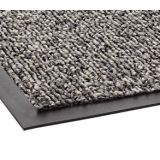 Stat-Zap Matting
Starting at $68.00
Stat-Zap Matting is an anti-static floor mat for the places a black rubber ESD mat would look wrong: the cashier station, the registration desk, the computer workstation in an office or a library. It is a pewter loop-pile carpet with conductive fibers woven into the top and a vinyl...
Stat-Zap Matting is an anti-static floor mat for the places a black rubber ESD mat would look wrong: the...
Stat-Zap Matting is an anti-static floor mat for the places a black rubber ESD mat would look wrong: the cashier station, the registration desk, the computer workstation in an office or a library. It is a pewter loop-pile carpet with conductive fibers woven into the top and a vinyl anti-slip backing underneath, grounded through a cord so the static a person builds up walking to the desk drains away before it reaches the keyboard.
What Stat-Zap Does Before a Shock Reaches the Register
Most offices have a spot where static is a daily nuisance. Someone crosses a carpeted room, touches the till or the workstation, and the equipment reboots, drops a card read, or locks up. The charge that does it is small. The problem is that ordinary carpet holds it on the person until the first grounded thing they touch, and at a service counter that thing is the machine.
An anti-static carpet mat changes where the charge goes. The conductive top fibers give it a path down through the mat and out along a grounding cord to a building ground, so the person standing on the mat is bleeding off charge the whole time they are there. The maker publishes a resistivity of 10¹⁰ ohms, which places this mat in the anti-static band of the scale rather than the faster-draining dissipative or conductive bands.
That band is the right one for the job this mat does. It is a nuisance-static mat for equipment protection at a counter, not a bench mat for handling bare circuit boards. Knowing the difference is what keeps a buyer from putting a carpet mat where a rated dissipative mat belongs, and from paying for an industrial mat at a front desk that only needed the shocks to stop.
Why a Conductive-Fiber Carpet, and Why This One
The static control here is in the yarn, not sprayed on. Conductive fibers run through the nylon loop pile as part of the construction, so the property does not wash out with cleaning or wear off with traffic. What you vacuum in year three is the same mat you laid in year one, electrically as well as visually.
Under the carpet is a vinyl backing built to grip the floor. On a hard office floor, the failure that matters most for a small mat is creep: the mat walks a few inches a day until it sits crooked against the counter or curls at the corner where people step. The anti-slip backing holds it where it was placed, which is also what keeps the grounding cord from being tugged loose.
The whole mat is 5/16 inch thick, low enough that a rolling stool or a wheeled cart crosses it without a lip to catch on. Every stock-size mat ships with one grounding cord. For rolls and custom cuts, the maker recommends one grounding cord for every ten feet of matting. Rolls are supplied without edging on the cut ends unless you specify it.
Mats Inc. offers it in seven stock sizes, from 2 by 3 feet for a single seat to 4 by 10 for a shared counter, plus 60-foot rolls in 3 and 4 foot widths and custom cuts up to 60 feet long in those two widths. One color, pewter, chosen to sit under office furniture and beside a service desk without drawing attention.
Where It Belongs, and What It Is Not
The maker lists the placements plainly: computer workstations, cashier stations, offices, ATMs, service counters, registration desks, schools, universities, and libraries. What those share is a person standing or sitting at a piece of electronic equipment on a dry interior floor, in a room where the mat is seen by the public and needs to look like carpet.
It also fits the small static-sensitive corners of a building that never got their own flooring: a copier alcove, a shared printer station, a self-checkout island, a help desk with a rolling stool. Roll goods let you run a continuous strip down a row of terminals or along an IT repair counter without seams every few feet.
What it is not: a dissipative or conductive mat for electronics assembly and test. Where a specification cites a resistance class or a program standard for handling components, choose a mat rated to that class from our anti-static matting lineup instead. Stat-Zap is rated for nuisance static at equipment, and it says so in its own numbers.
It is also not a wet-area mat or an anti-fatigue mat. The carpet face holds water and the backing is meant for dry floors, so it stays out of entrances, wash-down zones, and kitchens. And at 5/16 inch it is a thin carpet mat, not a cushion; a cashier who stands all shift gets static protection from it, not relief for their feet.
Three Things to Check Before You Spec It
First, name the problem. If the complaint is equipment glitching when someone touches it, or customers getting zapped at the counter, this mat is built for that. If the requirement is a written ESD program with a resistance class, it is the wrong band, and a rated dissipative mat is the answer. The EOS/ESD Association standards that specifications cite are about the second case, not the first.
Second, find the ground before you place the mat. The cord needs a verified building ground within reach, usually the center screw of a grounded outlet cover, and the mat has to sit where the cord will not be walked on or kicked out. A carpet mat that looks grounded and is not does nothing, and nobody notices until the reboots come back.
Third, size to the seat, not the room. A single workstation takes the 2 by 3 or 3 by 4; a two-person counter takes the 3 by 5 or 4 by 6; a run of terminals takes a 3 or 4 foot roll cut to length with a cord every ten feet. Measure where feet actually rest, and remember that roll ends arrive unbound unless you ask for edging.
Why Mats Inc.
Front-desk static is one of those problems we have been asked about since our first office and school customers in the 1960s, and the honest answer has always started with which kind of static you have. We will tell you when a carpet mat is the right fix and when it is not, before you order, and we ship this one with its cord and its published figure rather than a promise. Send us the counter layout and we will size it.
Surface Nylon loop-pile carpet with conductive top fibers Backing Vinyl anti-slip backing Overall thickness 5/16" Resistivity 10¹⁰ ohms (anti-static band) Grounding One grounding cord included with each stock mat; one cord per 10' recommended for rolls and custom cuts Stock sizes 2' x 3', 3' x 4', 3' x 5', 3' x 10', 4' x 6', 4' x 8', 4' x 10' Rolls and custom 3' x 60', 4' x 60'; custom cuts up to 60' in 3' and 4' widths; roll ends unedged unless specified Color Pewter Use area Interior dry areas Warranty 1-year limited (Mats Inc.) Frequently Asked Questions
How does a carpet mat control static, and is it really anti-static or just carpet?
Answered by Dustin Thompson, Owner & CEO
It is carpet with a path built in. Conductive fibers are woven into the nylon loop pile, so charge on a person's shoes can move down through the mat instead of sitting on them. A grounding cord clipped to the mat carries that charge to a building ground. Ordinary carpet does the opposite: it generates charge and holds it.
The maker publishes a resistivity of 10¹⁰ ohms. On the scale specifiers use, that is the anti-static band, above the dissipative and conductive bands. It is the right rating for stopping nuisance shocks at equipment. It is not a rating for handling bare components, and we would not sell it to you for that.
How long does the anti-static property last, and what wears the mat out?
Answered by Dustin Thompson, Owner & CEO
Because the conductive fiber is part of the yarn rather than a coating, the static property lasts as long as the pile does. Vacuuming and spot cleaning do not remove it. What ends the mat's life is ordinary carpet wear: a matted traffic lane where a stool rolls all day, or a fraying cut end on a roll that was never edged.
At a single workstation, expect three to five years before the pile looks tired; that range is our field judgment for loop-pile office matting, not a maker's figure. Keep it on a dry floor, vacuum it with the rest of the carpet, and check once a year that the cord is still clipped and the outlet screw is still grounded.
Where should Stat-Zap go, and how do I ground it?
Answered by Dustin Thompson, Owner & CEO
Put it where the person stands or sits at the equipment: under the cashier, in front of the registration desk, at the computer workstation, beside the ATM. Every stock-size mat comes with one grounding cord. Clip it to the mat's terminal and fasten the other end to a verified ground, most often the center screw of a grounded outlet cover.
For rolls and custom cuts, the maker recommends one grounding cord for every ten feet of matting, so a 30-foot run down a row of terminals wants three. Route the cord along the wall or under the counter where it will not be stepped on. An anti-static mat with the cord pulled loose is just a pewter rug.
What size do I need for one workstation, a shared counter, or a row of terminals?
Answered by Jinna Hopson, Vice President of Marketing
For one person at a desk or a register, the 2 by 3 covers the chair-and-feet zone and the 3 by 4 gives room to stand back. A two-person counter or a registration desk usually takes the 3 by 5 or 4 by 6, so both staff stay on the mat as they move. The 3 by 10 and 4 by 10 suit a long service counter or a bank of self-checkouts.
For a row of terminals or an IT counter, a 3 or 4 foot wide roll cut to length is cleaner than butting mats together. Custom cuts run up to 60 feet in either width. Ask for edging on the cut ends if the run will be seen from the public side; standard roll ends arrive unbound.
What does it look like, and will it fit an office or a library rather than a shop floor?
Answered by Jinna Hopson, Vice President of Marketing
It looks like a piece of commercial carpet, which is the whole idea. The pewter loop pile is a mid-tone gray that sits under a desk or beside a counter without announcing itself, and at 5/16 inch it lies nearly flush with the floor. Nobody walking up to a registration desk reads it as safety equipment.
The maker names schools, universities, libraries, and offices among its intended homes, and that is where we see it chosen: places that need the static gone but would never put a black rubber mat at the front desk. If your carpet is a warm tone, pewter reads as a deliberate neutral rather than a mismatch.
Is this the mat for an electronics bench, a computer desk, or a chair?
Answered by Jinna Hopson, Vice President of Marketing
It is the mat for the floor at a computer desk or a counter where the goal is to stop static from reaching the equipment or shocking the customer. It is a floor mat, not a bench-top or table mat, so it goes under feet, not under the keyboard or the parts tray.
It is not an ESD bench mat for assembling or testing components, which calls for a dissipative rating and a written grounding program. And while its low profile lets a rolling stool cross it, it is not a chair mat; use a chair mat for casters and put this where the feet land. If you are unsure which of those you need, describe the desk and we will tell you.
By Jinna Hopson, Vice President of Marketing, Mats Inc.
↑
Stat-Zap Matting is an anti-static floor mat for the places a black rubber ESD mat would look wrong: the cashier station, the registration desk, the computer workstation in an office or a library. It is a pewter loop-pile carpet with conductive fibers woven into the top and a vinyl anti-slip backing underneath, grounded through a cord so the static a person builds up walking to the desk drains away before it reaches the keyboard.
What Stat-Zap Does Before a Shock Reaches the Register
Most offices have a spot where static is a daily nuisance. Someone crosses a carpeted room, touches the till or the workstation, and the equipment reboots, drops a card read, or locks up. The charge that does it is small. The problem is that ordinary carpet holds it on the person until the first grounded thing they touch, and at a service counter that thing is the machine.
An anti-static carpet mat changes where the charge goes. The conductive top fibers give it a path down through the mat and out along a grounding cord to a building ground, so the person standing on the mat is bleeding off charge the whole time they are there. The maker publishes a resistivity of 10¹⁰ ohms, which places this mat in the anti-static band of the scale rather than the faster-draining dissipative or conductive bands.
That band is the right one for the job this mat does. It is a nuisance-static mat for equipment protection at a counter, not a bench mat for handling bare circuit boards. Knowing the difference is what keeps a buyer from putting a carpet mat where a rated dissipative mat belongs, and from paying for an industrial mat at a front desk that only needed the shocks to stop.
Why a Conductive-Fiber Carpet, and Why This One
The static control here is in the yarn, not sprayed on. Conductive fibers run through the nylon loop pile as part of the construction, so the property does not wash out with cleaning or wear off with traffic. What you vacuum in year three is the same mat you laid in year one, electrically as well as visually.
Under the carpet is a vinyl backing built to grip the floor. On a hard office floor, the failure that matters most for a small mat is creep: the mat walks a few inches a day until it sits crooked against the counter or curls at the corner where people step. The anti-slip backing holds it where it was placed, which is also what keeps the grounding cord from being tugged loose.
The whole mat is 5/16 inch thick, low enough that a rolling stool or a wheeled cart crosses it without a lip to catch on. Every stock-size mat ships with one grounding cord. For rolls and custom cuts, the maker recommends one grounding cord for every ten feet of matting. Rolls are supplied without edging on the cut ends unless you specify it.
Mats Inc. offers it in seven stock sizes, from 2 by 3 feet for a single seat to 4 by 10 for a shared counter, plus 60-foot rolls in 3 and 4 foot widths and custom cuts up to 60 feet long in those two widths. One color, pewter, chosen to sit under office furniture and beside a service desk without drawing attention.
Where It Belongs, and What It Is Not
The maker lists the placements plainly: computer workstations, cashier stations, offices, ATMs, service counters, registration desks, schools, universities, and libraries. What those share is a person standing or sitting at a piece of electronic equipment on a dry interior floor, in a room where the mat is seen by the public and needs to look like carpet.
It also fits the small static-sensitive corners of a building that never got their own flooring: a copier alcove, a shared printer station, a self-checkout island, a help desk with a rolling stool. Roll goods let you run a continuous strip down a row of terminals or along an IT repair counter without seams every few feet.
What it is not: a dissipative or conductive mat for electronics assembly and test. Where a specification cites a resistance class or a program standard for handling components, choose a mat rated to that class from our anti-static matting lineup instead. Stat-Zap is rated for nuisance static at equipment, and it says so in its own numbers.
It is also not a wet-area mat or an anti-fatigue mat. The carpet face holds water and the backing is meant for dry floors, so it stays out of entrances, wash-down zones, and kitchens. And at 5/16 inch it is a thin carpet mat, not a cushion; a cashier who stands all shift gets static protection from it, not relief for their feet.
Three Things to Check Before You Spec It
First, name the problem. If the complaint is equipment glitching when someone touches it, or customers getting zapped at the counter, this mat is built for that. If the requirement is a written ESD program with a resistance class, it is the wrong band, and a rated dissipative mat is the answer. The EOS/ESD Association standards that specifications cite are about the second case, not the first.
Second, find the ground before you place the mat. The cord needs a verified building ground within reach, usually the center screw of a grounded outlet cover, and the mat has to sit where the cord will not be walked on or kicked out. A carpet mat that looks grounded and is not does nothing, and nobody notices until the reboots come back.
Third, size to the seat, not the room. A single workstation takes the 2 by 3 or 3 by 4; a two-person counter takes the 3 by 5 or 4 by 6; a run of terminals takes a 3 or 4 foot roll cut to length with a cord every ten feet. Measure where feet actually rest, and remember that roll ends arrive unbound unless you ask for edging.
Why Mats Inc.
Front-desk static is one of those problems we have been asked about since our first office and school customers in the 1960s, and the honest answer has always started with which kind of static you have. We will tell you when a carpet mat is the right fix and when it is not, before you order, and we ship this one with its cord and its published figure rather than a promise. Send us the counter layout and we will size it.
Surface Nylon loop-pile carpet with conductive top fibers Backing Vinyl anti-slip backing Overall thickness 5/16" Resistivity 10¹⁰ ohms (anti-static band) Grounding One grounding cord included with each stock mat; one cord per 10' recommended for rolls and custom cuts Stock sizes 2' x 3', 3' x 4', 3' x 5', 3' x 10', 4' x 6', 4' x 8', 4' x 10' Rolls and custom 3' x 60', 4' x 60'; custom cuts up to 60' in 3' and 4' widths; roll ends unedged unless specified Color Pewter Use area Interior dry areas Warranty 1-year limited (Mats Inc.) Frequently Asked Questions
How does a carpet mat control static, and is it really anti-static or just carpet?
Answered by Dustin Thompson, Owner & CEO
It is carpet with a path built in. Conductive fibers are woven into the nylon loop pile, so charge on a person's shoes can move down through the mat instead of sitting on them. A grounding cord clipped to the mat carries that charge to a building ground. Ordinary carpet does the opposite: it generates charge and holds it.
The maker publishes a resistivity of 10¹⁰ ohms. On the scale specifiers use, that is the anti-static band, above the dissipative and conductive bands. It is the right rating for stopping nuisance shocks at equipment. It is not a rating for handling bare components, and we would not sell it to you for that.
How long does the anti-static property last, and what wears the mat out?
Answered by Dustin Thompson, Owner & CEO
Because the conductive fiber is part of the yarn rather than a coating, the static property lasts as long as the pile does. Vacuuming and spot cleaning do not remove it. What ends the mat's life is ordinary carpet wear: a matted traffic lane where a stool rolls all day, or a fraying cut end on a roll that was never edged.
At a single workstation, expect three to five years before the pile looks tired; that range is our field judgment for loop-pile office matting, not a maker's figure. Keep it on a dry floor, vacuum it with the rest of the carpet, and check once a year that the cord is still clipped and the outlet screw is still grounded.
Where should Stat-Zap go, and how do I ground it?
Answered by Dustin Thompson, Owner & CEO
Put it where the person stands or sits at the equipment: under the cashier, in front of the registration desk, at the computer workstation, beside the ATM. Every stock-size mat comes with one grounding cord. Clip it to the mat's terminal and fasten the other end to a verified ground, most often the center screw of a grounded outlet cover.
For rolls and custom cuts, the maker recommends one grounding cord for every ten feet of matting, so a 30-foot run down a row of terminals wants three. Route the cord along the wall or under the counter where it will not be stepped on. An anti-static mat with the cord pulled loose is just a pewter rug.
What size do I need for one workstation, a shared counter, or a row of terminals?
Answered by Jinna Hopson, Vice President of Marketing
For one person at a desk or a register, the 2 by 3 covers the chair-and-feet zone and the 3 by 4 gives room to stand back. A two-person counter or a registration desk usually takes the 3 by 5 or 4 by 6, so both staff stay on the mat as they move. The 3 by 10 and 4 by 10 suit a long service counter or a bank of self-checkouts.
For a row of terminals or an IT counter, a 3 or 4 foot wide roll cut to length is cleaner than butting mats together. Custom cuts run up to 60 feet in either width. Ask for edging on the cut ends if the run will be seen from the public side; standard roll ends arrive unbound.
What does it look like, and will it fit an office or a library rather than a shop floor?
Answered by Jinna Hopson, Vice President of Marketing
It looks like a piece of commercial carpet, which is the whole idea. The pewter loop pile is a mid-tone gray that sits under a desk or beside a counter without announcing itself, and at 5/16 inch it lies nearly flush with the floor. Nobody walking up to a registration desk reads it as safety equipment.
The maker names schools, universities, libraries, and offices among its intended homes, and that is where we see it chosen: places that need the static gone but would never put a black rubber mat at the front desk. If your carpet is a warm tone, pewter reads as a deliberate neutral rather than a mismatch.
Is this the mat for an electronics bench, a computer desk, or a chair?
Answered by Jinna Hopson, Vice President of Marketing
It is the mat for the floor at a computer desk or a counter where the goal is to stop static from reaching the equipment or shocking the customer. It is a floor mat, not a bench-top or table mat, so it goes under feet, not under the keyboard or the parts tray.
It is not an ESD bench mat for assembling or testing components, which calls for a dissipative rating and a written grounding program. And while its low profile lets a rolling stool cross it, it is not a chair mat; use a chair mat for casters and put this where the feet land. If you are unsure which of those you need, describe the desk and we will tell you.
By Jinna Hopson, Vice President of Marketing, Mats Inc.
↑
View Details
View Details
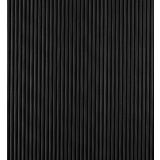 Corrugated Rubber Switchboard Matting (ASTM)$1,606.00This is ASTM D178 Type I switchboard matting in a corrugated finish — an insulating rubber barrier for people working on or near energized electrical equipment. It's available in Class 2, Class 3, and Class 4, and the class you choose is the specification. Every roll is proof tested at
...
This is ASTM D178 Type I switchboard matting in a corrugated finish — an insulating rubber barrier for people working...
This is ASTM D178 Type I switchboard matting in a corrugated finish — an insulating rubber barrier for people working on or near energized electrical equipment. It's available in Class 2, Class 3, and Class 4, and the class you choose is the specification. Every roll is proof tested at the voltage specified for its class, across the entire surface.
What Switchboard Matting Does Before Current Finds a Path Through a Worker
Electricity needs a complete circuit. A worker standing on a concrete floor in front of an energized panel is a potential half of one — if their hand contacts something live, current travels through the body, down through the legs, and into the ground. The floor is what completes the path.
Switchboard matting interrupts that path. It's an insulating barrier between the worker and the floor, engineered so current cannot pass through it to reach ground. The person can still be exposed to a live conductor, but the circuit has nowhere to complete, and that difference is the entire point of the product.
This is worth stating plainly because it runs opposite to another kind of matting people confuse it with. Anti-static and ESD matting is deliberately conductive — it drains charge to ground on purpose. Dielectric matting blocks that path completely. Substituting one for the other, or grounding a mat that must never be grounded, removes the protection entirely.
The consequences here aren't measured in downtime or floor wear. Electrical incidents at switchgear and distribution equipment are the kind that end careers and lives. Insulating matting is one layer in an electrical safety program that also includes de-energizing where possible, proper protective equipment, and trained procedure. It is not a substitute for any of those.
Why Type I Rubber Construction, and Why Class Matters More Than Anything Else
ASTM D178 governs insulating matting for electrical work, and it sorts product two ways. Type identifies the compound the matting is made from. Class sets the voltage the material is tested and rated for. Both belong on a specification, and both have to match the job.
This is Type I — a vulcanized rubber compound. Rubber gives you a well-understood insulating material with the flexibility to lie flat, roll up, and stay workable across normal temperature ranges. It's the baseline construction in the standard, and for most indoor electrical rooms it's exactly what's called for.
Class is where your attention belongs. Class 2, Class 3, and Class 4 are three different products wearing the same name, and each carries its own proof test voltage and its own maximum recommended use voltage. Thickness increases with class, because insulating capacity comes from material. Picking a class because it was in stock rather than because it matched your equipment is the failure mode this whole category exists to prevent.
The testing detail that matters most: every roll is proof tested at its class voltage over the entire surface, not sampled. A dielectric barrier is only as good as its weakest square inch, and a spot check across a 75-foot roll would leave most of that surface unverified. Full-surface testing is the difference between a rated product and a plausible one.
Rolls are guaranteed single piece. That sounds like a shipping detail and isn't. A splice is a discontinuity in the insulating barrier, and discontinuities are where protection fails. A single-piece roll means the material in front of your panel is continuous end to end.
The corrugated surface runs as ridges across the mat, giving traction where workers stand for long periods and where the floor may pick up oil or moisture. Each piece is permanently marked at regular intervals with the manufacturer, the standard, the type, and the class — so what arrives on your dock can be verified on sight rather than taken on trust.
Where It Belongs, and Where It Doesn't
The applications are specific and they're all electrical: distribution boards, switchgear, sub-stations, transformers, generators, and electrical workbenches. The common factor is a person working at or near energized equipment who needs the floor beneath them to stop being a conductor.
Coverage is usually what people get wrong. The matting should extend across the full working area in front of the equipment, far enough that a worker can move, step back, or reach without ever having a foot off the mat. A strip narrower than the panel is a strip somebody will step past. It sits alongside the rest of our electrical and switchboard matting, which covers the other type and class combinations.
What it is not: an ESD or anti-static mat. It will not dissipate static charge, protect sensitive electronics, or work as a bench mat for soldering and component handling. Those products are conductive by design and belong to a completely different specification. If static control is what you need, this is the wrong product and it will not do that job.
It's also not an anti-fatigue mat, an entrance mat, or general floor protection — despite the corrugated surface offering traction. Specifying it for comfort or coverage means paying for dielectric performance where it isn't needed, and it can leave people assuming a work area is protected when the mat was never placed for that reason.
And it is not primary protection. Electrical safety work starts with de-energizing and verifying, then protective equipment and procedure. Insulating matting is a supplementary layer beneath all of that, not a reason to skip any of it.
Three Things to Check Before You Spec It
First, match the class to your actual working voltage. Find the real voltage at the equipment rather than assuming, then select the class rated at or above it with margin to spare. Class 2, 3, and 4 are all available here, and moving up a class costs far less than discovering mid-project that the mat under someone's feet was never rated for the panel in front of them.
Second, build inspection into your routine. Dielectric failure is invisible. A cut, a puncture, embedded metal debris, or chemical and oil contamination can compromise the insulating barrier while the mat still looks perfectly serviceable. Inspect regularly, replace anything damaged rather than working around it, and follow your facility's retest interval. A mat people trust and shouldn't is worse than no mat.
Third, size the coverage to the work, not to the equipment. Measure the area a worker actually occupies and moves through while working the panel, then choose a width that keeps them fully on the mat throughout. Cutting a roll into panel-length sections is normal practice. When it's a close call between two widths, take the wider one — the extra material is minimal across a full roll and it removes the most common coverage mistake.
Why Mats Inc.
We've been supplying industrial and commercial matting since 1964, and safety-rated electrical products are where getting the specification right matters more than anything else we sell. We'll ask what voltage you're working at and what the equipment is before we quote, because type and class aren't preferences — they're the whole product. If your application needs a class we don't have in front of you, we'd rather route you to it than sell you what's convenient.
Product Type Insulating (dielectric) switchboard matting Standard ANSI/ASTM D178, Type I Classes Available Class 2, Class 3, Class 4 Material High-quality vulcanized rubber compound Surface Corrugated Color Black Class 2 Sizes 24 inch, 36 inch, and 48 inch widths in 75 ft. rolls Class 3 Sizes 36 inch width in 75 ft. rolls Class 4 Sizes 36 inch and 48 inch widths in 30 ft. rolls Class 2 Proof Test 20,000 volts A.C., tested over the entire surface Class 2 Max Use Voltage 17,000 volts A.C. Class 2 Dielectric Strength 30,000 volts A.C. Roll Guarantee Single piece, full rolls only Marking Permanently marked with manufacturer, ASTM D178, type, and class Recommended For Distribution boards, switchgear, sub-stations, transformers, generators, electrical workbenches Static Control None — this is an insulator, not an ESD or anti-static product Warranty 1-year limited (Mats Inc.) Frequently Asked Questions
What do Type and Class mean on switchboard matting?
They're the two halves of the specification, and a quote that names only one isn't complete. Type identifies the compound the matting is manufactured from — this product is Type I, a vulcanized rubber compound. Class sets the voltage the material is tested and rated to handle.
Class is the one that changes what you're buying. This product is offered in Class 2, Class 3, and Class 4, and each has its own proof test voltage and its own maximum recommended use voltage, with thickness increasing as the class goes up. Two rolls that look identical on a dock can be rated for very different equipment. Always confirm the class against the voltage you're actually working at, not against what's convenient to order. — Dustin Thompson, Owner & CEO, Mats Inc.
How is it tested, and how do I know it's still protecting anyone a year from now?
Testing is the strongest thing about this product. Every roll is proof tested at the voltage specified for its class over the entire surface rather than sampled at intervals. A dielectric barrier is only as good as its weakest point, so full-surface testing is what separates a rated mat from one that's probably fine. Rolls are also guaranteed single piece, meaning no splice sits in the middle of your barrier. Class 2 material is proof tested at 20,000 volts A.C. with a maximum recommended use voltage of 17,000.
Ongoing, the honest answer is that you have to inspect it. Dielectric failure doesn't announce itself — a cut, a puncture, metal debris pressed into the surface, or oil and chemical contamination can compromise the insulation while the mat looks completely normal. Build inspection into your routine, follow your facility's retest interval, and replace damaged material instead of working around it. A mat people trust that no longer performs is more dangerous than bare floor, because bare floor doesn't create false confidence. — Dustin Thompson, Owner & CEO, Mats Inc.
Where should it be placed, and how much area does it need to cover?
It goes wherever people work at or near energized equipment — in front of distribution boards, switchgear, sub-stations, transformers, generators, and electrical workbenches. The mat's job is to break the path to ground beneath the worker, so it has to be under them the entire time they're exposed.
That's why coverage deserves real thought. Extend the matting across the full working area in front of the equipment, with enough margin that someone can shift their stance, step back, or reach sideways without a foot landing on bare floor. A strip narrower than the panel is a strip somebody will eventually step past, usually at the worst moment. And to be direct: this is supplementary protection. It sits underneath de-energizing, verification, protective equipment, and trained procedure — never in place of them. — Dustin Thompson, Owner & CEO, Mats Inc.
What sizes are available, and how do I work out what to order?
It depends on the class. Class 2 comes in 24, 36, and 48 inch widths in 75-foot rolls. Class 3 comes in 36 inch width in 75-foot rolls. Class 4 comes in 36 and 48 inch widths in 30-foot rolls — shorter because the material is thicker and heavier at that rating.
To work out quantity, go equipment by equipment. Measure the width of each panel or bench, then add margin on both sides so a worker never runs out of mat when they move. Total those lengths, and choose your width based on how far people stand back while working. Cutting a roll into panel-length sections is normal, so one roll usually serves several pieces of equipment. Send us your equipment list and the voltages, and we'll work through both the class and the quantity with you. — Jinna Hopson, Vice President of Marketing, Mats Inc.
What does it look like, and what's involved in handling it?
It's black with a corrugated surface — ridges running across the mat that give traction where people stand for long stretches or where the floor picks up oil and moisture. The look is straightforwardly industrial, which is right for the setting. Nobody is specifying switchboard matting for a lobby.
Handling is the practical thing to plan for. These rolls are heavy, and they get heavier as the class goes up, since higher classes mean thicker material. A full-width roll is genuinely a two-person job with equipment, so think about where it lands on the dock, how it gets to the electrical room, and where you'll cut it. Let it lie flat and relax before final placement, and cut with a sharp blade and a straightedge for clean, safe edges. — Jinna Hopson, Vice President of Marketing, Mats Inc.
Is this the same as an anti-static or ESD mat?
No, and this is the single most important thing to be clear about, because the two get confused constantly and the mistake runs in a dangerous direction. Anti-static and ESD matting is conductive or dissipative on purpose — it exists to give static charge a controlled path to ground so it doesn't damage sensitive electronics. It's designed to conduct.
Switchboard matting is the opposite. It's an insulator, engineered so electricity cannot pass through it to reach ground, which is exactly what protects a worker at a live panel. It offers no static control whatsoever and won't protect components on a bench. More seriously, treating it like an ESD product — grounding it, or swapping one in for the other — removes the protection it exists to provide. If you need static control, we carry proper ESD products and we'll point you at them. If you need shock protection at electrical equipment, this is the right category. They are not interchangeable. — Jinna Hopson, Vice President of Marketing, Mats Inc.
Written by Dustin Thompson, Owner & CEO, Mats Inc.
↑
This is ASTM D178 Type I switchboard matting in a corrugated finish — an insulating rubber barrier for people working on or near energized electrical equipment. It's available in Class 2, Class 3, and Class 4, and the class you choose is the specification. Every roll is proof tested at the voltage specified for its class, across the entire surface.
What Switchboard Matting Does Before Current Finds a Path Through a Worker
Electricity needs a complete circuit. A worker standing on a concrete floor in front of an energized panel is a potential half of one — if their hand contacts something live, current travels through the body, down through the legs, and into the ground. The floor is what completes the path.
Switchboard matting interrupts that path. It's an insulating barrier between the worker and the floor, engineered so current cannot pass through it to reach ground. The person can still be exposed to a live conductor, but the circuit has nowhere to complete, and that difference is the entire point of the product.
This is worth stating plainly because it runs opposite to another kind of matting people confuse it with. Anti-static and ESD matting is deliberately conductive — it drains charge to ground on purpose. Dielectric matting blocks that path completely. Substituting one for the other, or grounding a mat that must never be grounded, removes the protection entirely.
The consequences here aren't measured in downtime or floor wear. Electrical incidents at switchgear and distribution equipment are the kind that end careers and lives. Insulating matting is one layer in an electrical safety program that also includes de-energizing where possible, proper protective equipment, and trained procedure. It is not a substitute for any of those.
Why Type I Rubber Construction, and Why Class Matters More Than Anything Else
ASTM D178 governs insulating matting for electrical work, and it sorts product two ways. Type identifies the compound the matting is made from. Class sets the voltage the material is tested and rated for. Both belong on a specification, and both have to match the job.
This is Type I — a vulcanized rubber compound. Rubber gives you a well-understood insulating material with the flexibility to lie flat, roll up, and stay workable across normal temperature ranges. It's the baseline construction in the standard, and for most indoor electrical rooms it's exactly what's called for.
Class is where your attention belongs. Class 2, Class 3, and Class 4 are three different products wearing the same name, and each carries its own proof test voltage and its own maximum recommended use voltage. Thickness increases with class, because insulating capacity comes from material. Picking a class because it was in stock rather than because it matched your equipment is the failure mode this whole category exists to prevent.
The testing detail that matters most: every roll is proof tested at its class voltage over the entire surface, not sampled. A dielectric barrier is only as good as its weakest square inch, and a spot check across a 75-foot roll would leave most of that surface unverified. Full-surface testing is the difference between a rated product and a plausible one.
Rolls are guaranteed single piece. That sounds like a shipping detail and isn't. A splice is a discontinuity in the insulating barrier, and discontinuities are where protection fails. A single-piece roll means the material in front of your panel is continuous end to end.
The corrugated surface runs as ridges across the mat, giving traction where workers stand for long periods and where the floor may pick up oil or moisture. Each piece is permanently marked at regular intervals with the manufacturer, the standard, the type, and the class — so what arrives on your dock can be verified on sight rather than taken on trust.
Where It Belongs, and Where It Doesn't
The applications are specific and they're all electrical: distribution boards, switchgear, sub-stations, transformers, generators, and electrical workbenches. The common factor is a person working at or near energized equipment who needs the floor beneath them to stop being a conductor.
Coverage is usually what people get wrong. The matting should extend across the full working area in front of the equipment, far enough that a worker can move, step back, or reach without ever having a foot off the mat. A strip narrower than the panel is a strip somebody will step past. It sits alongside the rest of our electrical and switchboard matting, which covers the other type and class combinations.
What it is not: an ESD or anti-static mat. It will not dissipate static charge, protect sensitive electronics, or work as a bench mat for soldering and component handling. Those products are conductive by design and belong to a completely different specification. If static control is what you need, this is the wrong product and it will not do that job.
It's also not an anti-fatigue mat, an entrance mat, or general floor protection — despite the corrugated surface offering traction. Specifying it for comfort or coverage means paying for dielectric performance where it isn't needed, and it can leave people assuming a work area is protected when the mat was never placed for that reason.
And it is not primary protection. Electrical safety work starts with de-energizing and verifying, then protective equipment and procedure. Insulating matting is a supplementary layer beneath all of that, not a reason to skip any of it.
Three Things to Check Before You Spec It
First, match the class to your actual working voltage. Find the real voltage at the equipment rather than assuming, then select the class rated at or above it with margin to spare. Class 2, 3, and 4 are all available here, and moving up a class costs far less than discovering mid-project that the mat under someone's feet was never rated for the panel in front of them.
Second, build inspection into your routine. Dielectric failure is invisible. A cut, a puncture, embedded metal debris, or chemical and oil contamination can compromise the insulating barrier while the mat still looks perfectly serviceable. Inspect regularly, replace anything damaged rather than working around it, and follow your facility's retest interval. A mat people trust and shouldn't is worse than no mat.
Third, size the coverage to the work, not to the equipment. Measure the area a worker actually occupies and moves through while working the panel, then choose a width that keeps them fully on the mat throughout. Cutting a roll into panel-length sections is normal practice. When it's a close call between two widths, take the wider one — the extra material is minimal across a full roll and it removes the most common coverage mistake.
Why Mats Inc.
We've been supplying industrial and commercial matting since 1964, and safety-rated electrical products are where getting the specification right matters more than anything else we sell. We'll ask what voltage you're working at and what the equipment is before we quote, because type and class aren't preferences — they're the whole product. If your application needs a class we don't have in front of you, we'd rather route you to it than sell you what's convenient.
Product Type Insulating (dielectric) switchboard matting Standard ANSI/ASTM D178, Type I Classes Available Class 2, Class 3, Class 4 Material High-quality vulcanized rubber compound Surface Corrugated Color Black Class 2 Sizes 24 inch, 36 inch, and 48 inch widths in 75 ft. rolls Class 3 Sizes 36 inch width in 75 ft. rolls Class 4 Sizes 36 inch and 48 inch widths in 30 ft. rolls Class 2 Proof Test 20,000 volts A.C., tested over the entire surface Class 2 Max Use Voltage 17,000 volts A.C. Class 2 Dielectric Strength 30,000 volts A.C. Roll Guarantee Single piece, full rolls only Marking Permanently marked with manufacturer, ASTM D178, type, and class Recommended For Distribution boards, switchgear, sub-stations, transformers, generators, electrical workbenches Static Control None — this is an insulator, not an ESD or anti-static product Warranty 1-year limited (Mats Inc.) Frequently Asked Questions
What do Type and Class mean on switchboard matting?
They're the two halves of the specification, and a quote that names only one isn't complete. Type identifies the compound the matting is manufactured from — this product is Type I, a vulcanized rubber compound. Class sets the voltage the material is tested and rated to handle.
Class is the one that changes what you're buying. This product is offered in Class 2, Class 3, and Class 4, and each has its own proof test voltage and its own maximum recommended use voltage, with thickness increasing as the class goes up. Two rolls that look identical on a dock can be rated for very different equipment. Always confirm the class against the voltage you're actually working at, not against what's convenient to order. — Dustin Thompson, Owner & CEO, Mats Inc.
How is it tested, and how do I know it's still protecting anyone a year from now?
Testing is the strongest thing about this product. Every roll is proof tested at the voltage specified for its class over the entire surface rather than sampled at intervals. A dielectric barrier is only as good as its weakest point, so full-surface testing is what separates a rated mat from one that's probably fine. Rolls are also guaranteed single piece, meaning no splice sits in the middle of your barrier. Class 2 material is proof tested at 20,000 volts A.C. with a maximum recommended use voltage of 17,000.
Ongoing, the honest answer is that you have to inspect it. Dielectric failure doesn't announce itself — a cut, a puncture, metal debris pressed into the surface, or oil and chemical contamination can compromise the insulation while the mat looks completely normal. Build inspection into your routine, follow your facility's retest interval, and replace damaged material instead of working around it. A mat people trust that no longer performs is more dangerous than bare floor, because bare floor doesn't create false confidence. — Dustin Thompson, Owner & CEO, Mats Inc.
Where should it be placed, and how much area does it need to cover?
It goes wherever people work at or near energized equipment — in front of distribution boards, switchgear, sub-stations, transformers, generators, and electrical workbenches. The mat's job is to break the path to ground beneath the worker, so it has to be under them the entire time they're exposed.
That's why coverage deserves real thought. Extend the matting across the full working area in front of the equipment, with enough margin that someone can shift their stance, step back, or reach sideways without a foot landing on bare floor. A strip narrower than the panel is a strip somebody will eventually step past, usually at the worst moment. And to be direct: this is supplementary protection. It sits underneath de-energizing, verification, protective equipment, and trained procedure — never in place of them. — Dustin Thompson, Owner & CEO, Mats Inc.
What sizes are available, and how do I work out what to order?
It depends on the class. Class 2 comes in 24, 36, and 48 inch widths in 75-foot rolls. Class 3 comes in 36 inch width in 75-foot rolls. Class 4 comes in 36 and 48 inch widths in 30-foot rolls — shorter because the material is thicker and heavier at that rating.
To work out quantity, go equipment by equipment. Measure the width of each panel or bench, then add margin on both sides so a worker never runs out of mat when they move. Total those lengths, and choose your width based on how far people stand back while working. Cutting a roll into panel-length sections is normal, so one roll usually serves several pieces of equipment. Send us your equipment list and the voltages, and we'll work through both the class and the quantity with you. — Jinna Hopson, Vice President of Marketing, Mats Inc.
What does it look like, and what's involved in handling it?
It's black with a corrugated surface — ridges running across the mat that give traction where people stand for long stretches or where the floor picks up oil and moisture. The look is straightforwardly industrial, which is right for the setting. Nobody is specifying switchboard matting for a lobby.
Handling is the practical thing to plan for. These rolls are heavy, and they get heavier as the class goes up, since higher classes mean thicker material. A full-width roll is genuinely a two-person job with equipment, so think about where it lands on the dock, how it gets to the electrical room, and where you'll cut it. Let it lie flat and relax before final placement, and cut with a sharp blade and a straightedge for clean, safe edges. — Jinna Hopson, Vice President of Marketing, Mats Inc.
Is this the same as an anti-static or ESD mat?
No, and this is the single most important thing to be clear about, because the two get confused constantly and the mistake runs in a dangerous direction. Anti-static and ESD matting is conductive or dissipative on purpose — it exists to give static charge a controlled path to ground so it doesn't damage sensitive electronics. It's designed to conduct.
Switchboard matting is the opposite. It's an insulator, engineered so electricity cannot pass through it to reach ground, which is exactly what protects a worker at a live panel. It offers no static control whatsoever and won't protect components on a bench. More seriously, treating it like an ESD product — grounding it, or swapping one in for the other — removes the protection it exists to provide. If you need static control, we carry proper ESD products and we'll point you at them. If you need shock protection at electrical equipment, this is the right category. They are not interchangeable. — Jinna Hopson, Vice President of Marketing, Mats Inc.
Written by Dustin Thompson, Owner & CEO, Mats Inc.
↑
View Details
View Details
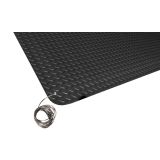 Conductive Diamond Plate Vinyl Runner Matting$180.00Conductive Diamond Plate Vinyl Runner Matting is a grounded ESD floor runner: a 5/32" PVC sheet with a raised diamond top, sold by the roll and laid down the aisles and along the bench lines where static has to be drained off people before it reaches the equipment. It is
...
Conductive Diamond Plate Vinyl Runner Matting is a grounded ESD floor runner: a 5/32" PVC sheet with a raised diamond...
Conductive Diamond Plate Vinyl Runner Matting is a grounded ESD floor runner: a 5/32" PVC sheet with a raised diamond top, sold by the roll and laid down the aisles and along the bench lines where static has to be drained off people before it reaches the equipment. It is thin, it sweeps clean, and it takes a rolling cart, which is what separates it from the thick station mats a technician stands on.
What a Conductive Runner Does Before a Charge Walks Into the Room
Static does not start at the bench. It builds on a person walking across the floor, and by the time they reach the station they are carrying a charge they cannot feel. If the first grounded thing they touch is a board or a drive, that is where it goes. A conductive floor runner along the path to the bench drains the charge on the way, through the shoes and the mat and down a cord to building ground.
This runner's surface is rated at 10⁶ ohms surface resistivity, tested to ESD-S7.1, the flooring standard published by the ESD Association. That figure is the line where the conductive band meets the static-dissipative band, which is why the maker rates it for light-duty electrical protection rather than for the fastest possible drain. For aisles, kitting areas, and the floor between stations, that is the normal spec.
The stakes are simple. A component damaged by a discharge usually does not fail on the bench; it fails in the field, weeks later, with no trace of why. A grounded path from the door to the station is how a facility keeps that from being the story.
Why a Thin Diamond Plate Sheet, and Why This One
The runner is PVC, 5/32" thick, with a high-profile embossed diamond pattern on top. The pattern is there for footing in every direction, so a worker turning with a cart or stepping off sideways gets the same grip as one walking straight down the aisle. Because it is embossed rather than molded into a soft base, the surface sweeps clean with a broom and does not hold the dust and shavings a ribbed mat collects.
The thin gauge is the design choice that matters. There is no foam under this sheet, so a cart rolls across it without sinking or chattering, and the edge is low enough that a wheel rides onto it rather than stopping at it. That is what makes it an aisle runner instead of a station mat. The trade is that it offers no anti-fatigue relief; a person who stands still on it for a shift is standing on the floor with a conductive skin over it.
It is sold by the roll and cut to the run, so one bench line or one aisle gets a single continuous grounded surface instead of a row of mats with seams. Grounding cords connect the runner to building ground; we spec one cord for every 10 feet of runner, and cords for roll cuts are ordered with the run.
Where It Belongs, and What It Is Not
The maker rates it for light-duty electrical applications: the floors around vulnerable electronic equipment where people walk and carts move. In practice that is the aisle between assembly benches, the path from the door to a test area, the floor of a kitting or packaging room handling boards and drives, a server or telecom room where techs walk the rows, and any OEM line where a grounded walkway is specified.
It is not the mat for the person standing still at the bench. A technician on their feet for a shift needs cushion under them, and this sheet has none. Pair it with a conductive anti-fatigue station mat at each standing position and use the runner between them; the rest of the conductive floor mats range covers that station mat.
It is not electrical safety matting either. A conductive runner is built to carry charge from a person to ground, which in front of a live switchboard is exactly the wrong direction. Insulating switchboard matting stops current so a worker at live panels is not the path to ground. Keep this runner in the ESD area and keep it away from open switchgear.
Three Things to Check Before You Spec It
First, what your program requires at the surface. At 10⁶ ohms this runner sits at the boundary between conductive and dissipative. If your ESD program specifies a dissipative floor, that fits. If it specifies conductive with a ceiling below 10⁶, ask us before you order. Match the written requirement to the figure, not to the word conductive in the name.
Second, the run and its ground points. Measure the aisle or bench line wall to wall, then count one grounding cord per 10 feet and find a grounded outlet within reach of each. A long run grounded only at one end is a long vinyl sheet, not a grounded floor. Verify the outlets are actually grounded; a cord on a painted surface or an ungrounded receptacle is not a ground.
Third, the traffic and the cleaning. A thin diamond plate runner is the right pick where carts roll and people walk; it is the wrong pick where a person stands still for hours. And a conductive surface stays conductive only while it is clean: floor finish, wax, and some cleaning residues leave an insulating film. Sweep it, damp-mop with a static-control cleaner, keep the polish machine off, and test resistance to ground on a schedule.
Why Mats Inc.
We sell this runner by the roll because an aisle is one grounded surface or it is not grounded. Give us the run length and the outlet locations and we will cut it to fit and count the cords with you, so the runner is grounded the day it goes down and not after the first audit finds it isn't. If your program's resistance requirement is tighter than the maker's published figure, we will say so before you order and point you to a mat that meets it.
Material PVC (vinyl) Surface High-profile embossed diamond plate Thickness 5/32" Surface resistivity 10⁶ ohms Test standard ESD-S7.1 2001 (surface resistivity) Color Black Roll sizes 36" x 75' (191 lb); 48" x 75' (287 lb) Grounding One grounding cord per 10' of runner; cords ordered separately Rated use Light-duty electrical applications; accommodates rolling carts Origin Made in the USA Warranty 1-year limited (Mats Inc.) Frequently Asked Questions
What is this runner made of, and how is it different from a conductive anti-fatigue mat?
Answered by Dustin Thompson, Owner & CEO
It is a single sheet of PVC, 5/32" thick, with a diamond pattern embossed into the top. There is no foam layer and no separate backing. That is the whole difference from a conductive anti-fatigue mat, which puts the same kind of conductive surface on top of a cushioned base. The runner is for the floor people walk and roll carts across; the station mat is for the spot where one person stands.
Both drain static to ground through a cord. If a room needs both a grounded aisle and grounded standing positions, it usually gets both products, with the runner between the mats.
How long does the runner last, and what wears it out?
Answered by Dustin Thompson, Owner & CEO
The maker publishes no year figure or abrasion number for this runner, so we will not invent one. What we can say is that a solid PVC sheet with no foam has nothing to compress or delaminate; the surface wears where carts turn and where an edge gets kicked up and stepped on. Keep the edges flat and the runner will outlast most of what rolls over it.
Its static life is a separate matter. Floor finish, wax, or residue on the surface insulates it, and the runner stops draining charge while looking fine. A loose or missing cord does the same. Test resistance to ground on a schedule; that test, not the runner's appearance, is what tells you it is working. The runner carries a 1-year limited (Mats Inc.) warranty.
How do I ground a long run, and how many cords do I need?
Answered by Dustin Thompson, Owner & CEO
A grounding cord connects the runner to a verified building ground, usually the ground screw on an outlet cover or a dedicated ground point. We spec one cord for every 10 feet of runner, so a 40-foot aisle wants four, spaced along its length rather than bunched at one end, so every part of the sheet has a short path to ground. Cords are ordered with the run, not included in it.
Before you trust the floor, confirm each outlet is grounded. Facilities with an ESD program test surface-to-ground resistance at intervals, and that is the only way to know the runner is doing its job.
How much should I order for an aisle or a bench line?
Answered by Jinna Hopson, Vice President of Marketing
Measure the full run, wall to wall or bench end to bench end, and order it as one continuous cut. One piece means one grounded surface with no seams for a cart wheel to catch or for charge to skip across. If the run turns a corner, order each straight leg as its own cut and butt them at the corner rather than trying to bend the sheet.
It comes in 36" and 48" widths. Match the width to the aisle; a runner narrower than the walkway leaves a strip of ungrounded floor along one side, and people will walk on it.
What does it look like once it is down?
Answered by Jinna Hopson, Vice President of Marketing
Black, with a raised diamond pattern that reads as clean industrial flooring rather than a mat someone added later. Because it is thin, it lies flat and low, so it looks like part of the floor from across the room. It is a production-floor finish; in a client-facing space, a static-dissipative carpet tile is the better visual fit for the room, with this runner reserved for the working areas.
Black is the only color. The surface sweeps clean and does not hold dust in a pattern the way a ribbed runner does, so it keeps its look with a broom and a damp mop.
Is this the right runner for my floor, or do I need something else?
Answered by Jinna Hopson, Vice President of Marketing
It is the right runner if the floor is where people walk and carts roll, the equipment nearby is static-sensitive, and your program accepts a surface at 10⁶ ohms. Aisles between benches, kitting and packaging rooms, server and telecom rows, and OEM lines all fit. It is the wrong product if one person stands in one spot for a shift, which wants a conductive anti-fatigue mat, or if the hazard is live electrical work, which wants insulating switchboard matting.
If you are not sure which side of that line your floor is on, call with the room layout and what gets handled in it. We would rather tell you it is the wrong runner than sell you one.
By Dustin Thompson, Owner & CEO, Mats Inc.
↑
Conductive Diamond Plate Vinyl Runner Matting is a grounded ESD floor runner: a 5/32" PVC sheet with a raised diamond top, sold by the roll and laid down the aisles and along the bench lines where static has to be drained off people before it reaches the equipment. It is thin, it sweeps clean, and it takes a rolling cart, which is what separates it from the thick station mats a technician stands on.
What a Conductive Runner Does Before a Charge Walks Into the Room
Static does not start at the bench. It builds on a person walking across the floor, and by the time they reach the station they are carrying a charge they cannot feel. If the first grounded thing they touch is a board or a drive, that is where it goes. A conductive floor runner along the path to the bench drains the charge on the way, through the shoes and the mat and down a cord to building ground.
This runner's surface is rated at 10⁶ ohms surface resistivity, tested to ESD-S7.1, the flooring standard published by the ESD Association. That figure is the line where the conductive band meets the static-dissipative band, which is why the maker rates it for light-duty electrical protection rather than for the fastest possible drain. For aisles, kitting areas, and the floor between stations, that is the normal spec.
The stakes are simple. A component damaged by a discharge usually does not fail on the bench; it fails in the field, weeks later, with no trace of why. A grounded path from the door to the station is how a facility keeps that from being the story.
Why a Thin Diamond Plate Sheet, and Why This One
The runner is PVC, 5/32" thick, with a high-profile embossed diamond pattern on top. The pattern is there for footing in every direction, so a worker turning with a cart or stepping off sideways gets the same grip as one walking straight down the aisle. Because it is embossed rather than molded into a soft base, the surface sweeps clean with a broom and does not hold the dust and shavings a ribbed mat collects.
The thin gauge is the design choice that matters. There is no foam under this sheet, so a cart rolls across it without sinking or chattering, and the edge is low enough that a wheel rides onto it rather than stopping at it. That is what makes it an aisle runner instead of a station mat. The trade is that it offers no anti-fatigue relief; a person who stands still on it for a shift is standing on the floor with a conductive skin over it.
It is sold by the roll and cut to the run, so one bench line or one aisle gets a single continuous grounded surface instead of a row of mats with seams. Grounding cords connect the runner to building ground; we spec one cord for every 10 feet of runner, and cords for roll cuts are ordered with the run.
Where It Belongs, and What It Is Not
The maker rates it for light-duty electrical applications: the floors around vulnerable electronic equipment where people walk and carts move. In practice that is the aisle between assembly benches, the path from the door to a test area, the floor of a kitting or packaging room handling boards and drives, a server or telecom room where techs walk the rows, and any OEM line where a grounded walkway is specified.
It is not the mat for the person standing still at the bench. A technician on their feet for a shift needs cushion under them, and this sheet has none. Pair it with a conductive anti-fatigue station mat at each standing position and use the runner between them; the rest of the conductive floor mats range covers that station mat.
It is not electrical safety matting either. A conductive runner is built to carry charge from a person to ground, which in front of a live switchboard is exactly the wrong direction. Insulating switchboard matting stops current so a worker at live panels is not the path to ground. Keep this runner in the ESD area and keep it away from open switchgear.
Three Things to Check Before You Spec It
First, what your program requires at the surface. At 10⁶ ohms this runner sits at the boundary between conductive and dissipative. If your ESD program specifies a dissipative floor, that fits. If it specifies conductive with a ceiling below 10⁶, ask us before you order. Match the written requirement to the figure, not to the word conductive in the name.
Second, the run and its ground points. Measure the aisle or bench line wall to wall, then count one grounding cord per 10 feet and find a grounded outlet within reach of each. A long run grounded only at one end is a long vinyl sheet, not a grounded floor. Verify the outlets are actually grounded; a cord on a painted surface or an ungrounded receptacle is not a ground.
Third, the traffic and the cleaning. A thin diamond plate runner is the right pick where carts roll and people walk; it is the wrong pick where a person stands still for hours. And a conductive surface stays conductive only while it is clean: floor finish, wax, and some cleaning residues leave an insulating film. Sweep it, damp-mop with a static-control cleaner, keep the polish machine off, and test resistance to ground on a schedule.
Why Mats Inc.
We sell this runner by the roll because an aisle is one grounded surface or it is not grounded. Give us the run length and the outlet locations and we will cut it to fit and count the cords with you, so the runner is grounded the day it goes down and not after the first audit finds it isn't. If your program's resistance requirement is tighter than the maker's published figure, we will say so before you order and point you to a mat that meets it.
Material PVC (vinyl) Surface High-profile embossed diamond plate Thickness 5/32" Surface resistivity 10⁶ ohms Test standard ESD-S7.1 2001 (surface resistivity) Color Black Roll sizes 36" x 75' (191 lb); 48" x 75' (287 lb) Grounding One grounding cord per 10' of runner; cords ordered separately Rated use Light-duty electrical applications; accommodates rolling carts Origin Made in the USA Warranty 1-year limited (Mats Inc.) Frequently Asked Questions
What is this runner made of, and how is it different from a conductive anti-fatigue mat?
Answered by Dustin Thompson, Owner & CEO
It is a single sheet of PVC, 5/32" thick, with a diamond pattern embossed into the top. There is no foam layer and no separate backing. That is the whole difference from a conductive anti-fatigue mat, which puts the same kind of conductive surface on top of a cushioned base. The runner is for the floor people walk and roll carts across; the station mat is for the spot where one person stands.
Both drain static to ground through a cord. If a room needs both a grounded aisle and grounded standing positions, it usually gets both products, with the runner between the mats.
How long does the runner last, and what wears it out?
Answered by Dustin Thompson, Owner & CEO
The maker publishes no year figure or abrasion number for this runner, so we will not invent one. What we can say is that a solid PVC sheet with no foam has nothing to compress or delaminate; the surface wears where carts turn and where an edge gets kicked up and stepped on. Keep the edges flat and the runner will outlast most of what rolls over it.
Its static life is a separate matter. Floor finish, wax, or residue on the surface insulates it, and the runner stops draining charge while looking fine. A loose or missing cord does the same. Test resistance to ground on a schedule; that test, not the runner's appearance, is what tells you it is working. The runner carries a 1-year limited (Mats Inc.) warranty.
How do I ground a long run, and how many cords do I need?
Answered by Dustin Thompson, Owner & CEO
A grounding cord connects the runner to a verified building ground, usually the ground screw on an outlet cover or a dedicated ground point. We spec one cord for every 10 feet of runner, so a 40-foot aisle wants four, spaced along its length rather than bunched at one end, so every part of the sheet has a short path to ground. Cords are ordered with the run, not included in it.
Before you trust the floor, confirm each outlet is grounded. Facilities with an ESD program test surface-to-ground resistance at intervals, and that is the only way to know the runner is doing its job.
How much should I order for an aisle or a bench line?
Answered by Jinna Hopson, Vice President of Marketing
Measure the full run, wall to wall or bench end to bench end, and order it as one continuous cut. One piece means one grounded surface with no seams for a cart wheel to catch or for charge to skip across. If the run turns a corner, order each straight leg as its own cut and butt them at the corner rather than trying to bend the sheet.
It comes in 36" and 48" widths. Match the width to the aisle; a runner narrower than the walkway leaves a strip of ungrounded floor along one side, and people will walk on it.
What does it look like once it is down?
Answered by Jinna Hopson, Vice President of Marketing
Black, with a raised diamond pattern that reads as clean industrial flooring rather than a mat someone added later. Because it is thin, it lies flat and low, so it looks like part of the floor from across the room. It is a production-floor finish; in a client-facing space, a static-dissipative carpet tile is the better visual fit for the room, with this runner reserved for the working areas.
Black is the only color. The surface sweeps clean and does not hold dust in a pattern the way a ribbed runner does, so it keeps its look with a broom and a damp mop.
Is this the right runner for my floor, or do I need something else?
Answered by Jinna Hopson, Vice President of Marketing
It is the right runner if the floor is where people walk and carts roll, the equipment nearby is static-sensitive, and your program accepts a surface at 10⁶ ohms. Aisles between benches, kitting and packaging rooms, server and telecom rows, and OEM lines all fit. It is the wrong product if one person stands in one spot for a shift, which wants a conductive anti-fatigue mat, or if the hazard is live electrical work, which wants insulating switchboard matting.
If you are not sure which side of that line your floor is on, call with the room layout and what gets handled in it. We would rather tell you it is the wrong runner than sell you one.
By Dustin Thompson, Owner & CEO, Mats Inc.
↑
View Details
View Details