





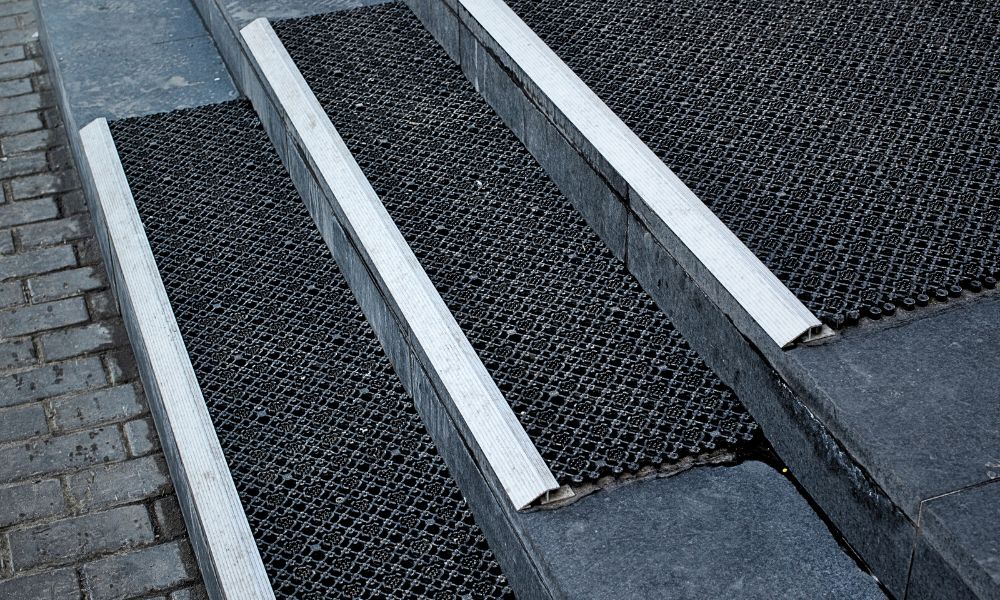
Stairways are the highest-risk walking surface in most commercial buildings. A wet shoe, a worn nose edge, a poorly lit step — and a routine trip up to the second floor turns into an incident report. Stair treads are the low-friction fix: they add traction, quiet the stairwell, and absorb the daily wear that would otherwise land on the steps themselves. Here are four reasons they earn their place in commercial, public, and high-traffic buildings.
Reduce the Risk of Slips and Falls
Stairs are where a slip turns serious. A misstep on flat flooring is usually a stumble; the same misstep on a staircase is a fall down multiple steps. That's why stairwells show up so consistently in commercial liability claims — the National Floor Safety Institute tracks stairs as one of the most common settings for slip-and-fall injuries on commercial property.
Non-slip stair treads address the cause directly. A rubber or vinyl tread with a textured face — diamond pattern, raised disc, or ribbed surface — gives shoes something to grip in both wet and dry conditions, where bare metal, concrete, or terrazzo offers almost none. In a building with heavy foot traffic, anti-slip stair treads aren't a nice-to-have; they're the difference between a safe stairwell and an open liability.
Control Noise in the Stairwell
Hard stairwells are loud. Footsteps on concrete, metal, or terrazzo echo up and down the shaft, and in a busy building that's a constant background clatter. Stair treads — rubber and carpet treads especially — absorb that impact instead of reflecting it, taking the edge off both the noise and the echo. The result is a calmer stairwell and less sound bleeding into the offices, classrooms, or patient rooms next to it.
Protect the Stairs Underneath
Every step up your staircase lands on the same few inches of each tread — the nose edge and the impact zone. Over thousands of crossings, that's what wears first: the nose rounds off, the surface dulls, and on concrete or terrazzo the edges start to chip. Stair treads take that wear in place of the step.
A tread is a replaceable wear layer. When it's done its job, you swap the tread, not the staircase, and the steps underneath stay protected from the scuffs, scratches, and edge damage that heavy traffic causes. On older or architecturally significant stairs, that protection is the whole point — the original surface stays intact under a tread that's built to be used up and replaced.
Keep the Stairwell Looking Intentional
A worn, mismatched, or patched-up staircase reads as neglect — and stairwells are more visible than people assume, especially in lobbies, retail, and multi-floor offices where the stairs are part of the path. Stair treads keep the surface uniform and clean-edged, so the stairwell looks maintained rather than improvised.
They're also a design surface. Treads come in a range of colors and finishes, and carpet and logo options let you carry brand colors or a logo into the stairwell. A consistent tread across every flight makes a multi-floor building feel deliberate instead of cobbled together.
How to Match the Tread to the Stairway
The right tread depends on what the stairway is actually doing. A few distinctions cover most decisions.
Traffic volume. Heavy-traffic interior stairs — main stairwells, public buildings, schools — call for heavier-gauge rubber or heavy-duty vinyl treads built for continuous use. Lighter-traffic stairs in apartments or back-of-house areas can run a lighter-duty vinyl tread without overspending the durability you won't use.
Indoor versus outdoor. Exterior steps need a tread rated for weather, freeze-thaw, and UV. Rubber outdoor stair treads made from recycled material handle rain, ice, and sun where an interior vinyl tread would crack or fade. Putting an indoor tread on an outdoor step is the single most common reason a tread fails early.
The step surface underneath. Treads are made to fit pan-filled, concrete, or terrazzo steps, and the nose profile — square or rounded — needs to match your step edge. Pairing treads with matching cove risers and the right adhesive gives you a finished, fully covered staircase instead of a tread sitting on a bare riser.
Where the moisture is. Treads handle the steps, but the landing at the top or bottom is where wet shoes arrive and water pools. That's a job for a mat, not a tread — pairing your stairs with water-absorbent mats at the landing catches moisture before it ever reaches the first step.
You can see the full range of commercial stair treads — rubber, vinyl, raised-disc, and outdoor — alongside matching risers and adhesives in one place, which makes it easier to spec a whole stairway at once rather than piece it together flight by flight.
Frequently Asked Questions
What's the difference between rubber and vinyl stair treads?
Answered by Dustin Thompson, Owner & CEO
Rubber treads are the heavier-duty option — thick, grippy, quiet underfoot, and built for the highest-traffic interior stairs as well as outdoor use when they're made from recycled rubber. Vinyl treads are lighter and lower-profile, which suits apartments, light commercial stairs, and back-of-house flights where traffic is moderate. Both come in textured, slip-resistant surfaces; the real choice comes down to how hard the stairway gets used and whether it's indoors or out.
Can stair treads match our building's look or carry a logo?
Answered by Jinna Hopson, Vice President of Marketing
Yes. Treads come in a range of solid colors and surface finishes, so you can keep a stairwell consistent with the rest of the building rather than defaulting to generic black. Carpet and logo treads let you carry brand colors or a logo into the stairwell, which matters most in lobbies and customer-facing flights. Matching cove risers in the same finish complete the look, so the whole staircase reads as one intentional surface rather than a tread stuck on top.
Are stair treads slip-resistant enough to meet safety codes?
Answered by Dustin Thompson, Owner & CEO
The commercial-grade treads are built for it. Many carry textured diamond or raised-disc surfaces and meet the federal specifications and ASTM flame-spread ratings used in public and institutional buildings, with high-traction options for the most safety-sensitive stairwells. If your project has a specific code, slip-resistance, or fire-rating requirement, send it over and we'll point you to the treads that meet it — that's a spec worth confirming before the order ships rather than after.
What stair treads hold up on outdoor steps?
Answered by Dustin Thompson, Owner & CEO
Exterior steps need a tread made for weather. Recycled-rubber outdoor treads handle rain, freeze-thaw cycles, and UV without cracking or fading the way an indoor vinyl tread would, and their deep textured surface stays grippy when wet or iced over. The rule that saves the most headaches: never run an interior tread outdoors. Indoor treads aren't built for temperature swings or standing moisture, and putting one on an exterior step is the fastest path to a failed tread.
Will stair treads look out of place on a finished or carpeted staircase?
Answered by Jinna Hopson, Vice President of Marketing
Not if you match them to the space. Treads come in finishes that range from utilitarian industrial to cleaner low-profile looks, and carpet treads in particular sit naturally on finished or carpeted stairs while still adding traction and protecting the nose edge. The goal is a tread that reads as part of the staircase, not a patch laid over it — choosing the color and profile deliberately is what gets you there.
How long do commercial stair treads last?
Answered by Dustin Thompson, Owner & CEO
On heavy-traffic interior stairs, expect several years from a properly specified rubber or heavy-duty vinyl tread; lighter-duty treads on those same stairs wear out sooner. Outdoor treads depend on climate and sun exposure. The biggest factor isn't the tread itself — it's whether it was matched to the traffic and the location to begin with. The right tread for the stairway holds up for years; an underbuilt one on a busy flight starts showing edge wear inside the first year.
By Dustin Thompson, Owner & CEO, Mats Inc.