





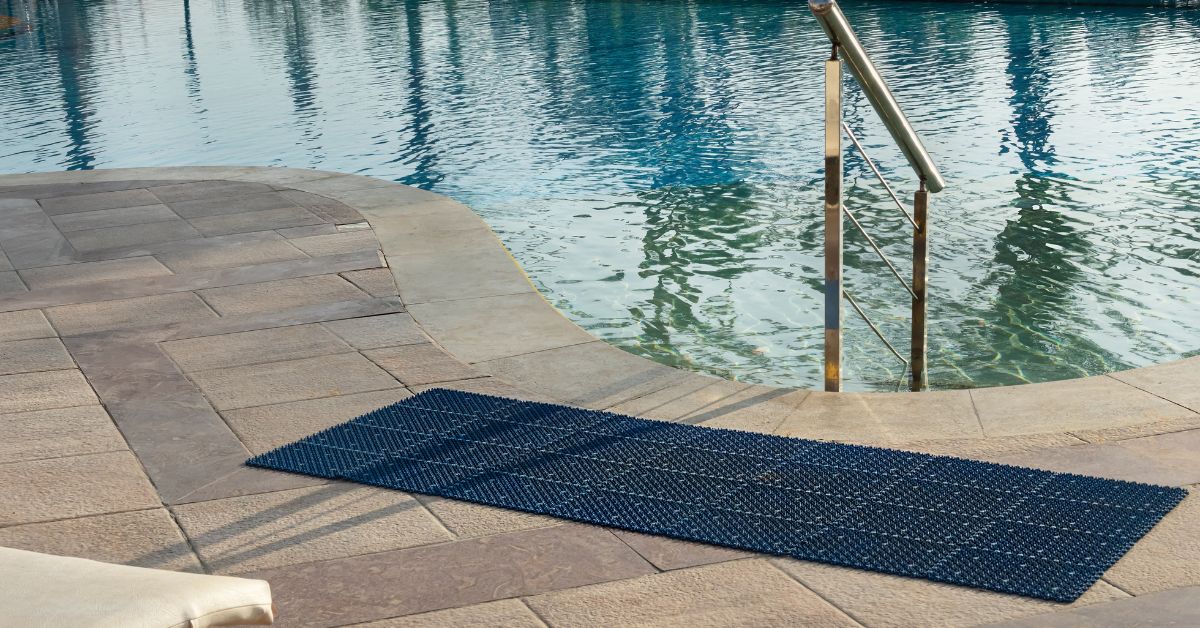
How to Prevent Slips and Falls Around Commercial Pools
Pools bring guests enjoyment, but they also introduce significant safety risks.
Wet surfaces, constant foot traffic, and water exposure make pool decks and surrounding areas prone to slips and falls.
To keep patrons safe and minimize liability, commercial and public pools must take proactive measures.
In this blog, we’ll examine three effective ways to prevent slips and falls around the pool.
Use Floor Mats
One of the most effective ways to prevent slips and falls is by strategically placing commercial-grade floor mats around the pool and in other moisture-prone areas such as locker rooms, showers, and restrooms.
These mats are designed to provide reliable traction, even when wet.
Many feature drainage holes or bi-level surfaces that allow water to flow beneath the walking surface, helping keep the top layer drier and safer for foot traffic.
Investing in high-quality pool mats and wet area matting improves safety while also supporting long-term durability in demanding environments.
For entry points, Waterhog Classic entrance mats help capture moisture and debris before it spreads.
In high-moisture zones, WaterPro drainage mats allow water to flow through the surface, reducing pooling and improving traction.
Provide Signage and Warnings
Clear signage is essential for reinforcing safe behavior around pool areas.
Posting visible warnings about wet and slippery surfaces helps remind patrons to walk carefully and avoid running.
Signage should be placed at entrances, exits, and high-traffic zones where slips are most likely to occur.
In addition to signs, visual cues such as painted walkways, textured surfaces, or contrasting tiles can further encourage safe movement and increase awareness of hazardous areas.
Maintain Drainage Systems
Proper drainage is critical to preventing water accumulation and reducing slip hazards.
Drains, gutters, and grates should be regularly inspected and kept free of debris to ensure efficient water flow.
Any areas where water tends to collect should be addressed promptly, whether through improved drainage design or routine maintenance.
Keeping surfaces as dry as possible plays a major role in minimizing the risk of slips and falls.
Create a Safer Pool Environment with Proactive Planning
Now that you know three ways to prevent slips and falls around the pool, you can take the proper steps to improve safety throughout your facility.
By combining effective matting, clear communication, and proper maintenance, you can create a safer environment and provide a better experience for your guests.
For commercial floor mats designed for aquatic environments, explore pool mats, locker room mats, Waterhog entrance mats, and drainage mats to improve traction and moisture control across your facility.
Frequently Asked Questions About Pool Slip Prevention
What are the best mats for pool decks?
The best mats for pool decks are rubber drainage mats and pool mats designed for wet environments.
These mats provide slip resistance while allowing water to flow through, helping reduce standing water and improve safety.
What is the difference between pool mats and drainage mats?
Pool mats are designed specifically for barefoot comfort and slip resistance around aquatic areas.
Drainage mats focus on water flow-through to prevent pooling in high-moisture environments.
Do entrance mats help reduce slips around pools?
Yes, entrance mats such as Waterhog mats help capture water and debris at entry points.
This reduces the amount of moisture tracked into the facility.
Where should wet area mats be installed?
Wet area mats should be installed around pool decks, locker rooms, showers, restrooms, and transition areas.
These are the locations where water accumulation is most common.
Are rubber mats better for locker rooms and pool areas?
Rubber mats are ideal for locker rooms and pool areas because they are durable and slip-resistant.
They are also resistant to mold and mildew in wet conditions.
How do drainage mats improve pool safety?
Drainage mats allow water to pass through the surface instead of collecting on top.
This reduces slip hazards and maintains better traction for foot traffic.
How often should pool drainage systems be maintained?
Drainage systems should be inspected and cleaned regularly to ensure proper water flow.
This helps prevent clogs and reduces the risk of standing water.
Are pool safety signs required for commercial facilities?
Most commercial and public pools are required to display signage warning of slippery surfaces.
These signs also outline safety rules for patrons.